Top fixes
Top Ford Focus fixes every owner should know
Cheap, practical fixes for the Ford Focus faults you actually meet, with rough costs and what a garage will charge.
Updated 4th September 2026 DVSA data: Across 891,804 recorded MOT tests, 25.3% failed.
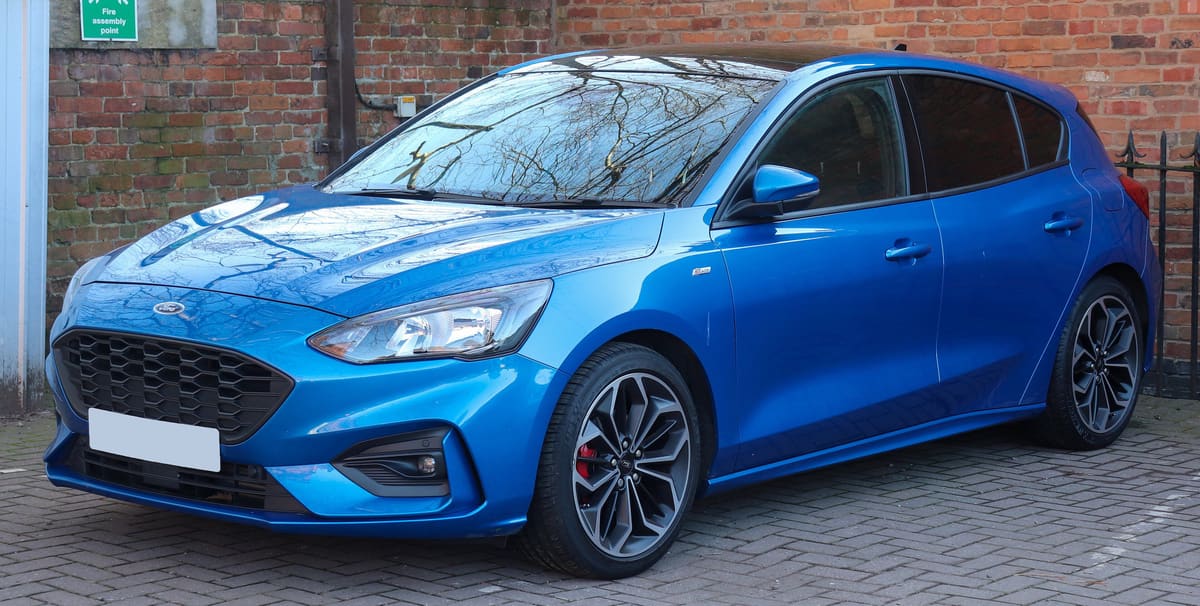
Ford Focus owners often encounter a handful of common issues that can be addressed with practical fixes. Many problems, such as clutch wear, door lock failures, and suspension noise, have straightforward repairs. Some can be tackled at home with basic tools and mechanical knowledge, while others require a professional garage’s expertise to ensure safety and reliability.
Clutch Slipping and Wear
A slipping clutch is a frequent complaint, especially on higher-mileage Ford Focus models. Symptoms include difficulty accelerating, a burning smell, or the engine revving without corresponding speed increase. The likely cause is worn clutch plates or a failing pressure plate.
Replacing the clutch involves removing the gearbox, which is a labour-intensive job. This repair requires mechanical skill, a well-equipped garage, and ideally a ramp or lift. While some experienced DIYers might attempt this, it is generally recommended to have a garage undertake the replacement to avoid complications and ensure correct adjustment.
Door Lock and Central Locking Problems
Owners often report issues with door locks failing to operate correctly, either manually or via remote central locking. Common symptoms include doors not locking or unlocking, or the key fob having reduced range or no response. The cause is usually a faulty door lock actuator or worn wiring connections.
Fixing this typically involves removing the door trim to access the actuator and wiring. Replacing the actuator is a moderately straightforward DIY job for those comfortable with interior panels and electrical connectors. However, if wiring faults are suspected, a garage visit might be necessary to diagnose and repair electrical problems safely.
Suspension Noise and Wear
Clunking or knocking noises from the suspension when driving over bumps or during cornering are common on older Focus models. The cause is often worn suspension bushes, ball joints, or shock absorbers.
Replacing suspension bushes or shock absorbers requires lifting the vehicle and removing suspension components. While changing shock absorbers can be a DIY task with the right tools and safety precautions, replacing bushes and ball joints is more complex and may need specialised tools and alignment checks. A garage is usually the best option for suspension repairs to maintain handling and safety.
Engine Misfire or Rough Running
A rough-running engine or misfire can be caused by faulty spark plugs, ignition coils, or fuel injectors. Symptoms include uneven idling, loss of power, or the engine warning light illuminating.
Replacing spark plugs and ignition coils is a common maintenance task and can be done at home with basic tools. Fuel injector issues are more complex and might require professional cleaning or replacement. Diagnosing the exact cause often involves scanning the engine control unit for fault codes, which a garage can perform if you do not have access to a diagnostic tool.
EGR Valve Blockage
Exhaust gas recirculation (EGR) valves can become clogged with carbon deposits over time, leading to poor engine performance, increased emissions, or the engine warning light coming on. This is a known issue on many diesel and some petrol Ford Focus engines.
Cleaning the EGR valve involves removing it from the engine and manually clearing carbon build-up. This is a moderately challenging DIY job that requires some mechanical knowledge and care to avoid damaging sensors. If cleaning does not resolve the issue, replacement may be necessary, which is best handled by a garage.
Window Regulator Failures
Electric window regulators can fail, causing windows to become stuck or operate erratically. This is often due to worn cables or motor failure inside the door.
Repairing a window regulator requires removing the door panel and replacing the faulty mechanism. This is a feasible DIY job for those comfortable with vehicle interiors and electrical components. Care must be taken to avoid damaging the window glass or door trim during removal and refitting. If unsure, a garage can perform the repair efficiently.
Ford Focus recall record
59 recalls have been issued for the Ford Focus, between 1999 and 2026.
Transit Courier: Diesel DV-Neo Engine Coolant Pump Update
R/2026/237Issued 15 June 2026
Affected vehicles may have been repaired using a coolant pump with a potential issue. This issue may lead to incorrect engine timing resulting in an engine failure causing a sudden loss of power without prior warning. The engine cannot be restarted.
Remedy:Check and replace the water pump and timing belt if necessary.
Affects cars built Oct 2020 to Oct 2020
Multi Vehicle Line (MVL): Telecommunications Control Module (TCU) loss of Function Software Update
R/2026/181Issued 5 May 2026
Affected vehicles may experience a loss of emergency call system (eCall) functionality which impacts both automatic and manual eCall events.
Remedy:Update the Telematics Control Unit software to the latest level.
Affects cars built Oct 2019 to Oct 2022
25C75 Focus - Lane Centering Assist Software Update
R/2026/111Issued 18 March 2026
Certain affected vehicles may not have the remedy for Compliance Recall 24C12 installed correctly
Remedy:Dealers will update Audio Front Control Module (ACM) software to the latest level available.
Affects cars built Apr 2024 to Apr 2024
25C77 Focus Telematics Control Unit Software Update
R/2026/059Issued 13 February 2026
On affected vehicles the software repair for previous recall 20C22 may not have been delivered properly and the Telematics Control Unit (TCU) in these vehicles may disconnect from Ford’s Service Delivery Network and become unresponsive.
Remedy:Update the TCU software and perform an additional verification process to ensure the configuration has been installed correctly.
Affects cars built Aug 2018 to Aug 2018
55 older recalls not shown.
A recall applies to a build range, not to every car of this model. Check a registration to see whether one specific vehicle has an outstanding recall.
Ford Focus MOT record
From 891,804 recorded MOT tests, 25.3% failed.
| Registered | Tests | Failed | Median mileage |
|---|---|---|---|
| 2023 | 1,088 | 6.7% | 20,049 mi |
| 2022 | 15,456 | 7.8% | 23,042 mi |
| 2021 | 20,446 | 9.1% | 31,668 mi |
| 2020 | 37,538 | 12.0% | 38,652 mi |
| 2019 | 54,522 | 15.3% | 45,966 mi |
| 2018 | 46,681 | 14.2% | 50,979 mi |
| 2017 | 62,698 | 14.7% | 60,474 mi |
| 2016 | 62,812 | 17.3% | 69,176 mi |
Most common reasons for failure
- Tyre tread depth not in accordance with the requirements30.3%
- A suspension pin, bush or joint excessively worn24.3%
- A tyre seriously damaged16.3%
- A spring or spring component fractured or seriously weakened14.6%
- A suspension component excessively damaged or corroded14.4%
Figures cover every Ford Focus tested in the DVSA dataset, not this specific car. Check a registration for the actual history of one vehicle.
Ford Focus official figures
Median across 8 variants on sale, petrol, petrol electric.
- Combined economy
- 40.5 mpg
- WLTP median across variants
- CO2 emissions
- 161.5 g/km
- Sets the first-year tax rate
Official figures for new cars. Real economy varies with driving, load and conditions.
Frequently asked questions
What are common faults with the Ford Focus?
Common faults include electrical issues, clutch problems, and suspension wear.
Can I fix these problems myself?
Many issues can be addressed with DIY methods, but some may require professional help.
Are the fixes permanent?
Some fixes are temporary patches, while others provide a long-term solution.
Sources
- DVSA anonymised MOT tests and results (Open Government Licence v3.0)
- VCA new car fuel consumption and emissions data (Open Government Licence v3.0)
- DVSA vehicle safety recalls (Open Government Licence v3.0)