Running costs
Jaguar I-Pace running costs: what UK ownership really costs
Jaguar I-Pace UK running costs: fuel or electric, insurance group, road tax, servicing and depreciation.
Updated 4th September 2026 DVSA data: Across 22,113 recorded MOT tests, 7.2% failed.
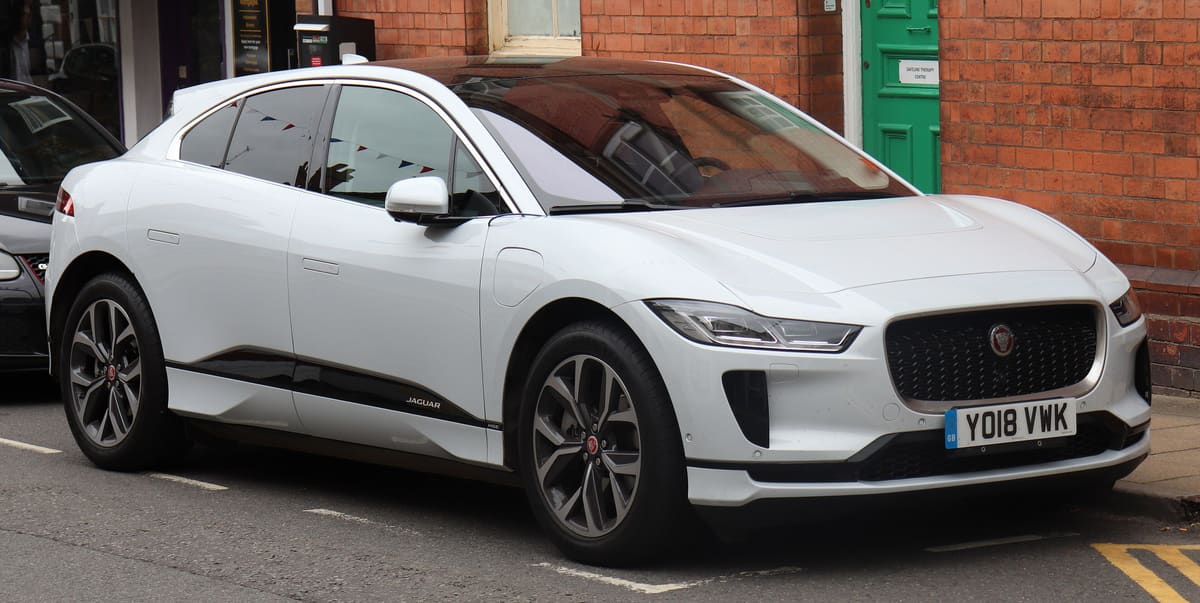
The Jaguar I-Pace offers competitive running costs for an electric vehicle, with low fuel costs due to its electric powertrain, insurance group ratings that vary by model, and a favourable tax band. Servicing intervals are reasonable, and depreciation is typical for luxury electric vehicles, making it an appealing option for many drivers.
Fuel and Electric Costs
The Jaguar I-Pace is an all-electric vehicle, which means it runs on electricity rather than petrol or diesel. Charging costs can vary significantly depending on your energy provider and whether you charge at home or use public charging stations.
Public charging stations may have different pricing structures, often charging per minute or per kWh. Rapid chargers can be more expensive, but they offer the convenience of faster charging times. Overall, the I-Pace’s electric powertrain can lead to substantial savings compared to traditional fuel costs, especially for those who can charge at home.
Insurance Group
The insurance group for the Jaguar I-Pace varies depending on the specific model and trim level. Generally, the I-Pace falls into a higher insurance group, typically ranging from group 48 to group 50. This is reflective of its status as a luxury electric vehicle with advanced technology and performance capabilities.
When considering insurance, it is essential to shop around as premiums can differ significantly between providers. Factors such as your driving history, location, and the level of coverage you choose will also influence your insurance costs. As a high-value vehicle, it is advisable to ensure you have adequate coverage to protect your investment.
Tax Band
As an electric vehicle, the Jaguar I-Pace benefits from favourable tax treatment. It is exempt from road tax (Vehicle Excise Duty) in the UK, which is a significant saving compared to petrol and diesel vehicles. This exemption applies to all electric vehicles, making them an attractive option for environmentally conscious drivers.
In addition to road tax exemptions, electric vehicles also benefit from lower company car tax rates, which can be particularly advantageous for business users. The I-Pace’s zero emissions mean it falls into the lowest benefit-in-kind tax band, resulting in lower tax liabilities for those using the vehicle for business purposes.
Servicing Intervals
The servicing intervals for the Jaguar I-Pace are generally every 12 months or 16,000 miles, whichever comes first. This is in line with many modern vehicles, allowing for regular maintenance without excessive frequency.
Servicing includes checks on the battery, brakes, and software updates, which are crucial for maintaining the vehicle’s performance and safety. Electric vehicles typically require less maintenance than their petrol or diesel counterparts due to fewer moving parts and no oil changes. However, it is essential to follow the manufacturer’s recommended service schedule to ensure the longevity and reliability of the vehicle.
Typical Depreciation
Depreciation is an important factor to consider when assessing the total ownership costs of any vehicle, including the Jaguar I-Pace. Electric vehicles, particularly luxury models, can experience significant depreciation in the first few years. However, the I-Pace has shown to hold its value relatively well compared to other electric vehicles.
On average, you can expect the I-Pace to depreciate by around 40-50% over the first three years of ownership. Factors influencing depreciation include mileage, condition, and market demand for electric vehicles. As the market for electric cars continues to grow, the depreciation rates may stabilise, making the I-Pace a more attractive option for used car buyers in the future.
Conclusion
Overall, the Jaguar I-Pace presents a compelling case for those considering an electric vehicle. With low running costs, tax benefits, and reasonable servicing intervals, it offers an appealing ownership experience. While depreciation is a factor to consider, the I-Pace’s performance and luxury features make it a strong contender in the electric vehicle market.
Jaguar I-Pace recall record
10 recalls have been issued for the Jaguar I-Pace, between 2019 and 2026.
2019 to 2021 Model Year Jaguar I-PACE Battery Fire or Smoke
R/2026/052Issued 6 March 2026
Some vehicles have experienced thermal overload in the high voltage traction battery pack which may present as smoke or fire. Since the installation of protective software field evidence has shown that there remains a risk of thermal overload in vehicles with battery packs manufactured up to the end of 2021 model year.
Remedy:As an interim repair the vehicles will have software installed to restrict the maximum state of charge to 90% whilst a permanent remedy is developed.
Affects cars built Jun 2017 to Jun 2021
I-PACE Traction Battery Thermal Overload - Elevated Risk
R/2024/120Issued 15 April 2024
On affected vehicles the traction battery packs which contain cells manufactured on or before 31 May 2018 are exposed to multiple technical issues that have shown to contribute to an elevated risk of thermal overload.
Remedy:The traction battery pack will be replaced with a new pack or the vehicle will be re-acquired from the customer.
Affects cars built Feb 2018 to Sept 2019
I-PACE High Voltage battery loose busbar fixings
R/2024/034Issued 20 March 2024
On affected vehicles the fasteners for the battery module to module electrical connecting busbars may not be sufficiently secure.
Remedy:The busbar fixings will be inspected and as required new components installed.
Affects cars built Jun 2018 to May 2024
On affected vehicles a crack may be present in the floor tunnel strengthening panel. Where a crack is present there is risk that the crack may propagate which may impact the seat anchorage structural performance.
R/2024/023Issued 7 February 2024
On affected vehicles a crack may be present in the floor tunnel strengthening panel. Where a crack is present there is risk that the crack may propagate which may impact the seat anchorage structural performance.
Remedy:Drilling a hole at either end of the crack and installation of an additional aluminium plate if a crack is present.
Affects cars built Sept 2023 to Oct 2023
6 older recalls not shown.
A recall applies to a build range, not to every car of this model. Check a registration to see whether one specific vehicle has an outstanding recall.
Jaguar I-Pace MOT record
From 22,113 recorded MOT tests, 7.2% failed.
| Registered | Tests | Failed | Median mileage |
|---|---|---|---|
| 2022 | 4,552 | 5.9% | 26,736 mi |
| 2021 | 5,045 | 6.6% | 35,477 mi |
| 2020 | 7,967 | 7.3% | 41,981 mi |
| 2019 | 3,866 | 8.7% | 44,922 mi |
| 2018 | 683 | 11.3% | 44,483 mi |
Most common reasons for failure
- A tyre seriously damaged42.7%
- Tyre tread depth not in accordance with the requirements30.2%
- A steering ball joint with excessive wear or free play12.3%
- A tyre cords visible or damaged10.2%
- Brake disc or drum excessively weakened, insecure or fractured4.6%
Figures cover every Jaguar I-Pace tested in the DVSA dataset, not this specific car. Check a registration for the actual history of one vehicle.
Frequently asked questions
What are the typical servicing costs for a Jaguar I-Pace?
Servicing costs for the Jaguar I-Pace can vary, but a major service typically occurs every 12 months or 16,000 miles. Expect to pay more for this service due to the complexity of electric components, including the battery management system.
How much does it cost to charge a Jaguar I-Pace?
Charging costs depend on your electricity tariff, but on average, it can cost around £8 to fully charge the I-Pace from home. The vehicle's 90 kWh battery offers a range of approximately 292 miles, making it efficient for daily use.
What is the road tax band for the Jaguar I-Pace?
The Jaguar I-Pace falls into the zero emissions road tax band, meaning you won't pay any annual road tax. This is a significant saving compared to traditional petrol or diesel vehicles, making it an attractive option for eco-conscious drivers.
Are there any specific maintenance tasks for the I-Pace?
Regular maintenance for the I-Pace includes checking the brake fluid and coolant levels, as well as inspecting the battery cooling system. These checks are crucial for ensuring the longevity of the electric powertrain and overall vehicle performance.
What warranty coverage does the Jaguar I-Pace offer?
The Jaguar I-Pace comes with a standard three-year warranty, covering most components. Additionally, the battery is typically covered for eight years or 100,000 miles, providing peace of mind regarding potential battery degradation.
How does the I-Pace's insurance cost compare to other electric vehicles?
Insurance for the Jaguar I-Pace can be higher than some other electric vehicles due to its luxury status and repair costs. Factors such as your driving history and location will influence the premium, so it's wise to shop around for the best quotes.
What are the common wear items that need replacing on the I-Pace?
Brake pads and tyres are common wear items for the Jaguar I-Pace, especially if you drive in a spirited manner. The regenerative braking system can help extend the life of the brake pads, but regular checks are still essential.
Sources
- DVSA anonymised MOT tests and results (Open Government Licence v3.0)
- DVSA vehicle safety recalls (Open Government Licence v3.0)