Running costs
Jaguar XF running costs: what UK ownership really costs
Jaguar XF UK running costs: fuel or electric, insurance group, road tax, servicing and depreciation.
Updated 4th September 2026 DVSA data: Across 92,629 recorded MOT tests, 21.9% failed.
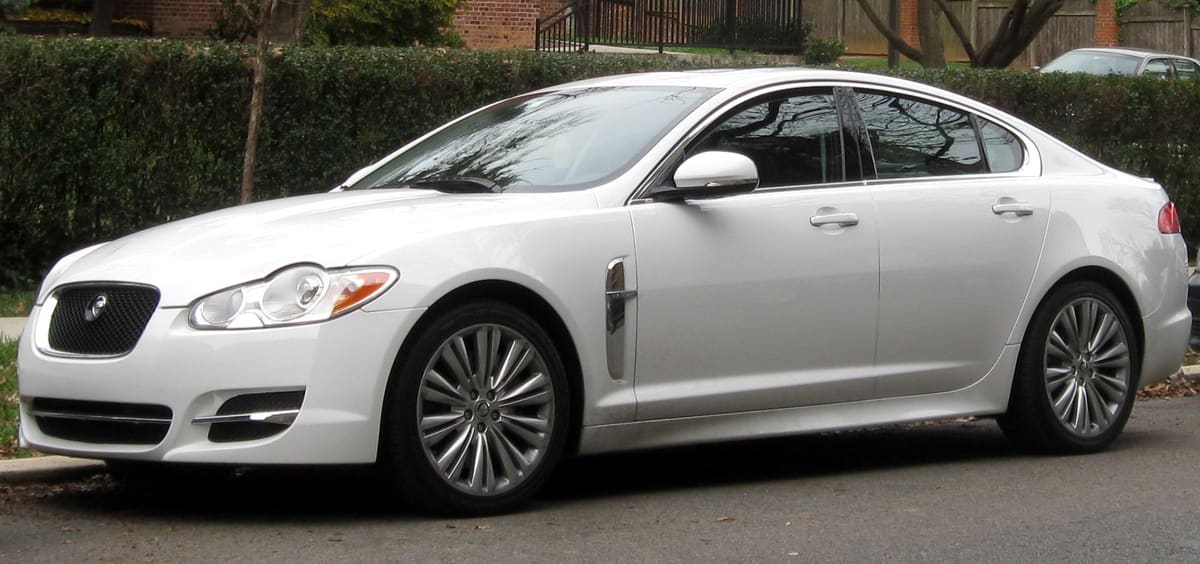
The Jaguar XF offers a balance of luxury and performance, but running costs can vary significantly depending on the model and engine choice. Fuel efficiency, insurance costs, tax bands, servicing intervals, and depreciation all play a role in the total ownership cost.
Fuel Costs
Fuel costs for the Jaguar XF depend on the engine type and driving habits. The petrol variants generally offer lower miles per gallon (mpg) compared to the diesel options.
For those considering the plug-in hybrid variant, the electric-only range can help reduce fuel expenses, especially for short commutes. However, the overall cost will depend on local electricity rates and charging habits. Regularly checking fuel prices can help manage running costs effectively.
Insurance Group
Insurance groups for the Jaguar XF can vary widely, typically ranging from group 30 to group 50, depending on the model and engine size. Higher performance models, such as the supercharged V6 or V8 variants, fall into the more expensive insurance categories.
When selecting a model, it is wise to consider the insurance group as part of the total cost of ownership. Factors like your driving history, location, and the level of coverage you choose will also influence the final insurance premium.
Tax Band
The tax band for the Jaguar XF is determined by CO2 emissions. Most models fall into bands D to H, with the lowest emissions models benefiting from lower road tax rates. For example, models with CO2 emissions under 130 g/km may attract a lower annual tax fee.
Newer models tend to have better emissions figures due to advancements in technology, which can lead to lower tax costs. It is important to check the specific emissions rating for the model you are considering, as this directly impacts the annual road tax you will pay.
Servicing Intervals
Jaguar recommends servicing the XF every 16,000 miles or annually, whichever comes first. Regular maintenance is crucial for keeping the vehicle in optimal condition and can help prevent more costly repairs down the line.
Service costs can vary based on the type of service required. minor or major. Minor services typically include oil changes and basic checks, while major services involve more comprehensive inspections and replacements. Keeping up with the service schedule can help maintain the vehicle’s resale value.
Typical Depreciation
Depreciation for the Jaguar XF can be significant, with estimates suggesting it can lose around 50-60% of its value within the first three years. Factors influencing depreciation include the model year, mileage, condition, and market demand for used luxury vehicles.
Luxury cars like the XF often experience steeper depreciation compared to mainstream brands. However, well-maintained models with lower mileage can retain value better. Understanding the depreciation curve can help potential buyers make informed decisions regarding purchase timing and resale expectations.
Conclusion
The Jaguar XF combines luxury with performance, but prospective owners should be aware of the associated running costs. Fuel efficiency, insurance groups, tax bands, servicing intervals, and depreciation all contribute to the total ownership cost. By considering these factors, potential buyers can make informed decisions and enjoy their Jaguar XF without unexpected financial burdens.
Jaguar XF recall record
31 recalls have been issued for the Jaguar XF, between 2008 and 2025.
Security Guidance
R/2025/488Issued 2 December 2025
Jaguar Land Rover in conjunction with law enforcement and insurance bodies is aware of the increase in thefts of vehicles in specific geographical locations within the United Kingdom. There is no fault with Jaguar Land Rover's security systems and they continue to meet stringent automotive legislation. Jaguar Land Rover is offering owners guidance on how to maximise vehicle security and protect against theft
Remedy:Vehicle registered keepers will be sent a security guidance letter only - there is no repair action.
Affects cars built Jun 2013 to Sept 2020
AJ21-D4 Turbo Oil Feed Pipe Leak
R/2024/207Issued 7 June 2024
On certain vehicles there may be insufficient clamp load on the turbocharger oil feed pipe which may over time loosen and lead to an oil leak.
Remedy:The oil feed pipe will be removed the O-rings replaced lubricated and an additional clamp installed.
Affects cars built Nov 2019 to May 2024
THE RUBBERISED FUEL RETURN HOSE ASSEMBLY MAY HAVE BEEN INCORRECTLY MANUFACTURED
R/2021/230Issued 25 June 2021
The rubberised fuel return hose assembly may have been incorrectly manufactured.
Remedy:Inspect the date code on the fuel return pipe and replace the part if necessary.
Affects cars built Nov 2019 to Apr 2021
VEHICLES FAILED TO ACHIEVE REQUIRED LEVELS OF CO2 EMISSIONS
R/2019/047Issued 29 August 2019
Vehicles failed to routinely achieve the required levels of CO2 emissions.
Remedy:Solutions include hardware and software changes.
Affects cars built Oct 2014 to Nov 2018
27 older recalls not shown.
A recall applies to a build range, not to every car of this model. Check a registration to see whether one specific vehicle has an outstanding recall.
Jaguar XF MOT record
From 92,629 recorded MOT tests, 21.9% failed.
| Registered | Tests | Failed | Median mileage |
|---|---|---|---|
| 2021 | 636 | 7.7% | 28,822 mi |
| 2020 | 1,328 | 11.0% | 37,488 mi |
| 2019 | 3,310 | 11.5% | 46,514 mi |
| 2018 | 5,683 | 11.9% | 54,517 mi |
| 2017 | 6,882 | 12.0% | 64,846 mi |
| 2016 | 8,154 | 13.6% | 74,894 mi |
| 2015 | 9,560 | 19.7% | 82,509 mi |
| 2014 | 11,848 | 23.0% | 90,256 mi |
Most common reasons for failure
- Tyre tread depth not in accordance with the requirements31.6%
- A suspension pin, bush or joint excessively worn26.4%
- A tyre seriously damaged16.4%
- A suspension joint dust cover missing or no longer prevents the ingress of dirt etc13.2%
- Brake disc or drum excessively weakened, insecure or fractured12.4%
Figures cover every Jaguar XF tested in the DVSA dataset, not this specific car. Check a registration for the actual history of one vehicle.
Frequently asked questions
What are the typical fuel costs for a Jaguar XF?
Fuel costs for a Jaguar XF can vary based on the engine type. For example, the 2.0-litre diesel engine from 2018 offers around 50 mpg, which can help keep fuel expenses lower compared to the 3.0-litre petrol variant, which consumes more fuel.
How much does insurance cost for a Jaguar XF?
Insurance premiums for a Jaguar XF typically fall into groups 30 to 50, depending on the model year and specifications. For instance, a 2016 XF might have higher premiums due to its performance features compared to a 2010 model.
What are the servicing costs for a Jaguar XF?
Servicing costs can vary, but a major service for a Jaguar XF usually occurs every 12 months or 16,000 miles. Expect to pay for items like oil changes, air filters, and brake fluid replacements, which can add up over time.
Are there any specific maintenance issues to be aware of?
The Jaguar XF may experience issues with the timing chain tensioner, particularly in models from 2010 to 2015. If you hear a rattling noise from the engine, it could indicate a problem that needs immediate attention.
What is the road tax band for a Jaguar XF?
The road tax band for a Jaguar XF varies by model year and engine size. For example, the 2017 2.0-litre diesel falls into Band D, which means lower annual tax costs compared to higher emissions models in Band H.
How reliable is the Jaguar XF in terms of running costs?
Reliability can be mixed for the Jaguar XF, with some owners reporting high maintenance costs, particularly for electrical issues in models from 2016 onwards. Regular checks on components like the battery and alternator can help mitigate unexpected expenses.
What are the typical tyre replacement costs for a Jaguar XF?
Tyre replacement costs for a Jaguar XF can vary based on the tyre brand and size. Generally, premium brands like Michelin or Pirelli are recommended, and you might expect to replace tyres every 20,000 to 30,000 miles, depending on driving habits.
Sources
- DVSA anonymised MOT tests and results (Open Government Licence v3.0)
- DVSA vehicle safety recalls (Open Government Licence v3.0)