Top fixes
Jeep Renegade top fixes: how owners handle the common issues
Practical fixes for the common Jeep Renegade faults owners run into.
Updated 4th September 2026 DVSA data: Across 28,939 recorded MOT tests, 23.0% failed.
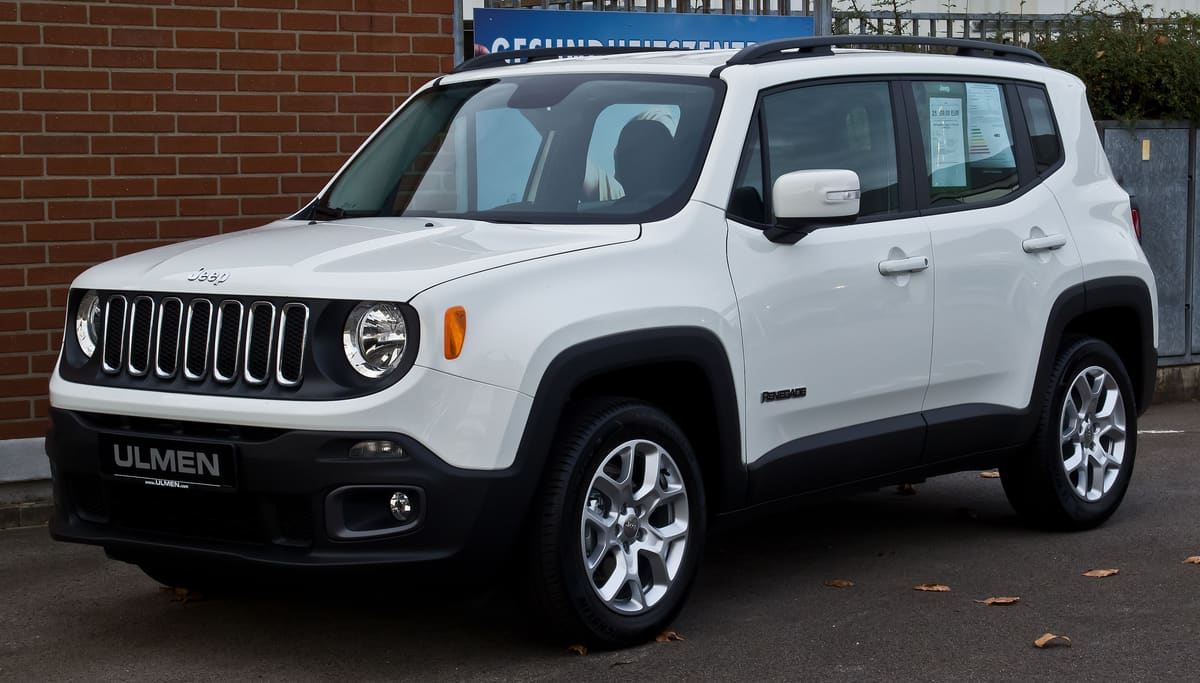
The Jeep Renegade is a popular compact SUV, but like any vehicle, it can experience issues. Common problems include electrical faults, transmission concerns, and suspension wear. This article outlines practical fixes for these issues, helping owners maintain their vehicles and enhance reliability.
Electrical Problems
Many Jeep Renegade owners report electrical issues, particularly with the battery and dashboard lights. A common fix is to check the battery connections for corrosion and ensure they are tight. If the battery is old, replacing it can resolve many electrical faults.
Additionally, faulty fuses can cause various electrical components to malfunction. Inspecting and replacing blown fuses can restore functionality. For persistent dashboard light warnings, a diagnostic scan may be necessary to identify specific error codes, allowing for targeted repairs.
Transmission Concerns
Transmission problems can manifest as slipping gears or rough shifting. Regular maintenance, including fluid changes, is crucial for preventing these issues. If you notice unusual behaviour, check the transmission fluid level and condition. Low or dirty fluid can lead to significant transmission damage.
In some cases, a software update may resolve shifting issues. Jeep dealerships often provide updates that improve transmission performance. If problems persist, it may be necessary to consult a specialist for a thorough inspection and potential repairs.
Suspension Wear
The Renegade’s suspension system can wear over time, leading to a bumpy ride or uneven tyre wear. Owners should regularly inspect shock absorbers and struts for leaks or damage. Replacing worn components can significantly improve ride quality and handling.
Tyre alignment is also essential for maintaining suspension health. Misalignment can cause premature tyre wear and affect vehicle stability. Regular checks and adjustments can prevent these issues and extend the life of your tyres.
Air Conditioning Failures
Air conditioning problems are common, especially in older models. If the system is not blowing cold air, the first step is to check the refrigerant levels. Low refrigerant can result from leaks, which should be repaired before recharging the system.
Another potential issue is a faulty compressor. If the compressor is not engaging, it may need replacement. Regular maintenance, including cabin filter changes, can also improve air conditioning performance and ensure clean air circulation within the vehicle.
Brake System Issues
Braking problems can be a significant safety concern. Common issues include squeaking or grinding noises, which often indicate worn brake pads. Regularly inspecting and replacing brake pads can prevent damage to rotors and ensure optimal braking performance.
Additionally, brake fluid should be checked regularly. Low fluid levels can affect braking efficiency and indicate a leak in the system. Flushing the brake fluid every couple of years can help maintain the system’s integrity and responsiveness.
Fuel System Troubles
Fuel system issues can lead to poor performance and reduced fuel efficiency. A common problem is a clogged fuel filter, which can restrict fuel flow. Replacing the fuel filter at regular intervals can prevent this issue and ensure the engine runs smoothly.
Another potential concern is the fuel pump. If the engine struggles to start or stalls frequently, the fuel pump may be failing. Testing the pump’s pressure can help diagnose the problem, and replacement may be necessary for reliable operation.
By addressing these common issues proactively, Jeep Renegade owners can enhance their vehicle’s performance and longevity. Regular maintenance and timely repairs are key to enjoying a trouble-free driving experience.
Jeep Renegade recall record
8 recalls have been issued for the Jeep Renegade, between 2017 and 2024.
2024 Jeep Renegade and Compass PHEV 12V cable connection
R/2024/288Issued 22 August 2024
On certain vehicles the under-seat intermediate connection or the rear connection to the Integrated Dual Charging Module (IDCM) may not be tightened to the proper torque which may cause overheating of the terminal with risk of thermal incident to surrounding parts.
Remedy:Check the conformity of the fastener torque on the 12V cable connection and if required replacement of the cable.
Affects cars built Sept 2019 to May 2024
Incorrect tyre size data on Certificate of Conformity (CoC)
R/2024/184Issued 24 May 2024
Affected vehicles may display incorrect tyre size information on the Certificate of Conformity (CoC).
Remedy:The CoC must be replaced.
Affects cars built Feb 2021 to Sept 2023
Catalyst efficiency
R/2023/286Issued 22 November 2023
On affected vehicles the tailpipe emission standards are exceeded due to a loss of catalyst CO/NOx conversion efficiency as a result of the catalyst operating at high temperatures.
Remedy:The Powertrain Control Module (PCM) and Transmission Control Module (TCM) software will be updated and a new catalytic converter fitted.
Affects cars built Jul 2014 to Oct 2016
The PBU (pressure valve) membrane in the high voltage battery pack may not be sealed due to incomplete ultrasonic welding
R/2023/202Issued 10 July 2023
On affected vehicles The PBU (pressure valve) membrane in the high voltage battery pack may not be sealed due to incomplete ultrasonic welding. If the battery pack is completely submerged in water (i.e. water fording) water can enter the battery pack which can cause a fire.
Remedy:Check the QR code on the PBU (pressure valve) to verify the compliance of the 48V battery and replacement of the 48V battery if necessary.
Affects cars built Nov 2022 to Mar 2023
4 older recalls not shown.
A recall applies to a build range, not to every car of this model. Check a registration to see whether one specific vehicle has an outstanding recall.
Jeep Renegade MOT record
From 28,939 recorded MOT tests, 23.0% failed.
| Registered | Tests | Failed | Median mileage |
|---|---|---|---|
| 2022 | 699 | 10.9% | 22,233 mi |
| 2021 | 1,932 | 9.2% | 28,552 mi |
| 2020 | 1,953 | 11.0% | 33,438 mi |
| 2019 | 1,830 | 13.5% | 38,678 mi |
| 2018 | 2,271 | 18.5% | 49,618 mi |
| 2017 | 4,004 | 23.3% | 59,108 mi |
| 2016 | 10,443 | 26.2% | 68,102 mi |
| 2015 | 5,807 | 31.6% | 76,130 mi |
Most common reasons for failure
- Tyre tread depth not in accordance with the requirements31.5%
- A suspension pin, bush or joint excessively worn24.4%
- Steering rack gaiter or ball joint dust cover missing or no longer prevents the ingress of dirt etc17.5%
- Brake disc or drum excessively weakened, insecure or fractured14.2%
- A tyre seriously damaged12.3%
Figures cover every Jeep Renegade tested in the DVSA dataset, not this specific car. Check a registration for the actual history of one vehicle.
Frequently asked questions
What are common issues with the Jeep Renegade?
Common issues with the Jeep Renegade include electrical problems, transmission issues, and occasional engine performance concerns. Regular maintenance can help mitigate these problems.
How can I fix a Jeep Renegade that won't start?
If your Jeep Renegade won't start, check the battery, starter motor, and fuel supply. If these components are functioning, it may be best to consult a professional mechanic.
What should I do if my Jeep Renegade has warning lights on?
If warning lights appear on your dashboard, it is important to diagnose the issue promptly. You can use an OBD-II scanner or take your vehicle to a garage for a thorough check.
Are there any recalls for the Jeep Renegade?
Recalls are issued against individual vehicles rather than a model as a whole, so a model-level yes or no would be guesswork. Enter the registration on Honest Car Check and we check the DVSA record for that specific car. Where DVSA holds no status, confirm it with a franchised dealer using the VIN.
How often should I service my Jeep Renegade?
It is recommended to service your Jeep Renegade every 12,000 miles or annually, whichever comes first. Regular servicing helps maintain performance and prevent issues.
What are the signs of a failing transmission in a Jeep Renegade?
Signs of a failing transmission include slipping gears, delayed shifting, and unusual noises. If you notice these symptoms, it is important to have your vehicle inspected as soon as possible.
Can I perform basic maintenance on my Jeep Renegade myself?
Yes, you can perform basic maintenance tasks like oil changes, air filter replacements, and checking tyre pressure yourself. However, more complex repairs should be handled by a qualified mechanic.
What should I do if my Jeep Renegade has a coolant leak?
If you suspect a coolant leak, check the coolant level and look for visible leaks under the vehicle. It is advisable to have a mechanic inspect and repair any leaks to prevent engine overheating.
Sources
- DVSA anonymised MOT tests and results (Open Government Licence v3.0)
- DVSA vehicle safety recalls (Open Government Licence v3.0)