Running costs
Kia Picanto running costs: what UK ownership really costs
Kia Picanto UK running costs: fuel or electric, insurance group, road tax, servicing and depreciation.
Updated 4th September 2026 DVSA data: Across 187,594 recorded MOT tests, 23.2% failed.
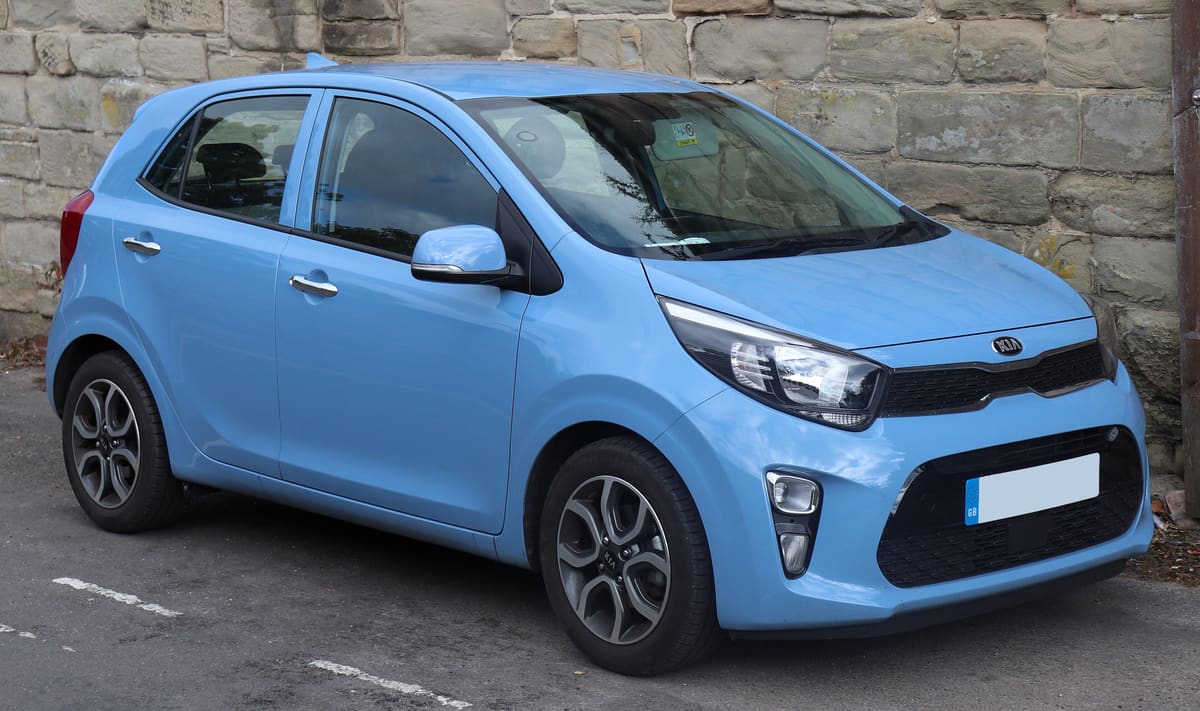
The Kia Picanto is an economical choice for UK drivers, with low running costs across fuel, insurance, and tax. Its compact size contributes to excellent fuel efficiency, while affordable servicing and low depreciation make it a practical option for budget-conscious owners.
Fuel Costs
The Kia Picanto is known for its impressive fuel efficiency, making it an economical choice for daily driving. Depending on the engine variant, the Picanto can achieve between 45 to 60 miles per gallon (mpg). The smaller 1.0-litre engine is particularly fuel-efficient, ideal for urban environments where stop-start driving is common.
With petrol prices fluctuating, the cost of filling up can vary.
Insurance Group
Insurance costs for the Kia Picanto are generally low, making it an attractive option for younger drivers or those looking to keep their insurance premiums down. Most models fall into insurance groups 1 to 5, depending on the specific variant and trim level.
This low insurance grouping is due to the Picanto’s small engine size and good safety ratings. This affordability contributes significantly to the overall running costs of the vehicle.
Tax Band
The Kia Picanto benefits from low road tax costs, particularly for models equipped with smaller engines. Most variants fall into the lower tax bands, with many models being exempt from road tax altogether due to their low CO2 emissions.
For example, the 1.0-litre engine typically emits around 100 grams of CO2 per kilometre, placing it in the lower tax bracket. This aspect further enhances the Picanto’s appeal as a cost-effective city car.
Servicing Intervals
Servicing for the Kia Picanto is straightforward and affordable, with intervals set at every 12,000 miles or annually, whichever comes first. This regular maintenance schedule helps ensure the vehicle remains in good condition and can prevent costly repairs down the line.
Kia also offers a seven-year warranty on new models, which can provide peace of mind for owners. This predictability in servicing costs makes budgeting easier for owners.
Typical Depreciation
Depreciation is a crucial factor to consider when assessing ownership costs. The Kia Picanto tends to hold its value relatively well compared to other vehicles in its class.
The strong reputation for reliability and low running costs contributes to the Picanto’s resale value. Owners can expect to recoup a fair amount of their initial investment when selling or trading in their vehicle, making it a wise choice for those concerned about long-term ownership costs.
Conclusion
Overall, the Kia Picanto presents an appealing package for UK drivers seeking a cost-effective vehicle. With low fuel costs, affordable insurance, minimal road tax, reasonable servicing expenses, and decent resale value, it stands out as a practical choice for both city driving and longer journeys. Its economical nature makes it a strong contender in the competitive small car market.
Kia Picanto recall record
8 recalls have been issued for the Kia Picanto, between 2010 and 2026.
Kia Picanto Possible Under Bonnet Fuel Leak
R/2026/251Issued 24 July 2026
Fuel leakage may occur due to contact between the fuel line and the battery tray cable. For affected cars this may lead to damage of the fuel line and the risk of a fuel leak.
Remedy:Carry out a visual inspection pipe if no damage re-route and secure the pipe. If damaged replace the pipe and re-route.
Affects cars built Sept 2020 to Jul 2023
Kia HECU Fuse Replacement
R/2024/465Issued 5 December 2024
The HECU hydraulic electronic control unit of affected vehicles equipped with Anti-lock Brake Systems ABS and Electronic Stability Control ESC could leak internally and cause an electrical short over time. In extreme cases the HECU could overheat with a possible risk of an under bonnet fire.
Remedy:The recall will replace the fuses in the junction box with a lower rated version.
Affects cars built Dec 2009 to Jan 2011
Kia Picanto ISLA Upgrade
R/2024/367Issued 3 October 2024
The Intelligent Speed Limit Assist (ISLA) system may not function properly due to an incorrect software version of the instrument cluster and the ISLA camera coding partially missing. As a result there may be no audible or visual warning on the dashboard when the speed limit is exceeded. Without this system the vehicle may not meet EU ISA legislation.
Remedy:Update the Cluster software and the front camera ISLA coding.
Affects cars built Apr 2024 to May 2024
Kia Picanto EGR Valve
R/2024/317Issued 23 August 2024
On affected vehicles a short circuit inside the EGR (Exhaust Gas Circulation) valve may occur potentially causing the engine to stall before a warning light is displayed.
Remedy:On the affected vehicles the EGR Valve will be replaced.
Affects cars built Jan 2024 to Feb 2024
4 older recalls not shown.
A recall applies to a build range, not to every car of this model. Check a registration to see whether one specific vehicle has an outstanding recall.
Kia Picanto MOT record
From 187,594 recorded MOT tests, 23.2% failed.
| Registered | Tests | Failed | Median mileage |
|---|---|---|---|
| 2023 | 728 | 6.5% | 13,056 mi |
| 2022 | 10,031 | 8.4% | 14,871 mi |
| 2021 | 10,551 | 9.5% | 19,009 mi |
| 2020 | 8,722 | 10.2% | 23,261 mi |
| 2019 | 17,188 | 11.3% | 26,714 mi |
| 2018 | 16,051 | 12.6% | 32,859 mi |
| 2017 | 13,075 | 15.7% | 37,504 mi |
| 2016 | 12,338 | 21.2% | 41,980 mi |
Most common reasons for failure
- A tyre seriously damaged27.2%
- Tyre tread depth not in accordance with the requirements23.6%
- Brake pipe damaged or excessively corroded20.1%
- A suspension pin, bush or joint excessively worn18.4%
- Brake disc or drum excessively weakened, insecure or fractured10.7%
Figures cover every Kia Picanto tested in the DVSA dataset, not this specific car. Check a registration for the actual history of one vehicle.
Kia Picanto official figures
Median across 26 variants on sale, petrol.
- Combined economy
- 51.9 mpg
- WLTP median across variants
- CO2 emissions
- 122.5 g/km
- Sets the first-year tax rate
Official figures for new cars. Real economy varies with driving, load and conditions.
Frequently asked questions
What are the typical fuel costs for a Kia Picanto?
The Kia Picanto, particularly the 1.0-litre model, offers impressive fuel efficiency, averaging around 55-60 mpg. This means that for a typical UK driver covering 12,000 miles a year, fuel costs can be quite manageable, especially with petrol prices fluctuating.
How often does a Kia Picanto need servicing?
Kia recommends servicing the Picanto every 12 months or 10,000 miles, whichever comes first. Regular maintenance includes oil changes, air filter replacements, and brake inspections, which help keep running costs low and performance optimal.
What is the road tax band for a Kia Picanto?
The Kia Picanto typically falls into the lower tax bands due to its low CO2 emissions. For example, the 2021 model with a 1.0-litre engine is in tax band A, which means it is exempt from road tax, making it a cost-effective choice.
Are there any common repairs needed for the Kia Picanto?
Brake pad replacement is a common maintenance task for the Kia Picanto, especially if you drive in urban areas. Depending on your driving habits, you may need to replace them every 20,000 to 30,000 miles to ensure optimal braking performance.
What insurance group does the Kia Picanto belong to?
The Kia Picanto generally falls into insurance groups 1 to 10, depending on the model and trim level. This makes it an affordable option for insurance, especially for younger drivers or those looking to keep overall running costs down.
How reliable is the Kia Picanto in terms of running costs?
The Kia Picanto is known for its reliability, with many owners reporting minimal issues over several years. Regular checks on components like the battery and tyres can prevent unexpected expenses, contributing to its reputation as a low-cost vehicle to run.
Sources
- DVSA anonymised MOT tests and results (Open Government Licence v3.0)
- VCA new car fuel consumption and emissions data (Open Government Licence v3.0)
- DVSA vehicle safety recalls (Open Government Licence v3.0)