Running costs
Kia Sportage running costs: what UK ownership really costs
Kia Sportage UK running costs: fuel or electric, insurance group, road tax, servicing and depreciation.
Updated 4th September 2026 DVSA data: Across 298,237 recorded MOT tests, 19.4% failed.
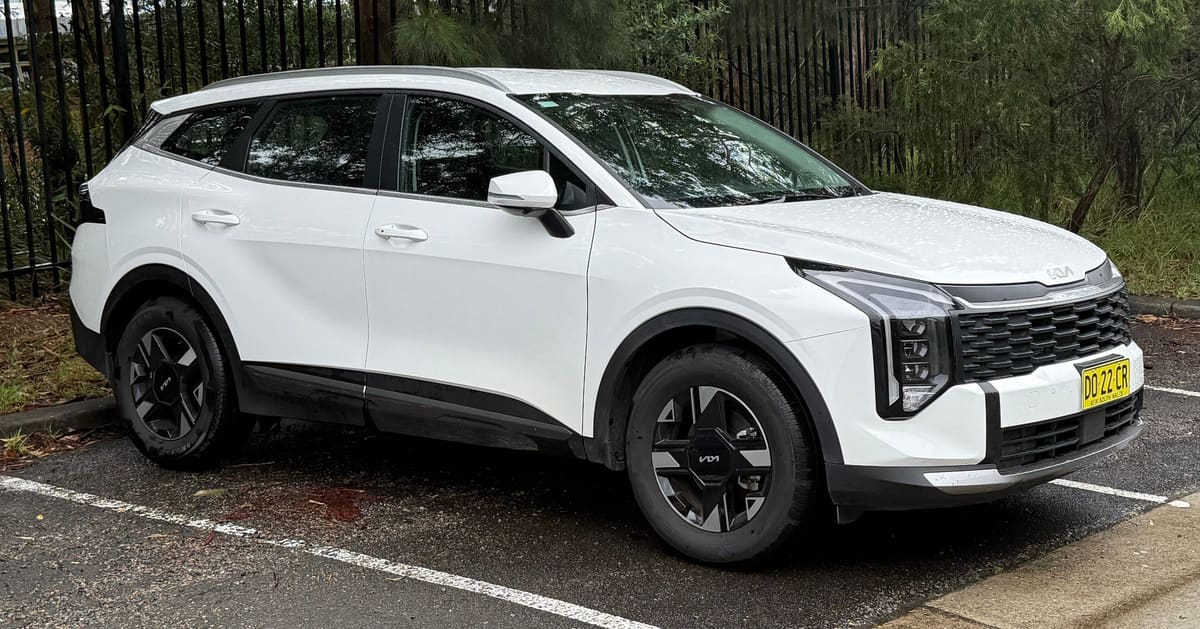
The Kia Sportage offers competitive running costs, making it an appealing choice for UK drivers. Fuel efficiency varies by engine type, with diesel models generally providing better mileage. Insurance groups range from 13 to 26, while road tax bands depend on emissions. Servicing intervals are typically every 12 months or 10,000 miles, and depreciation is moderate, with values holding well over time.
Fuel Costs
Fuel costs for the Kia Sportage can vary significantly depending on the engine choice.
When calculating fuel costs, consider the current fuel prices in the UK, which fluctuate regularly. A higher mpg rating translates to lower fuel expenditure, making diesel models more economical for long-distance driving. Additionally, the hybrid options can reduce fuel costs for urban driving, where electric power can be utilised more frequently.
Insurance Groups
The Kia Sportage falls into various insurance groups, ranging from 13 to 26, depending on the model and specification. Generally, the lower the insurance group, the cheaper the premiums. For instance, entry-level models with smaller engines tend to be in the lower insurance groups, while higher-spec models with more powerful engines are placed in the higher groups.
When selecting a Sportage, it is advisable to check the specific insurance group for the model you are considering. This can help you budget for insurance costs more accurately. Additionally, factors such as your driving history, location, and the level of coverage you choose will also influence your insurance premiums.
Road Tax
Road tax for the Kia Sportage is determined by its CO2 emissions. The model typically falls into several tax bands, with the most efficient versions benefiting from lower rates. For example, models with lower emissions may qualify for tax exemptions or reduced rates, while higher-emission variants will incur higher costs.
As of the latest regulations, road tax for new vehicles is calculated based on emissions, which means that choosing a more eco-friendly engine can lead to significant savings over time. It is essential to check the specific emissions figures for the model you are interested in to get an accurate estimate of annual road tax costs.
Servicing Intervals
Kia recommends servicing the Sportage every 12 months or 10,000 miles, whichever comes first. This regular maintenance schedule helps ensure the vehicle remains in good condition and can prevent more costly repairs down the line.
During a service, essential checks are performed, including oil changes, brake inspections, and tyre assessments. Kia’s servicing costs are generally competitive, and many owners find that sticking to the manufacturer’s schedule helps maintain the vehicle’s warranty. Some owners may choose to perform basic maintenance tasks themselves, such as oil changes, which can further reduce ownership costs.
Depreciation
The Kia Sportage has a reputation for holding its value relatively well compared to some competitors in the SUV market. Depreciation rates can vary based on factors such as model year, mileage, and condition, but on average, owners can expect a moderate depreciation rate over the first few years of ownership.
However, the Sportage’s solid build quality and reliability can help mitigate this loss. When considering a used model, look for one with a good service history, as this can positively impact resale value.
Overall Ownership Costs
When assessing the overall ownership costs of the Kia Sportage, it is essential to factor in fuel, insurance, road tax, servicing, and depreciation. The Sportage is designed to be a practical and economical choice for families and individuals alike.
With competitive fuel efficiency, reasonable insurance premiums, and manageable servicing costs, the Sportage is an attractive option for those looking to keep running costs low. Additionally, its strong resale value can make it a wise investment in the long run, ensuring that you get a good return when it comes time to sell or trade in the vehicle.
Kia Sportage recall record
17 recalls have been issued for the Kia Sportage, between 2003 and 2026.
Kia Cluster Malfunction Recall
R/2026/139Issued 24 April 2026
The instrument cluster screen may respond slowly immediately after starting the vehicle. During this condition activating the turn signal can cause the cluster to reset or the Blind View Monitor (BVM) within the cluster to turn green. The malfunction is caused by PMIC noise induced falsely high temperature sensor readings which trigger the chip protection logic above a certain threshold and lead to performance limitation up to reboot or black screen.
Remedy:Over The Air software update or dealer software update
Affects cars built Jun 2025 to Nov 2025
Kia Sportage Vacuum Pump Recall
R/2024/500Issued 13 January 2025
The vacuum pump drive gear may be damaged by a mechanical failure caused by high acceleration torque during the engine starting phase. If the pump fails an increase of the brake pedal force may be experienced while driving.
Remedy:Complete a software update of the engine ECU. The ECU upgrade reduces the initial load caused by the Mild Hybrid Starter Generator during engine startup (cranking acceleration).
Affects cars built Sept 2022 to Jun 2023
Kia HECU Fuse Replacement
R/2024/465Issued 5 December 2024
The HECU hydraulic electronic control unit of affected vehicles equipped with Anti-lock Brake Systems ABS and Electronic Stability Control ESC could leak internally and cause an electrical short over time. In extreme cases the HECU could overheat with a possible risk of an under bonnet fire.
Remedy:The recall will replace the fuses in the junction box with a lower rated version.
Affects cars built Mar 2010 to Jan 2014
The mesh filter inside the tandem pump may block causing insufficient oil supply and a risk of vacuum pump failure. If the pump fails there will be no vacuum assistance and the possibility of increased braking distance when applying the brake pedal.
R/2023/255Issued 29 September 2023
The mesh filter inside the tandem pump may block causing insufficient oil supply and a risk of vacuum pump failure. If the pump fails there will be no vacuum assistance and the possibility of increased braking distance when applying the brake pedal.�
Remedy:Remove the mesh filter and check the vacuum pump for damage if damaged replace the pump/drive belt.
Affects cars built Oct 2018 to Sept 2020
13 older recalls not shown.
A recall applies to a build range, not to every car of this model. Check a registration to see whether one specific vehicle has an outstanding recall.
Kia Sportage MOT record
From 298,237 recorded MOT tests, 19.4% failed.
| Registered | Tests | Failed | Median mileage |
|---|---|---|---|
| 2023 | 1,672 | 4.9% | 24,216 mi |
| 2022 | 28,754 | 7.7% | 24,964 mi |
| 2021 | 26,402 | 10.9% | 32,449 mi |
| 2020 | 18,659 | 13.3% | 37,611 mi |
| 2019 | 32,489 | 13.8% | 45,200 mi |
| 2018 | 33,272 | 15.0% | 54,582 mi |
| 2017 | 36,130 | 18.2% | 64,792 mi |
| 2016 | 36,368 | 21.1% | 72,686 mi |
Most common reasons for failure
- Tyre tread depth not in accordance with the requirements32.3%
- A suspension pin, bush or joint excessively worn21.1%
- a brake lining or pad worn below 1.5mm20.6%
- A tyre seriously damaged14.5%
- Brake disc or drum excessively weakened, insecure or fractured11.5%
Figures cover every Kia Sportage tested in the DVSA dataset, not this specific car. Check a registration for the actual history of one vehicle.
Kia Sportage official figures
Median across 46 variants on sale, electricity / petrol, petrol, petrol electric.
- Combined economy
- 44.1 mpg
- WLTP median across variants
- CO2 emissions
- 144 g/km
- Sets the first-year tax rate
- Electric range
- 41.5 miles
- Manufacturer WLTP figure
Official figures for new cars. Real economy varies with driving, load and conditions.
Frequently asked questions
How often does a Kia Sportage need servicing?
A Kia Sportage typically requires servicing every 12 months or 10,000 miles, whichever comes first. Regular maintenance includes oil changes, filter replacements, and checks on components like brakes and tyres to ensure optimal performance and safety.
Are there any known issues with the Kia Sportage?
Some Kia Sportage models, particularly those from 2017, have reported issues with the engine, specifically the 1.6-litre GDI engine, which may experience knocking sounds. It's advisable to have a thorough inspection if you're considering a used model from this year.
Sources
- DVSA anonymised MOT tests and results (Open Government Licence v3.0)
- VCA new car fuel consumption and emissions data (Open Government Licence v3.0)
- DVSA vehicle safety recalls (Open Government Licence v3.0)