Common problems
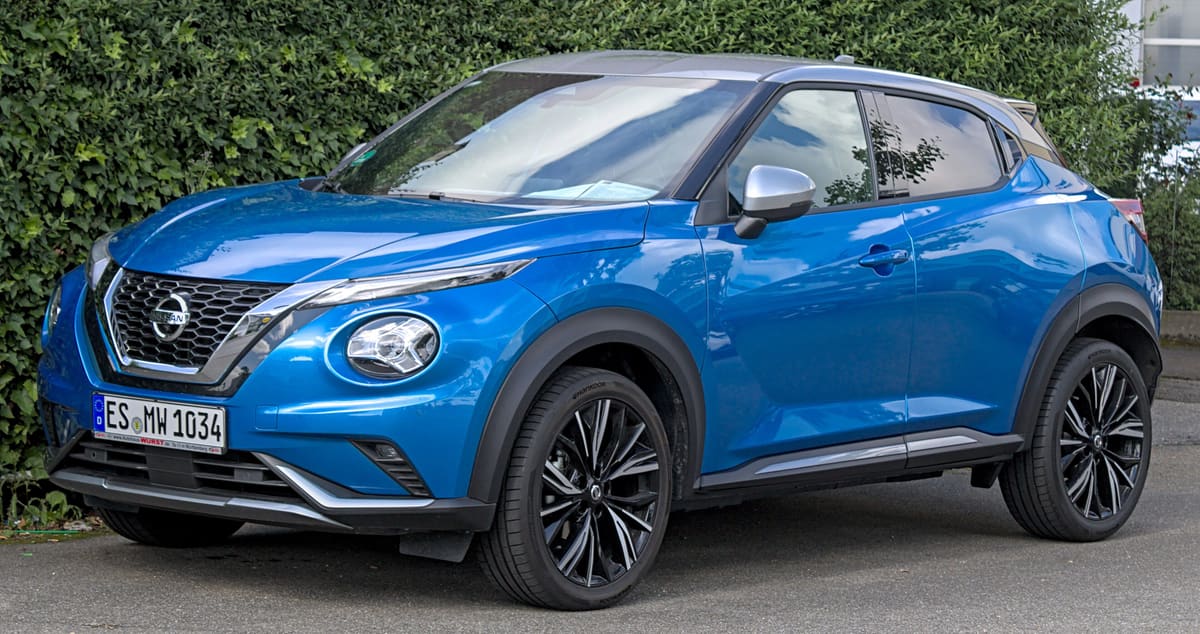
Nissan Juke common problems and reliability issues
Honest rundown of the most common Nissan Juke faults, what to watch for, and how to keep one running well.
Updated 4th September 2026 DVSA data: Across 325,064 recorded MOT tests, 25.5% failed.
TL;DR
The Nissan Juke has several common problems, particularly with its engine, transmission, and electrical systems. Being aware of these issues can help potential buyers make informed decisions. Key concerns include timing chain issues in older models, CVT transmission failures, suspension wear, and electrical faults, along with recalls for safety-related problems.
Engine Issues
The Nissan Juke’s engine, particularly in models from 2010 to 2014, is known for timing chain issues. Owners have reported rattling noises, indicating that the timing chain may be stretched or failing, which can lead to significant engine damage if not addressed. Additionally, some models have experienced oil leaks around the turbocharger, necessitating regular checks for oil levels and leaks to prevent potential engine failures.
Transmission Problems
The Juke features a continuously variable transmission (CVT) in many models, especially from 2011 to 2015. Some owners have reported transmission failures, resulting in a complete loss of power, often linked to overheating or software issues. When considering a used Juke, ensure the transmission has been regularly serviced and check for warning signs during a test drive, including any previous repairs related to the transmission.
Suspension Concerns
Suspension problems are prevalent in the Juke, particularly in models from 2015 to 2018. Owners have reported premature wear of shock absorbers and suspension bushes, leading to a rough ride and poor handling. Regular inspections of suspension components can help identify these issues early. If unusual noises or handling characteristics are noticed, have the suspension checked by a professional.
Electrical Faults
Electrical issues have been reported across various Nissan Juke models, with common problems including faulty window regulators that can prevent windows from operating correctly. While often minor, these issues can be annoying. Some owners have also experienced problems with the infotainment system in earlier models, which may be resolved with software updates. Additionally, the keyless entry system can be sensitive to battery life, causing intermittent failures.
Recalls and Safety Issues
The Nissan Juke has had several recalls, mainly affecting models from 2011 and 2012, with issues including fuel leaks and airbag faults that pose safety risks. It is essential to check if the vehicle has had these recalls addressed before purchasing. The DVSA MOT History website can provide information on any outstanding recalls for specific vehicles, and contacting a Nissan dealer can ensure all necessary repairs have been completed.
What people are asking
Are Nissan Jukes a reliable car?
While the Juke has appeal due to its unique design and compact size, its overall reliability can be concerning. Many owners report mixed experiences, with some praising its performance while others highlight persistent issues, particularly with the transmission and engine.
What year to avoid Nissan Juke?
Buyers should be cautious with Nissan Juke models from 2011 to 2015 due to frequent reports of transmission failures and engine problems. Models from 2010 to 2014 also have notable timing chain issues that can lead to significant repairs.
What is the most reliable year of Nissan Juke?
The most reliable Nissan Juke year models are 2011, 2012, and 2017. These models tend to have fewer reported issues and generally better owner satisfaction ratings compared to other years.
How long do Nissan Jukes typically last?
The estimated lifespan of a Nissan Juke is around 158,000 miles before reaching its upper life expectancy limit. Factors such as regular maintenance, driving habits, and adherence to service schedules can significantly influence the vehicle’s longevity.
What owners say
Reliability
While some appreciate its unique styling and compact size, others have expressed concerns about the long-term durability of its CVT transmission, which they describe as a ticking time bomb. Many suggest that potential buyers should be wary of models that have not had regular maintenance. Owners have mixed feelings about the Juke’s reliability.
Common Faults
Many have reported that the keyless entry system can be particularly problematic, especially if the battery is low, leading to frustrating situations where the vehicle fails to recognise the key fob, necessitating costly repairs. Several users have noted common faults such as timing chain failures and electrical issues.
Value
Buyers in UK communities have flagged that the Juke offers good value for money, especially for those looking for a compact SUV. However, they recommend avoiding certain year models due to the aforementioned issues. Some owners have mentioned that while the initial purchase price is appealing, potential repair costs can diminish the overall value.
What to Avoid
They recommend looking for vehicles with a documented service history and being cautious of any signs of previous transmission repairs. Many users have pointed out that while the Juke has its merits, such as decent fuel economy and a comfortable interior, they advise against models with known transmission issues.
Nissan Juke recall record
15 recalls have been issued for the Nissan Juke, between 2010 and 2025.
Juke (F16) Front Seat Belt
R/2025/118Issued 7 April 2025
On affected vehicles the front seat belt may have been accidentally damaged during the parts preparation for assembly.
Remedy:The retailers will inspect vehicles as identified as potentially affected and replace any affected seat belt assemblies.
Affects cars built Apr 2024 to Sept 2024
Juke (F16) Qashqai (J12) and Leaf (ZE1) VIN Scan
R/2024/234Issued 17 June 2024
On affected vehicles the VIN stored in the vehicle system may not match the actual VIN of the vehicle. This may lead to a situation where a vehicle user can see information related to a different vehicle resulting in a data security breach.
Remedy:Replace the navigation display / control unit and the telematics control unit.
Affects cars built Oct 2019 to Jun 2023
Juke (F16) Right Hand Rear Door
R/2024/179Issued 25 April 2024
On affected vehicles the right-hand rear door welds may be out of specification. The door may rattle and a side impact may increase the risk of deformation. In the extreme impact could cause the hinge to fail and the door to open.
Remedy:Replace the rear right-hand door.
Affects cars built Nov 2023 to Nov 2023
A potential concern affecting the HEVC (Hybrid Electric Vehicle Control) module software has been identified which may cause a module reset of affected vehicles. Simultaneous pressing of brake and accelerator could cause engine stumble or stall.
R/2023/096Issued 19 April 2023
A potential concern affecting the HEVC (Hybrid Electric Vehicle Control) module software has been identified which may cause a module reset of affected vehicles. Simultaneous pressing of brake and accelerator could cause engine stumble or stall.
Remedy:Update the HEVC module software
Affects cars built Jun 2022 to Dec 2022
11 older recalls not shown.
A recall applies to a build range, not to every car of this model. Check a registration to see whether one specific vehicle has an outstanding recall.
Nissan Juke MOT record
From 325,064 recorded MOT tests, 25.5% failed.
| Registered | Tests | Failed | Median mileage |
|---|---|---|---|
| 2023 | 1,668 | 5.2% | 19,242 mi |
| 2022 | 16,752 | 5.3% | 19,398 mi |
| 2021 | 19,148 | 8.6% | 24,848 mi |
| 2020 | 17,312 | 10.3% | 29,636 mi |
| 2019 | 18,633 | 12.9% | 37,946 mi |
| 2018 | 23,499 | 15.2% | 43,459 mi |
| 2017 | 36,812 | 19.8% | 52,877 mi |
| 2016 | 36,307 | 25.7% | 60,951 mi |
Most common reasons for failure
- A suspension pin, bush or joint excessively worn34.3%
- Tyre tread depth not in accordance with the requirements22.6%
- A tyre seriously damaged16.1%
- a brake lining or pad worn below 1.5mm14.3%
- Brake pipe damaged or excessively corroded12.7%
Figures cover every Nissan Juke tested in the DVSA dataset, not this specific car. Check a registration for the actual history of one vehicle.
Nissan Juke official figures
Median across 15 variants on sale, petrol.
- Combined economy
- 46.3 mpg
- WLTP median across variants
- CO2 emissions
- 137 g/km
- Sets the first-year tax rate
Official figures for new cars. Real economy varies with driving, load and conditions.
Frequently asked questions
What are the most common engine problems in the Nissan Juke?
Common engine issues include timing chain problems, particularly in models from 2010 to 2014.
Are there any transmission issues I should be aware of?
CVT transmission failures have been reported, especially in models from 2011 to 2015.
What suspension problems are typical for the Juke?
Suspension issues often arise from worn-out bushes and shock absorbers, mainly in 2015-2018 models.
Does the Nissan Juke have any known electrical faults?
Electrical issues such as faulty window regulators have been noted in various models.
Are there any recalls for the Nissan Juke?
Recalls are issued against individual vehicles rather than a model as a whole, so a model-level yes or no would be guesswork. Enter the registration on Honest Car Check and we check the DVSA record for that specific car. Where DVSA holds no status, confirm it with a franchised dealer using the VIN.
Sources
- DVSA anonymised MOT tests and results (Open Government Licence v3.0)
- VCA new car fuel consumption and emissions data (Open Government Licence v3.0)
- DVSA vehicle safety recalls (Open Government Licence v3.0)