Reliability
Nissan Note reliability: how dependable is it really?
What Nissan Note owners actually report, by year, plus what MOT data tells us about its reliability.
Updated 23rd June 2026 DVSA data: Across 145,933 recorded MOT tests, 28.1% failed.
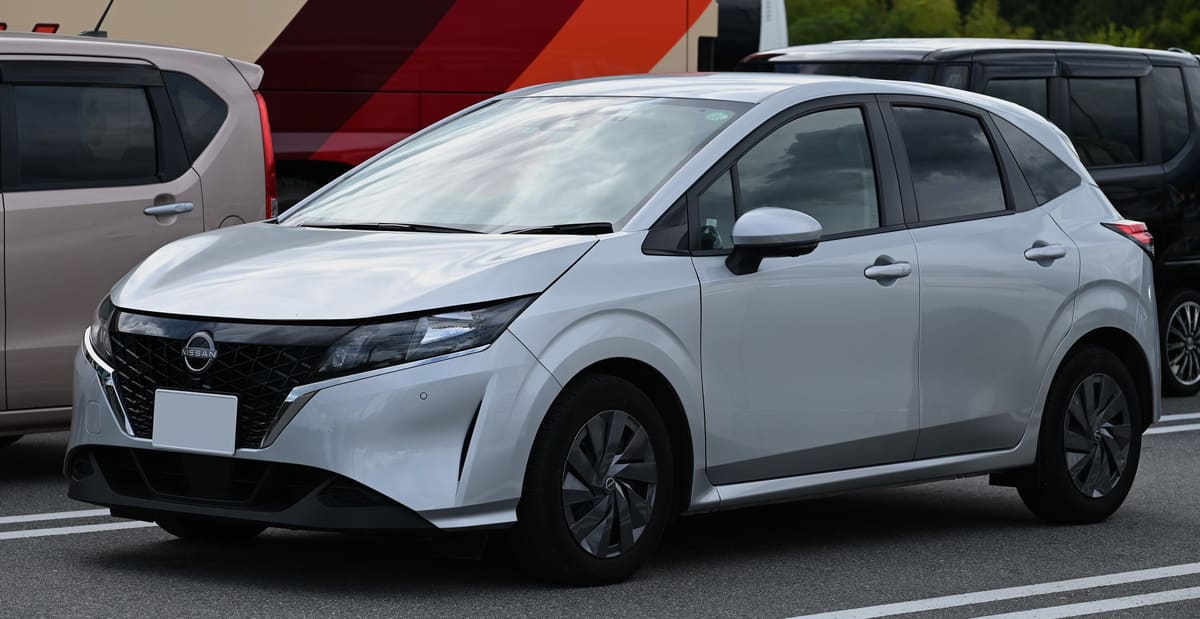
The Nissan Note is generally regarded as a reliable vehicle, with a solid reputation for dependability across its production years. While some models may have specific issues, overall, the Note has proven to be a trustworthy choice for many UK drivers.
Overview of the Nissan Note
The Nissan Note was first introduced in 2005 and has since undergone several updates and redesigns. This compact MPV is known for its practicality, spacious interior, and efficient engines. The Note has been popular among families and city drivers alike, thanks to its versatile layout and ease of use.
The first generation, produced until 2012, was well-received for its reliability and low running costs. The second generation, launched in 2013, continued this trend while also introducing more modern features and improved fuel efficiency.
First Generation (2005-2012)
The first generation of the Nissan Note is often praised for its reliability. Many owners report minimal issues, particularly with the 1.5-litre diesel engine, which is known for its durability. Common problems include minor electrical faults and wear on suspension components, but these are generally easy to manage.
MOT data indicates that the first generation has a good pass rate, reflecting its overall dependability. Regular servicing and maintenance can help keep these vehicles running smoothly for many years. Owners have noted that the Note’s build quality contributes to its longevity, making it a solid choice for budget-conscious buyers.
Second Generation (2013-2017)
The second generation of the Nissan Note saw improvements in technology and design, but it also faced some reliability concerns. Some owners have reported issues with the automatic transmission, particularly in earlier models. Additionally, there have been occasional complaints about the infotainment system and electrical components.
Despite these issues, the second generation maintains a respectable reliability rating. Regular maintenance and prompt attention to any emerging issues can help mitigate potential problems.
Common Issues Across Generations
While the Nissan Note is generally reliable, certain issues have been reported across both generations. Electrical faults, particularly with the central locking system and dashboard displays, are among the most common complaints. Additionally, some owners have experienced problems with the air conditioning system, which can be costly to repair.
It is worth noting that many of these issues can be resolved with routine maintenance and timely repairs. Keeping an eye on the vehicle’s performance and addressing any concerns early can help ensure a long and trouble-free ownership experience.
Owner Feedback and Satisfaction
Owner feedback plays a crucial role in assessing the reliability of the Nissan Note. Many drivers appreciate the spacious interior, comfortable ride, and overall practicality of the vehicle. The Note’s fuel efficiency is also a significant factor, making it an attractive option for those looking to save on running costs.
However, some owners have expressed dissatisfaction with the performance of the infotainment system and the quality of materials used in the interior. While these concerns do not overshadow the vehicle’s reliability, they are worth considering for potential buyers. Overall, the feedback from owners suggests that the Nissan Note is a dependable choice for those seeking a versatile and practical vehicle.
Maintenance and Servicing
Regular maintenance is key to ensuring the reliability of any vehicle, and the Nissan Note is no exception. Following the manufacturer’s recommended service schedule can help prevent common issues and prolong the life of the vehicle.
Many owners find that routine checks of the brakes, suspension, and electrical systems can help identify potential problems before they escalate. Additionally, keeping the vehicle clean and addressing any cosmetic issues can contribute to its overall longevity and reliability.
For those considering purchasing a used Nissan Note, it is advisable to check the service history and ensure that previous owners have adhered to the maintenance schedule. A well-maintained vehicle is likely to provide a more dependable ownership experience.
Conclusion
Overall, the Nissan Note stands out as a reliable choice in the compact MPV segment. While some specific issues have been reported, particularly in the second generation, the vehicle’s overall dependability remains strong. With proper maintenance and attention to common problems, owners can enjoy a practical and trustworthy vehicle for many years.
Nissan Note recall record
10 recalls have been issued for the Nissan Note, between 2006 and 2020.
POSSIBLE REDUCED RETENTION FORCE OF THE REAR DOOR CHILD LOCK SWITCH
R/2020/220Issued 14 August 2020
Possible reduced retention force of the Rear Door Child Lock switch.
Remedy:Fit a countermeasure part into the child lock door switch aperture of all potentially affected vehicles.
Affects cars built Sept 2015 to Aug 2016
ABNORMAL DEPLOYMENT OF PASSENGER AIRBAG
R/2017/226Issued 28 November 2017
The subject vehicles are equipped with front passenger�airbag�inflators which could have been assembled with improperly manufactured propellant This could cause the inflator to rupture and the front passenger�airbag�to deploy abnormally in a crash. This could result in increased risk of injury to the occupant.
Remedy:On affected vehicles replace the airbag with a new assembly.
Affects cars built Aug 2005 to Jul 2013
WHEELS MAY LOCK IF ABS IS ACTIVATED
R/2016/273Issued 19 December 2016
It has been identified that due to a manufacturing issue the Anti-lock Braking System (ABS) Actuator Control Unit may have contamination within it. When in use the contamination particle can migrate within the ABS unit and become trapped in a valve. In this condition the ABS may not operate as per design intent in the worst case when the ABS is activated under certain unusual driving conditions the customer may experience wheel lock and the vehicle�s dynamic behaviour would be adversely affected.
Remedy:Recall all affected vehicles to inspect the ABS control unit and where necessary replace it with new component.
Affects cars built Apr 2016 to Apr 2016
ENGINE MAY STALL AND/OR FAIL TO RESTART
R/2016/008Issued 22 February 2016
The engine ignition coil may not be to the correct specification. The internal electrical components of the coil may short circuit resulting in an engine misfire. In the worst case this short circuit may cause a fuse inside the Power Distribution Module (IPDM) to fail stopping power to the ignition relay. In this condition the engine may stall and prevent the customer from being able to restart the engine.
Remedy:Recall the vehicles that are likely to be affected and replace the ignition coil with new.
Affects cars built Aug 2015 to Jan 2016
6 older recalls not shown.
A recall applies to a build range, not to every car of this model. Check a registration to see whether one specific vehicle has an outstanding recall.
Nissan Note MOT record
From 145,933 recorded MOT tests, 28.1% failed.
| Registered | Tests | Failed | Median mileage |
|---|---|---|---|
| 2017 | 5,134 | 13.9% | 44,117 mi |
| 2016 | 10,644 | 13.6% | 47,002 mi |
| 2015 | 14,851 | 16.2% | 55,906 mi |
| 2014 | 21,621 | 21.1% | 63,664 mi |
| 2013 | 11,698 | 27.8% | 70,658 mi |
| 2012 | 11,420 | 32.4% | 75,215 mi |
| 2011 | 11,539 | 33.4% | 82,834 mi |
| 2010 | 13,390 | 34.2% | 88,835 mi |
Most common reasons for failure
- A suspension pin, bush or joint excessively worn39.3%
- Tyre tread depth not in accordance with the requirements21.0%
- A spring or spring component fractured or seriously weakened17.4%
- A tyre seriously damaged12.9%
- The aim of a headlamp is not within limits laid down in the requirements9.3%
Figures cover every Nissan Note tested in the DVSA dataset, not this specific car. Check a registration for the actual history of one vehicle.
Frequently asked questions
How reliable is the Nissan Note?
The Nissan Note is generally considered to be a reliable car, with many owners reporting few issues over the years. Regular maintenance can help ensure its longevity.
What common problems should I look out for in a used Nissan Note?
Common issues include electrical faults and wear on suspension components. It's advisable to check the service history for any previous repairs.
Are parts for the Nissan Note easy to find?
Yes, parts for the Nissan Note are widely available and relatively affordable. Many local garages can source parts without difficulty.
How does the Nissan Note compare to other small cars in terms of reliability?
The Nissan Note often ranks well against other small cars, with many users praising its dependability. However, individual experiences may vary.
What is the typical lifespan of a Nissan Note?
With proper care and maintenance, a Nissan Note can last well over 100,000 miles. Many owners report their vehicles running smoothly for many years.
Is the Nissan Note good for long-distance driving?
Yes, the Nissan Note is suitable for long-distance driving, offering comfort and decent fuel efficiency. Its reliability makes it a good choice for longer journeys.
How often should I service my Nissan Note?
It is recommended to service your Nissan Note at least once a year or every 10,000 to 12,000 miles, whichever comes first. Regular servicing helps maintain its reliability.
Sources
- DVSA anonymised MOT tests and results (Open Government Licence v3.0)
- DVSA vehicle safety recalls (Open Government Licence v3.0)