MOT failure rates
Nissan X-Trail MOT failure rates: what to expect
What fails on a Nissan X-Trail at MOT, how often, and what each fix typically costs.
Updated 4th September 2026 DVSA data: Across 87,311 recorded MOT tests, 27.0% failed.
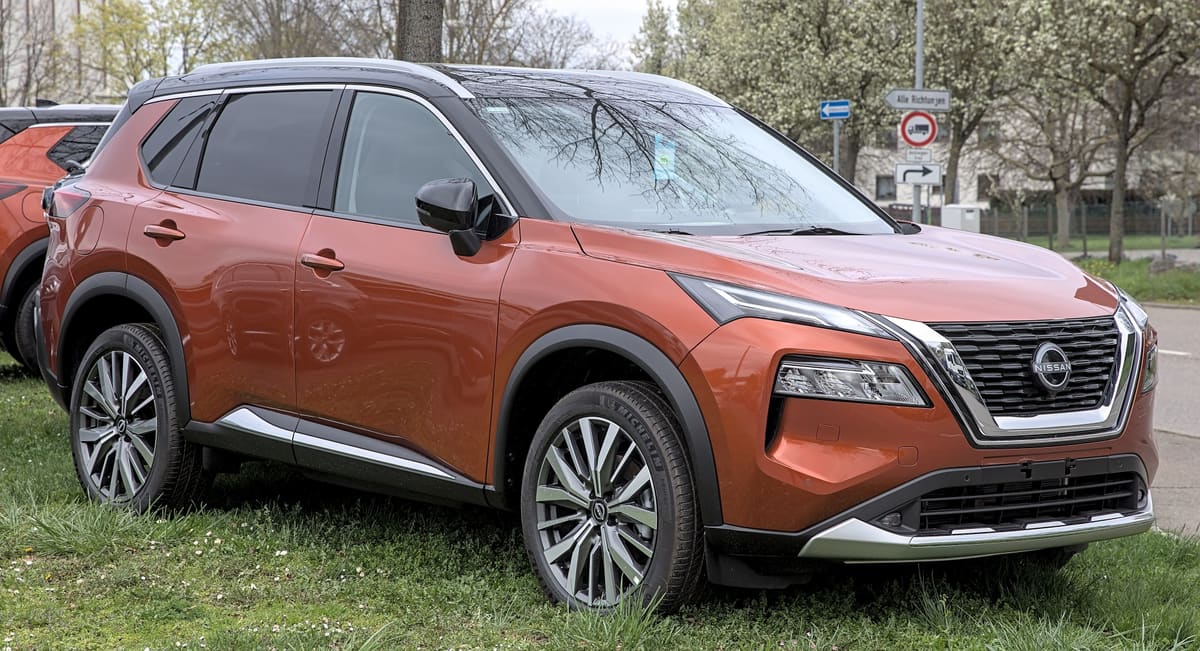
The Nissan X-Trail often faces specific issues during its MOT tests, with common failures including suspension problems, brake wear, and emissions failures. Fixing these issues can vary in cost, but understanding them can help owners prepare for potential expenses.
Suspension Issues
One of the most frequent MOT failures for the Nissan X-Trail is related to its suspension system. This can include worn-out shock absorbers, broken springs, or damaged bushes. Suspension problems can lead to poor handling and increased tyre wear, making them critical to address.
Regular checks can help identify these issues before the MOT, potentially saving on more extensive repairs later.
Brake System Failures
Brakes are vital for safety, and the Nissan X-Trail is not exempt from common brake-related MOT failures. Issues can arise from worn brake pads, damaged discs, or fluid leaks. These problems can significantly affect stopping power and overall vehicle safety.
Regular maintenance and inspections can help ensure the brake system remains in good condition.
Emissions Failures
Emissions failures are increasingly common in modern vehicles, including the Nissan X-Trail. This can be due to a malfunctioning catalytic converter, faulty oxygen sensors, or issues with the exhaust system. Failing the emissions test can lead to costly repairs and is often a reason for MOT failure.
Keeping the exhaust system well-maintained can help prevent these issues from arising.
Tyre Condition
Tyres are another area where the Nissan X-Trail can fail its MOT. Common issues include insufficient tread depth, uneven wear, or damage to the sidewalls. Tyres are crucial for safety and performance, making their condition vital during the MOT.
Regularly checking tyre pressure and tread depth can help avoid MOT failures and ensure safe driving conditions.
Lighting and Electrical Failures
Lighting and electrical systems are essential for safe driving, and failures in these areas are common during MOT tests for the Nissan X-Trail. This can include issues with headlights, brake lights, or indicators not functioning correctly. Such failures can lead to dangerous driving conditions and are easily checked.
Regularly inspecting lights and electrical systems can help ensure all components are functioning correctly before the MOT.
Bodywork and Structural Integrity
Finally, bodywork and structural integrity can also lead to MOT failures for the Nissan X-Trail. This includes rust, corrosion, or damage to the chassis. Such issues can compromise safety and may require significant repairs to pass the MOT.
Addressing bodywork issues early can prevent them from escalating into more significant problems, ensuring the vehicle remains safe and roadworthy.
Understanding these common MOT failures and their associated costs can help Nissan X-Trail owners prepare for their next test. Regular maintenance and inspections can significantly reduce the likelihood of unexpected repairs, keeping the vehicle in top condition.
Nissan X-Trail recall record
19 recalls have been issued for the Nissan X-Trail, between 2003 and 2026.
X-TRAIL T33 Lithium Ion Battery
R/2026/265Issued 10 July 2026
For affected vehicles the lithium-ion battery controller (LBC) on some X-Trail (T33) vehicles may not properly maintain diagnostic robustness. It has been found that these ICs may misdiagnose abnormalities and as a result the system may enter fail-safe mode during driving which restricts motor output and prohibits charging. Under certain conditions a loss of motive power may occur and the vehicle may stop while driving due to the loss of propulsion.
Remedy:Update to the Battery Management Software (BMW)
Affects cars built Dec 2021 to Apr 2026
XTRAIL (T33) Adaptive LED Headlight
R/2025/051Issued 3 March 2025
On affected vehicles the Adaptive LED Headlight (ALH) configuration may be out of specification. In this condition the ALH may not function as intended and alternate between high and low beam mode despite the presence of other vehicles.
Remedy:Update the adaptive LED headlights (ALH) control module software configuration with revised parameters.
Affects cars built Jan 2024 to Oct 2024
XTRAIL (T33) Intelligent Speed Assistance
R/2025/052Issued 3 March 2025
For certain vehicles due to incorrect software calibration the Intelligent Speed Assistance may not behave as intended.
Remedy:Reconfigure the associated control units to address the issue.
Affects cars built Jul 2024 to Sept 2024
A NON-DESSICATED PASSENGER AIRBAG INFLATOR WAS USED DURING PREVIOUS RECALL TO REPLACE THIS COMPONENT
R/2018/100Issued 17 August 2018
In 2013 Nissan announced a Recall campaign to replace Takata SPI front passenger airbag inflators. A non-dessicated passenger airbag inflator was used for the replacement. Although there have been no known incidents associated with inflators of this type Nissan has decided to replace all inflators previously repaired with a non-dessicated inflator to a new dessicated version.
Remedy:Replace the front passenger airbag inflator with a new dessicated type.
Affects cars built Jan 2004 to Nov 2012
15 older recalls not shown.
A recall applies to a build range, not to every car of this model. Check a registration to see whether one specific vehicle has an outstanding recall.
Nissan X-Trail MOT record
From 87,311 recorded MOT tests, 27.0% failed.
| Registered | Tests | Failed | Median mileage |
|---|---|---|---|
| 2022 | 499 | 5.0% | 24,036 mi |
| 2021 | 2,269 | 11.2% | 32,807 mi |
| 2020 | 4,676 | 11.4% | 39,592 mi |
| 2019 | 5,583 | 14.3% | 46,578 mi |
| 2018 | 8,815 | 16.1% | 58,730 mi |
| 2017 | 16,969 | 22.2% | 68,882 mi |
| 2016 | 14,733 | 27.1% | 78,111 mi |
| 2015 | 8,138 | 31.4% | 88,674 mi |
Most common reasons for failure
- A suspension pin, bush or joint excessively worn38.1%
- Tyre tread depth not in accordance with the requirements20.1%
- a brake lining or pad worn below 1.5mm17.3%
- A suspension component excessively damaged or corroded13.7%
- Brake disc or drum excessively weakened, insecure or fractured10.9%
Figures cover every Nissan X-Trail tested in the DVSA dataset, not this specific car. Check a registration for the actual history of one vehicle.
Nissan X-Trail official figures
Median across 6 variants on sale, diesel, petrol.
- CO2 emissions
- 165 g/km
- Sets the first-year tax rate
Diesel variants of this model attract the diesel VED supplement in their first year.
Official figures for new cars. Real economy varies with driving, load and conditions.
Frequently asked questions
What is the Nissan X-Trail MOT requirement in the UK?
In the UK, the Nissan X-Trail must undergo its first MOT test three years after its registration date. After that, it needs to be tested annually.
How can I check the MOT status of a Nissan X-Trail?
You can check the MOT status of a Nissan X-Trail by visiting the official UK government website. You will need the vehicle's registration number to access the information.
What common issues should I look for in a used Nissan X-Trail before its MOT?
Before the MOT, check for common issues such as worn brakes, tyre condition, and any warning lights on the dashboard. It's also wise to inspect the suspension and exhaust system.
What happens if my Nissan X-Trail fails its MOT?
If your Nissan X-Trail fails its MOT, you will receive a list of issues that need to be addressed. You must fix these problems and have the vehicle retested before you can legally drive it.
Can I drive my Nissan X-Trail if the MOT has expired?
You cannot legally drive your Nissan X-Trail if the MOT has expired, unless you are driving it to a pre-booked MOT appointment. Always ensure your vehicle is roadworthy before driving.
How can I prepare my Nissan X-Trail for its MOT?
To prepare your Nissan X-Trail for its MOT, ensure all lights are working, check tyre pressures and tread depth, and top up fluids. A thorough inspection can help identify any potential issues beforehand.
Sources
- DVSA anonymised MOT tests and results (Open Government Licence v3.0)
- VCA new car fuel consumption and emissions data (Open Government Licence v3.0)
- DVSA vehicle safety recalls (Open Government Licence v3.0)