Reliability
Porsche Cayenne reliability: how dependable is it really?
What Porsche Cayenne owners actually report, by year, plus what MOT data tells us about its reliability.
Updated 23rd June 2026 DVSA data: Across 31,307 recorded MOT tests, 12.1% failed.
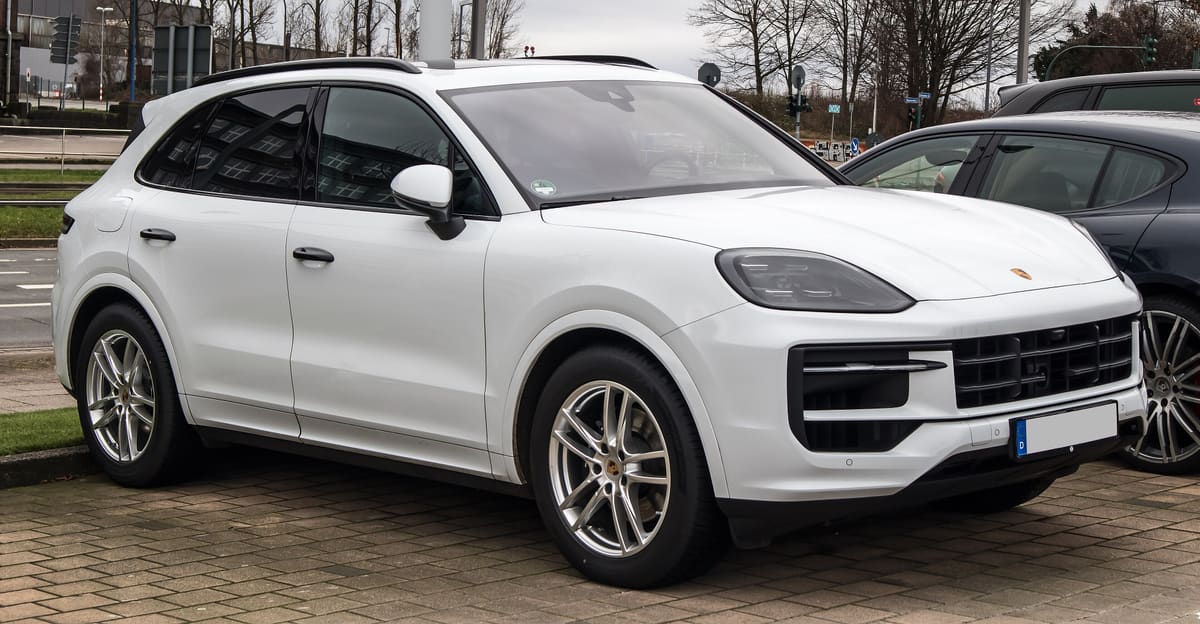
The Porsche Cayenne is generally regarded as a reliable luxury SUV, with varying dependability across its production years. While some models have shown strong performance in terms of reliability, others have faced issues that potential buyers should be aware of. Understanding these nuances can help you decide with confidence.
Early Models (2002-2006)
The first generation of the Porsche Cayenne, produced from 2002 to 2006, laid the groundwork for the model’s reputation. While it introduced a robust platform and powerful engines, early models had some reliability concerns. Issues with the air suspension and electrical systems were noted, which could lead to costly repairs.
The early Cayenne models were also affected by problems with the transmission and engine cooling systems. Owners reported that these issues could sometimes lead to significant downtime and repair costs. Despite these concerns, many owners appreciated the performance and handling, which somewhat mitigated the reliability issues.
Mid-Generation Models (2007-2010)
The second generation, launched in 2007, saw improvements in reliability, with many owners reporting fewer issues compared to the first generation. The introduction of more efficient engines and updated technology contributed to a more dependable driving experience. However, some models still experienced electrical faults and issues with the air conditioning systems.
Owners noted that regular maintenance and attention to detail could significantly enhance the longevity of these vehicles. As with any luxury SUV, the cost of parts and servicing can be higher than average, which is an important consideration for potential buyers.
Recent Models (2011-2017)
The third generation of the Cayenne, produced from 2011 to 2017, marked a significant leap in reliability. Many owners reported fewer mechanical issues and a more refined driving experience. The introduction of advanced technology and improved build quality contributed to a more dependable vehicle overall.
However, some models from this generation did experience problems with the infotainment system and minor electrical issues. The DVSA MOT data suggests that these models generally passed inspections with fewer advisories compared to earlier iterations. Overall, the 2011-2017 Cayenne models are considered a solid choice for buyers looking for reliability in a luxury SUV.
Current Generation (2018-Present)
The latest generation of the Porsche Cayenne, which began production in 2018, continues to build on the reliability improvements of its predecessors. With a focus on performance and technology, these models have received positive feedback from owners regarding their dependability. The engines are more efficient, and the overall build quality has been enhanced.
However, as with any new model, early production years may experience teething problems. Some owners have reported issues with the electronic systems and software updates.
Maintenance and Ownership Costs
When considering the reliability of the Porsche Cayenne, it is essential to factor in maintenance and ownership costs. Regular servicing is crucial to keeping the vehicle in good condition, and luxury brands like Porsche often come with higher service fees. Owners should be prepared for the costs associated with parts and repairs, especially for older models.
Additionally, the Cayenne’s performance-oriented nature means that certain components, such as tyres and brakes, may wear out more quickly than in standard SUVs. Budgeting for these costs can help ensure that ownership remains a positive experience.
Conclusion
Overall, the Porsche Cayenne has developed a reputation for reliability, with significant improvements across its generations. While early models faced some challenges, later versions have generally proven to be dependable vehicles. Prospective buyers should consider the specific model year and its associated issues, along with maintenance costs, to decide with confidence about their purchase.
Porsche Cayenne recall record
26 recalls have been issued for the Porsche Cayenne, between 2004 and 2025.
ASA9 Recall campaign - Check the high-pressure pump connections and if necessary replace the high-pressure pumps including fuel lines
R/2025/432Issued 9 October 2025
On affected vehicles the screw connection of the high-pressure pump was not implemented in accordance with the technical specifications. This can lead to a leak and the possibility of the fuel igniting.
Remedy:Check the screw connections of both high-pressure pumps and replace the high-pressure pumps and fuel lines if necessary.
Affects cars built Apr 2023 to Sept 2025
ARC2 Recall campaign - Re-programming DME control unit
R/2025/060Issued 1 December 2024
The software version of the engine control unit does not correspond to the software version that should be on the vehicle.
Remedy:Review the software version of the engine control unit and if necessary update it to the correct software version.
Affects cars built Mar 2016 to Sept 2017
ARB9 Recall campaign - Re-program DME control unit
R/2025/061Issued 1 December 2024
The software version of the engine control unit does not correspond to the software version that should be on the vehicle.
Remedy:Review the software version of the engine control unit and if necessary update it to the correct software version.
Affects cars built Nov 2012 to Oct 2017
ARC1 Recall campaign - Re-programming DME control unit
R/2025/063Issued 1 December 2024
The software version of the engine control unit does not correspond to the software version that should be on the vehicle.
Remedy:Review the software version of the engine control unit and if necessary update it to the correct software version.
Affects cars built Aug 2014 to Nov 2017
22 older recalls not shown.
A recall applies to a build range, not to every car of this model. Check a registration to see whether one specific vehicle has an outstanding recall.
Porsche Cayenne MOT record
From 31,307 recorded MOT tests, 12.1% failed.
| Registered | Tests | Failed | Median mileage |
|---|---|---|---|
| 2022 | 2,388 | 5.7% | 24,798 mi |
| 2021 | 1,554 | 5.5% | 32,300 mi |
| 2020 | 2,327 | 7.8% | 39,678 mi |
| 2019 | 3,176 | 7.1% | 44,759 mi |
| 2018 | 1,808 | 9.7% | 57,378 mi |
| 2017 | 1,751 | 10.2% | 68,914 mi |
| 2016 | 2,765 | 11.7% | 76,986 mi |
| 2015 | 2,315 | 12.1% | 84,170 mi |
Most common reasons for failure
- Tyre tread depth not in accordance with the requirements35.4%
- A tyre seriously damaged25.0%
- a brake lining or pad worn below 1.5mm17.0%
- A spring or spring component fractured or seriously weakened14.1%
- Brake disc or drum excessively weakened, insecure or fractured8.5%
Figures cover every Porsche Cayenne tested in the DVSA dataset, not this specific car. Check a registration for the actual history of one vehicle.
Porsche Cayenne official figures
Median across 18 variants on sale, electricity / petrol, petrol.
- Combined economy
- 24.1 mpg
- WLTP median across variants
- CO2 emissions
- 266 g/km
- Sets the first-year tax rate
- Electric range
- 27 miles
- Manufacturer WLTP figure
Official figures for new cars. Real economy varies with driving, load and conditions.
Frequently asked questions
How reliable is the Porsche Cayenne compared to other SUVs?
The Porsche Cayenne generally has a good reputation for reliability compared to other luxury SUVs. However, maintenance costs can be higher, so it's important to consider long-term ownership.
What common issues should I look out for in a used Porsche Cayenne?
Common issues include electrical problems, air suspension faults, and engine oil leaks. It's advisable to have a thorough inspection done before purchasing a used model.
Are there any specific model years of the Cayenne that are more reliable?
Some owners report that later models, particularly from 2015 onwards, tend to have fewer issues. Researching owner reviews and reliability ratings for specific years can be helpful.
How often does the Porsche Cayenne require servicing?
The Cayenne typically requires servicing every 12 months or 10,000 miles, whichever comes first. Regular maintenance is crucial for ensuring reliability.
Is the Porsche Cayenne expensive to maintain?
Yes, maintenance and repair costs for the Cayenne can be higher than average due to its luxury status and complex engineering. Budgeting for these costs is important if you consider buying one.
What warranty options are available for a new Porsche Cayenne?
A new Porsche Cayenne usually comes with a three-year warranty, which covers most repairs and defects. Extended warranties may also be available for added peace of mind.
How does the Porsche Cayenne perform in terms of fuel efficiency?
Fuel efficiency can vary depending on the engine choice, but generally, the Cayenne is not as economical as smaller SUVs. It's advisable to check the specific model's fuel consumption figures.
Should I consider a Porsche Cayenne for family use?
The Porsche Cayenne offers ample space and comfort, making it a suitable option for families. However, consider the running costs and reliability factors before making a decision.
Sources
- DVSA anonymised MOT tests and results (Open Government Licence v3.0)
- VCA new car fuel consumption and emissions data (Open Government Licence v3.0)
- DVSA vehicle safety recalls (Open Government Licence v3.0)