Top fixes
Top Renault Megane fixes every owner should know
Cheap, practical fixes for the Renault Megane faults you actually meet, with rough costs and what a garage will charge.
Updated 4th September 2026 DVSA data: Across 93,052 recorded MOT tests, 37.7% failed.
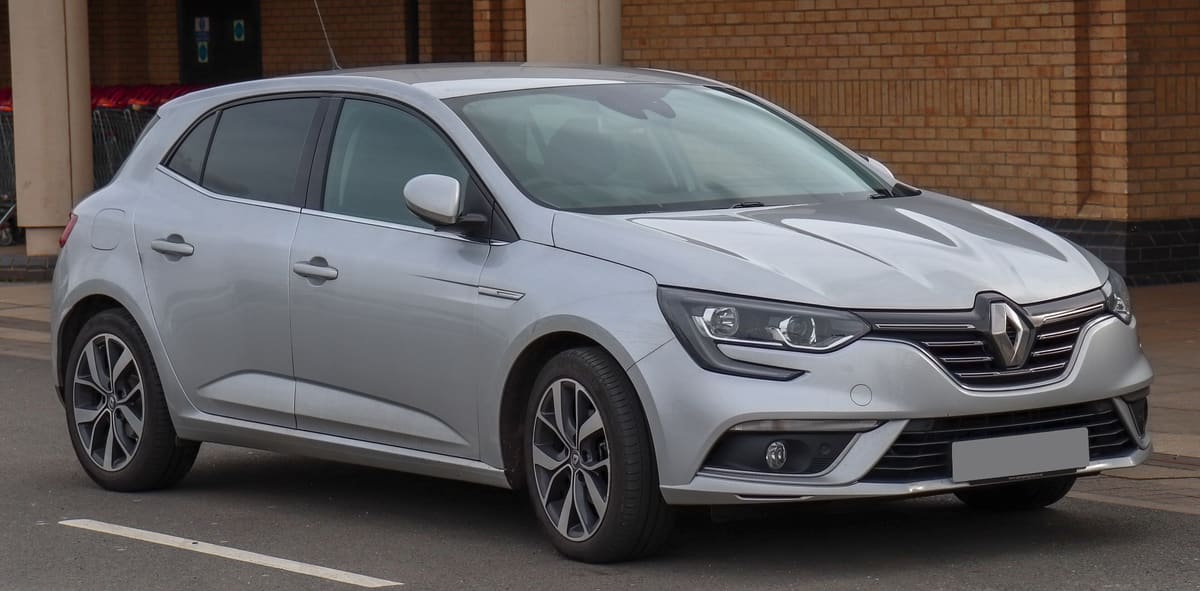
Renault Megane owners often face a handful of recurring issues that can be addressed with practical fixes. Common problems include engine warning lights, suspension noise, electrical glitches, and clutch wear. Many repairs require a garage visit, but some, like replacing bulbs or air filters, can be tackled at home with basic tools and care.
Engine Warning Light and Misfire Symptoms
If your Megane’s engine warning light comes on or the car experiences rough idling and reduced power, it often points to ignition or fuel system issues. Common causes include faulty spark plugs, clogged fuel injectors, or a malfunctioning ignition coil.
Replacing spark plugs is usually straightforward and can be done at home with a socket wrench and a spark plug socket. It involves removing the engine cover, unplugging the ignition coils, and swapping out the old plugs for new ones. Cleaning or replacing fuel injectors is more complex and generally requires specialist equipment, so it is best left to a garage. Ignition coils may also need replacement if misfires persist after changing plugs.
If the warning light stays on after these steps, a diagnostic scan tool is needed to read fault codes and pinpoint the problem, which is a garage job unless you have access to the right equipment.
Suspension Noise and Handling Issues
A common complaint with the Megane is clunking or knocking noises from the front suspension, especially over bumps, alongside vague or loose steering feel. This often indicates worn suspension bushes, ball joints, or anti-roll bar links.
Replacing suspension bushes or ball joints involves lifting the car and removing suspension components, which requires mechanical knowledge and tools like a spring compressor. It is generally recommended to have a garage perform this work due to safety concerns and the need for wheel alignment after.
Anti-roll bar links are simpler to change and can sometimes be done at home with basic spanners and sockets. The process involves removing the old links and fitting new ones to restore handling sharpness and eliminate noise.
Regularly checking suspension components for wear and addressing issues early can prevent more costly repairs and maintain safe driving behaviour.
Electrical Problems and Central Locking Faults
Electrical gremlins such as malfunctioning central locking, erratic dashboard lights, or window switch failures are not uncommon in the Megane. These issues often stem from faulty door lock actuators, blown fuses, or worn wiring connectors.
Replacing a door lock actuator requires removing the door trim panel, disconnecting the old actuator, and fitting a new one. This is a moderately challenging DIY job if you have patience and the correct tools, including trim removal tools to avoid damage.
Checking and replacing blown fuses is straightforward and can be done at home by locating the fuse box and swapping out the faulty fuse for a new one of the same rating. Inspecting wiring connectors for corrosion or looseness may require some disassembly but is manageable for a competent DIYer.
If electrical faults persist, professional diagnostic equipment can identify deeper wiring or control module faults, which is a garage job.
Clutch Wear and Gearbox Problems
Owners of manual Meganes may notice clutch slipping, difficulty changing gears, or a spongy clutch pedal. These symptoms usually indicate clutch wear or hydraulic system issues such as a failing master or slave cylinder.
Clutch replacement is a labour-intensive job involving removal of the gearbox and is best left to a garage. It requires specialised tools and expertise to ensure correct installation and adjustment.
If the clutch pedal feels soft or the clutch doesn’t disengage properly, bleeding the hydraulic system or replacing the master or slave cylinder can sometimes restore normal operation. This is a moderately difficult DIY job if you have the right tools and knowledge, but many prefer a garage for this to avoid air in the system.
Regular clutch maintenance and avoiding riding the clutch can extend its life and reduce the likelihood of expensive repairs.
Lighting and Indicator Failures
Burnt-out bulbs or flickering indicators are common minor issues on the Megane. These usually result from worn bulbs, faulty bulb holders, or poor electrical connections.
Replacing bulbs is a simple DIY task. Access to headlight or rear light clusters varies by model but generally involves removing a few screws or clips. Always handle bulbs with clean gloves to avoid oil contamination, which can shorten bulb life.
If indicators flicker or fail intermittently, checking the bulb holders for corrosion or loose connections is advisable. Cleaning contacts or replacing faulty holders can resolve the issue.
For persistent lighting faults, a garage can test the electrical system and replace relays or wiring as needed.
Air Conditioning and Heating Problems
Some Megane owners experience weak air conditioning or heating, which can be caused by low refrigerant levels, clogged cabin filters, or faulty blower motors.
Recharging the air conditioning system with refrigerant is a garage job due to the need for specialist equipment and handling of refrigerants. However, replacing the cabin air filter is a simple DIY task, usually done by removing the glovebox or accessing a panel under the dashboard.
If the blower motor is noisy or not working, replacement involves removing the dashboard panel and disconnecting the motor. This is moderately difficult and may require professional assistance.
Regular servicing of the air conditioning system and timely replacement of filters maintain comfort and system efficiency.
Renault Megane recall record
31 recalls have been issued for the Renault Megane, between 1997 and 2026.
Error in Handbook for Operation of Window Lock
R/2026/103Issued 12 March 2026
Amendment to the Owners Handbook – Correction of an error in the operating instructions in paragraph 3.22 relating to the operation of the window lifter: incorrect description of the rear door locking procedure
Remedy:Registered keeper will be sent a corrected page
Affects cars built Apr 2016 to Oct 2016
Risk of parking brake actuator failing
R/2025/377Issued 9 September 2025
For certain vehicles a concern involving the electric traction reducer parking brake mechanism actuator or gearbox engagement actuator within the transmission may result in the parking brake mechanism actuator no longer correctly positioning the locking pawl in the “P lock”.
Remedy:Replacement of the electric traction reducer parking brake mechanism actuator or gearbox Engagement Actuator.
Affects cars built Apr 2024 to May 2025
THERE IS A POTENTIAL FOR THE INTERNAL AGGRESSION IN THE FUEL HOSE CAUSING A FUEL LEAK
R/2020/189Issued 30 June 2020
There is a potential for the internal aggression in the fuel hose causing a fuel leak.
Remedy:Replace the fuel supple pipe
Affects cars built Sept 2018 to May 2019
THE SOLENOID VALVE DOES NOT SWITCH TO THE HIGH OIL PRESSURE POSITION WHEN REQUIRED
R/2019/300Issued 17 September 2019
The oil pressure solenoid valve may not switch correctly.
Remedy:Check the solenoid and modify or replace if required
Affects cars built Mar 2018 to May 2019
27 older recalls not shown.
A recall applies to a build range, not to every car of this model. Check a registration to see whether one specific vehicle has an outstanding recall.
Renault Megane MOT record
From 93,052 recorded MOT tests, 37.7% failed.
| Registered | Tests | Failed | Median mileage |
|---|---|---|---|
| 2022 | 1,286 | 15.5% | 22,234 mi |
| 2021 | 762 | 12.7% | 35,613 mi |
| 2020 | 1,013 | 16.2% | 40,014 mi |
| 2019 | 2,456 | 19.1% | 43,018 mi |
| 2018 | 1,928 | 20.3% | 54,517 mi |
| 2017 | 5,091 | 24.3% | 65,683 mi |
| 2016 | 5,027 | 27.4% | 69,855 mi |
| 2015 | 6,220 | 36.6% | 83,944 mi |
Most common reasons for failure
- A suspension pin, bush or joint excessively worn26.8%
- Tyre tread depth not in accordance with the requirements24.1%
- Brake disc or drum excessively weakened, insecure or fractured18.4%
- A spring or spring component fractured or seriously weakened17.4%
- A tyre seriously damaged13.2%
Figures cover every Renault Megane tested in the DVSA dataset, not this specific car. Check a registration for the actual history of one vehicle.
Renault Megane official figures
Median across 18 variants on sale, electricity.
- Electric range
- 280 miles
- Manufacturer WLTP figure
Official figures for new cars. Real economy varies with driving, load and conditions.
Frequently asked questions
What are common faults in the Renault Megane?
Common faults include electrical issues, faulty EGR valves, and worn suspension components.
Can I fix these issues myself?
Many issues can be DIY fixes, but some may require professional help.
Are these fixes temporary or permanent?
Some fixes are temporary patches while others can be permanent repairs.
Sources
- DVSA anonymised MOT tests and results (Open Government Licence v3.0)
- VCA new car fuel consumption and emissions data (Open Government Licence v3.0)
- DVSA vehicle safety recalls (Open Government Licence v3.0)