Top fixes
Top Suzuki Vitara fixes every owner should know
Cheap, practical fixes for the Suzuki Vitara faults you actually meet, with rough costs and what a garage will charge.
Updated 4th September 2026 DVSA data: Across 69,735 recorded MOT tests, 10.0% failed.
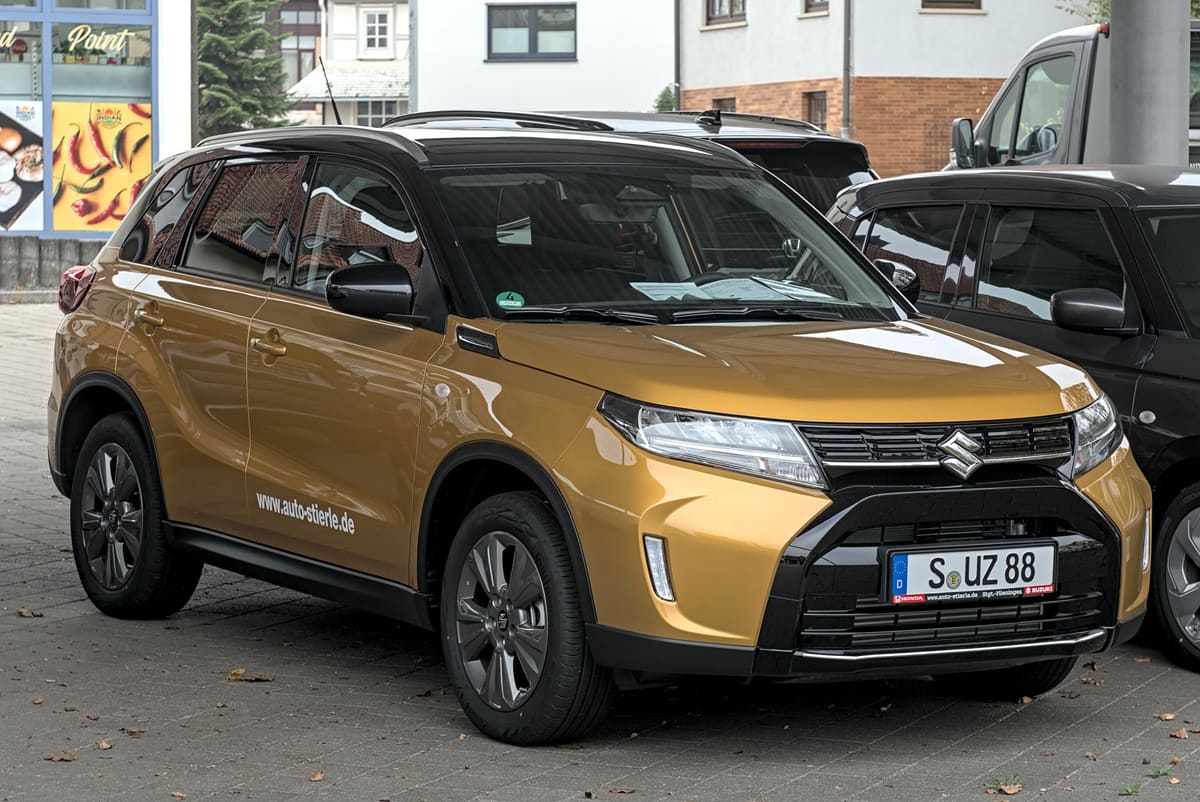
The Suzuki Vitara is generally a reliable compact SUV, but like any vehicle, it has common issues that can be fixed with practical approaches. Typical problems include clutch wear, suspension noise, electrical glitches, and occasional engine warning lights. Many fixes require a garage visit, but some can be tackled at home with basic tools and mechanical knowledge.
Clutch Wear and Replacement
Clutch problems in the Suzuki Vitara often show as difficulty changing gears, a spongy or stiff clutch pedal, or a burning smell. The likely cause is clutch plate wear or hydraulic system issues. Over time, the clutch disc wears down, reducing its grip and causing slippage.
Fixing this involves inspecting the clutch assembly, replacing the worn clutch plate, pressure plate, and sometimes the release bearing. The hydraulic system should also be checked for leaks or air in the lines. This is a labour-intensive job requiring the removal of the gearbox, so it is best left to a professional garage. DIY clutch replacement is possible for experienced enthusiasts with the right tools and space but is not recommended for most owners.
Suspension Noise and Wear
If your Vitara develops knocking or creaking noises over bumps or during cornering, worn suspension components are often the cause. Common culprits include worn shock absorbers, bushings, or ball joints. These parts degrade over time due to road conditions and mileage.
Repair involves identifying the noisy component through inspection and test drives, then replacing the faulty parts. Shock absorbers and bushings can sometimes be replaced by a competent DIYer with a jack and basic tools, but ball joints and more complex suspension parts usually require specialist equipment and expertise. A garage can also perform wheel alignment after suspension repairs to ensure proper handling.
Electrical Glitches and Warning Lights
Owners of the Vitara may notice intermittent electrical issues such as dashboard warning lights flickering, central locking faults, or problems with electric windows. These symptoms often stem from loose wiring connections, faulty sensors, or ageing control modules.
The repair process starts with a diagnostic scan to read fault codes, followed by checking and securing wiring harnesses and connectors. Replacing faulty sensors or modules may be necessary. While some electrical checks and minor repairs like tightening connectors can be done at home, advanced diagnostics and module replacement typically require garage equipment and expertise.
Engine Warning Light and Emissions Issues
An illuminated engine warning light on the Vitara’s dashboard can indicate various issues, commonly related to the emissions system. Causes include a faulty oxygen sensor, a loose or damaged fuel filler cap, or problems with the catalytic converter.
Fixing this involves scanning the car’s onboard computer for error codes, then addressing the specific fault. Replacing an oxygen sensor or tightening the fuel cap are straightforward tasks that many owners can manage themselves. However, catalytic converter issues require professional assessment and repair due to the complexity and cost involved. Always clear the fault codes after repair to confirm the issue is resolved.
Brake Wear and Maintenance
Brake wear is a common maintenance item on the Suzuki Vitara, with symptoms such as squealing noises, reduced braking performance, or a spongy brake pedal. The likely causes are worn brake pads, discs, or air in the brake lines.
Replacing brake pads and discs is a routine job that many DIYers can perform with the correct tools and safety precautions. Bleeding the brake system to remove air requires a helper or a brake bleeding kit. If you are unsure or notice persistent braking issues, a garage should inspect the system for potential hydraulic faults or caliper problems.
Cooling System and Overheating
Some Vitara owners report overheating or coolant leaks, often caused by a failing thermostat, radiator leaks, or a worn water pump. Symptoms include engine temperature rising above normal, coolant puddles under the car, or heater malfunction.
Repair involves pressure testing the cooling system to locate leaks, replacing faulty components, and refilling with the correct coolant mix. While changing a thermostat or radiator hose can be a DIY job for those comfortable with engine work, water pump replacement is more involved and usually requires a garage. Regular coolant checks and timely repairs help prevent costly engine damage.
Suzuki Vitara recall record
11 recalls have been issued for the Suzuki Vitara, between 1998 and 2025.
Canister Replacement
R/2025/127Issued 16 April 2025
On affected vehicles the EVAP Carbon canister should be filled with activated carbon however an air gap may develop on the inside during use which may degrade its performance. There is a risk that fuel evaporation gas will leak into the atmosphere resulting in non-compliance with regulations.
Remedy:Replace the EVAP Carbon cannister.
Affects cars built Sept 2019 to Jan 2020
Left Rear Brake Pipe Inspection
R/2024/032Issued 14 February 2024
On affected vehicles there is a possibility that the left rear brake pipe was damaged during the tightening process.
Remedy:Check the left rear brake pipe and replace if damaged.
Affects cars built Sept 2023 to Oct 2023
Some vehicles have an inappropriate design and material on check valve of vacuum pump
R/2022/267Issued 1 December 2022
Some vehicles have an inappropriate design and material on the check valve of brake vacuum pump.
Remedy:Replace the vacuum pump check valve.
Affects cars built Sept 2018 to May 2019
VEHICLE EMISSION OUTPUTS MAY NOT BE CORRECT
R/2021/059Issued 26 February 2021
Vehicle emission outputs may not be correct.
Remedy:Software upgrade to be carried out
Affects cars built Feb 2015 to Sept 2016
7 older recalls not shown.
A recall applies to a build range, not to every car of this model. Check a registration to see whether one specific vehicle has an outstanding recall.
Suzuki Vitara MOT record
From 69,735 recorded MOT tests, 10.0% failed.
| Registered | Tests | Failed | Median mileage |
|---|---|---|---|
| 2023 | 283 | 3.2% | 17,691 mi |
| 2022 | 6,053 | 4.6% | 21,145 mi |
| 2021 | 6,183 | 4.1% | 28,008 mi |
| 2020 | 5,093 | 6.1% | 33,693 mi |
| 2019 | 12,568 | 8.1% | 39,974 mi |
| 2018 | 11,872 | 11.1% | 48,398 mi |
| 2017 | 11,304 | 12.6% | 55,824 mi |
| 2016 | 10,837 | 14.1% | 64,022 mi |
Most common reasons for failure
- Tyre tread depth not in accordance with the requirements46.7%
- a brake lining or pad worn below 1.5mm17.1%
- A tyre seriously damaged15.6%
- Brake disc or drum excessively weakened, insecure or fractured11.0%
- Brake pipe damaged or excessively corroded9.5%
Figures cover every Suzuki Vitara tested in the DVSA dataset, not this specific car. Check a registration for the actual history of one vehicle.
Suzuki Vitara official figures
Median across 12 variants on sale, petrol electric.
- Combined economy
- 52.3 mpg
- WLTP median across variants
- CO2 emissions
- 128 g/km
- Sets the first-year tax rate
Official figures for new cars. Real economy varies with driving, load and conditions.
Frequently asked questions
What are common faults with the Suzuki Vitara?
Common faults include rust issues, electrical problems, and suspension wear.
Can I fix these issues myself?
Many issues are DIY-friendly, but some may require professional help.
Are these fixes temporary or permanent?
Some fixes are temporary patches, while others provide a permanent solution.
Sources
- DVSA anonymised MOT tests and results (Open Government Licence v3.0)
- VCA new car fuel consumption and emissions data (Open Government Licence v3.0)
- DVSA vehicle safety recalls (Open Government Licence v3.0)