Buying guide
Buying a used Tesla Model 3: what to check before you hand over cash
A checklist for inspecting a used Tesla Model 3. Engine, gearbox, electrics, paperwork, and what a Honest Car Check report tells you.
Updated 22nd June 2026 DVSA data: Across 86,416 recorded MOT tests, 14.2% failed.
TL;DR
When buying a used Tesla Model 3, check the V5C and service history, inspect for bodywork damage, test the battery’s cold-start performance, ensure all electrics function properly, and review the MOT history for past failures. These checks will help ensure a wise investment.
Paperwork
Start with the V5C registration document. Ensure the seller’s details match and that the document is genuine. Next, review the service history. A well-maintained Tesla should have regular service records, ideally from a Tesla-approved service centre. Look for any discrepancies in the service history that might indicate neglect or improper maintenance.
Bodywork
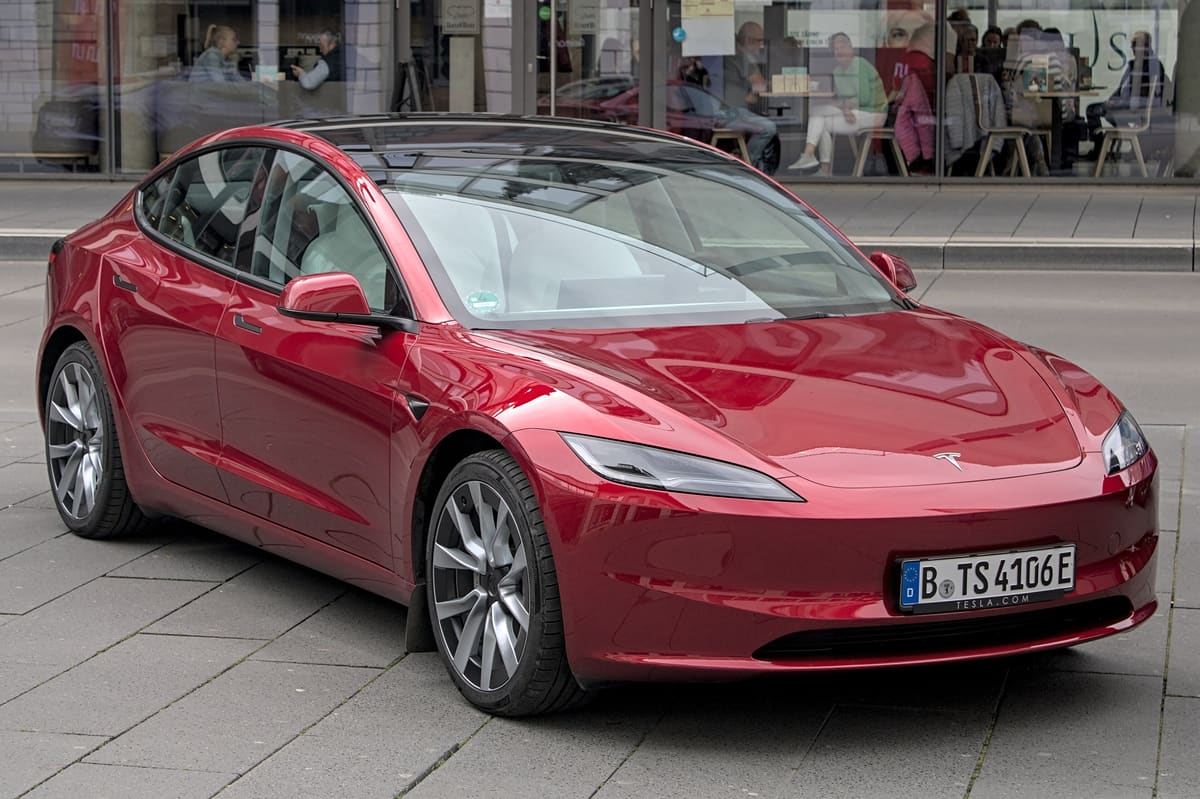
Inspect the bodywork for any signs of damage or poor repairs. Look for dents, scratches, and mismatched paint. Pay special attention to the panel gaps, which should be even. This can indicate if the car has been in an accident. Owners have reported issues with paint quality, such as chipping and fading, especially on older models. It’s wise to check for these details closely.
Engine Cold-Start
Although Tesla Model 3 does not have a traditional engine, check the battery’s cold-start performance. When you turn on the vehicle, it should respond immediately without any issues. Look for any warning lights on the dashboard. Owners have noted that the battery performance can vary significantly in colder weather, so be sure to test the vehicle in various conditions if possible.
Test Drive Checklist
During the test drive, pay attention to how the car accelerates and brakes. It should feel smooth and responsive. Listen for any unusual noises, such as rattles or squeaks. Test all driving modes to ensure everything operates as it should. Some drivers have mentioned that the regenerative braking feature can feel different, so be sure to test this out to see if it meets your driving style.
Gearbox
The Tesla Model 3 uses a single-speed transmission. Check for smooth gear transitions during your test drive. There should be no jerking or hesitation when accelerating. Owners have reported that the drive experience is generally seamless, but any irregularities should be noted.
Electrics
Check all electrical systems, including the infotainment system, lights, and charging ports. Ensure that the touchscreen responds well and that navigation and other features are functioning correctly. Look for any software updates that may be pending. Many owners have highlighted that software issues can sometimes affect performance, so ensure everything is up to date.
MOT History
Review the MOT history for any past failures or advisories. This can give you insight into potential issues with the vehicle. Pay attention to recurring problems, as they may indicate underlying faults. Some owners have mentioned that certain models have had common issues flagged during MOT tests, so being aware of these can help you make a more a confident decision. Use Honest Car Check to verify mileage and MOT history. This will help ensure you are making a wise investment in a used Tesla Model 3.
What people are asking
Why is everybody selling their Teslas?
Some owners report selling their Teslas due to changing needs, such as moving to a different vehicle type or financial considerations. Others have cited the desire for newer models or different electric vehicles that may better suit their lifestyle.
What are the biggest problems with Tesla?
Common issues reported include battery performance in cold weather, minor build quality problems, and software glitches. Owners have also noted that some features can be inconsistent, particularly with updates that may introduce new bugs.
Is Tesla 3 expensive to maintain?
While electric vehicles generally have lower maintenance costs, some owners find that certain repairs can be costly, especially if not covered by warranty. Routine maintenance is usually inexpensive, but unexpected repairs can add up.
What year to stay away from Tesla Model 3?
Buyers should be cautious with the 2021 model year due to reports of reliability issues, particularly with the drive unit. Owners have flagged that some 2021 models have experienced significant performance problems, making them less desirable.
What owners say
Reliability
Reliability ratings from various surveys indicate a mixed bag, with some owners reporting trouble-free experiences while others faced significant repairs. Owners frequently discuss the reliability of the Model 3, noting that while many vehicles perform exceptionally well, some have experienced issues with the drive unit, particularly in the 2021 models.
Common Faults
Some owners have also mentioned problems with the infotainment system, where software glitches can lead to unexpected resets or slow response times. These issues seem to vary by model year, with older models generally being more reliable. In discussions, buyers have highlighted common faults such as battery performance issues, particularly in colder climates.
Value
However, they advise potential buyers to be cautious and ensure they are purchasing a well-maintained vehicle, as some cheaper options may have hidden issues. Many users have commented on the depreciation of the Model 3, noting that prices have dropped significantly, making them more accessible.
What to Avoid
Buyers in UK communities have flagged that it’s wise to avoid vehicles with a history of repeated repairs or those that have been involved in accidents. Additionally, some owners recommend steering clear of models that have undergone extensive modifications, as these can lead to unforeseen complications down the line.
Tesla Model 3 recall record
11 recalls have been issued for the Tesla Model 3, between 2020 and 2025.
Loss of Rearview Camera Display Recall
R/2025/049Issued 28 March 2025
On a small percentage of affected vehicles upon vehicle power up the car computer board may experience a short resulting in the loss of rear view camera functionality .
Remedy:Over the air software update or Car Computer replacement if necessary.
Affects cars built Jan 2024 to Sept 2024
Update Vehicle Software To Rectify EPAS Functionality
R/2025/104Issued 14 March 2025
On affected vehicles operating with a software release prior to 2023.38.4 an overvoltage breakdown in the steering rack may overstress motor drive components on the printed circuit board. If the overstress condition occurs while the vehicle is driving steering assistance will not be affected and a visual alert will illuminate. Once the vehicle speed comes to a standstill a loss of steering assistance may occur and loss of steering assistance will persist when the vehicle is driven again. Manual steering without steering assistance remains available to the driver.
Remedy:Install modified software via an Over the Air (OTA) wireless update.
Affects cars built Jan 2022 to Aug 2023
Update vehicle software to correct TPMS behaviour
R/2025/002Issued 31 December 2024
On affected vehicles upon detection of a malfunction with the tyre pressure monitoring system (TPMS) the TPMS tell tale does not persist between drive cycles where the vehicle is off or asleep between the drive cycles. Therefore the driver may not be adequately warned of potential under-inflation of the tyres increasing the risk of a collision.
Remedy:Install modified software via an Over the Air (OTA) wireless update.
Affects cars built May 2019 to Oct 2024
IN CERTAIN CONDITIONS THE USER INTERFACE (UI ) ON AFFECTED VEHICLES DISPLAYS VEHICLE SPEED BUT NOT A UNIT OF SPEED(I.E MPH OR KM/H)
R/2022/120Issued 20 April 2022
In certain conditions the user interface (�UI�) on affected vehicles displays vehicle speed but not a unit of speed (i.e. mph or km/h).
Remedy:Tesla will deploy an over the air firmware update that will reintroduce the display of the speed unit when using Track Mode.
Affects cars built Feb 2018 to Apr 2022
7 older recalls not shown.
A recall applies to a build range, not to every car of this model. Check a registration to see whether one specific vehicle has an outstanding recall.
Tesla Model 3 MOT record
From 86,416 recorded MOT tests, 14.2% failed.
| Registered | Tests | Failed | Median mileage |
|---|---|---|---|
| 2023 | 705 | 7.5% | 45,717 mi |
| 2022 | 18,864 | 13.4% | 36,863 mi |
| 2021 | 34,740 | 12.9% | 44,808 mi |
| 2020 | 21,902 | 16.5% | 51,977 mi |
| 2019 | 10,205 | 16.2% | 56,340 mi |
Most common reasons for failure
- Tyre tread depth not in accordance with the requirements44.5%
- A suspension pin, bush or joint excessively worn17.4%
- A tyre seriously damaged16.5%
- A tyre cords visible or damaged12.9%
- Brake disc or drum excessively weakened, insecure or fractured8.7%
Figures cover every Tesla Model 3 tested in the DVSA dataset, not this specific car. Check a registration for the actual history of one vehicle.
Tesla Model 3 official figures
Median across 10 variants on sale, electricity.
- Electric range
- 394.5 miles
- Manufacturer WLTP figure
Official figures for new cars. Real economy varies with driving, load and conditions.
Frequently asked questions
What paperwork should I check?
Always check the V5C and service history for authenticity and completeness.
How can I tell if the battery is in good condition?
Look for any signs of battery degradation and check the range reported by the owner.
What should I listen for during a test drive?
Listen for unusual noises and ensure the car accelerates smoothly.
Is the Model 3 reliable?
Generally, the Model 3 has a good reliability rating, but check owner reviews for specific issues.
How do I verify the mileage?
Use an Honest Car Check report to confirm the mileage against MOT records.
Why is everybody selling their Teslas?
Some owners report selling their Teslas due to changing needs, such as moving to a different vehicle type or financial considerations.
What are the biggest problems with Tesla?
Common issues reported include battery performance in cold weather, minor build quality problems, and software glitches.
Is Tesla 3 expensive to maintain?
While electric vehicles generally have lower maintenance costs, some owners find that certain repairs can be costly, especially if not covered by warranty.
What year to stay away from Tesla Model 3?
Buyers should be cautious with the 2021 model year due to reports of reliability issues, particularly with the drive unit.
Sources
- DVSA anonymised MOT tests and results (Open Government Licence v3.0)
- VCA new car fuel consumption and emissions data (Open Government Licence v3.0)
- DVSA vehicle safety recalls (Open Government Licence v3.0)