Top fixes
Top Toyota Aygo fixes every owner should know
Cheap, practical fixes for the Toyota Aygo faults you actually meet, with rough costs and what a garage will charge.
Updated 4th September 2026 DVSA data: Across 253,974 recorded MOT tests, 19.3% failed.
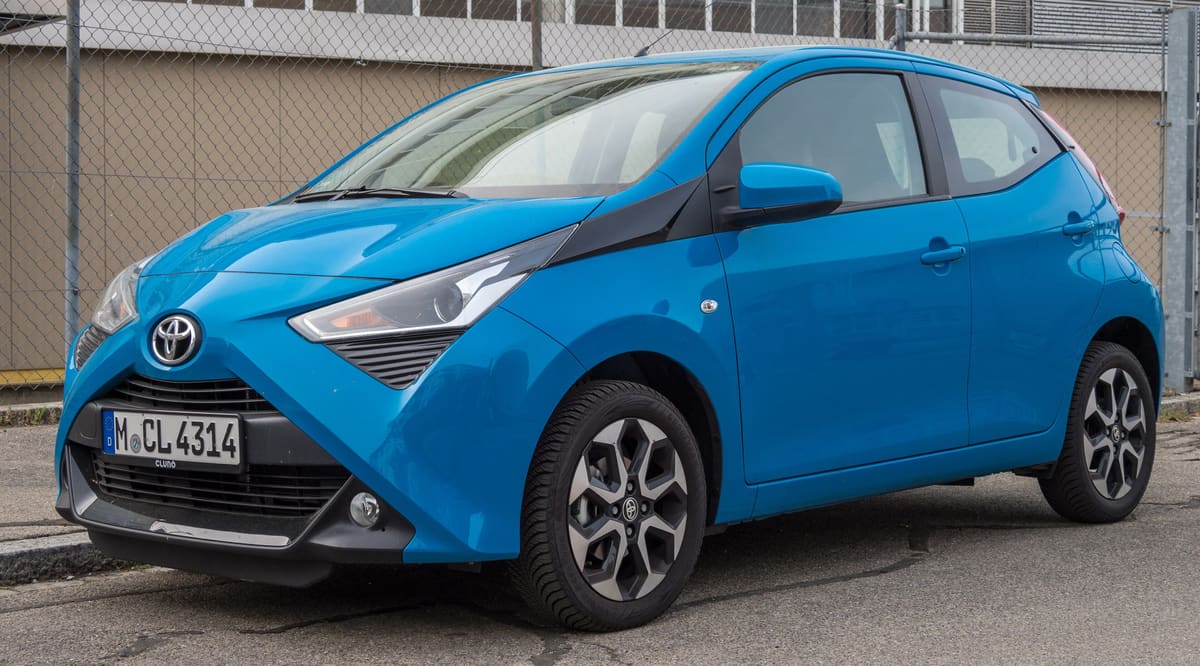
The Toyota Aygo is generally reliable but can develop a few common issues over time. Practical fixes often involve straightforward repairs such as replacing worn brake pads, addressing electrical glitches, or servicing the clutch. Some of these tasks are manageable for confident DIYers, while others require a garage’s expertise due to specialised tools or safety concerns.
Brake Squeal and Wear
Brake noise and wear are frequent complaints with the Aygo, especially in urban driving conditions where stop-start traffic is common. The typical symptom is a high-pitched squeal when applying the brakes, often caused by worn brake pads or glazed discs.
Replacing brake pads involves removing the wheels, detaching the caliper, and swapping out the pads. It is a moderately straightforward job for someone with basic mechanical skills and the right tools, such as a jack, spanners, and a brake piston tool. However, if the brake discs are also worn or scored, they may need resurfacing or replacement, which is better handled by a garage due to the need for precision and safety checks.
Regular inspection of brake components can prevent sudden failures and maintain safe stopping distances. Brake fluid should also be checked and replaced as per the manufacturer’s schedule to avoid spongy pedal feel.
Clutch Judder or Slippage
Some Aygo owners report clutch judder or slippage, particularly as the car ages or if driven in heavy traffic with frequent gear changes. Symptoms include a shudder when engaging the clutch or a loss of power transmission despite engine revs rising.
The most common cause is wear of the clutch friction plate or contamination from oil leaks. Repair involves removing the gearbox to access the clutch assembly, which is a labour-intensive job. This is not a DIY task for most owners because it requires specialised tools and mechanical knowledge.
If the clutch is slipping, replacement is the only fix. While the parts themselves are not complex, the labour involved means it is best left to a professional garage. Regular driving habits, such as avoiding resting the foot on the clutch pedal, can extend clutch life.
Electrical Glitches and Warning Lights
Electrical issues can manifest as warning lights on the dashboard, intermittent faults with lights or indicators, or problems with the central locking and alarm system. These are often due to poor connections, ageing wiring, or sensor faults.
A common practical fix is to check and clean battery terminals and earth connections, as corrosion can cause erratic electrical behaviour. This is a simple DIY job that requires basic tools and safety precautions to disconnect the battery first.
For more complex faults, such as sensor replacements or diagnosing error codes, a garage with diagnostic equipment is needed. Modern Aygo models may require software updates or module resets that cannot be done at home.
Engine Misfire or Rough Running
If the Aygo experiences rough idling, hesitation, or misfires, the cause is often ignition or fuel system related. Common culprits include worn spark plugs, clogged fuel injectors, or a dirty air filter.
Replacing spark plugs is a straightforward task for a DIYer with access to a spark plug socket and some mechanical aptitude. It involves removing the engine cover, unplugging ignition coils, and swapping the plugs. Changing the air filter is even simpler and should be part of routine maintenance.
Fuel injector cleaning or replacement is more complex and usually requires garage intervention. Persistent misfire issues may also need a diagnostic scan to identify faulty sensors or ignition coils.
Suspension Noise or Harsh Ride
Owners sometimes report knocking noises over bumps or a harsh ride quality, which often points to worn suspension components such as shock absorbers, bushes, or anti-roll bar links.
Replacing shock absorbers requires lifting the car safely and removing suspension components, which can be done by a competent DIYer with the right tools and safety equipment. However, worn bushes or anti-roll bar links often need pressing out and fitting new parts, which may be challenging without a workshop press.
If the suspension is noisy or the ride uncomfortable, it is advisable to have a garage inspect the system to ensure all components are in good condition and aligned correctly. Ignoring suspension wear can lead to poor handling and increased tyre wear.
Interior Wear and Electrical Accessories
Common minor issues inside the Aygo include faulty electric window mechanisms, worn seat fabric, or malfunctioning dashboard switches. These problems are usually straightforward to fix.
Window regulators can be replaced by removing door panels and swapping the mechanism. This is a DIY-friendly job if you are comfortable with trim removal and have basic tools. Seat fabric repairs or replacements may require professional upholstery services but minor tears can be patched at home.
Dashboard switches or knobs that stick or fail often need cleaning or replacement, which can be done by removing the relevant panels. Electrical accessory faults sometimes require checking fuses and wiring connections, a simple task for most owners.
Addressing these common Toyota Aygo issues with practical fixes can keep the car running smoothly and safely. While some repairs are accessible to DIY enthusiasts, others demand the expertise and equipment of a professional garage to ensure proper and safe completion. Regular maintenance and early attention to symptoms help avoid costly repairs down the line.
Toyota Aygo recall record
9 recalls have been issued for the Toyota Aygo, between 2010 and 2023.
On affected vehicles there is a possibility that the DCM may not complete the shutdown process within a specific period of time when the ignition is turned off causing the DCM to not restart at the next ignition cycle and making the e-Call function unavailable. As a result the vehicles do not comply with relevant regulations.
R/2023/279Issued 12 October 2023
On affected vehicles there is a possibility that the DCM may not complete the shutdown process within a specific period of time when the ignition is turned off causing the DCM to not restart at the next ignition cycle and making the e-Call function unavailable. As a result the vehicles do not comply with relevant regulations.
Remedy:The software of the DCM (Data Communication Module) will be updated via an Over the Air (OTA) wireless update.
Affects cars built Sept 2022 to Aug 2023
SOME REAR INNER SEAT BELTS MAY HAVE INCORRECT STITCHING ON THE BELT MATERIAL
R/2020/351Issued 25 January 2021
On affected vehicles some rear inner seat belts may have incorrect stitching on the belt material.
Remedy:Check seat belts and relace if necessary.
Affects cars built Aug 2020 to Oct 2020
IT MAY NOT BE POSSIBLE TO SWITCH HEADLIGHTS FROM HIGH BEAM TO LOW BEAM OR LOW BEAM TO HIGH BEAM
R/2020/254Issued 20 October 2020
It may not be possible to switch headlights from high beam to low beam or low beam to high beam.
Remedy:Replace the Headlamp Units
Affects cars built Jun 2020 to Jun 2020
AN INCORRECT TOOLING SETUP DURING THE MANUFACTURING OF THE FUEL TANK MAY RESULT IN REDUCED WALL THICKNESS OR SMALL PIN HOLE IN THE TANK'S BOTTOM SURFACE
R/2018/316Issued 21 January 2019
An incorrect tooling setup during the manufacturing of the fuel tank may result in reduced wall thickness
Remedy:Check the serial number and replace the fuel tank if necessary.
Affects cars built Jun 2016 to Jun 2016
5 older recalls not shown.
A recall applies to a build range, not to every car of this model. Check a registration to see whether one specific vehicle has an outstanding recall.
Toyota Aygo MOT record
From 253,974 recorded MOT tests, 19.3% failed.
| Registered | Tests | Failed | Median mileage |
|---|---|---|---|
| 2022 | 1,576 | 5.1% | 16,545 mi |
| 2021 | 16,616 | 7.0% | 19,724 mi |
| 2020 | 16,199 | 8.9% | 23,906 mi |
| 2019 | 21,692 | 9.7% | 29,228 mi |
| 2018 | 21,510 | 10.3% | 34,477 mi |
| 2017 | 21,095 | 12.1% | 40,752 mi |
| 2016 | 21,851 | 13.5% | 46,543 mi |
| 2015 | 22,910 | 15.5% | 52,505 mi |
Most common reasons for failure
- A suspension pin, bush or joint excessively worn27.9%
- A tyre seriously damaged23.1%
- Tyre tread depth not in accordance with the requirements22.4%
- Brake pipe damaged or excessively corroded14.5%
- A suspension component excessively damaged or corroded12.2%
Figures cover every Toyota Aygo tested in the DVSA dataset, not this specific car. Check a registration for the actual history of one vehicle.
Frequently asked questions
What are the common faults with the Toyota Aygo?
Common faults include issues with the exhaust system, air conditioning, and electrical components.
Can I fix these issues myself?
Many fixes are DIY-able, but some may require professional help, especially for complex repairs.
Is it worth repairing an older Aygo?
It depends on the specific fault and overall condition of the vehicle. Some repairs can extend the life of the car.
Sources
- DVSA anonymised MOT tests and results (Open Government Licence v3.0)
- DVSA vehicle safety recalls (Open Government Licence v3.0)