MOT failure rates
Toyota Hilux MOT failure rates: what to expect
What fails on a Toyota Hilux at MOT, how often, and what each fix typically costs.
Updated 4th September 2026 DVSA data: Across 74,135 recorded MOT tests, 24.3% failed.
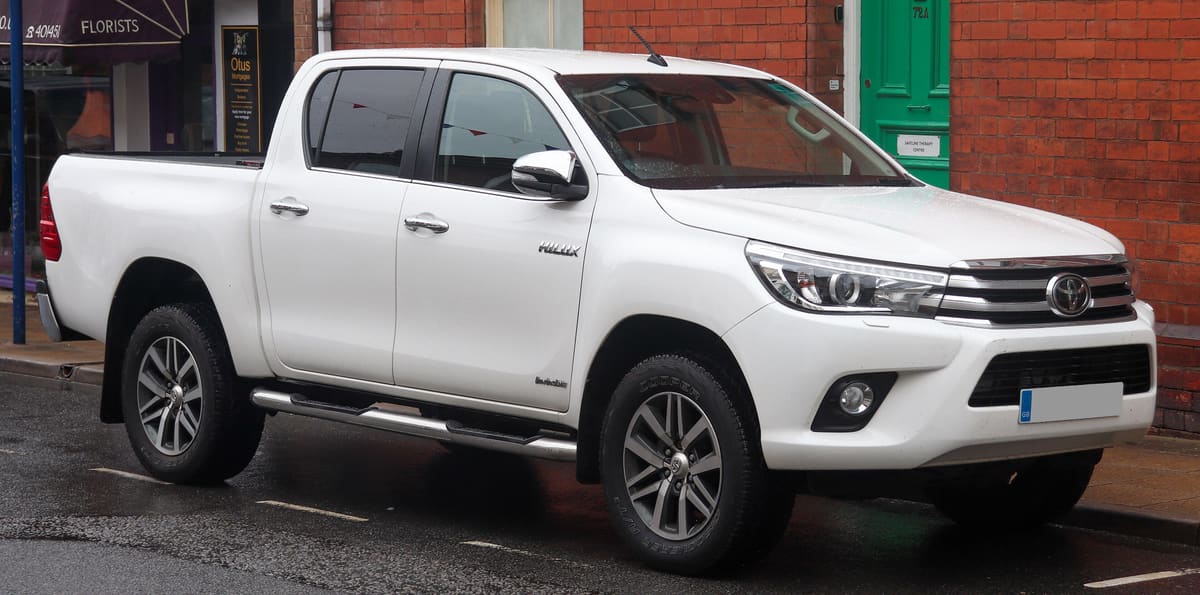
The Toyota Hilux is a robust and reliable vehicle, but like any car, it can face issues during its MOT test. Common failures include problems with the brakes, suspension, emissions, and lights. Fixing these issues can vary in cost, but understanding the common pitfalls can help you prepare for your MOT.
Brake System Issues
Brakes are one of the most critical safety components of any vehicle, and the Toyota Hilux is no exception. Common brake-related failures include worn brake pads, damaged discs, or issues with the brake lines.
In addition to pads and discs, the brake fluid may need to be replaced if it is contaminated or below the required level. Regular maintenance of the brake system is essential to avoid costly repairs and ensure safe driving.
Suspension Problems
Suspension issues can lead to an MOT failure, particularly if the shock absorbers are worn or if there are problems with the springs. The Hilux is designed for rugged terrain, which can put additional strain on the suspension components.
Keeping the suspension system in good condition is vital for handling and ride comfort, especially for a vehicle often used for heavy-duty tasks.
Emissions Failures
Emissions standards are strict in the UK, and the Toyota Hilux must meet these requirements to pass its MOT. Common causes of emissions failures include faulty catalytic converters, worn spark plugs, or issues with the fuel injection system.
Regular servicing can help keep emissions in check and prevent costly repairs down the line.
Lighting and Electrical Failures
Lighting issues are common in MOT failures, with problems often arising from blown bulbs, faulty wiring, or malfunctioning switches. The Toyota Hilux features various lights, including headlights, brake lights, and indicators, all of which must function correctly.
Ensuring that all lights are regularly checked and replaced as needed can help avoid MOT failures and enhance safety on the road.
Tyre Condition
Tyres are a crucial aspect of vehicle safety and are a common reason for MOT failures. The Hilux must have a minimum tread depth of 1.6mm across the central three-quarters of the tyre.
Additionally, if the tyres are found to have sidewall damage or other defects, they will also need replacing. Regularly checking tyre pressure and tread depth can help maintain safety and prevent unexpected costs during the MOT.
Bodywork and Structural Integrity
While not as common as mechanical failures, issues with bodywork and structural integrity can lead to an MOT failure. Common problems include rust, particularly in older models, and damage to the chassis or undercarriage.
Structural integrity is crucial for safety, and any significant damage may necessitate professional assessment and repair. Regular inspections can help identify potential issues before they become serious problems, ensuring the Hilux remains roadworthy and compliant with MOT standards.
Toyota Hilux recall record
11 recalls have been issued for the Toyota Hilux, between 2006 and 2025.
Wheel hub and nut loose on Hilux
R/2025/477Issued 1 December 2025
For affected vehicles that previously had the chassis frame replaced in a special facility there is a possibility that some joints were not correctly tightened.
Remedy:Retighten nuts and/or bolts in specific mounting or joint portions.
Affects cars built Jun 2012 to Jan 2019
Hilux Occupant Classification System calibration
R/2024/459Issued 13 January 2025
For certain vehicles there is a possibility that the zero-point calibration of the Occupant Classification System (OCS) that provides input to the Supplemental Restraint System is incorrect.
Remedy:Calibrate the Occupant Classification System (OCS).
Affects cars built Jul 2023 to Nov 2023
On affected vehicles there is a possibility that the DCM may not complete the shutdown process within a specific period of time when the ignition is turned off causing the DCM to not restart at the next ignition cycle and making the e-Call function unavailable. As a result the vehicles do not comply with relevant regulations.
R/2023/279Issued 12 October 2023
On affected vehicles there is a possibility that the DCM may not complete the shutdown process within a specific period of time when the ignition is turned off causing the DCM to not restart at the next ignition cycle and making the e-Call function unavailable. As a result the vehicles do not comply with relevant regulations.
Remedy:The software of the DCM (Data Communication Module) will be updated via an Over the Air (OTA) wireless update.
Affects cars built Sept 2022 to Jun 2023
THE STRENGTH OF THE BRAKE BOOSTER PISTON COULD DEGRADE
R/2020/350Issued 1 February 2021
On affected vehicles the strength of the brake booster piston could degrade.
Remedy:Check the brake booster piston serial number and replace if necessary.
Affects cars built Aug 2018 to Mar 2019
7 older recalls not shown.
A recall applies to a build range, not to every car of this model. Check a registration to see whether one specific vehicle has an outstanding recall.
Toyota Hilux MOT record
From 74,135 recorded MOT tests, 24.3% failed.
| Registered | Tests | Failed | Median mileage |
|---|---|---|---|
| 2022 | 6,131 | 10.8% | 37,442 mi |
| 2021 | 8,012 | 12.3% | 47,304 mi |
| 2020 | 4,863 | 14.0% | 55,717 mi |
| 2019 | 4,956 | 16.0% | 66,686 mi |
| 2018 | 5,227 | 17.5% | 76,662 mi |
| 2017 | 4,823 | 19.3% | 85,580 mi |
| 2016 | 4,305 | 24.7% | 89,227 mi |
| 2015 | 5,337 | 28.3% | 94,490 mi |
Most common reasons for failure
- Brake pipe damaged or excessively corroded24.6%
- Tyre tread depth not in accordance with the requirements24.5%
- A suspension pin, bush or joint excessively worn19.3%
- Vehicle structure corroded to the extent that the rigidity of the assembly is seriously reduced17.1%
- A spring or spring component fractured or seriously weakened14.5%
Figures cover every Toyota Hilux tested in the DVSA dataset, not this specific car. Check a registration for the actual history of one vehicle.
Frequently asked questions
What is the MOT requirement for a Toyota Hilux?
In the UK, a Toyota Hilux must have an MOT test every year once it is three years old. This test ensures that the vehicle meets road safety and environmental standards.
How can I check the MOT status of a Toyota Hilux?
You can check the MOT status of a Toyota Hilux by visiting the official UK government website. You will need the vehicle's registration number to access the information.
What common issues might cause a Toyota Hilux to fail its MOT?
Common issues that could lead to an MOT failure for a Toyota Hilux include worn brakes, faulty lights, and excessive emissions. Regular maintenance can help prevent these problems.
Can I drive my Toyota Hilux if it has failed its MOT?
You cannot legally drive your Toyota Hilux if it has failed its MOT, unless you are taking it to a garage for repairs or to a pre-booked MOT test. Driving without a valid MOT can result in fines.
What should I do if my Toyota Hilux is due for an MOT?
If your Toyota Hilux is due for an MOT, you should book an appointment with an authorised testing centre. It's advisable to do this a few weeks in advance to ensure you get a suitable time.
How can I prepare my Toyota Hilux for its MOT?
To prepare your Toyota Hilux for its MOT, check the lights, brakes, and tyres, and ensure that the windscreen wipers and washers are functioning. Regular servicing can also help ensure it passes.
Sources
- DVSA anonymised MOT tests and results (Open Government Licence v3.0)
- DVSA vehicle safety recalls (Open Government Licence v3.0)