Top fixes
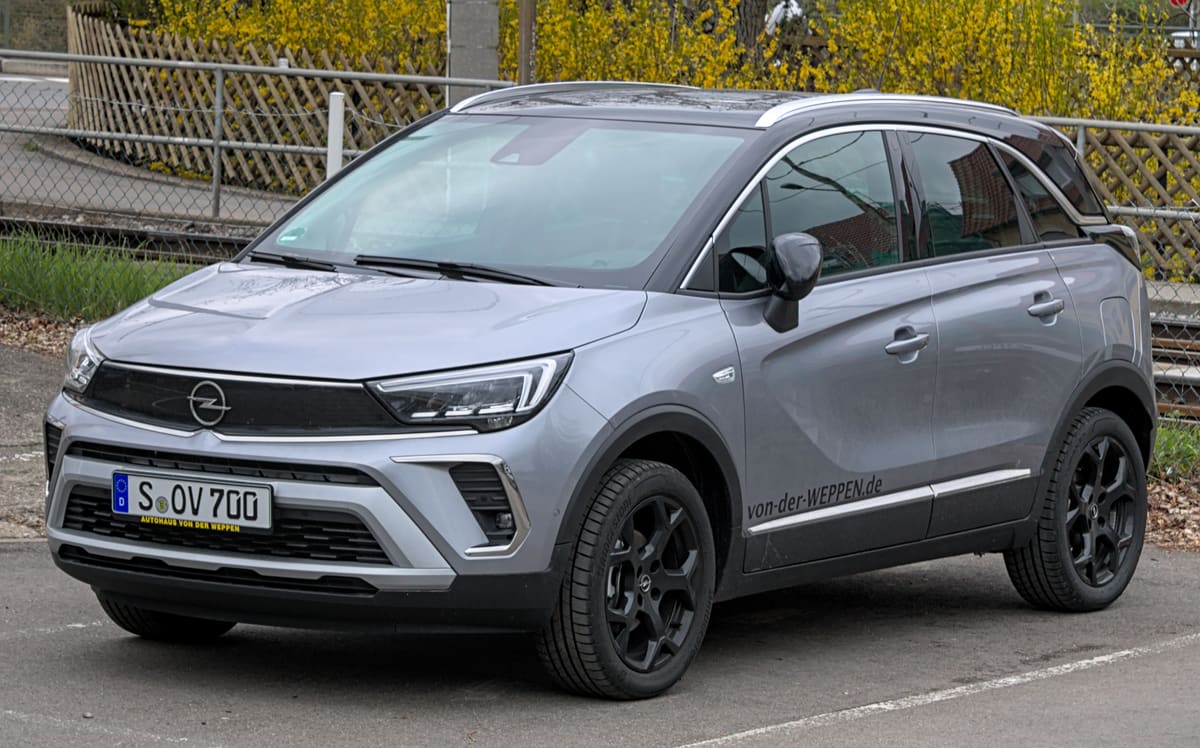
Top Vauxhall Crossland fixes every owner should know
Cheap, practical fixes for the Vauxhall Crossland faults you actually meet, with rough costs and what a garage will charge.
Updated 4th September 2026 DVSA data: Across 77,816 recorded MOT tests, 13.0% failed.
TL;DR
Vauxhall Crossland owners should be aware of common faults such as faulty sensors, electrical issues, suspension problems, brake wear, and exhaust leaks. Understanding these issues and their fixes can save time and money, with DIY options available for some repairs.
Common Faults and Fixes
1. Faulty Sensors
The Vauxhall Crossland is known for faulty sensors, particularly the oxygen and MAF (Mass Air Flow) sensors. Replacing these sensors is usually straightforward, with parts costing around £30 to £100 and garage labour about £50 to £100. This fix is generally permanent.
2. Electrical Issues
Electrical problems can affect lights, windows, and other components. Simple fixes like replacing fuses or relays can be DIY tasks costing around £10 to £30 for parts. More complex issues may require a garage, with costs ranging from £60 to £120 per hour. These fixes can be temporary if underlying issues exist.
3. Suspension Problems
Suspension issues are common, especially in models from 2017 to 2020. Symptoms include a bumpy ride and noise from the front or rear. Replacing shocks or struts can cost between £150 to £500 for parts and labour. This is not a temporary fix and should be addressed promptly for safety.
4. Brake Wear
Brake pads and discs wear out over time. For the Crossland, replacing pads costs around £50 to £150 for parts, while discs might add another £50 to £100. Garage labour can total £100 to £200. Regular inspections can help avoid more extensive repairs.
5. Exhaust Issues
Exhaust leaks can lead to increased noise and emissions. A temporary patch with exhaust tape can cost around £10, while a proper repair or replacement can range from £100 to £300. Garage labour for this work typically costs between £60 to £120 per hour.
Vauxhall Crossland recall record
13 recalls have been issued for the Vauxhall Crossland, between 2018 and 2025.
Emission recall – On Board Diagnostics
R/2025/342Issued 18 August 2025
Vehicles may be affected by incorrect performance of the On-Board-Diagnostics related to Selective Catalytic Reduction system and/or Diesel Particle Filter. The Malfunction Indicator Light (MIL) may not illuminate in the event of a malfunction and therefore does not comply with emission regulations.
Remedy:Update the Engine Control Unit software to ensure compliance to regulations.
Affects cars built Oct 2017 to Oct 2020
Vauxhall DV5R Engines Camshaft Chain.
R/2025/245Issued 3 July 2025
Vehicles may be affected by premature wearing of the camshaft drive chain leading to abnormal noise or to a breakage of the chain in the worst case.
Remedy:Update the software to improve oil pressure and reduce wear. Check the engine noise and replace the chain if required. If no problem found change the oil to one with higher viscosity and special anti-wear additives.
Affects cars built Jul 2019 to Jan 2023
Cross carline Engine software
R/2024/133Issued 13 March 2024
On affected vehicles below 12500 miles under certain conditions engine emissions may lead to a non-compliance to regulatory requirements.
Remedy:Check the mileage of the vehicle and update the ECU (Engine Control Unit) calibration on vehicles below 12500 miles.
Affects cars built Jan 2022 to Nov 2022
Affected vehicles may have been fitted with a rear axle crossmember that was not manufactured according to specifications.
R/2023/219Issued 21 July 2023
Affected vehicles may have been fitted with a rear axle crossmember that was not manufactured according to specifications.
Remedy:Check and replace the rear axle crossmember if necessary.
Affects cars built May 2022 to Jun 2022
9 older recalls not shown.
A recall applies to a build range, not to every car of this model. Check a registration to see whether one specific vehicle has an outstanding recall.
Vauxhall Crossland MOT record
From 77,816 recorded MOT tests, 13.0% failed.
| Registered | Tests | Failed | Median mileage |
|---|---|---|---|
| 2023 | 217 | 5.5% | 14,307 mi |
| 2022 | 13,133 | 8.5% | 18,183 mi |
| 2021 | 15,387 | 8.6% | 28,953 mi |
| 2020 | 17,877 | 11.3% | 34,148 mi |
| 2019 | 16,173 | 14.2% | 37,925 mi |
| 2018 | 12,525 | 21.7% | 47,588 mi |
| 2017 | 2,504 | 23.5% | 51,183 mi |
Most common reasons for failure
- Tyre tread depth not in accordance with the requirements26.1%
- Brake disc or drum excessively weakened, insecure or fractured23.2%
- A tyre seriously damaged23.0%
- a brake lining or pad worn below 1.5mm15.7%
- Exhaust system leaking or insecure12.0%
Figures cover every Vauxhall Crossland tested in the DVSA dataset, not this specific car. Check a registration for the actual history of one vehicle.
Frequently asked questions
What are common faults with the Vauxhall Crossland?
Common faults include faulty sensors, electrical issues, and suspension problems.
Is it easy to fix a faulty sensor?
Yes, many owners can replace faulty sensors with basic tools.
Can I fix electrical issues myself?
Some electrical issues are DIY-friendly, but complex problems may require a garage.
Sources
- DVSA anonymised MOT tests and results (Open Government Licence v3.0)
- DVSA vehicle safety recalls (Open Government Licence v3.0)