Recall history
Audi A7 recall history: what has been recalled and why
Audi A7 recall history: which model years were affected, what was fixed, and how to check your own car.
Updated 4th September 2026 DVSA data: Across 16,630 recorded MOT tests, 13.4% failed.
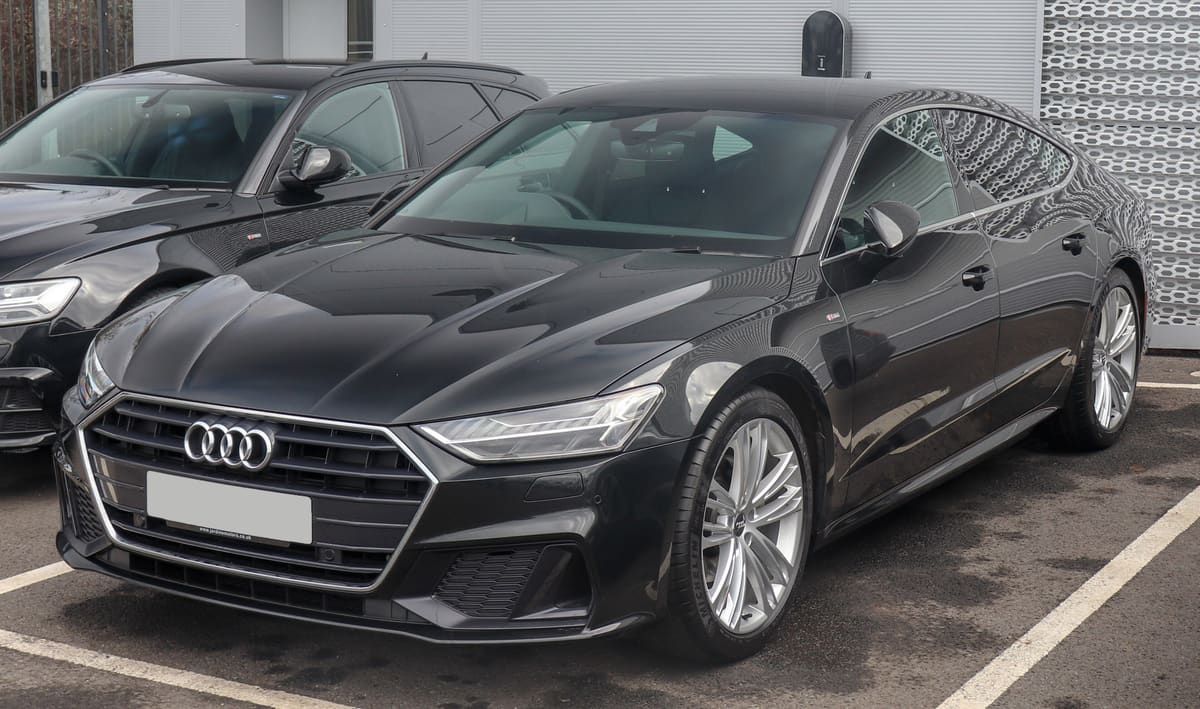
The Audi A7 has experienced several recalls since its introduction, primarily addressing issues related to safety and performance. Key recalls have involved problems with the airbag system, fuel system, and electrical components. Affected build years primarily span from 2010 to 2021, with most issues resolved through dealer fixes.
Overview of Audi A7 Recalls
The Audi A7, a luxury fastback, has been subject to multiple recalls since its launch in 2010. These recalls are issued to rectify defects that could potentially compromise vehicle safety or performance. Audi’s commitment to customer safety is evident in their proactive approach to addressing these issues, ensuring that affected vehicles are repaired promptly.
Recalls are typically initiated by manufacturers when a defect is identified that poses a risk to safety or compliance with regulations. Audi has worked closely with the DVSA (Driver and Vehicle Standards Agency) to manage these recalls effectively, ensuring that owners are informed and repairs are conducted efficiently.
Key Recalls and Issues
One of the most significant recalls for the Audi A7 involved the airbag system. In certain models, a defect in the airbag control unit could lead to the airbags failing to deploy in the event of a collision. This recall affected several build years, particularly from 2010 to 2015, and was addressed by replacing the faulty control unit.
Another notable recall concerned the fuel system. In some A7 models, a potential leak in the fuel line could pose a fire risk. This issue was identified in vehicles manufactured between 2012 and 2016. Audi responded by replacing the affected fuel lines to eliminate the risk.
Additionally, electrical issues have also been a concern for the A7. Some vehicles experienced problems with the electronic stability control system, which could lead to loss of vehicle control. This recall impacted models built from 2013 to 2018 and involved software updates to rectify the issue.
Affected Build Years
The recalls affecting the Audi A7 span various build years, with the earliest models dating back to 2010. The most significant recalls have typically involved vehicles produced up until 2021. Owners of A7 models from these years should be particularly vigilant regarding recall notices and ensure that any necessary repairs are completed.
The DVSA maintains a comprehensive database of recalls, which can be a useful resource for Audi A7 owners. Checking this database can help owners determine if their vehicle is affected by any outstanding recalls. It is advisable for owners to contact their local Audi dealer for the most accurate and up-to-date information regarding recalls.
Current Status of Recalls
As of now, most recalls affecting the Audi A7 have been resolved. Audi has implemented corrective measures for the majority of issues identified, and affected owners have been notified to bring their vehicles in for repairs. The company continues to monitor the performance and safety of the A7, ensuring that any new issues are addressed swiftly.
Owners should regularly check for any new recalls that may arise, as manufacturers often issue recalls for ongoing safety assessments.
How to Check for Recalls
Audi A7 owners can easily check if their vehicle has any outstanding recalls. The DVSA provides an online service where vehicle identification numbers (VIN) can be entered to see if a car is affected by any recalls. This is a straightforward process that can help ensure that owners are aware of any necessary repairs.
Additionally, Audi dealers can provide information about recalls and assist with scheduling repairs. Owners should keep their contact information updated with Audi to receive timely notifications regarding recalls and service updates.
Conclusion
The Audi A7 has had its share of recalls, primarily focusing on safety-related issues such as airbag functionality, fuel system integrity, and electrical stability. While the majority of these recalls have been addressed, it is crucial for owners to remain vigilant and informed about their vehicle’s recall status. Regular checks and communication with Audi dealers can help ensure that the A7 remains safe and reliable on the road.
Audi A7 recall record
14 recalls have been issued for the Audi A7, between 2014 and 2025.
Software update for battery control unit
R/2025/463Issued 24 October 2025
On affected vehicles there may be defective battery modules which may result in a fire hazard when charging the high-voltage battery.
Remedy:Update the software of the high-voltage battery to improve the self-diagnosis capabilities. Vehicle owners are advised to not charge the high-voltage battery using external charging sources and also not use the e-tron modes “Battery charge” and “Battery hold” until the update is applied.
Affects cars built Dec 2021 to Jun 2024
On certain vehicles an incorrect bracket for the side airbag was fitted in the left front seat.
R/2023/317Issued 27 October 2023
On certain vehicles an incorrect bracket for the side airbag was fitted in the left front seat.
Remedy:Replace the side airbag and bracket.
Affects cars built Jul 2023 to Jul 2023
The fuel gauge may not show the drop in fuel level correctly during vehicle operation
R/2023/027Issued 20 January 2023
The fuel gauge may not show the drop in fuel level correctly during vehicle operation.
Remedy:The tank level sender must be replaced on the affected vehicles.
Affects cars built Apr 2018 to Oct 2021
ENGINE CONTROL UNITS MIGHT BE FITTED WITH SEMICONDUCTOR COMPONENTS THAT DO NOT MEET SPECIFICATIONS
R/2022/169Issued 10 June 2022
On a small number of vehicles manufactured within a specific period it is possible that the engine control units were fitted with semiconductor components which do not meet the specifications.
Remedy:The engine control unit must be replaced on the affected vehicles.
Affects cars built Jan 2022 to Feb 2022
THE MESH SIZE OF THE OIL STRAINER IN THE OIL SUPPLY FOR BOTH TURBOCHARGERS IS TOO SMALL
R/2022/132Issued 4 May 2022
The mesh size of the oil strainer in the oil supply for both turbochargers is too small.
Remedy:The oil strainer will be replaced with a revised version with a larger mesh size.
Affects cars built May 2012 to Mar 2017
VEHICLES MAY HAVE BEEN FITTED WITH A HINGED TOWING BRACKET ON WHICH THE LOCKING MECHANISM IN THE HINGE MODULE COULD BE FAULTY
R/2021/204Issued 7 June 2021
Vehicles may have been fitted with a hinged towing bracket on which the locking mechanism in the hinge module could be faulty.
Remedy:The hinge module for the towing bracket must be checked and where necessary replaced on the vehicles affected.
Affects cars built Dec 2015 to Dec 2018
THE FRONT PASSENGER AIRBAG MIGHT NOT INFLATE FULLY IN THE EVENT OF AN ACCIDENT
R/2021/117Issued 26 March 2021
In the event of an accident requiring the vehicle�s front passenger airbag to be activated the airbag might not inflate fully.
Remedy:The dash panel must be checked on the affected vehicles and repaired or replaced if required
Affects cars built Feb 2018 to Dec 2020
MOISTURE MAY ENTER THE BELT-DRIVEN STARTER-ALTERNATOR
R/2020/138Issued 30 June 2020
It is possible that moisture may enter the belt-driven starter-alternator.
Remedy:The starter-alternator must be replaced on the affected vehicles.
Affects cars built Jun 2017 to Mar 2020
THE LOCKING MECHANISM IN THE HINGED TOWING BRACKET COULD BE FAULTY
R/2019/175Issued 3 June 2019
Hinged towing bracket on which the locking mechanism in the hinge module could be faulty.
Remedy:The hinge module for the towing bracket must be checked and replaced if required.
Affects cars built Dec 2015 to Dec 2018
FUEL MAY ESCAPE FROM ONE OR BOTH FUEL RAILS
R/2019/099Issued 18 March 2019
It is possible that fuel may escape from one or both fuel rails (low-pressure side).
Remedy:The fuel rails for the low-pressure side of both cylinder banks must be replaced on the affected vehicles.
Affects cars built Feb 2014 to Sept 2016
THE AUXILIARY HEATER ELEMENT IN THE AIR CONDITIONER MAY FAIL
R/2019/060Issued 22 February 2019
The auxiliary heater element connection in the air conditioner may fail.
Remedy:Check the auxiliary heater connector and replace the element if required.
Affects cars built Jul 2014 to Oct 2014
AIRBAG/BELT TENSIONERS MAY NOT TRIGGER IN EVENT OF AN ACCIDENT
R/2017/078Issued 20 February 2017
Due to an error in the manufacturing process the air bag and/or seat belt pretensioner may not trigger in the event of a collision
Remedy:On affected vehicles replace air bag assembly and seta belt pretensioner where necessary.
Affects cars built May 2016 to Oct 2016
2 older recalls not shown.
A recall applies to a build range, not to every car of this model. Check a registration to see whether one specific vehicle has an outstanding recall.
Audi A7 MOT record
From 16,630 recorded MOT tests, 13.4% failed.
| Registered | Tests | Failed | Median mileage |
|---|---|---|---|
| 2022 | 429 | 9.1% | 29,440 mi |
| 2021 | 642 | 9.8% | 38,684 mi |
| 2020 | 618 | 9.1% | 43,280 mi |
| 2019 | 1,422 | 9.8% | 56,564 mi |
| 2018 | 1,368 | 10.5% | 63,004 mi |
| 2017 | 1,620 | 11.5% | 71,690 mi |
| 2016 | 2,307 | 14.0% | 79,955 mi |
| 2015 | 1,972 | 12.9% | 88,184 mi |
Most common reasons for failure
- Tyre tread depth not in accordance with the requirements38.0%
- A tyre seriously damaged23.3%
- A suspension pin, bush or joint excessively worn20.7%
- a brake lining or pad worn below 1.5mm9.6%
- A tyre cords visible or damaged8.3%
Figures cover every Audi A7 tested in the DVSA dataset, not this specific car. Check a registration for the actual history of one vehicle.
Audi A7 official figures
Median across 5 variants on sale, diesel electric, electricity / petrol, petrol electric.
- Combined economy
- 40.9 mpg
- WLTP median across variants
- CO2 emissions
- 169.5 g/km
- Sets the first-year tax rate
Official figures for new cars. Real economy varies with driving, load and conditions.
Frequently asked questions
What is the recall history of the Audi A7?
Recalls are issued against individual vehicles rather than a model as a whole, so a model-level yes or no would be guesswork. Enter the registration on Honest Car Check and we check the DVSA record for that specific car. Where DVSA holds no status, confirm it with a franchised dealer using the VIN.
How can I find out if my Audi A7 has been recalled?
Recalls are issued against individual vehicles rather than a model as a whole, so a model-level yes or no would be guesswork. Enter the registration on Honest Car Check and we check the DVSA record for that specific car. Where DVSA holds no status, confirm it with a franchised dealer using the VIN.
What should I do if my Audi A7 is recalled?
Recalls are issued against individual vehicles rather than a model as a whole, so a model-level yes or no would be guesswork. Enter the registration on Honest Car Check and we check the DVSA record for that specific car. Where DVSA holds no status, confirm it with a franchised dealer using the VIN.
Are recalls common for the Audi A7?
Recalls are issued against individual vehicles rather than a model as a whole, so a model-level yes or no would be guesswork. Enter the registration on Honest Car Check and we check the DVSA record for that specific car. Where DVSA holds no status, confirm it with a franchised dealer using the VIN.
Will a recall affect the resale value of my Audi A7?
Recalls are issued against individual vehicles rather than a model as a whole, so a model-level yes or no would be guesswork. Enter the registration on Honest Car Check and we check the DVSA record for that specific car. Where DVSA holds no status, confirm it with a franchised dealer using the VIN.
How does Audi notify owners about recalls?
Recalls are issued against individual vehicles rather than a model as a whole, so a model-level yes or no would be guesswork. Enter the registration on Honest Car Check and we check the DVSA record for that specific car. Where DVSA holds no status, confirm it with a franchised dealer using the VIN.
Can I still drive my Audi A7 if it has an open recall?
Recalls are issued against individual vehicles rather than a model as a whole, so a model-level yes or no would be guesswork. Enter the registration on Honest Car Check and we check the DVSA record for that specific car. Where DVSA holds no status, confirm it with a franchised dealer using the VIN.
Are recall repairs free for Audi A7 owners?
Recalls are issued against individual vehicles rather than a model as a whole, so a model-level yes or no would be guesswork. Enter the registration on Honest Car Check and we check the DVSA record for that specific car. Where DVSA holds no status, confirm it with a franchised dealer using the VIN.
Sources
- DVSA anonymised MOT tests and results (Open Government Licence v3.0)
- VCA new car fuel consumption and emissions data (Open Government Licence v3.0)
- DVSA vehicle safety recalls (Open Government Licence v3.0)