Running costs
Audi Q3 running costs: what UK ownership really costs
Audi Q3 UK running costs: fuel or electric, insurance group, road tax, servicing and depreciation.
Updated 4th September 2026 DVSA data: Across 139,528 recorded MOT tests, 15.5% failed.
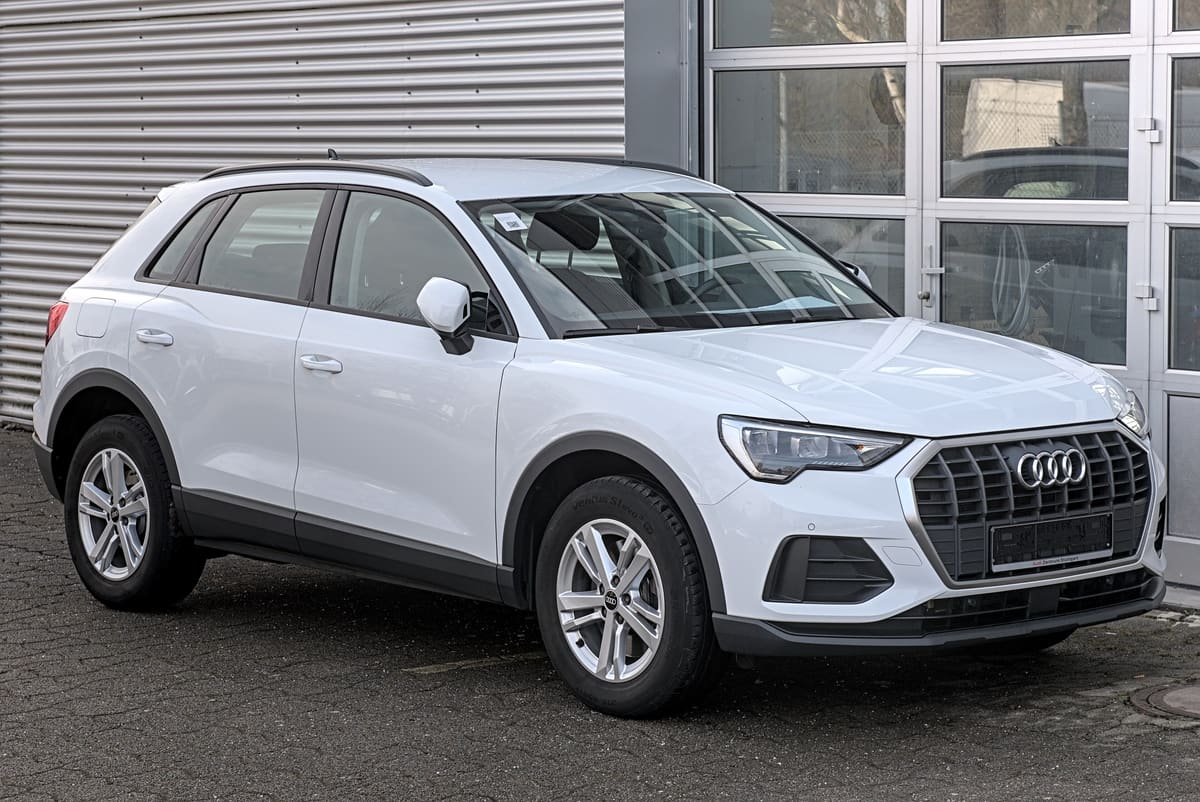
The Audi Q3 offers a balanced ownership cost profile, with fuel efficiency varying by engine choice, insurance groups typically ranging from 22 to 36, and tax bands reflecting CO2 emissions. Servicing intervals are generally every 12 months or 10,000 miles, while depreciation can be moderate, influenced by model and condition.
Fuel and Electric Costs
The fuel costs for the Audi Q3 depend on the engine variant. For electric models, the Q3 e-tron offers a range of approximately 200 miles on a full charge, with charging costs varying based on electricity tariffs.
When calculating fuel costs, consider your driving habits and the type of journeys you typically undertake. Urban driving may yield lower mpg figures, while motorway driving can enhance fuel efficiency. Additionally, the cost of petrol and diesel fluctuates, so it is advisable to keep an eye on current prices to estimate monthly fuel expenses accurately.
Insurance Groups
The Audi Q3 falls into various insurance groups, typically ranging from 22 to 36, depending on the engine size and trim level. This range means that insurance premiums can vary significantly, with higher performance models attracting higher rates.
When selecting your Q3, it is wise to obtain insurance quotes for specific models to understand potential costs. Factors such as your driving history, location, and the level of coverage you choose will also impact your insurance premiums. Generally, opting for a lower insurance group can lead to significant savings over time.
Tax Bands
The tax band for the Audi Q3 is determined by its CO2 emissions, which can range from 130 to 200 g/km depending on the engine variant.
It is important to consider the tax implications when purchasing a Q3, especially if you are looking at a model with higher emissions. The first-year tax rate can be significantly higher for these vehicles, which may affect your overall running costs. Additionally, changes in government policy regarding emissions and taxation could impact future ownership costs.
Servicing Intervals
Audi recommends servicing the Q3 every 12 months or after 10,000 miles, whichever comes first. This regular maintenance helps ensure the vehicle remains in good condition and can prevent more costly repairs down the line.
Audi also offers a fixed-price servicing plan, which can help manage costs and provide peace of mind. It is advisable to keep up with these intervals to maintain the vehicle’s warranty and resale value. Additionally, some owners may choose to perform minor maintenance tasks themselves, such as oil changes, to save on servicing costs.
Typical Depreciation
This is relatively standard for vehicles in its class, but factors such as mileage, condition, and service history can influence the exact depreciation rate.
When considering the Q3 as a long-term investment, it is essential to factor in potential resale value. Models with higher specifications and desirable features tend to retain their value better. Keeping the vehicle well-maintained and documenting service history can also enhance its appeal to future buyers.
Overall Ownership Costs
Combining all these factors, the overall ownership costs of the Audi Q3 can be manageable for many drivers. While initial purchase prices may be higher than some competitors, the balance of fuel efficiency, insurance costs, and depreciation can make it an attractive option in the long run.
It is crucial to conduct thorough research and consider your specific driving needs when evaluating the total cost of ownership. By understanding the various elements that contribute to running costs, you can make an informed decision about whether the Audi Q3 is the right vehicle for you.
Audi Q3 recall record
11 recalls have been issued for the Audi Q3, between 2017 and 2026.
Checking lap belt tensioner
R/2026/325Issued 11 August 2026
On affected vehicles the seat belt webbing may not be connected correctly to the vehicle's load-bearing structure meaning it would not be able to restrain the occupant in the event of an accident.
Remedy:Check the affected seat belt and replace if necessary.
Affects cars built Jul 2026 to Jul 2026
Replacement front seat belt
R/2026/292Issued 13 July 2026
On affected vehicles a joint at the pyrotechnic inflator of the front seat belt retractors was not welded correctly presenting a risk of vehicle occupants being injured by small parts coming loose in the event of an accident.
Remedy:Replace the affected seat belts.
Affects cars built Nov 2025 to May 2026
A weld seam on the outer backrest frame of the front seats may not have been made correctly.
R/2023/331Issued 10 November 2023
A weld seam on the outer backrest frame of the front seats may not have been made correctly.�
Remedy:Check the front seats and if required to replace the affected backrest.
Affects cars built Jun 2023 to Jun 2023
Certain vehicles may have been fitted with a rear window which does not conform to the manufacturer s quality requirements.
R/2022/354Issued 18 November 2022
Certain vehicles may have been fitted with a rear window which does not conform to the manufacturer�s quality requirements.
Remedy:Check the manufacturing date of the vehicle�s rear window and if it is affected replace the window.
Affects cars built May 2022 to May 2022
7 older recalls not shown.
A recall applies to a build range, not to every car of this model. Check a registration to see whether one specific vehicle has an outstanding recall.
Audi Q3 MOT record
From 139,528 recorded MOT tests, 15.5% failed.
| Registered | Tests | Failed | Median mileage |
|---|---|---|---|
| 2023 | 452 | 3.3% | 21,894 mi |
| 2022 | 11,293 | 6.6% | 24,320 mi |
| 2021 | 11,044 | 7.0% | 32,154 mi |
| 2020 | 12,420 | 7.7% | 37,211 mi |
| 2019 | 13,701 | 8.0% | 43,777 mi |
| 2018 | 12,434 | 13.4% | 52,196 mi |
| 2017 | 15,896 | 14.4% | 60,416 mi |
| 2016 | 16,181 | 18.4% | 70,182 mi |
Most common reasons for failure
- Tyre tread depth not in accordance with the requirements31.7%
- A suspension pin, bush or joint excessively worn18.5%
- A tyre seriously damaged18.4%
- A spring or spring component fractured or seriously weakened17.8%
- Brake disc or drum excessively weakened, insecure or fractured13.6%
Figures cover every Audi Q3 tested in the DVSA dataset, not this specific car. Check a registration for the actual history of one vehicle.
Audi Q3 official figures
Median across 20 variants on sale, diesel, petrol, petrol electric.
- Combined economy
- 40.3 mpg
- WLTP median across variants
- CO2 emissions
- 177 g/km
- Sets the first-year tax rate
Official figures for new cars. Real economy varies with driving, load and conditions.
Frequently asked questions
What are the average fuel costs for an Audi Q3?
The fuel costs for an Audi Q3 can vary depending on the engine type and driving habits. Generally, you can expect to spend a reasonable amount on fuel, especially if you choose a more efficient engine.
How much is road tax for the Audi Q3?
Road tax for the Audi Q3 depends on the specific model and its CO2 emissions. Typically, newer models with lower emissions may have lower road tax rates.
What are the insurance costs for an Audi Q3?
Insurance costs for an Audi Q3 can vary significantly based on factors like your driving history and location. On average, it falls into a mid-range insurance group, making it relatively affordable to insure.
What maintenance costs should I expect for an Audi Q3?
Maintenance costs for an Audi Q3 can vary, but regular servicing and parts replacement are essential. It's advisable to budget for annual services and occasional repairs to keep the vehicle in good condition.
How does the Audi Q3's depreciation compare to other SUVs?
The Audi Q3 tends to hold its value well compared to many other SUVs. However, like all vehicles, it will depreciate over time, so it's important to consider this when purchasing.
Are there any common running costs associated with the Audi Q3?
Common running costs for the Audi Q3 include fuel, insurance, road tax, and maintenance. Additionally, you should factor in costs for tyres and any unexpected repairs.
What is the warranty coverage for the Audi Q3?
The Audi Q3 typically comes with a standard warranty that covers the vehicle for a certain number of years or miles. This can help reduce unexpected costs during the warranty period.
Is the Audi Q3 economical for city driving?
The Audi Q3 can be economical for city driving, especially with its efficient engine options. However, fuel consumption may increase in stop-and-go traffic compared to motorway driving.
Sources
- DVSA anonymised MOT tests and results (Open Government Licence v3.0)
- VCA new car fuel consumption and emissions data (Open Government Licence v3.0)
- DVSA vehicle safety recalls (Open Government Licence v3.0)