Top fixes
Audi Q7 top fixes: how owners handle the common issues
Practical fixes for the common Audi Q7 faults owners run into.
Updated 4th September 2026 DVSA data: Across 49,531 recorded MOT tests, 14.6% failed.
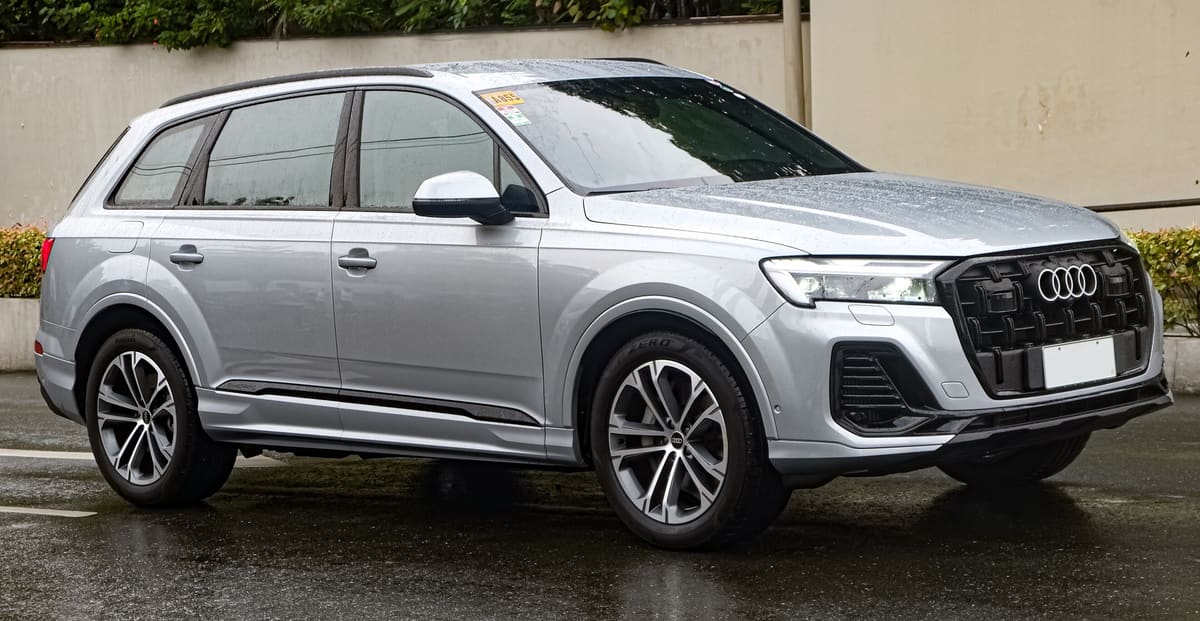
The Audi Q7 is a luxurious SUV that combines style with practicality, but like any vehicle, it can encounter issues. Common problems reported by owners include electrical faults, air suspension failures, and engine management warnings. Fortunately, there are practical fixes available for these issues that can help maintain your Q7’s performance and reliability.
Electrical Faults
One of the most frequently reported issues with the Audi Q7 is electrical faults, which can manifest as malfunctioning dashboard lights or problems with the infotainment system. These issues often stem from faulty wiring or poor connections.
To address electrical faults, start by checking the battery and its connections, ensuring they are clean and secure. If the problem persists, a diagnostic scan can identify specific fault codes, guiding you to the source of the issue. In some cases, software updates may be required to resolve glitches in the infotainment system.
Air Suspension Problems
The Q7’s air suspension system is designed for a smooth ride, but it can develop issues over time, such as air leaks or compressor failure. These problems can lead to a bumpy ride and uneven vehicle height, affecting both comfort and handling.
To fix air suspension issues, inspect the air springs for any visible damage or leaks. If you find any, replacing the affected air spring is necessary. Additionally, the compressor may need to be checked; if it is not functioning correctly, it may require replacement. Regular maintenance can help prevent these issues from arising in the first place.
Engine Management Warnings
Owners often report engine management warnings that can be triggered by various factors, including sensor malfunctions or fuel system issues. Ignoring these warnings can lead to more severe problems down the line, so it is crucial to address them promptly.
Start by using an OBD-II scanner to read the fault codes stored in the engine control unit. This will provide insight into the specific issue at hand. Common fixes include replacing faulty sensors or cleaning fuel injectors. Regular servicing and using high-quality fuel can also help prevent these warnings from appearing.
Brake System Concerns
The brake system in the Audi Q7 is generally reliable, but some owners have reported issues such as squeaking or grinding noises, which can indicate worn brake pads or discs. Addressing these concerns promptly is essential for safety.
To fix brake system issues, inspect the brake pads and discs for wear. If the pads are worn down, replacing them is necessary. Additionally, ensure that the brake fluid is at the correct level and free from contamination. Regular brake inspections can help catch these issues early, ensuring optimal performance.
Transmission Issues
Some Audi Q7 owners have experienced transmission problems, such as rough shifting or delayed engagement. These issues can be caused by low transmission fluid levels or a failing transmission control module.
To resolve transmission issues, start by checking the transmission fluid level and condition. If it is low or dirty, a fluid change may be required. If problems persist, a diagnostic check can help identify if the control module needs reprogramming or replacement. Regular transmission service can help prevent these issues from occurring.
Cooling System Failures
Overheating can be a concern for the Audi Q7, particularly if the cooling system is not functioning correctly. Common issues include coolant leaks or a failing water pump, which can lead to engine damage if not addressed.
To fix cooling system failures, regularly check coolant levels and inspect for leaks around hoses and the radiator. If you notice any leaks, replacing the affected components is essential. Additionally, ensure that the water pump is functioning correctly; if it shows signs of wear, replacement may be necessary. Keeping up with cooling system maintenance can help avoid overheating issues.
By addressing these common issues with practical fixes, Audi Q7 owners can enhance their vehicle’s reliability and performance. Regular maintenance and timely repairs will ensure that your Q7 continues to provide a luxurious driving experience for years to come.
Audi Q7 recall record
16 recalls have been issued for the Audi Q7, between 2007 and 2025.
Software update for battery control unit
R/2025/441Issued 10 October 2025
On affected vehicles there may be defective battery modules which may result in a fire hazard when charging the high-voltage battery.
Remedy:Update the software of the high-voltage battery to improve the self-diagnosis capabilities. Vehicle owners are advised to not charge the high-voltage battery using external charging sources and also not use the e-tron modes “Battery charge” and “Battery hold” until the update is applied.
Affects cars built Nov 2020 to Oct 2023
The function of the side airbag may be restricted due to the airbag not being sufficiently secured to the front left seat frame.
R/2024/018Issued 15 January 2024
The function of the side airbag may be restricted due to the airbag not being sufficiently secured to the front left seat frame.
Remedy:Conduct a check of the airbag to ensure it is secured correctly; if necessary the side airbag is to be correctly hooked in position and resecured.
Affects cars built Aug 2023 to Oct 2023
A weld seam on the outer backrest frame of the front seats may not have been made correctly.
R/2023/331Issued 10 November 2023
A weld seam on the outer backrest frame of the front seats may not have been made correctly.�
Remedy:Check the front seats and if required to replace the affected backrest.
Affects cars built Jun 2023 to Jun 2023
FOLLOWING A PREVIOUS CAMPAIGN THE TOE AND/OR CAMBER VALUES ON THE REAR AXLE MAY IN CERTAIN CIRCUMSTANCES INCORRECTLY BE CHANGED WITHOUT THIS BEING NOTICED
R/2022/036Issued 14 February 2022
Following a previous campaign the toe and/or camber values on the rear axle may in certain circumstances incorrectly be changed without this being noticed.
Remedy:The wheel alignment must be checked and if necessary the suspension must be serviced on the affected vehicles.
Affects cars built Nov 2019 to Feb 2021
12 older recalls not shown.
A recall applies to a build range, not to every car of this model. Check a registration to see whether one specific vehicle has an outstanding recall.
Audi Q7 MOT record
From 49,531 recorded MOT tests, 14.6% failed.
| Registered | Tests | Failed | Median mileage |
|---|---|---|---|
| 2022 | 3,146 | 9.1% | 29,913 mi |
| 2021 | 3,055 | 9.4% | 39,428 mi |
| 2020 | 3,548 | 8.6% | 47,228 mi |
| 2019 | 4,382 | 12.4% | 56,288 mi |
| 2018 | 4,655 | 13.5% | 67,400 mi |
| 2017 | 5,156 | 15.3% | 76,599 mi |
| 2016 | 4,729 | 16.3% | 84,560 mi |
| 2015 | 3,139 | 14.2% | 92,239 mi |
Most common reasons for failure
- Tyre tread depth not in accordance with the requirements36.8%
- A suspension pin, bush or joint excessively worn21.6%
- A tyre seriously damaged19.6%
- a brake lining or pad worn below 1.5mm12.6%
- Brake disc or drum excessively weakened, insecure or fractured9.4%
Figures cover every Audi Q7 tested in the DVSA dataset, not this specific car. Check a registration for the actual history of one vehicle.
Audi Q7 official figures
Median across 8 variants on sale, diesel electric, electricity / petrol, petrol electric.
- Combined economy
- 31.2 mpg
- WLTP median across variants
- CO2 emissions
- 215.5 g/km
- Sets the first-year tax rate
Official figures for new cars. Real economy varies with driving, load and conditions.
Frequently asked questions
What are common issues with the Audi Q7?
Common issues with the Audi Q7 include electrical problems, air suspension failures, and oil leaks. Regular maintenance can help prevent some of these issues.
How can I tell if an Audi Q7 has been well maintained?
Check the service history for regular oil changes and maintenance records. Look for any recalls that have been addressed and inspect the vehicle for signs of wear and tear.
What should I do if my Audi Q7 shows warning lights?
If warning lights appear, it is best to consult the owner's manual for guidance. You should have the vehicle checked by a qualified mechanic to diagnose the issue.
Are there any specific recalls for the Audi Q7?
Recalls are issued against individual vehicles rather than a model as a whole, so a model-level yes or no would be guesswork. Enter the registration on Honest Car Check and we check the DVSA record for that specific car. Where DVSA holds no status, confirm it with a franchised dealer using the VIN.
How much does it cost to fix common Audi Q7 problems?
Repair costs can vary widely depending on the issue and the garage. It is advisable to get quotes from multiple mechanics to find a fair price.
Is it worth buying a used Audi Q7?
Buying a used Audi Q7 can be worthwhile if it has a full service history and has been well maintained. Be sure to have it inspected by a professional before making a purchase.
What are the signs of a failing air suspension in an Audi Q7?
Signs of a failing air suspension include a bumpy ride, uneven ride height, and warning lights on the dashboard. If you notice these symptoms, it is best to have it checked immediately.
How can I improve the reliability of my Audi Q7?
To improve reliability, ensure regular servicing and address any issues promptly. Using quality parts and fluids can also help maintain the vehicle's performance.
Sources
- DVSA anonymised MOT tests and results (Open Government Licence v3.0)
- VCA new car fuel consumption and emissions data (Open Government Licence v3.0)
- DVSA vehicle safety recalls (Open Government Licence v3.0)