MOT failure rates
Audi Q8 MOT failure rates: what to expect
What fails on a Audi Q8 at MOT, how often, and what each fix typically costs.
Updated 4th September 2026 DVSA data: Across 5,104 recorded MOT tests, 8.6% failed.
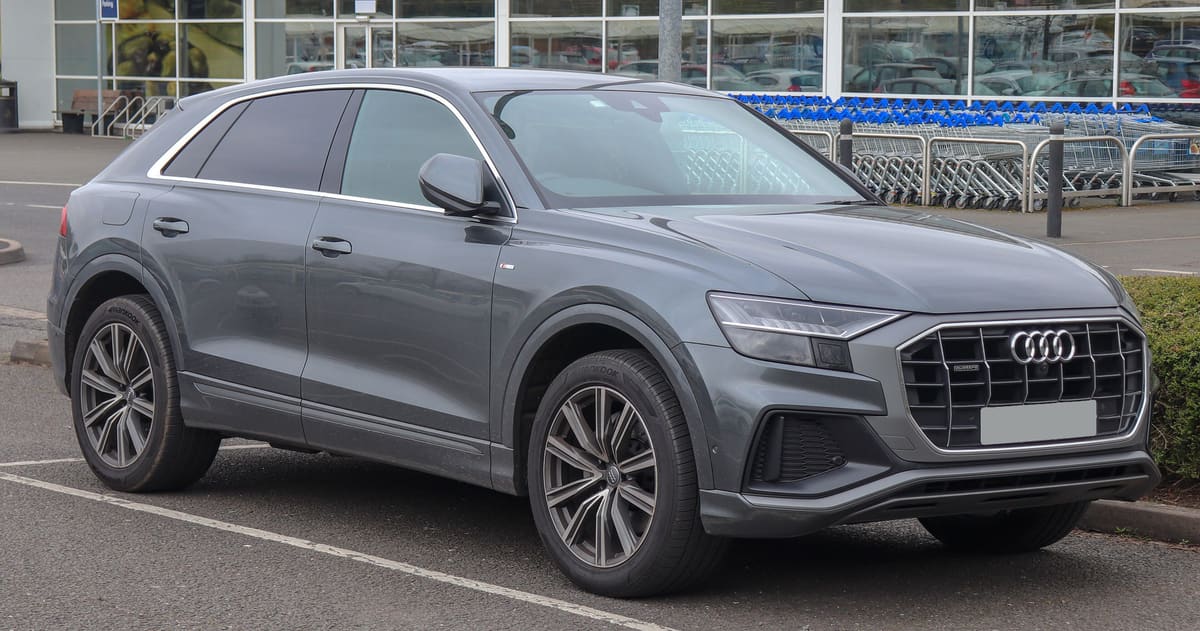
The Audi Q8’s most common MOT failures typically involve brake wear, tyre condition, and lighting faults. Testers focus on safety-critical components such as brake efficiency, tyre tread depth, and correct operation of lights. Owners can pre-empt these by regularly checking brake responsiveness, tyre tread and pressure, and all exterior lights. Repairs often involve replacing worn pads or discs, fitting new tyres, or addressing electrical faults in lighting circuits.
Brake System Issues
Brake-related failures are among the most frequent reasons an Audi Q8 might not pass its MOT. The tester checks the braking efficiency on all wheels, looking for uneven wear, excessive pad or disc wear, and any fluid leaks. The handbrake is also tested to ensure it holds the vehicle securely.
Owners can spot brake problems by noting any squealing or grinding noises when braking, a spongy brake pedal, or a longer stopping distance. Visual inspection of the brake discs through the wheel spokes can reveal scoring or rust, while brake pads can sometimes be seen to be very thin.
Repairing brake issues usually involves replacing worn brake pads and possibly discs if they are damaged or below minimum thickness. Brake fluid may need to be flushed and replaced if contaminated or old. If the handbrake cable is stretched or corroded, it will require adjustment or replacement to restore proper function.
Tyre Condition and Tread Depth
Tyres are a critical safety component, and the MOT tester will check for sufficient tread depth, correct tyre size, and any damage such as cuts, bulges, or sidewall cracks. The legal minimum tread depth in the UK is 1.6mm across the central three-quarters of the tyre width.
Owners should regularly inspect their Q8’s tyres for uneven wear patterns, which can indicate alignment or suspension issues, and ensure the tyres are inflated to the recommended pressures. Tyres showing signs of damage or with tread worn below the legal limit must be replaced.
Replacing tyres involves removing the wheel, fitting new tyres onto the rim, balancing the wheel, and refitting it to the vehicle. It is important to use tyres that match the manufacturer’s recommended specifications for size and speed rating to maintain handling and safety.
Lighting and Electrical Faults
Lighting faults are a common MOT failure on the Audi Q8. The tester checks all exterior lights including headlights, indicators, brake lights, reverse lights, and number plate illumination. Each light must work correctly and be the correct colour and brightness.
Owners can easily check their lights by walking around the vehicle and activating each one. Common issues include blown bulbs, faulty wiring, or corroded connectors. Sometimes, automatic lighting systems or sensors can malfunction and cause intermittent faults.
Repairing lighting faults may involve replacing bulbs, cleaning or repairing corroded connectors, or diagnosing electrical wiring issues. In some cases, control modules may need to be reset or replaced if the fault lies in the vehicle’s lighting control system.
Suspension and Steering Components
Suspension and steering faults can cause MOT failures due to safety concerns. Testers check for excessive play in steering, worn suspension bushes, damaged shock absorbers, and broken springs. They also look for any corrosion or damage to suspension arms and linkages.
Owners might notice symptoms such as uneven tyre wear, pulling to one side, excessive body roll, or unusual noises over bumps. A visual inspection can reveal leaking shock absorbers or damaged components.
Repairs can range from replacing worn bushes and shock absorbers to more extensive work like fitting new suspension arms or steering rack components. Proper wheel alignment is often required after suspension repairs to ensure safe handling.
Exhaust and Emissions
The MOT includes checks on the exhaust system for leaks, excessive noise, and emissions compliance. The tester inspects the exhaust for corrosion, holes, or loose components that could allow harmful gases to escape before the catalytic converter.
Owners can sometimes hear unusual exhaust noises or notice a strong smell of exhaust fumes inside the vehicle, indicating a leak. Visible rust or damage under the car can also be a warning sign.
Repairing exhaust faults involves replacing damaged sections of the exhaust pipe, muffler, or catalytic converter. Exhaust hangers and mounts may also need attention if they are broken or missing to prevent excessive movement and wear.
Windscreen and Wipers
The condition of the windscreen and wipers is checked during the MOT to ensure clear visibility. Testers look for chips or cracks in the driver’s line of sight that could impair vision, and wipers must be effective at clearing the screen.
Owners should regularly clean the windscreen and check for damage. If chips or cracks are present, especially in the driver’s view, these should be repaired or the windscreen replaced. Wiper blades should be replaced if they leave streaks or miss areas.
Replacing wiper blades is a simple maintenance task. Windscreen repair or replacement involves removing the damaged glass and fitting a new screen, ensuring it is properly sealed to prevent leaks.
By keeping an eye on these common trouble spots, Audi Q8 owners can improve their chances of a smooth MOT test and maintain the vehicle’s safety and reliability on the road. Regular checks and timely repairs reduce the risk of unexpected failures and help protect your investment.
Audi Q8 recall record
11 recalls have been issued for the Audi Q8, between 2019 and 2026.
Checking brake servo
R/2026/168Issued 17 April 2026
On affected vehicles the bolted connection for the push rod between the brake pedal and brake servo may come loose with the risk that it will no longer be possible to stop by using the brake pedal.
Remedy:Check the bolted connection for the push rod between the brake pedal and brake servo and tighten if necessary.
Affects cars built May 2019 to May 2024
Belt buckle rivet missing
R/2025/508Issued 14 November 2025
On affected vehicles an important connection in the seat belt buckle may not have been produced correctly during the assembly process.
Remedy:The belt buckles on both front seats (left and right) must be replaced.
Affects cars built Mar 2025 to Mar 2025
Software update for battery control unit
R/2025/441Issued 10 October 2025
On affected vehicles there may be defective battery modules which may result in a fire hazard when charging the high-voltage battery.
Remedy:Update the software of the high-voltage battery to improve the self-diagnosis capabilities. Vehicle owners are advised to not charge the high-voltage battery using external charging sources and also not use the e-tron modes “Battery charge” and “Battery hold” until the update is applied.
Affects cars built Jan 2021 to Dec 2023
Checking brake lines
R/2024/259Issued 18 June 2024
On affected vehicles the bolts for the brake pressure lines may have been tightened too far. In such cases the bolted connection may fail resulting in brake fluid escaping.
Remedy:Check the bolted connection and replace the brake pressure lines if required.
Affects cars built May 2023 to Mar 2024
7 older recalls not shown.
A recall applies to a build range, not to every car of this model. Check a registration to see whether one specific vehicle has an outstanding recall.
Audi Q8 MOT record
From 5,104 recorded MOT tests, 8.6% failed.
| Registered | Tests | Failed | Median mileage |
|---|---|---|---|
| 2022 | 1,042 | 8.5% | 28,881 mi |
| 2021 | 969 | 7.5% | 39,754 mi |
| 2020 | 830 | 9.3% | 44,064 mi |
| 2019 | 1,663 | 9.2% | 55,641 mi |
| 2018 | 600 | 8.3% | 60,174 mi |
Most common reasons for failure
- Tyre tread depth not in accordance with the requirements42.0%
- A tyre seriously damaged24.5%
- a brake lining or pad worn below 1.5mm16.0%
- Brake disc or drum excessively weakened, insecure or fractured9.5%
- A suspension pin, bush or joint excessively worn8.1%
Figures cover every Audi Q8 tested in the DVSA dataset, not this specific car. Check a registration for the actual history of one vehicle.
Audi Q8 official figures
Median across 13 variants on sale, diesel electric, electricity, electricity / petrol, petrol electric.
- Combined economy
- 27.4 mpg
- WLTP median across variants
- CO2 emissions
- 230 g/km
- Sets the first-year tax rate
- Electric range
- 302 miles
- Manufacturer WLTP figure
Official figures for new cars. Real economy varies with driving, load and conditions.
Frequently asked questions
What is the Audi Q8 MOT requirement in the UK?
In the UK, the Audi Q8 requires an MOT test once it is three years old. This annual test ensures that the vehicle meets safety and environmental standards.
How can I check the MOT history of an Audi Q8?
You can check the MOT history of an Audi Q8 by visiting the official UK government website. You will need the vehicle's registration number and the make.
What are common reasons for an Audi Q8 to fail its MOT?
Common reasons for an Audi Q8 to fail its MOT include issues with brakes, lights, and emissions. Regular maintenance can help prevent these problems.
Can I drive my Audi Q8 if it has failed its MOT?
You cannot legally drive your Audi Q8 if it has failed its MOT, unless you are taking it to a pre-booked appointment for repairs. Otherwise, it must be kept off the road.
What should I do if my Audi Q8 is due for an MOT?
If your Audi Q8 is due for an MOT, you should book an appointment with an authorised testing centre. It's best to do this a few weeks in advance to ensure availability.
How long does an MOT test take for an Audi Q8?
An MOT test for an Audi Q8 typically takes about 45 minutes to an hour. However, this can vary depending on the garage and any additional checks needed.
Sources
- DVSA anonymised MOT tests and results (Open Government Licence v3.0)
- VCA new car fuel consumption and emissions data (Open Government Licence v3.0)
- DVSA vehicle safety recalls (Open Government Licence v3.0)