Top fixes
Top BMW X3 fixes every owner should know
Cheap, practical fixes for the BMW X3 faults you actually meet, with rough costs and what a garage will charge.
Updated 4th September 2026 DVSA data: Across 107,668 recorded MOT tests, 15.5% failed.
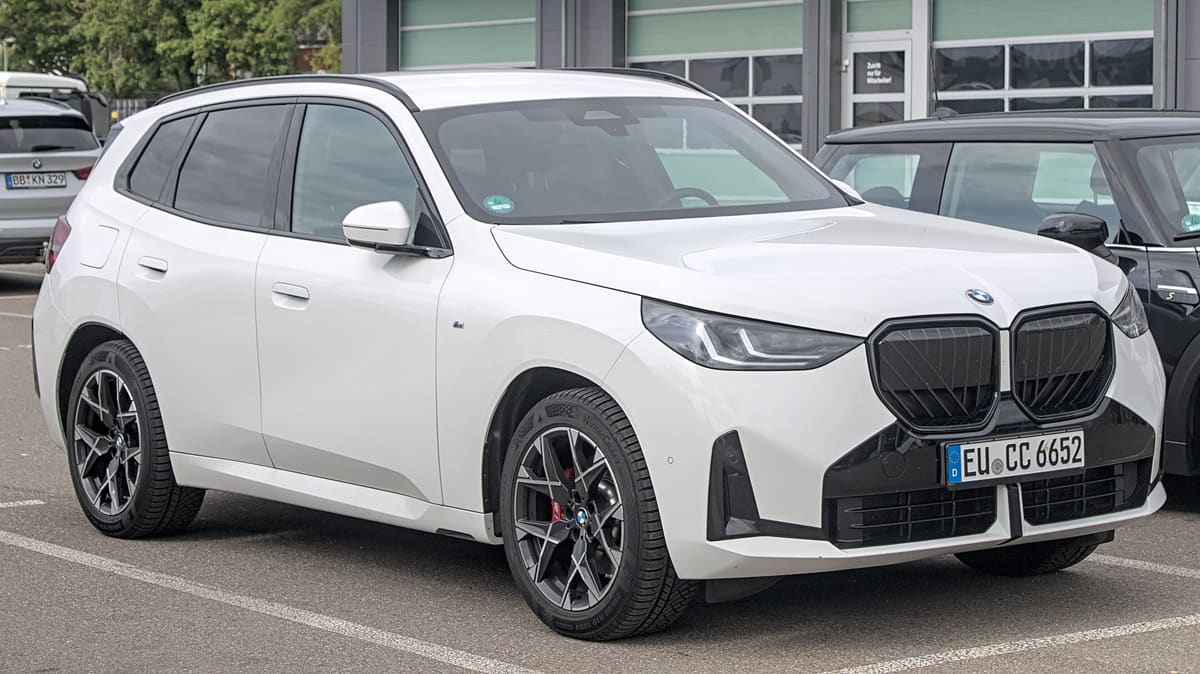
The BMW X3 is a well-engineered SUV, but like any vehicle, it has common issues that can be fixed with practical solutions. Typical problems include coolant leaks, electronic glitches, suspension wear, and turbocharger faults. Many repairs require professional attention, but some can be tackled by confident DIYers with the right tools and guidance.
Coolant Leaks and Overheating
Coolant leaks are a frequent issue in the BMW X3, often indicated by a low coolant warning or engine overheating. The likely cause is a failing water pump, radiator hose, or thermostat housing. These components can degrade over time due to heat and pressure.
Repairing coolant leaks involves draining the cooling system, replacing the faulty part, and refilling with fresh coolant. While replacing a radiator hose or thermostat housing can be a DIY job for those with moderate mechanical skills, water pump replacement is more complex. It requires removing engine covers and belts, so it is best left to a garage to ensure proper installation and avoid further damage.
Regularly checking coolant levels and inspecting hoses for cracks or swelling can help catch leaks early. Prompt attention prevents engine overheating, which can cause costly damage.
Electronic and Sensor Faults
The BMW X3 uses numerous sensors and electronic modules that can sometimes malfunction, triggering warning lights or erratic behaviour. Common symptoms include the check engine light, faulty parking sensors, or issues with the infotainment system.
The likely causes range from sensor failure, wiring faults, to software glitches. Diagnosing these problems requires a diagnostic scan tool to read fault codes and pinpoint the source. Simple sensor replacements, such as oxygen sensors or wheel speed sensors, can be DIY jobs if you have access to the right tools and know-how.
However, more complex electronic issues, especially those involving software updates or control module replacements, should be handled by a garage. They have the specialised diagnostic equipment and software to reset systems and ensure proper function.
Suspension Wear and Noise
Owners of the BMW X3 may notice knocking noises or a harsh ride, often due to worn suspension components. Common culprits include bushings, control arms, and anti-roll bar links, which degrade over time and with mileage.
Replacing worn suspension parts restores ride comfort and handling precision. Some components, like anti-roll bar links and bushings, can be replaced by competent DIYers with a good set of tools and a safe work environment. However, control arm replacement often requires alignment afterwards, so it is advisable to have this done at a garage.
Regular inspection of suspension parts, especially after driving on rough roads or kerbs, helps detect wear early. Addressing suspension issues promptly prevents uneven tyre wear and maintains vehicle stability.
Turbocharger and Boost Pressure Problems
Many BMW X3 models are equipped with turbocharged engines, which can develop boost pressure issues over time. Symptoms include reduced power, hesitation on acceleration, or a check engine light related to boost pressure.
The likely causes include leaks in the intercooler piping, a faulty wastegate, or a failing turbocharger actuator. Repair involves inspecting and replacing faulty hoses or components to restore proper boost pressure.
While replacing a cracked hose or pipe can be a DIY job, turbocharger repairs are complex and require specialist knowledge. Turbochargers operate under high heat and pressure, so improper handling can lead to further damage. It is best to have a garage diagnose and repair turbo-related faults.
Oil Leaks and Engine Seals
Oil leaks are another common issue in the BMW X3, often noticed as oil spots under the car or a burning oil smell. Common leak points include the valve cover gasket, oil filter housing gasket, and oil pan gasket.
Replacing gaskets involves removing engine covers and cleaning mating surfaces before fitting new seals. Some gasket replacements, like the valve cover gasket, can be tackled by experienced DIYers with patience and the correct tools.
However, leaks from the oil filter housing or oil pan often require more disassembly and careful torqueing of bolts to avoid further leaks. These repairs are better suited to a garage, especially if the engine needs to be lifted or other components removed.
Regular oil level checks and watching for leaks can prevent engine damage caused by low oil levels.
Brake Wear and Maintenance
Brake wear is a normal maintenance item on the BMW X3, with symptoms including squealing noises, reduced braking performance, or a spongy brake pedal. Brake pads and discs wear over time and need replacement to maintain safety.
Replacing brake pads is a straightforward job for many DIYers with basic mechanical skills and the right tools. However, brake disc replacement and brake fluid changes require more care and sometimes specialised tools.
Brake fluid should be changed regularly to prevent moisture buildup, which can reduce braking efficiency. For safety reasons, if you are unsure about brake maintenance, it is advisable to have a garage perform the work.
Regular inspection of brake components and prompt replacement ensures safe and reliable stopping power.
BMW X3 recall record
50 recalls have been issued for the BMW X3, between 2011 and 2026.
Replace the Engine Starter Motor
R/2026/054Issued 2 March 2026
The Safety Recall relates to the engine starter motor. The fault relates to the RSW22 starter RWT (reinforced water tightness). It was found that with RWT starters an increased abrasion of the magnetic contact can cause the growth of deposits at the lowest point of the relay interior. This in turn may increase the relay contact resistance resulting in false starts or even causing short circuits and possibly a thermal reaction. In case of a short circuit the possibility of a thermal event cannot be excluded. This may happen while attempting to start the vehicle or while driving due to vibrations causing a short circuit due to moving deposits.
Remedy:On the affected vehicles the starter motor will be replaced with a variant by another supplier with a different design. Until the repair has been completed it is recommended to not leave the vehicle running unattended after starting the engine.
Affects cars built Sept 2020 to Jan 2022
Replace the Driver’s Airbag – Takata PSDI-5
R/2025/327Issued 12 January 2026
Affected vehicles may be fitted with a drivers airbag which may deploy with too much explosive force causing sharp metal fragments to be released into the cabin. It has the potential to fatally or seriously injure vehicle occupants.
Remedy:Affected vehicles will have the airbag replaced.
Affects cars built Jan 2006 to Aug 2010
Takata Driver and/or Passenger Airbag Recall (Global VINs)
R/2025/349Issued 18 December 2025
Affected vehicles are already included in Safety Recalls within the markets they have previously resided in. The vehicles may be fitted with a driver and/or passenger airbag/s which if deployed may do so with excessive force causing sharp metal fragments to be released this may cause serious injury which could prove fatal to people in the vicinity.
Remedy:Vehicles will have the affected airbags checked and if necessary replaced.
Affects cars built Jul 2003 to Jul 2010
Programming Control Units (Steering Gear)
R/2025/535Issued 9 December 2025
A quality check has revealed a potential issue with the steering gear software program which monitors the function of two sensors and compares the signals. In the vehicles concerned due to an error in the software the failure of a sensor may not always be detected correctly. When a failure has been detected correctly the driver is notified of it by a Check Control message on the Central Display and minimal change to steering feel.
Remedy:To ensure your vehicle is in perfect working order we would like to program the vehicles control units. This work will be free of charge.
Affects cars built Aug 2024 to Oct 2025
46 older recalls not shown.
A recall applies to a build range, not to every car of this model. Check a registration to see whether one specific vehicle has an outstanding recall.
BMW X3 MOT record
From 107,668 recorded MOT tests, 15.5% failed.
| Registered | Tests | Failed | Median mileage |
|---|---|---|---|
| 2023 | 290 | 2.1% | 20,668 mi |
| 2022 | 7,281 | 8.4% | 26,351 mi |
| 2021 | 10,485 | 9.7% | 35,412 mi |
| 2020 | 7,478 | 9.6% | 41,180 mi |
| 2019 | 15,496 | 9.7% | 47,787 mi |
| 2018 | 8,060 | 10.3% | 55,272 mi |
| 2017 | 7,998 | 14.5% | 67,317 mi |
| 2016 | 8,909 | 17.1% | 75,285 mi |
Most common reasons for failure
- Tyre tread depth not in accordance with the requirements39.4%
- A tyre seriously damaged22.3%
- A spring or spring component fractured or seriously weakened13.5%
- A suspension pin, bush or joint excessively worn12.7%
- a brake lining or pad worn below 1.5mm12.1%
Figures cover every BMW X3 tested in the DVSA dataset, not this specific car. Check a registration for the actual history of one vehicle.
BMW X3 official figures
Median across 15 variants on sale, diesel electric, electricity / petrol, petrol electric.
- Combined economy
- 40.9 mpg
- WLTP median across variants
- CO2 emissions
- 160 g/km
- Sets the first-year tax rate
Official figures for new cars. Real economy varies with driving, load and conditions.
Frequently asked questions
What are common issues with the BMW X3?
Common issues include oil leaks, electrical faults, and suspension problems.
Can I fix these issues myself?
Many issues can be fixed DIY, but some may require professional help.
Are these fixes temporary or permanent?
Some fixes are temporary patches, while others can provide a long-term solution.
Sources
- DVSA anonymised MOT tests and results (Open Government Licence v3.0)
- VCA new car fuel consumption and emissions data (Open Government Licence v3.0)
- DVSA vehicle safety recalls (Open Government Licence v3.0)