Running costs
Ford Edge running costs: what UK ownership really costs
Ford Edge UK running costs: fuel or electric, insurance group, road tax, servicing and depreciation.
Updated 4th September 2026 DVSA data: Across 8,814 recorded MOT tests, 13.0% failed.
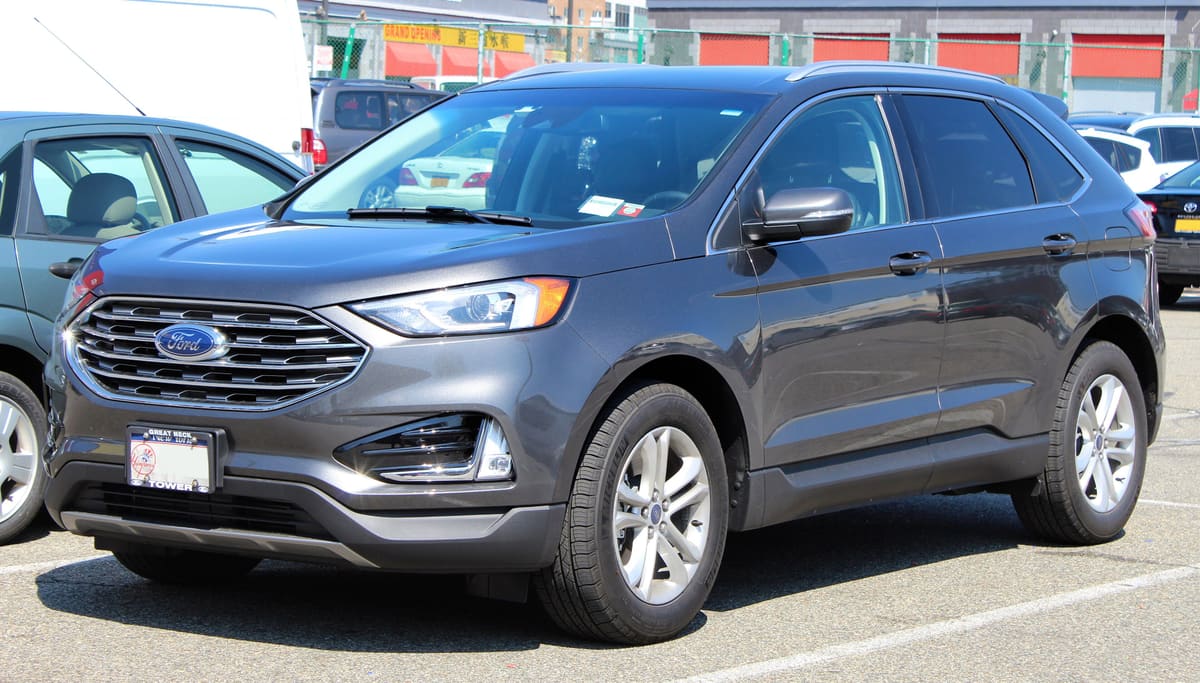
The Ford Edge offers a blend of practicality and comfort, but running costs can vary significantly based on the model and usage. Fuel economy, insurance groups, tax bands, servicing intervals, and depreciation all contribute to the total ownership cost. Understanding these factors can help potential buyers make informed decisions.
Fuel Costs
The Ford Edge is available with both petrol and diesel engines, each offering different fuel efficiencies. Fuel costs will depend on current fuel prices, which can fluctuate, but with diesel being generally cheaper per mile, many owners find it a more economical choice for longer journeys.
These figures can vary based on driving style and conditions, so it’s essential to consider your typical usage when evaluating fuel costs.
Insurance Group
Insurance for the Ford Edge falls within a moderate range, typically between groups 30 and 36, depending on the specific model and trim level. This positioning means that while it may not be the cheapest vehicle to insure, it is also not the most expensive. Factors such as your driving history, location, and the level of coverage you choose will influence your premium.
It’s advisable to shop around for quotes and consider factors like excess levels and additional cover options to find the best deal for your circumstances.
Tax Band
The Ford Edge is subject to road tax, which is based on CO2 emissions. The exact tax rate can vary depending on the model year and specific emissions figures.
For example, a newer Edge with lower emissions may qualify for a reduced tax rate, while older models could incur higher fees. Understanding the tax implications can help you budget more effectively for ownership costs.
Servicing Intervals
Regular servicing is crucial for maintaining the Ford Edge’s performance and longevity. Ford recommends servicing every 12,500 miles or annually, whichever comes first. This interval includes essential checks and replacements, such as oil changes, filter replacements, and brake inspections.
Independent garages may offer lower rates, but it is essential to ensure they use genuine parts and follow manufacturer guidelines to maintain warranty coverage.
Typical Depreciation
Depreciation is a significant factor in the total ownership cost of any vehicle, and the Ford Edge is no exception. Typically, you can expect the Edge to lose around 50-60% of its value over the first three years, which is in line with many vehicles in its class.
Factors influencing depreciation include mileage, condition, and market demand. The Edge’s reputation for reliability can help mitigate depreciation somewhat, but it is still essential to consider this when purchasing, as resale values can vary significantly based on these factors.
Conclusion
Understanding the running costs associated with the Ford Edge is crucial for prospective buyers. From fuel consumption and insurance to tax implications and servicing needs, each aspect plays a role in the overall ownership experience. By considering these factors, you can better assess whether the Ford Edge fits your budget and lifestyle.
Ford Edge recall record
6 recalls have been issued for the Ford Edge, between 2016 and 2026.
MVL: REAR-VIEW CAMERA DISTORTED AND/OR LOSS OF IMAGE
R/2026/213Issued 28 May 2026
Affected vehicles may have an issue with the rear-view camera. Drivers may experience a distorted or loss of image.
Remedy:Check vehicle and replace camera as required.
Affects cars built Dec 2015 to Sept 2016
CrossCar: Sync3 Rear-View Camera Software Update
R/2025/359Issued 8 September 2025
On affected vehicles a software problem may result in issues with the rear-view camera that reduce the driver’s view or with it remaining on after a reversing event.
Remedy:Update the vehicle software to the latest level.
Affects cars built Sept 2018 to Nov 2018
Brake Hose Leak
R/2026/076Issued 23 May 2024
On affected vehicles there is the possibility of the front brake hoses leaking.
Remedy:Replace both front brake hoses and modify the hose routing and ride height sensor if necessary.
Affects cars built Dec 2015 to Dec 2018
TAKATA AIR BAG INFLATOR MAY RUPTURE ON DEPLOYMENT
R/2019/156Issued 21 August 2020
Air bag inflators may not operate as intended
Remedy:Replace air bag inflator
Affects cars built Jul 2007 to Jul 2010
2 older recalls not shown.
A recall applies to a build range, not to every car of this model. Check a registration to see whether one specific vehicle has an outstanding recall.
Ford Edge MOT record
From 8,814 recorded MOT tests, 13.0% failed.
| Registered | Tests | Failed | Median mileage |
|---|---|---|---|
| 2019 | 1,002 | 10.7% | 45,386 mi |
| 2018 | 1,637 | 13.4% | 59,970 mi |
| 2017 | 3,891 | 13.0% | 65,840 mi |
| 2016 | 2,284 | 13.8% | 71,862 mi |
Most common reasons for failure
- Tyre tread depth not in accordance with the requirements37.2%
- a brake lining or pad worn below 1.5mm27.5%
- A tyre seriously damaged15.9%
- Brake disc or drum excessively weakened, insecure or fractured12.5%
- A shock absorber damaged to the extent that it does not function or showing signs of severe leakage6.9%
Figures cover every Ford Edge tested in the DVSA dataset, not this specific car. Check a registration for the actual history of one vehicle.
Frequently asked questions
How often does a Ford Edge need servicing?
A Ford Edge typically requires a service every 12,500 miles or annually, whichever comes first. Regular maintenance includes oil changes, brake checks, and tyre rotations to ensure optimal performance.
Are there any specific maintenance issues to watch for?
Owners have reported issues with the turbocharger in the 2017 model, which can lead to a loss of power. Regular checks on the turbo system and timely oil changes can help mitigate these problems.
How reliable is the Ford Edge in terms of running costs?
The Ford Edge is generally considered reliable, with many owners reporting minimal issues. However, the 2016 model has had some complaints regarding electrical systems, which can lead to higher repair costs if not addressed promptly.
What are the brake replacement intervals for a Ford Edge?
Brake pads on a Ford Edge typically need replacing every 20,000 to 30,000 miles, depending on driving conditions. Regular inspections can help catch wear early and avoid more costly repairs.
Sources
- DVSA anonymised MOT tests and results (Open Government Licence v3.0)
- DVSA vehicle safety recalls (Open Government Licence v3.0)