Running costs
Hyundai i10 running costs: what UK ownership really costs
Hyundai i10 UK running costs: fuel or electric, insurance group, road tax, servicing and depreciation.
Updated 4th September 2026 DVSA data: Across 247,537 recorded MOT tests, 21.0% failed.
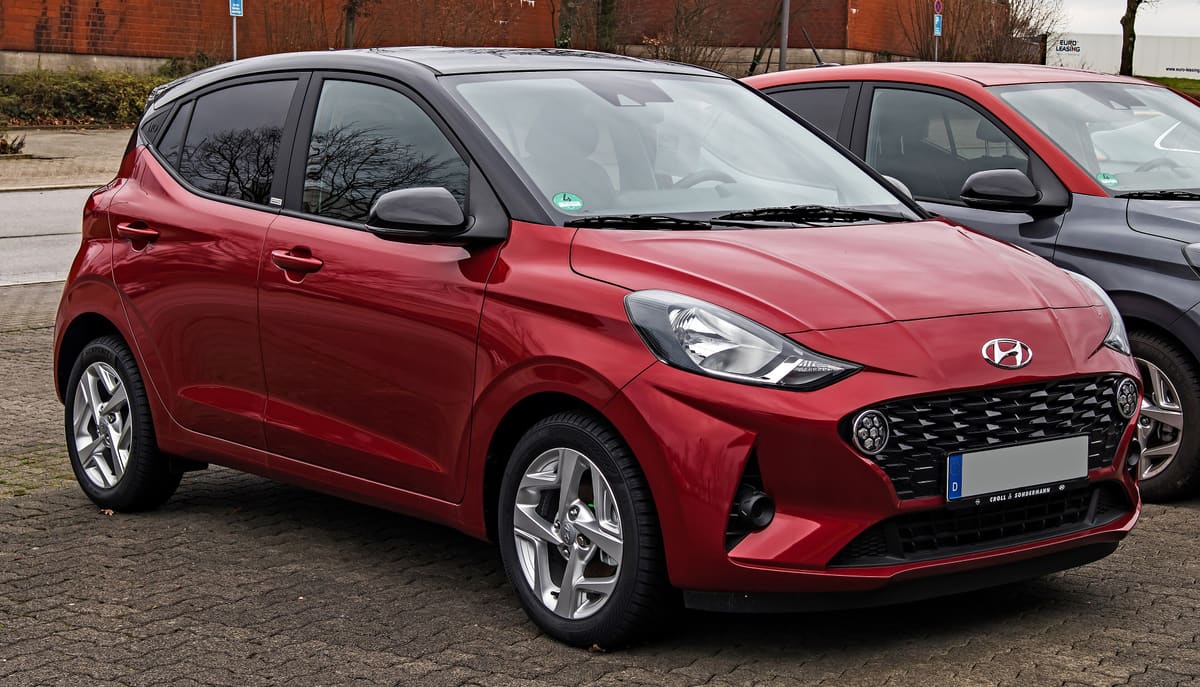
The Hyundai i10 is an economical choice for drivers, with low running costs that include affordable fuel consumption, reasonable insurance rates, and minimal tax obligations. Its servicing intervals are manageable, and depreciation is typically lower than average, making it a smart option for budget-conscious buyers.
Fuel Costs
The Hyundai i10 is known for its impressive fuel efficiency, making it an economical choice for daily commuting. The petrol variants typically return around 50 to 60 miles per gallon, depending on driving conditions and style.
For those considering the i10 as an electric vehicle, the running costs are even lower. This makes the i10 a compelling option for environmentally conscious drivers looking to save on fuel.
Insurance Group
Insurance costs for the Hyundai i10 are generally affordable, with most models falling into insurance groups 1 to 5. This low grouping is beneficial for younger drivers or those with limited driving experience, as it results in lower premiums.
Choosing a model with advanced safety features can also help reduce insurance costs. Many i10 variants come equipped with features like electronic stability control and multiple airbags, which can positively influence insurance premiums. Additionally, opting for a higher security rating can further lower costs, making it a wise choice for budget-conscious buyers.
Tax Band
The Hyundai i10 is typically placed in the lower tax bands due to its low CO2 emissions. Most petrol models emit around 100 to 120 g/km of CO2, which places them in tax bands A to C.
For electric variants, the road tax is even more favourable, as they are exempt from Vehicle Excise Duty (VED) entirely. This exemption can lead to significant savings over the lifespan of the vehicle, making the i10 an attractive option for those looking to minimise their overall ownership costs.
Servicing Intervals
The Hyundai i10 features a straightforward servicing schedule, with intervals set at 12,000 miles or annually, whichever comes first. This regular maintenance ensures that the vehicle remains in optimal condition, helping to prevent more costly repairs down the line.
Many owners find that the i10’s reliability means fewer unexpected repairs, further contributing to its low running costs. Additionally, Hyundai offers a five-year warranty on new vehicles, providing peace of mind and potentially reducing out-of-pocket expenses for repairs during the warranty period.
Typical Depreciation
Depreciation is a critical factor to consider when assessing the total ownership costs of any vehicle.
Factors influencing depreciation include mileage, condition, and market demand. The i10’s reputation for reliability and low running costs often makes it a desirable choice in the used car market, which can help mitigate depreciation losses. Buyers looking for a second-hand i10 can often find good deals, making it an appealing option for those wanting to save money on initial purchase costs.
Conclusion
Overall, the Hyundai i10 stands out as a cost-effective vehicle for UK drivers. With its low fuel consumption, affordable insurance rates, minimal tax obligations, manageable servicing costs, and reasonable depreciation, it is an excellent choice for anyone seeking a reliable and economical car. Whether for commuting or city driving, the i10 offers a practical solution without compromising on quality or comfort.
Hyundai i10 recall record
4 recalls have been issued for the Hyundai i10, between 2022 and 2026.
The vehicle fuel pump may have an internal malfunction which may fail over time.
R/2026/093Issued 6 April 2026
The vehicle fuel pump may have an internal malfunction which may fail over time. The malfunction indicator light MIL on the vehicle instrument cluster may illuminate when this symptom occurs and if ignored and the vehicle continues to be driven the vehicle may lose motive power.
Remedy:The affected vehicles will have the fuel pump replaced as a permanent solution
Affects cars built Nov 2021 to Apr 2023
The fuel tank may have been produced with a manufacturing defect which may result in fuel leakage in a limited number of vehicles
R/2025/273Issued 29 September 2025
The fuel tank may have been produced with a manufacturing defect which may result in fuel leakage in a limited number of vehicles
Remedy:The fuel tank will be replaced to correct the potential concern.
Affects cars built Oct 2025 to Oct 2025
The vehicle exhaust gas recirculation valve may have an internal short circuit which in some cases may result in the vehicle engine stalling.
R/2024/490Issued 20 January 2025
The vehicle exhaust gas recirculation valve may have an internal short circuit which in some cases may result in the vehicle engine stalling.
Remedy:Affected vehicles will have the exhaust gas recirculation valve replaced
Affects cars built Mar 2024 to May 2024
VEHICLES FITTED WITH A REAR RIGHT SEAT BELT PRETENSIONER MAY EXPERIENCE ABNORMAL PERFORMANCE OF THE PRETENSIONER DURING DEPLOYMENT
R/2022/163Issued 27 June 2022
Vehicles fitted with a rear right seat belt pretensioner within the affected production range may experience abnormal performance of the pretensioner during deployment
Remedy:Inspect the bar code on the rear right hand seatbelt assembly and replace if found within the affected production range with a countermeasure part.
Affects cars built Sept 2020 to Oct 2020
A recall applies to a build range, not to every car of this model. Check a registration to see whether one specific vehicle has an outstanding recall.
Hyundai i10 MOT record
From 247,537 recorded MOT tests, 21.0% failed.
| Registered | Tests | Failed | Median mileage |
|---|---|---|---|
| 2023 | 440 | 8.2% | 14,132 mi |
| 2022 | 8,479 | 11.2% | 14,881 mi |
| 2021 | 7,920 | 11.2% | 18,870 mi |
| 2020 | 6,256 | 9.8% | 21,610 mi |
| 2019 | 17,810 | 13.0% | 28,574 mi |
| 2018 | 20,801 | 14.7% | 33,928 mi |
| 2017 | 23,372 | 14.0% | 39,843 mi |
| 2016 | 21,830 | 15.2% | 42,434 mi |
Most common reasons for failure
- Tyre tread depth not in accordance with the requirements29.1%
- A tyre seriously damaged25.4%
- Brake pipe damaged or excessively corroded18.1%
- Brake disc or drum excessively weakened, insecure or fractured14.3%
- a brake lining or pad worn below 1.5mm13.1%
Figures cover every Hyundai i10 tested in the DVSA dataset, not this specific car. Check a registration for the actual history of one vehicle.
Hyundai i10 official figures
Median across 20 variants on sale, petrol.
- Combined economy
- 52.3 mpg
- WLTP median across variants
- CO2 emissions
- 123 g/km
- Sets the first-year tax rate
Official figures for new cars. Real economy varies with driving, load and conditions.
Frequently asked questions
What are the typical fuel costs for a Hyundai i10?
The Hyundai i10 generally offers good fuel efficiency, averaging around 55 to 60 mpg depending on the model year and driving conditions. This means you can expect reasonable fuel costs, especially for city driving.
How often does the Hyundai i10 need servicing?
The recommended service interval for the Hyundai i10 is every 12 months or 10,000 miles, whichever comes first. Regular servicing helps maintain performance and can prevent more costly repairs down the line.
What is the road tax band for the Hyundai i10?
The Hyundai i10 falls into various tax bands depending on the model year and engine size. For example, the 2021 model with a 1.0-litre engine typically sits in Band B, which has a lower annual tax rate.
Are there any common repairs needed for the Hyundai i10?
Brake pad replacement is a common maintenance task for the Hyundai i10, especially if you drive in urban areas. It's advisable to check the pads every 20,000 miles to ensure safety and performance.
What is the average insurance cost for a Hyundai i10?
Insurance costs for the Hyundai i10 can vary, but it generally falls into lower insurance groups, making it more affordable. For instance, the 2020 model is often in group 2 or 3, which helps keep premiums down.
How reliable is the Hyundai i10 in terms of running costs?
The Hyundai i10 is known for its reliability, which contributes to lower running costs. Owners often report fewer breakdowns and issues with components like the alternator, which can lead to savings on repairs.
What are the tyre replacement costs for the Hyundai i10?
Tyre replacement for the Hyundai i10 typically involves 14-inch or 15-inch tyres, depending on the model. Regular checks for tread wear are essential, and replacing tyres every 20,000 to 30,000 miles is common.
Sources
- DVSA anonymised MOT tests and results (Open Government Licence v3.0)
- VCA new car fuel consumption and emissions data (Open Government Licence v3.0)
- DVSA vehicle safety recalls (Open Government Licence v3.0)