MOT failure rates
Hyundai Ioniq 5 MOT failure rates: what to expect
What fails on a Hyundai Ioniq 5 at MOT, how often, and what each fix typically costs.
Updated 4th September 2026 DVSA data: Across 8,313 recorded MOT tests, 6.6% failed.
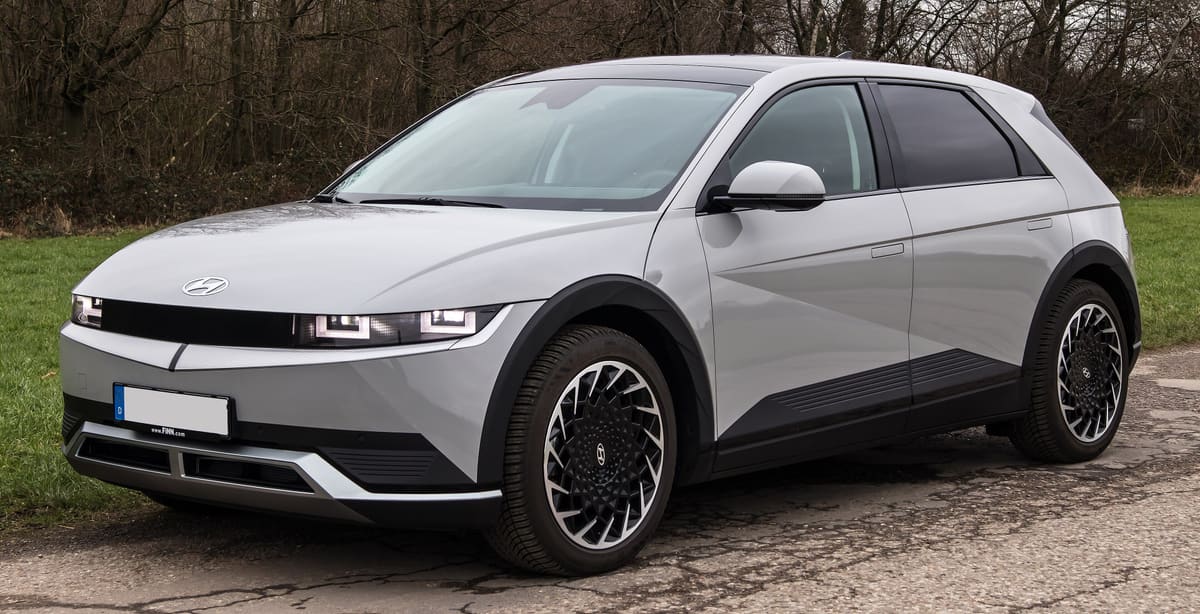
The Hyundai Ioniq 5 is generally a reliable electric vehicle, but like any car, it can encounter issues that may lead to an MOT failure. Common problems include tyre wear, lighting issues, and suspension faults. Understanding these common failures and their repair costs can help you maintain your vehicle and avoid unexpected expenses.
Tyre Wear and Condition
Tyres are one of the most common reasons for MOT failures across all vehicle types, including the Hyundai Ioniq 5. Insufficient tread depth or uneven wear can lead to a failed test. The legal minimum tread depth in the UK is 1.6mm, but it is advisable to replace tyres when they reach 3mm for optimal safety.
Regular checks can help identify issues before the MOT, ensuring tyres are in good condition. Proper alignment and rotation can also prolong tyre life, reducing the likelihood of MOT failures.
Lighting and Signalling Issues
Lighting failures are another common cause of MOT failures for the Ioniq 5. This includes issues with headlights, brake lights, indicators, and fog lights. A blown bulb or a malfunctioning light can lead to an automatic failure during the MOT inspection.
Regularly checking all lights and replacing bulbs as needed can prevent these issues from arising at the time of the MOT.
Suspension Problems
Suspension components are vital for vehicle stability and handling. Common suspension issues that can lead to MOT failures include worn shock absorbers, damaged springs, and issues with bushings. The Ioniq 5’s suspension is generally robust, but wear and tear can occur, especially if the vehicle has been driven on poor road surfaces.
Regular inspections can help identify early signs of wear, allowing for proactive repairs that can save money in the long run.
Braking System Failures
The braking system is crucial for safety and is thoroughly checked during an MOT. Common issues include worn brake pads, discs, and fluid leaks. The Ioniq 5’s regenerative braking system can also experience faults, which may affect performance and lead to a failed MOT.
Regular maintenance and timely replacement of worn components can help ensure the braking system remains in good condition, reducing the chances of MOT failures.
Battery and Electrical System
As an electric vehicle, the Ioniq 5 relies heavily on its battery and electrical systems. While battery issues are less common, they can still occur, particularly in older models or those with high mileage. Problems can include battery degradation or faults in the charging system.
Battery replacement can be expensive, often costing several thousand pounds, depending on the warranty and specific circumstances. Regular checks of the electrical system can help identify potential issues before they lead to a failed MOT.
Windscreen and Wipers
A damaged windscreen or faulty wipers can lead to an MOT failure. The Ioniq 5’s large windscreen is prone to chips and cracks, which can obstruct the driver’s view. Wiper blades that are worn or malfunctioning can also fail the test.
Regular checks and timely repairs can help maintain visibility and ensure compliance during the MOT.
By understanding these common issues and their associated costs, Ioniq 5 owners can take proactive measures to maintain their vehicle and ensure a successful MOT. Regular maintenance and inspections can help identify potential problems early, saving time and money in the long run.
Hyundai Ioniq 5 recall record
5 recalls have been issued for the Hyundai Ioniq 5, between 2022 and 2026.
Some vehicles may have an instrument cluster operational concern whilst driving the vehicle
R/2026/146Issued 2 April 2026
Some vehicles may face a concern where the instrument cluster panel may reboot during vehicle operation potentially resulting in a blank instrument cluster display screen.
Remedy:To correct this an ‘Over the Air ‘ software update to the vehicles will be deployed remotely.
Affects cars built Jul 2025 to Nov 2025
The rear inner driveshaft may develop noise resulting in a loss of drive
R/2024/169Issued 13 May 2024
On affected vehicles the rear inner driveshaft may develop noise resulting in a loss of drive.
Remedy:On all affected vehicles replace the affected driveshaft and check properly fastened
Affects cars built Jan 2023 to Feb 2023
The Integrated Charging Control Unit (ICCU) may become defective and stop charging the 12-volt battery which can result in the vehicle entering into a ‘failsafe’ driving mode.
R/2024/164Issued 6 May 2024
On affected vehicles the Integrated Charging Control Unit (ICCU) may be come defective and stop charging the 12volt battery this can result in the vehicle entering a failsafe driving mode
Remedy:On all affected vehicles update the ICCU software and check and replace if necessary the ICCU and fuse.
Affects cars built Jan 2021 to Feb 2024
The vehicle identification number label may not have the correct maximum permissible laden mass printed on the VIN label.
R/2023/041Issued 13 March 2023
The vehicle identification number label may not have the correct maximum permissible laden mass printed on the VIN label.
Remedy:Replace the vehicle identification number label with an amended VIN label.
Affects cars built Jul 2022 to Nov 2022
1 older recall not shown.
A recall applies to a build range, not to every car of this model. Check a registration to see whether one specific vehicle has an outstanding recall.
Hyundai Ioniq 5 MOT record
From 8,313 recorded MOT tests, 6.6% failed.
| Registered | Tests | Failed | Median mileage |
|---|---|---|---|
| 2023 | 297 | 6.1% | 37,363 mi |
| 2022 | 5,852 | 6.7% | 29,408 mi |
| 2021 | 2,164 | 6.5% | 35,240 mi |
Most common reasons for failure
- A tyre seriously damaged39.8%
- Tyre tread depth not in accordance with the requirements27.3%
- Wiper blade missing or obviously not clearing the windscreen21.2%
- A tyre cords visible or damaged7.9%
- Defect 100013.8%
Figures cover every Hyundai Ioniq 5 tested in the DVSA dataset, not this specific car. Check a registration for the actual history of one vehicle.
Hyundai Ioniq 5 official figures
Median across 43 variants on sale, electricity.
- Electric range
- 296 miles
- Manufacturer WLTP figure
Official figures for new cars. Real economy varies with driving, load and conditions.
Frequently asked questions
What is the Hyundai Ioniq 5 mot?
The Hyundai Ioniq 5 mot refers to the Ministry of Transport test that checks the vehicle's safety and roadworthiness. It is a legal requirement for vehicles over three years old in the UK.
How often do I need to get my Hyundai Ioniq 5 mot?
You need to get your Hyundai Ioniq 5 mot every year once it reaches three years old. It's important to keep up with this to ensure your vehicle remains safe and legal to drive.
What are common reasons for failing an mot on the Hyundai Ioniq 5?
Common reasons for failing an mot include issues with brakes, lights, tyres, and emissions. Regular maintenance can help prevent these problems.
Can I drive my Hyundai Ioniq 5 if it has failed its mot?
No, you cannot legally drive your Hyundai Ioniq 5 if it has failed its mot unless you are driving it to a pre-booked appointment for repairs. It is important to address any issues before driving.
How can I prepare my Hyundai Ioniq 5 for its mot?
To prepare your Hyundai Ioniq 5 for its mot, check the lights, tyres, and brakes, and ensure all fluids are topped up. It may also be helpful to have a professional inspection before the test.
What should I do if my Hyundai Ioniq 5 fails its mot?
If your Hyundai Ioniq 5 fails its mot, you will receive a list of issues that need to be fixed. You can then have the necessary repairs done and retest the vehicle.
Where can I get my Hyundai Ioniq 5 mot done?
You can get your Hyundai Ioniq 5 mot done at any authorised mot testing centre in the UK. It's advisable to choose a reputable garage for the best service.
Sources
- DVSA anonymised MOT tests and results (Open Government Licence v3.0)
- VCA new car fuel consumption and emissions data (Open Government Licence v3.0)
- DVSA vehicle safety recalls (Open Government Licence v3.0)