MOT failure rates
Hyundai Ioniq 6 MOT failure rates: what to expect
What fails on a Hyundai Ioniq 6 at MOT, how often, and what each fix typically costs.
Updated 4th September 2026
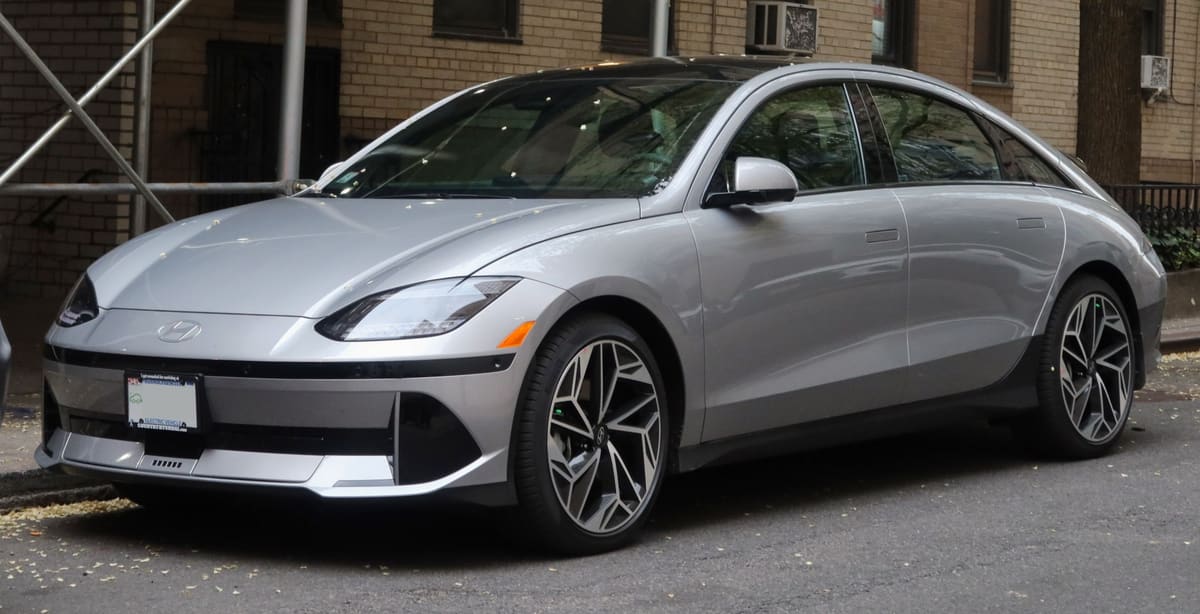
The Hyundai Ioniq 6 has received positive reviews for its reliability, but like any vehicle, it can encounter issues during its MOT. Common failures often include lighting and signalling faults, suspension problems, and issues with brakes. Fixing these problems can vary in cost, but understanding them can help you prepare for your next MOT.
Lighting and Signalling Failures
One of the most frequent reasons for MOT failures in the Hyundai Ioniq 6 is lighting and signalling issues. This can include problems with headlights, brake lights, and indicators. The DVSA MOT data indicates that these faults are among the top reasons for failure across many car models.
Regularly checking your lights can help prevent these issues from arising at the time of your MOT.
Suspension Problems
Suspension issues are another common failure point for the Hyundai Ioniq 6. Problems can arise from worn-out shock absorbers, damaged springs, or issues with the suspension geometry. These faults can significantly affect the vehicle’s handling and safety, making them critical to address.
Repair costs for suspension components can vary widely. Regular checks and maintenance can help identify these problems early, potentially saving you money in the long run.
Brake System Failures
The braking system is vital for safety, and any faults here can lead to an MOT failure. Common issues with the Hyundai Ioniq 6 include worn brake pads, damaged discs, or leaks in the brake lines.
Regular brake inspections can help ensure your vehicle remains safe and roadworthy.
Tyre Condition and Tread Depth
Tyres are essential for vehicle safety and performance, and they are a common failure point during MOTs. The Hyundai Ioniq 6 must have tyres that meet legal tread depth requirements. A tread depth of less than 1.6mm can lead to an automatic failure.
Additionally, uneven tyre wear can indicate alignment or suspension issues, which may require further inspection and repair. Regularly checking your tyre condition can help avoid MOT failures and ensure safe driving.
Exhaust Emissions and System Integrity
As an electric vehicle, the Hyundai Ioniq 6 has lower emissions compared to traditional petrol or diesel cars. However, issues can still arise with the exhaust system, particularly if the vehicle has a hybrid component. Problems with the catalytic converter or exhaust leaks can lead to an MOT failure.
Regular servicing can help identify potential exhaust issues before they become serious problems, ensuring compliance with emissions standards.
Bodywork and Structural Integrity
While the Hyundai Ioniq 6 is generally well-built, issues with bodywork and structural integrity can still lead to MOT failures. Common problems include corrosion, particularly in older models, and damage to the chassis or subframe. The DVSA MOT data suggests that structural issues can be a significant concern for many vehicles.
Regular inspections and prompt repairs can help maintain the integrity of your vehicle and prevent costly failures during the MOT.
Understanding these common failure points and their associated costs can help Hyundai Ioniq 6 owners prepare for their MOTs. Regular maintenance and timely repairs can ensure your vehicle remains in good condition and passes its MOT without issues.
Hyundai Ioniq 6 recall record
3 recalls have been issued for the Hyundai Ioniq 6, between 2024 and 2025.
The vehicle charge port door outer panel may detach
R/2025/457Issued 17 November 2025
The vehicle charge port door outer panel may have insufficient engagement between the outer panel retaining hooks and the charging port door increasing the risk of detachment during operation.
Remedy:To rectify this issue the charge port door outer panel assembly will be adhered as a permanent solution.
Affects cars built Aug 2022 to Jan 2025
The rear inner driveshaft may develop noise resulting in a loss of drive
R/2024/169Issued 13 May 2024
On affected vehicles the rear inner driveshaft may develop noise resulting in a loss of drive.
Remedy:On all affected vehicles replace the affected driveshaft and check properly fastened
Affects cars built Jan 2023 to Feb 2023
The Integrated Charging Control Unit (ICCU) may become defective and stop charging the 12-volt battery which can result in the vehicle entering into a ‘failsafe’ driving mode.
R/2024/164Issued 6 May 2024
On affected vehicles the Integrated Charging Control Unit (ICCU) may be come defective and stop charging the 12volt battery this can result in the vehicle entering a failsafe driving mode
Remedy:On all affected vehicles update the ICCU software and check and replace if necessary the ICCU and fuse.
Affects cars built Sept 2022 to Mar 2024
A recall applies to a build range, not to every car of this model. Check a registration to see whether one specific vehicle has an outstanding recall.
Hyundai Ioniq 6 official figures
Median across 14 variants on sale, electricity.
- Electric range
- 322 miles
- Manufacturer WLTP figure
Official figures for new cars. Real economy varies with driving, load and conditions.
Frequently asked questions
What is the Hyundai Ioniq 6's range on a full charge?
The Hyundai Ioniq 6 offers an impressive electric range, typically allowing drivers to travel several hundred miles on a full charge, depending on driving conditions and battery size.
Is the Hyundai Ioniq 6 eligible for government grants?
Yes, the Hyundai Ioniq 6 may qualify for government grants and incentives aimed at promoting electric vehicles, which can help reduce the overall cost of purchase.
What safety features does the Hyundai Ioniq 6 include?
The Hyundai Ioniq 6 comes equipped with a range of advanced safety features, including lane-keeping assist, adaptive cruise control, and automatic emergency braking, enhancing driver and passenger safety.
How does the Hyundai Ioniq 6 compare to other electric vehicles?
The Hyundai Ioniq 6 stands out in the electric vehicle market due to its sleek design, spacious interior, and competitive range, making it a strong contender against other models.
What is the warranty coverage for the Hyundai Ioniq 6?
Hyundai typically offers a comprehensive warranty for the Ioniq 6, which includes a five-year unlimited mileage warranty and an eight-year battery warranty, providing peace of mind for buyers.
Are there different trim levels available for the Hyundai Ioniq 6?
Yes, the Hyundai Ioniq 6 is available in various trim levels, each offering different features and options, allowing buyers to choose a model that best fits their needs and budget.
What is the boot space like in the Hyundai Ioniq 6?
The Hyundai Ioniq 6 offers a generous boot space, providing ample room for luggage and everyday items, making it practical for both daily commutes and longer journeys.
Sources
- VCA new car fuel consumption and emissions data (Open Government Licence v3.0)
- DVSA vehicle safety recalls (Open Government Licence v3.0)