Running costs
Hyundai Tucson running costs: what UK ownership really costs
Hyundai Tucson UK running costs: fuel or electric, insurance group, road tax, servicing and depreciation.
Updated 4th September 2026 DVSA data: Across 166,243 recorded MOT tests, 14.0% failed.
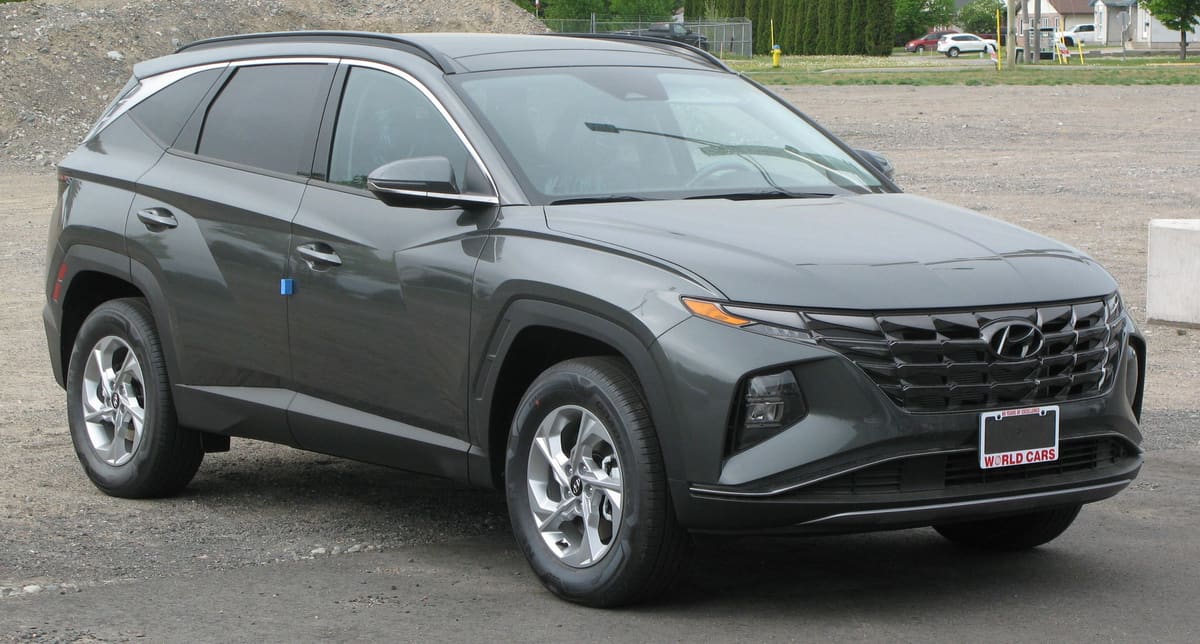
The running costs of the Hyundai Tucson are generally competitive within its segment. Fuel efficiency varies depending on the engine choice, with diesel models offering better mileage. Insurance groups are moderate, and tax bands are reasonable. Servicing intervals are manageable, and depreciation is typical for the class, making it a solid option for budget-conscious buyers.
Fuel and Electric Costs
The Hyundai Tucson offers a range of engine options, including petrol and diesel variants, as well as a hybrid model.
Electricity costs for the hybrid model will depend on local electricity rates, but charging at home can be economical. The Tucson’s battery can be charged overnight, and many owners find it beneficial to use off-peak electricity rates for lower costs. Overall, fuel and electric costs are manageable, making the Tucson a practical choice for daily commuting and longer journeys.
Insurance Group
The Hyundai Tucson falls into various insurance groups, typically ranging from group 14 to group 24, depending on the specific model and trim level. This places it in a moderate insurance category, which is advantageous for many drivers. The lower insurance groups are generally associated with the entry-level models, while the higher groups correspond to more powerful engines and higher-spec trims.
When considering insurance, it is advisable to shop around and compare quotes from different providers. Factors such as driving history, location, and the chosen model can significantly influence insurance premiums. Overall, the Tucson’s insurance costs are competitive, making it an appealing option for families and young drivers alike.
Tax Band
The Hyundai Tucson’s tax band is determined by its CO2 emissions, which vary based on the engine type. The hybrid model, with its lower emissions, may qualify for reduced tax rates or exemptions.
Understanding the tax implications of your chosen model is essential for budgeting. It is also worth noting that tax rates can change annually, so staying informed about any updates is beneficial. Overall, the Tucson’s tax bands are reasonable, contributing to its affordability as a family SUV.
Servicing Intervals
The servicing intervals for the Hyundai Tucson are typically set at 12 months or 10,000 miles, whichever comes first. This regular maintenance schedule helps ensure the vehicle remains in good condition and can prevent more significant issues down the line. Some owners may opt for extended service intervals, but this should be discussed with a qualified technician.
Routine servicing includes oil changes, brake checks, and inspections of various systems, which are crucial for maintaining performance and safety. Hyundai also offers a warranty that covers certain servicing costs for the first few years, which can help reduce overall ownership expenses. Regular maintenance is key to keeping running costs low and ensuring the Tucson remains reliable.
Typical Depreciation
The Hyundai Tucson experiences typical depreciation rates for its class, losing around 50-60% of its value over the first three to five years. Factors influencing depreciation include mileage, condition, and market demand. The Tucson’s reputation for reliability can help mitigate depreciation, making it a sensible choice for resale.
To maximise resale value, it is advisable to keep the vehicle well-maintained and document all service history. Additionally, opting for popular trims and colours can enhance desirability in the used car market. Overall, while depreciation is an inevitable part of car ownership, the Tucson’s steady performance in this area makes it a practical investment for many buyers.
Hyundai Tucson recall record
14 recalls have been issued for the Hyundai Tucson, between 2005 and 2026.
Some vehicles may have an instrument cluster operational concern whilst driving the vehicle
R/2026/147Issued 2 April 2026
Some vehicles may face a concern where the instrument cluster panel may reboot during vehicle operation potentially resulting in a blank instrument cluster display screen.
Remedy:To correct this an ‘Over the Air ‘ software update to the vehicles will be deployed remotely.
Affects cars built Aug 2025 to Nov 2025
The subject vehicles may experience a loss of brake assistance and brake performance may e reduced. The foot brake will still operate but in a manner of a vehicle without a functioning brake booster (less assistance)
R/2024/489Issued 20 January 2025
The subject vehicles may experience a loss of brake assistance and brake performance may be reduced. The foot brake will still operate but in a manner of a vehicle without a functioning brake booster (less assistance).
Remedy:Engine control unit software update
Affects cars built Sept 2022 to Sept 2023
The side curtain airbag could potentially be assembled in a twisted condition.
R/2024/036Issued 18 March 2024
The side curtain airbag could potentially be assembled in a twisted condition
Remedy:Check the installation of the side curtain airbag installation and rectify or replace the curtain airbag as required.
Affects cars built Apr 2021 to Aug 2023
Certain Tucson vehicles equipped with rear door power windows may experience a malfunction of the anti-pinch function during its operation.
R/2023/184Issued 7 August 2023
Certain Tucson vehicles equipped with rear door power windows may experience a malfunction of the anti-pinch function during its operation.
Remedy:Both left-hand and right-hand rear door power window regulator motors will be replaced.
Affects cars built Mar 2023 to Apr 2023
10 older recalls not shown.
A recall applies to a build range, not to every car of this model. Check a registration to see whether one specific vehicle has an outstanding recall.
Hyundai Tucson MOT record
From 166,243 recorded MOT tests, 14.0% failed.
| Registered | Tests | Failed | Median mileage |
|---|---|---|---|
| 2024 | 342 | 4.1% | 27,093 mi |
| 2023 | 1,519 | 5.8% | 24,078 mi |
| 2022 | 27,153 | 7.7% | 25,168 mi |
| 2021 | 21,237 | 8.3% | 31,950 mi |
| 2020 | 12,884 | 13.0% | 37,765 mi |
| 2019 | 26,477 | 13.1% | 44,041 mi |
| 2018 | 24,690 | 15.0% | 52,510 mi |
| 2017 | 23,728 | 17.7% | 63,668 mi |
Most common reasons for failure
- Tyre tread depth not in accordance with the requirements32.4%
- a brake lining or pad worn below 1.5mm25.0%
- A tyre seriously damaged20.2%
- A suspension pin, bush or joint excessively worn11.9%
- Brake disc or drum excessively weakened, insecure or fractured10.6%
Figures cover every Hyundai Tucson tested in the DVSA dataset, not this specific car. Check a registration for the actual history of one vehicle.
Hyundai Tucson official figures
Median across 100 variants on sale, electricity / petrol, petrol, petrol electric.
- Combined economy
- 40.9 mpg
- WLTP median across variants
- CO2 emissions
- 157 g/km
- Sets the first-year tax rate
Official figures for new cars. Real economy varies with driving, load and conditions.
Frequently asked questions
How often does a Hyundai Tucson need servicing?
A Hyundai Tucson typically requires a service every 12 months or 10,000 miles, whichever comes first. Regular servicing helps maintain the vehicle's performance and can prevent costly repairs down the line, such as issues with the timing belt or brake pads.
What are the insurance costs for a Hyundai Tucson?
Insurance costs for a Hyundai Tucson can vary significantly based on the model year and trim level. For instance, the 2020 Tucson falls into insurance groups ranging from 15 to 24, which can affect premiums. It's advisable to compare quotes from different insurers for the best deal.
Are there any common repairs needed for the Hyundai Tucson?
Brake pad replacement is a common maintenance task for the Hyundai Tucson, especially in models from 2016 onwards. Drivers may notice squeaking or grinding noises, indicating it's time for a replacement. Regular checks can help avoid more extensive brake system issues.
How reliable is the Hyundai Tucson in terms of running costs?
The Hyundai Tucson is generally considered reliable, with low running costs compared to other SUVs. Regular maintenance, such as oil changes every 12 months, can help keep it running smoothly. Owners often report fewer issues with the engine and transmission compared to competitors.
Sources
- DVSA anonymised MOT tests and results (Open Government Licence v3.0)
- VCA new car fuel consumption and emissions data (Open Government Licence v3.0)
- DVSA vehicle safety recalls (Open Government Licence v3.0)