Top fixes
Top Jaguar XE fixes every owner should know
Cheap, practical fixes for the Jaguar XE faults you actually meet, with rough costs and what a garage will charge.
Updated 4th September 2026 DVSA data: Across 42,398 recorded MOT tests, 15.4% failed.
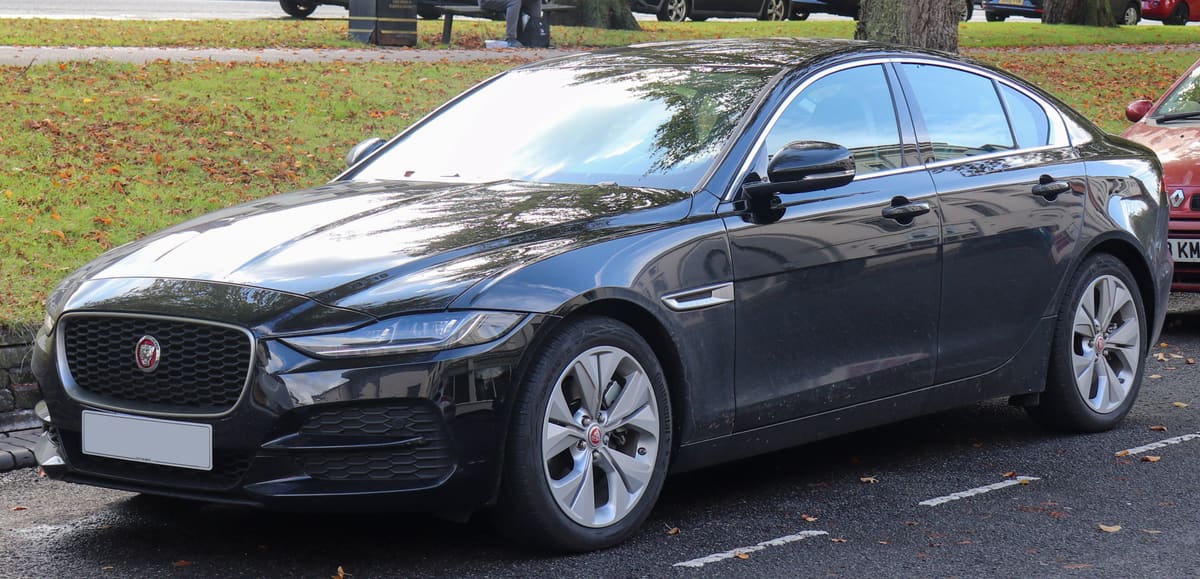
The Jaguar XE is a refined and stylish executive saloon but like many modern cars, it can develop some common faults over time. Practical fixes for these issues vary from simple DIY jobs like replacing bulbs or filters, to more complex garage repairs such as addressing suspension wear or electronic faults. Knowing the symptom, likely cause and repair approach helps keep the XE running smoothly.
Engine Warning Light and Rough Running
If the engine warning light appears on your Jaguar XE’s dashboard or the engine runs roughly, this often points to ignition or fuel system issues. Common causes include faulty spark plugs, clogged fuel injectors, or problems with sensors like the mass airflow sensor.
Replacing spark plugs is a straightforward DIY task if you have basic tools and some mechanical confidence. It involves removing the engine cover, unplugging the ignition coils, and swapping the old plugs for new ones. Cleaning or replacing fuel injectors is more complex and usually requires a garage visit, as it involves fuel system depressurisation and specialised equipment. Sensor faults typically need diagnostic testing with a scan tool to identify the exact problem and may require professional attention.
Regular servicing helps prevent these issues by keeping ignition and fuel components in good condition. If the engine light stays on after a DIY fix, it is advisable to have a professional diagnose the fault.
Suspension Noise and Handling Issues
Owners sometimes report knocking noises from the front suspension or a vague, unsettled feeling when cornering. This symptom often indicates worn suspension bushes, ball joints, or anti-roll bar links.
Replacing suspension bushes or ball joints is a job best left to a garage due to the need for special tools and precise alignment afterwards. Anti-roll bar links are easier to change and can be tackled by confident DIYers with a good set of spanners and a jack. The repair involves lifting the car safely, removing the worn link, and fitting a new one.
Suspension wear is common on cars with higher mileage or those frequently driven on rough roads. Regular inspections during servicing can catch early signs of deterioration before they affect safety or comfort.
Electrical Glitches and Infotainment Problems
Some Jaguar XE owners experience intermittent electrical faults such as flickering dashboard lights, malfunctioning infotainment screens, or erratic central locking behaviour. These symptoms often stem from loose wiring connections, failing control modules, or software glitches.
Simple electrical issues like blown fuses or loose connectors can be checked and replaced by a DIY enthusiast with a basic multimeter and fuse kit. However, diagnosing control module faults or software problems requires specialised diagnostic tools and software updates, which are only available at dealerships or well-equipped garages.
Keeping the car’s software up to date through official Jaguar service centres can help reduce the likelihood of infotainment and electronic control issues. If electrical faults persist or affect safety features, professional diagnosis is essential.
Brake Noise and Reduced Performance
Squealing or grinding noises when braking, or a spongy brake pedal, are warning signs that the Jaguar XE’s brake system needs attention. Common causes include worn brake pads, glazed discs, or air in the brake lines.
Replacing brake pads is a moderately challenging DIY job for those with mechanical experience and the correct tools. It involves safely lifting the car, removing the wheels, and swapping the pads. However, resurfacing or replacing brake discs is more complex and often requires a garage due to the need for precision and specialised equipment.
If the brake pedal feels spongy, the system may need bleeding to remove air bubbles. Brake bleeding is a messy and critical safety task best performed by a professional unless you have experience and the right tools.
Regular brake inspections and prompt replacement of worn components are vital for safe driving and avoiding more costly repairs.
Climate Control and Air Conditioning Faults
Problems with the Jaguar XE’s climate control system, such as the air conditioning not cooling properly or the heater failing to warm the cabin, are commonly caused by refrigerant leaks, faulty blower motors, or sensor failures.
Recharging the air conditioning refrigerant can sometimes be done as a DIY job using a refill kit, but this only addresses low refrigerant levels and not leaks. Detecting and repairing leaks requires specialised equipment and professional expertise.
Replacing a faulty blower motor or sensor is generally a garage job because it involves dismantling parts of the dashboard and using diagnostic tools to confirm the fault.
Maintaining the climate control system with regular servicing helps prevent these issues and ensures comfortable driving conditions throughout the year.
Door Lock and Window Mechanism Problems
Owners may find that door locks become stiff or fail to operate, or that electric windows move slowly or get stuck. These symptoms often result from worn door lock actuators, damaged window regulators, or dried-out lubricants.
Lubricating door locks and window tracks with suitable sprays is a simple DIY fix that can restore smooth operation. Replacing a door lock actuator or window regulator is more involved and usually requires removing door panels and electrical connectors, so it is typically a garage job unless you have good mechanical skills.
Regular lubrication and gentle use of door and window mechanisms can extend their lifespan and reduce the chance of failure.
Understanding the common faults and practical fixes for the Jaguar XE helps owners decide when to tackle repairs themselves and when to seek professional help. Routine maintenance and early attention to symptoms can keep this elegant saloon running reliably and comfortably.
Jaguar XE recall record
13 recalls have been issued for the Jaguar XE, between 2016 and 2025.
Security Guidance
R/2025/488Issued 2 December 2025
Jaguar Land Rover in conjunction with law enforcement and insurance bodies is aware of the increase in thefts of vehicles in specific geographical locations within the United Kingdom. There is no fault with Jaguar Land Rover's security systems and they continue to meet stringent automotive legislation. Jaguar Land Rover is offering owners guidance on how to maximise vehicle security and protect against theft
Remedy:Vehicle registered keepers will be sent a security guidance letter only - there is no repair action.
Affects cars built Sept 2014 to Jun 2019
AJ21-D4 Turbo Oil Feed Pipe Leak
R/2024/207Issued 7 June 2024
On certain vehicles there may be insufficient clamp load on the turbocharger oil feed pipe which may over time loosen and lead to an oil leak.
Remedy:The oil feed pipe will be removed the O-rings replaced lubricated and an additional clamp installed.
Affects cars built Nov 2019 to Apr 2024
THE RUBBERISED FUEL RETURN HOSE ASSEMBLY MAY HAVE BEEN INCORRECTLY MANUFACTURED
R/2021/230Issued 25 June 2021
The rubberised fuel return hose assembly may have been incorrectly manufactured.
Remedy:Inspect the date code on the fuel return pipe and replace the part if necessary.
Affects cars built Nov 2019 to Apr 2021
THE REAR RAIL ASSEMBLY MAY NOT HAVE THE SPECIFIED STRUCTURAL STRENGTH
R/2021/136Issued 21 April 2021
The rear rail assembly (rear longitudinal armatures) installed as part of an aftermarket repair may not have the specified structural strength.
Remedy:Replacement parts will be installed in line with aftermarket welding standards.
Affects cars built May 2016 to Sept 2017
9 older recalls not shown.
A recall applies to a build range, not to every car of this model. Check a registration to see whether one specific vehicle has an outstanding recall.
Jaguar XE MOT record
From 42,398 recorded MOT tests, 15.4% failed.
| Registered | Tests | Failed | Median mileage |
|---|---|---|---|
| 2021 | 947 | 13.7% | 30,700 mi |
| 2020 | 1,620 | 14.3% | 35,018 mi |
| 2019 | 4,488 | 14.7% | 44,666 mi |
| 2018 | 5,583 | 14.1% | 54,110 mi |
| 2017 | 10,185 | 14.4% | 63,538 mi |
| 2016 | 11,577 | 16.1% | 72,618 mi |
| 2015 | 7,998 | 17.5% | 75,334 mi |
Most common reasons for failure
- Tyre tread depth not in accordance with the requirements36.4%
- A tyre seriously damaged21.6%
- Brake disc or drum excessively weakened, insecure or fractured18.2%
- a brake lining or pad worn below 1.5mm16.7%
- A suspension pin, bush or joint excessively worn7.1%
Figures cover every Jaguar XE tested in the DVSA dataset, not this specific car. Check a registration for the actual history of one vehicle.
Frequently asked questions
What are common faults with the Jaguar XE?
Common faults include electrical issues, coolant leaks, suspension wear, transmission problems, and brake system faults.
Can I fix these issues myself?
Some issues are DIY-friendly, while others may require professional help.
Are temporary fixes reliable?
Temporary fixes can be useful, but they may not resolve the underlying issue.
Is the Jaguar XE a reliable car?
The Jaguar XE has mixed reliability ratings, with some owners reporting significant issues.
Sources
- DVSA anonymised MOT tests and results (Open Government Licence v3.0)
- DVSA vehicle safety recalls (Open Government Licence v3.0)