Running costs
Jeep Wrangler running costs: what UK ownership really costs
Jeep Wrangler UK running costs: fuel or electric, insurance group, road tax, servicing and depreciation.
Updated 4th September 2026 DVSA data: Across 5,048 recorded MOT tests, 17.1% failed.
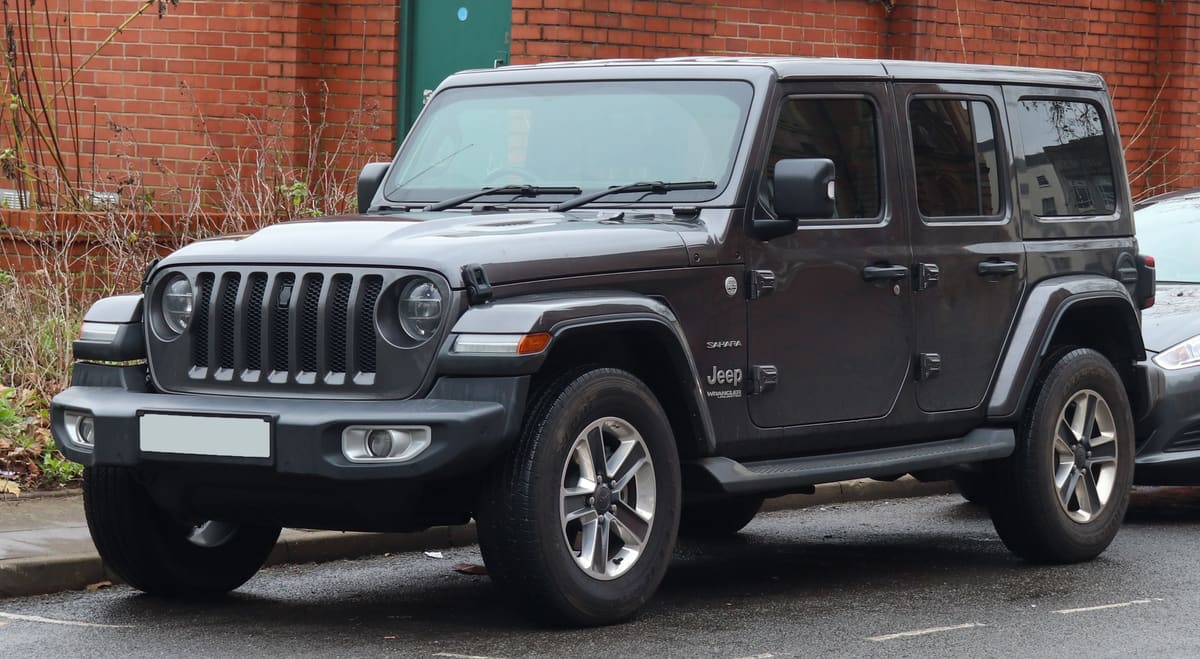
The running costs of a Jeep Wrangler in the UK can be significant, with factors including fuel consumption, insurance, tax, servicing, and depreciation all contributing to the total ownership cost. Expect to budget carefully to manage these expenses effectively.
Fuel Costs
The Jeep Wrangler is available with both petrol and diesel engines, with fuel consumption varying by model and driving conditions. Given the current fuel prices, owners should expect to spend a considerable amount on fuel, especially if they frequently drive in urban areas or off-road.
Diesel models, while slightly more efficient, still incur significant fuel expenses.
Insurance Group
Insurance costs for the Jeep Wrangler can be on the higher side due to its classification as a 4x4 vehicle. The insurance group varies depending on the model and trim level, typically ranging from group 30 to group 42. This means that premiums can be substantial, especially for younger or less experienced drivers.
It’s advisable to shop around for insurance quotes, as prices can differ significantly between providers. Factors such as driving history, location, and additional security features can influence the final premium. Owners should also consider the benefits of full coverage, which may provide better protection against theft or damage.
Road Tax
The road tax for a Jeep Wrangler depends on the engine size and emissions. Most models fall into the higher tax bands due to their larger engines and CO2 emissions.
Newer models may benefit from lower tax rates if they meet specific emissions standards. However, owners should be prepared for the possibility of increased costs as emissions regulations tighten. Checking the specific tax band for your model is essential to accurately budget for this expense.
Servicing Intervals
Servicing intervals for the Jeep Wrangler are generally recommended every 12,000 miles or annually, whichever comes first. Routine maintenance includes oil changes, filter replacements, and checks on brakes and tyres. Regular servicing is crucial to keep the vehicle in good condition, especially given its off-road capabilities.
Costs for servicing can vary, with independent garages often providing more competitive rates than main dealers. Keeping up with maintenance can help prevent more costly repairs down the line.
Typical Depreciation
Depreciation is a significant factor in the overall ownership cost of a Jeep Wrangler. Typically, these vehicles depreciate at a rate of around 15-20% per year. Factors such as mileage, condition, and market demand can influence the resale value.
While Wranglers tend to hold their value better than many other vehicles, owners should still be aware that depreciation can impact long-term costs. If you plan to sell or trade in your vehicle, understanding its depreciation curve can help you make informed decisions about when to sell.
Conclusion
Owning a Jeep Wrangler in the UK involves various running costs, including fuel, insurance, road tax, servicing, and depreciation. By understanding these expenses and budgeting accordingly, potential owners can ensure they are prepared for the financial commitment of owning this iconic 4x4 vehicle.
Jeep Wrangler recall record
33 recalls have been issued for the Jeep Wrangler, between 1995 and 2026.
Passenger airbag inflator
R/2026/130Issued 20 March 2026
In the event that the airbag is activated excessive internal pressure may cause the inflator body to rupture and metal fragments may pass through the cushion material causing injury to the vehicle occupants and / or in worst cases a fatality. The concern is caused by moisture in the air getting past faulty seals and being absorbed by the pyrotechnic biscuits in the inflator. As a result it is more likely to occur sooner in areas of high humidity and high temperature difference.
Remedy:Recall the vehicles that are likely to be affected and replace the passenger front air bag module which includes the inflator.
Affects cars built May 2008 to Jul 2012
Passenger airbag inflator
R/2026/135Issued 20 March 2026
Passenger air bag may deploy incorrectly if activated.
Remedy:Replace the passenger air bag inflator.
Affects cars built Aug 2009 to Dec 2016
2018-2022 Jeep Wrangler Check Engine Malfunction Indicator Lamp Incorrect operation and warning
R/2026/060Issued 2 March 2026
On affected vehicles the Malfunction Indicator Lamp (MIL) may not function as intended in the Instrument Panel Cluster (IPC). This condition will not affect emissions. However in the event of an emission issue that would require illumination of the MIL the driver may not be alerted due to the MIL not illuminating.
Remedy:Install updated software.
Affects cars built Aug 2017 to Jun 2022
2020-2025 Jeep Wrangler and 2022-2026 Jeep Grand Cherokee PHEV vehicles. High voltage battery.
R/2026/029Issued 16 February 2026
On affected vehicles the High Voltage (HV) battery may have been built with a battery pack which contains cells which are susceptible to separator damage which combined with other complex interactions within the cells may lead to a vehicle fire.
Remedy:Reprogram the battery pack control module with modified software and check and if necessary replace the HV Battery.
Affects cars built Jul 2020 to Dec 2024
29 older recalls not shown.
A recall applies to a build range, not to every car of this model. Check a registration to see whether one specific vehicle has an outstanding recall.
Jeep Wrangler MOT record
From 5,048 recorded MOT tests, 17.1% failed.
| Registered | Tests | Failed | Median mileage |
|---|---|---|---|
| 2022 | 359 | 8.6% | 21,329 mi |
| 2021 | 585 | 7.7% | 29,143 mi |
| 2020 | 645 | 9.6% | 33,888 mi |
| 2019 | 624 | 10.4% | 37,220 mi |
| 2018 | 391 | 17.4% | 41,038 mi |
| 2017 | 281 | 19.2% | 42,296 mi |
| 2016 | 293 | 21.2% | 50,938 mi |
| 2015 | 558 | 21.3% | 63,523 mi |
Most common reasons for failure
- A suspension pin, bush or joint excessively worn35.5%
- Brake disc or drum excessively weakened, insecure or fractured19.5%
- The aim of a headlamp is not within limits laid down in the requirements16.6%
- a brake lining or pad worn below 1.5mm15.7%
- Fluid leaking excessively and likely to harm the environment or to pose a safety risk to other road users12.9%
Figures cover every Jeep Wrangler tested in the DVSA dataset, not this specific car. Check a registration for the actual history of one vehicle.
Frequently asked questions
How often does a Jeep Wrangler need servicing?
A Jeep Wrangler generally requires a service every 12,000 miles or annually, whichever comes first. Regular maintenance includes oil changes, air filter replacements, and checking the brake system, which is crucial for keeping the vehicle in good condition.
How reliable is the Jeep Wrangler in terms of running costs?
The Jeep Wrangler is generally considered reliable, but it can incur higher running costs due to its off-road capabilities. Components like the differential and suspension may require more frequent attention, especially if you frequently drive on rough terrain.
Sources
- DVSA anonymised MOT tests and results (Open Government Licence v3.0)
- DVSA vehicle safety recalls (Open Government Licence v3.0)