Common problems
Land Rover Defender common problems and reliability issues
Honest rundown of the most common Land Rover Defender faults, what to watch for, and how to keep one running well.
Updated 23rd June 2026 DVSA data: Across 112,215 recorded MOT tests, 22.1% failed.
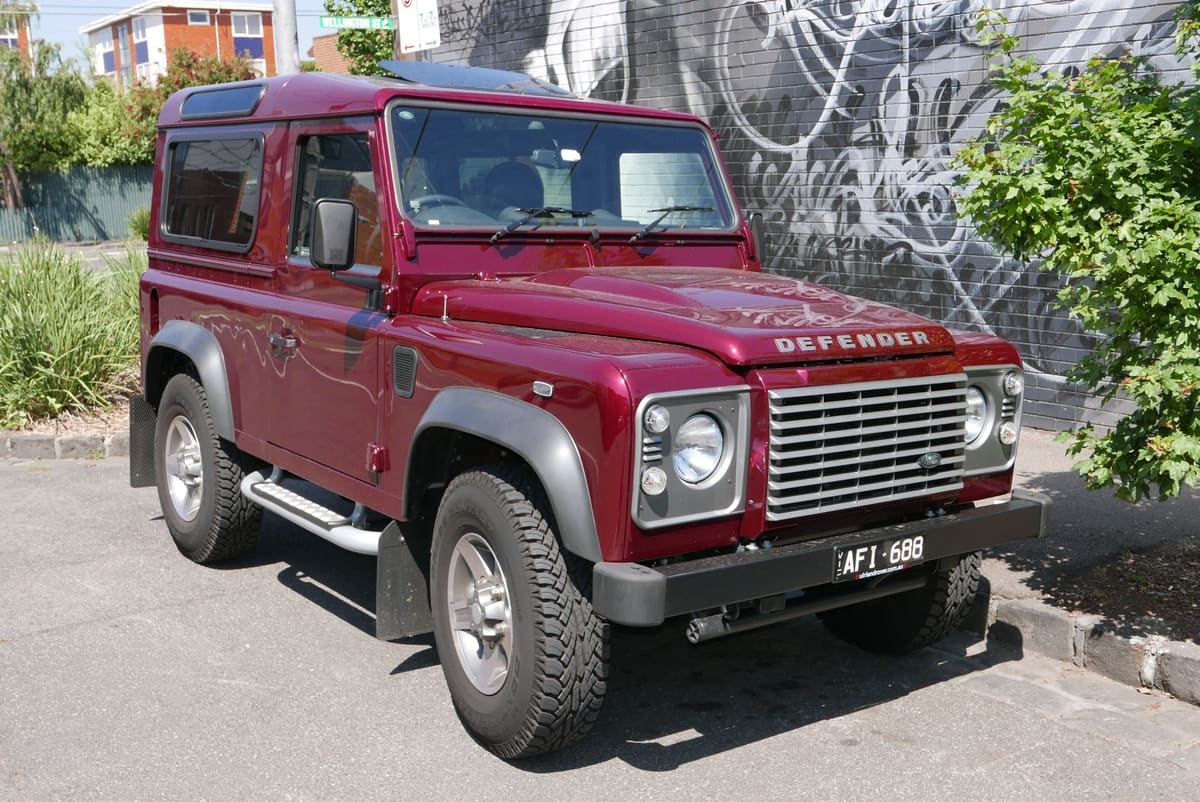
The Land Rover Defender is renowned for its ruggedness and off-road capabilities, but it is not without its faults. Common issues include electrical problems, engine troubles, transmission concerns, and suspension wear. Understanding these potential problems can help owners maintain their vehicles and avoid costly repairs.
Electrical Issues
Electrical faults are often reported by Land Rover Defender owners. Problems can range from minor inconveniences, such as malfunctioning lights, to more serious issues like complete electrical failures. These problems may stem from poor wiring connections or faulty components.
One common issue is the failure of the central locking system, which can leave owners struggling to secure their vehicles. Additionally, dashboard warning lights may illuminate unexpectedly, indicating problems with the vehicle’s systems. Regular checks of the electrical system can help identify issues early and prevent more significant failures.
Engine Problems
The Defender’s engine, while generally robust, can experience a range of issues. Owners have reported problems such as excessive oil consumption, coolant leaks, and turbocharger failures. These issues can lead to decreased performance and increased running costs.
Oil leaks are particularly common, often originating from the oil filter or sump. Regular oil changes and inspections can help mitigate these problems. Furthermore, turbocharger failures can result in a loss of power and increased emissions, making it essential to address any performance issues promptly.
Transmission Concerns
Transmission problems are another area of concern for Land Rover Defender owners. Automatic transmissions, in particular, may exhibit issues such as rough shifting or slipping gears. These problems can arise from low transmission fluid levels or worn components.
Manual transmissions can also face challenges, including difficulty engaging gears or clutch wear. Regular maintenance, such as fluid changes and clutch adjustments, can help prolong the life of the transmission. Owners should be vigilant for any unusual noises or performance changes, as these can indicate underlying issues.
Suspension Wear
The Defender’s suspension system is designed for off-road performance, but it can suffer from wear and tear over time. Common issues include worn shock absorbers, broken springs, and damaged bushings. These problems can affect ride quality and handling, making it crucial for owners to monitor their suspension components.
Worn shock absorbers can lead to a bouncy ride and decreased stability, particularly on rough terrain. Regular inspections and timely replacements can help maintain optimal performance. Additionally, owners should be aware of any unusual noises when driving over bumps, as this can indicate suspension problems that need addressing.
Brake System Problems
The braking system in the Land Rover Defender is vital for safety, but it can experience various issues. Common problems include brake pad wear, disc warping, and brake fluid leaks. These issues can compromise braking performance and should be addressed immediately.
Brake pads typically wear down over time, requiring regular inspections and replacements. Warped discs can cause vibrations during braking, indicating the need for replacement. Owners should also check for any signs of brake fluid leaks, as this can lead to reduced braking efficiency and increased stopping distances.
Bodywork and Corrosion
While the Defender is built to withstand harsh conditions, bodywork issues and corrosion can still occur, particularly in older models. Common problems include rust on the chassis, door sills, and wheel arches. Regular inspections and preventative measures can help protect against corrosion.
Owners should pay close attention to areas where dirt and moisture can accumulate, as these are prime spots for rust development. Applying protective coatings and ensuring proper drainage can help mitigate these issues. Regular cleaning and maintenance can also prolong the life of the vehicle’s bodywork, preserving its appearance and structural integrity.
Land Rover Defender recall record
31 recalls have been issued for the Land Rover Defender, between 2000 and 2026.
AJ20-D6 Idler Pulley Clash
R/2026/241Issued 26 June 2026
A concern has been identified on certain AJ20-D6 engines where the Front End Auxiliary Drive (FEAD) belt idler pulley may over-rotate following a high torsion input and lead to a clash with and damage to the oil pressure and temperature sensor. A damaged oil pressure and temperature sensor can lead to an oil leak from the engine which can result in a slip hazard for following road users particularly two-wheeled vehicles.
Remedy:Vehicles will have the Front-End Auxiliary Drive (FEAD) idler pulley replaced.
Affects cars built Jun 2024 to Apr 2026
Driver’s Airbag Potential Non-Deployment
R/2026/245Issued 19 June 2026
A concern has been identified where the connector to the driver’s airbag at the clockspring may experience fretting corrosion over time. This can lead to an increased resistance in the driver’s airbag circuit potentially resulting in the airbag failing to deploy when requested to do so. An airbag which fails to deploy as-intended will increase the risk of injury in the event of a crash.
Remedy:Vehicles will have a protective lubricant gel applied to the driver’s airbag connector terminals.
Affects cars built Apr 2019 to Jun 2026
E-PACE F-PACE Defender Discovery Sport Range Rover Evoque and Range Rover Velar PHEV Traction Battery Fire Risk
R/2025/553Issued 12 June 2026
Vehicles have experienced thermal overload which may manifest in smoke or fire that may occur underneath the rear of the vehicle where the high voltage traction battery is located. The root cause is not yet known and investigations are continuing. A vehicle thermal overload condition such as fire or smoke can result in increased risk of occupant injury and/or injury to persons outside the vehicle as well as property damage.
Remedy:Vehicles will be inspected by the retailer and as required at-risk battery packs will be replaced.
Affects cars built Oct 2020 to Jan 2025
Defender and Discovery 2026 Model Year Fuel Tank Wall Thickness
R/2026/177Issued 12 June 2026
A concern has been identified where the fuel tank wall thickness may be below design specification near the inlet check valve. A fuel tank with a thinner-than-designed wall may not perform adequately in the event of a crash leading to increased risk of fuel spillage and potentially fire.
Remedy:Affected vehicles will have the fuel tank replaced.
Affects cars built Jan 2026 to Jan 2026
27 older recalls not shown.
A recall applies to a build range, not to every car of this model. Check a registration to see whether one specific vehicle has an outstanding recall.
Land Rover Defender MOT record
From 112,215 recorded MOT tests, 22.1% failed.
| Registered | Tests | Failed | Median mileage |
|---|---|---|---|
| 2023 | 501 | 2.6% | 24,328 mi |
| 2022 | 9,663 | 6.5% | 28,569 mi |
| 2021 | 8,439 | 7.3% | 38,707 mi |
| 2020 | 4,143 | 9.2% | 45,211 mi |
| 2016 | 1,737 | 10.9% | 32,670 mi |
| 2015 | 6,389 | 15.0% | 46,914 mi |
| 2014 | 5,635 | 17.9% | 57,820 mi |
| 2013 | 4,197 | 20.7% | 65,629 mi |
Most common reasons for failure
- Fluid leaking excessively and likely to harm the environment or to pose a safety risk to other road users25.9%
- Brake pipe damaged or excessively corroded25.5%
- A shock absorber bush excessively worn16.5%
- A seat belt webbing or flexible stalk significantly stretched, damaged or weakened16.3%
- A suspension pin, bush or joint excessively worn15.8%
Figures cover every Land Rover Defender tested in the DVSA dataset, not this specific car. Check a registration for the actual history of one vehicle.
Frequently asked questions
What are the most common issues with the Land Rover Defender?
Common issues with the Land Rover Defender include electrical faults, air suspension problems, and engine performance issues. Owners have also reported issues with the infotainment system and water leaks.
How reliable is the Land Rover Defender?
The Land Rover Defender has a mixed reputation for reliability. While some owners report a dependable experience, others have faced frequent repairs and maintenance challenges.
Are there any known problems with the Defender's engine?
Yes, some Land Rover Defender models have experienced engine problems, including oil leaks and turbocharger issues. Regular servicing can help mitigate these risks.
What should I check before buying a used Defender?
Before buying a used Defender, check for service history, signs of rust, and the condition of the suspension and electrical systems. It's also wise to take it for a thorough test drive.
Is the air suspension on the Defender prone to failure?
Yes, the air suspension on some Defender models can be prone to failure, leading to a bumpy ride and costly repairs. Inspecting the suspension system during a pre-purchase check is advisable.
How can I prevent common problems with my Defender?
Regular maintenance and servicing are key to preventing common problems with the Defender. Keeping an eye on warning lights and addressing issues promptly can also help.
What are the signs of electrical problems in a Defender?
Signs of electrical problems in a Defender may include dashboard warning lights, malfunctioning windows, and issues with the infotainment system. If you notice these, it is best to have the vehicle inspected.
Are there specific models or years of the Defender that are more problematic?
Certain models and years of the Defender have been reported to have more issues than others. Researching owner reviews and reliability ratings for specific models can provide valuable insights.
Sources
- DVSA anonymised MOT tests and results (Open Government Licence v3.0)
- DVSA vehicle safety recalls (Open Government Licence v3.0)