Running costs
Land Rover Defender running costs: what UK ownership really costs
Land Rover Defender UK running costs: fuel or electric, insurance group, road tax, servicing and depreciation.
Updated 4th September 2026 DVSA data: Across 112,215 recorded MOT tests, 22.1% failed.
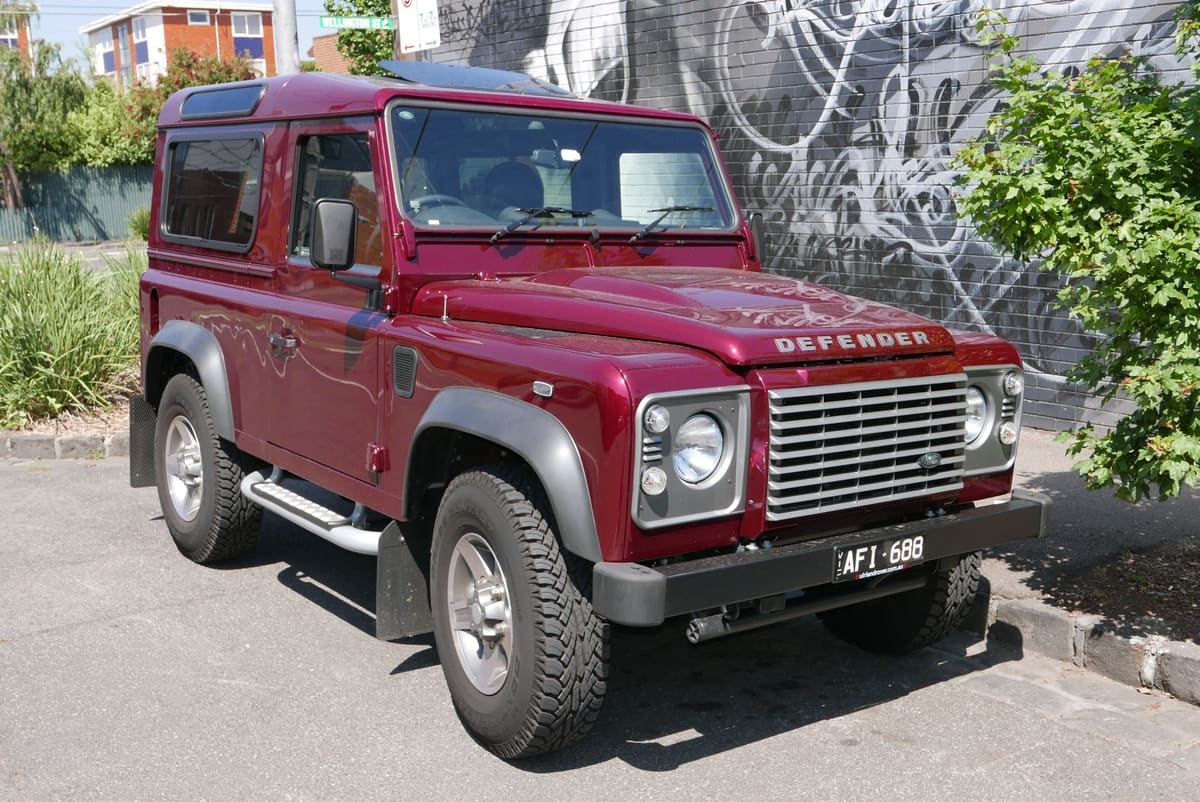
The Land Rover Defender’s running costs can be significant, with fuel, insurance, tax, servicing, and depreciation all contributing to total ownership expenses. Fuel economy varies by engine type, insurance groups can be high, and tax bands depend on emissions. Regular servicing is essential, and depreciation can be steep, particularly in the first few years.
Fuel Costs
The fuel economy of the Land Rover Defender varies depending on the engine choice. The diesel variants typically offer better fuel efficiency, averaging around 30-35 miles per gallon, while the petrol models may provide slightly lower figures. The plug-in hybrid version can deliver around 85 miles per gallon when driven in electric mode, making it a more economical choice for urban driving.
Fuel prices fluctuate, but with the average cost of diesel and petrol in the UK, owners should budget accordingly. For those who drive long distances or frequently use the vehicle for off-road adventures, the fuel costs can add up quickly, making it essential to consider the engine type when purchasing.
Insurance Group
Insurance costs for the Land Rover Defender can be high, as it typically falls into higher insurance groups. Depending on the model and specifications, the Defender can be classified in groups ranging from 34 to 50. Factors influencing insurance premiums include the vehicle’s value, repair costs, and safety ratings.
Owners should shop around for insurance quotes, as premiums can vary significantly between providers. Additionally, opting for advanced security features or a higher level of cover may help reduce insurance costs in the long run.
Tax Band
The tax band for the Land Rover Defender is determined by its CO2 emissions. Most models fall into the higher tax brackets due to their emissions, which can lead to an annual tax bill of several hundred pounds. The exact amount varies by model year and engine type, with some variants potentially qualifying for lower rates if they meet specific emissions standards.
It is important for prospective buyers to consider the tax implications when selecting a model. Additionally, the introduction of potential changes in tax legislation could impact future costs, making it wise to stay informed about any updates.
Servicing Intervals
Servicing intervals for the Land Rover Defender are typically set at every 16,000 miles or annually, whichever comes first. Regular maintenance is crucial to ensure the vehicle remains reliable and performs optimally. The cost of servicing can vary depending on the dealership or independent garage, as well as the specific services required.
Land Rover offers a service plan that can help spread the cost of maintenance over a set period, providing peace of mind for owners. Keeping up with scheduled servicing can prevent more costly repairs down the line and help maintain the vehicle’s resale value.
Typical Depreciation
Depreciation is a significant factor to consider when owning a Land Rover Defender. On average, new vehicles can lose around 20-30% of their value within the first three years. The Defender, while holding its value better than many other vehicles, still experiences noticeable depreciation, particularly in the early years.
Factors influencing depreciation include mileage, condition, and market demand. Limited editions or well-maintained models may retain value better than standard variants. Owners should be mindful of how their driving habits and maintenance practices can impact the vehicle’s resale value over time.
Conclusion
Owning a Land Rover Defender comes with various running costs that prospective buyers should carefully consider. From fuel and insurance to tax, servicing, and depreciation, understanding these factors can help in making an informed decision. While the Defender is a capable and iconic vehicle, its ownership costs can be substantial, making it essential to budget accordingly.
Land Rover Defender recall record
31 recalls have been issued for the Land Rover Defender, between 2000 and 2026.
AJ20-D6 Idler Pulley Clash
R/2026/241Issued 26 June 2026
A concern has been identified on certain AJ20-D6 engines where the Front End Auxiliary Drive (FEAD) belt idler pulley may over-rotate following a high torsion input and lead to a clash with and damage to the oil pressure and temperature sensor. A damaged oil pressure and temperature sensor can lead to an oil leak from the engine which can result in a slip hazard for following road users particularly two-wheeled vehicles.
Remedy:Vehicles will have the Front-End Auxiliary Drive (FEAD) idler pulley replaced.
Affects cars built Jun 2024 to Apr 2026
Driver’s Airbag Potential Non-Deployment
R/2026/245Issued 19 June 2026
A concern has been identified where the connector to the driver’s airbag at the clockspring may experience fretting corrosion over time. This can lead to an increased resistance in the driver’s airbag circuit potentially resulting in the airbag failing to deploy when requested to do so. An airbag which fails to deploy as-intended will increase the risk of injury in the event of a crash.
Remedy:Vehicles will have a protective lubricant gel applied to the driver’s airbag connector terminals.
Affects cars built Apr 2019 to Jun 2026
E-PACE F-PACE Defender Discovery Sport Range Rover Evoque and Range Rover Velar PHEV Traction Battery Fire Risk
R/2025/553Issued 12 June 2026
Vehicles have experienced thermal overload which may manifest in smoke or fire that may occur underneath the rear of the vehicle where the high voltage traction battery is located. The root cause is not yet known and investigations are continuing. A vehicle thermal overload condition such as fire or smoke can result in increased risk of occupant injury and/or injury to persons outside the vehicle as well as property damage.
Remedy:Vehicles will be inspected by the retailer and as required at-risk battery packs will be replaced.
Affects cars built Oct 2020 to Jan 2025
Defender and Discovery 2026 Model Year Fuel Tank Wall Thickness
R/2026/177Issued 12 June 2026
A concern has been identified where the fuel tank wall thickness may be below design specification near the inlet check valve. A fuel tank with a thinner-than-designed wall may not perform adequately in the event of a crash leading to increased risk of fuel spillage and potentially fire.
Remedy:Affected vehicles will have the fuel tank replaced.
Affects cars built Jan 2026 to Jan 2026
27 older recalls not shown.
A recall applies to a build range, not to every car of this model. Check a registration to see whether one specific vehicle has an outstanding recall.
Land Rover Defender MOT record
From 112,215 recorded MOT tests, 22.1% failed.
| Registered | Tests | Failed | Median mileage |
|---|---|---|---|
| 2023 | 501 | 2.6% | 24,328 mi |
| 2022 | 9,663 | 6.5% | 28,569 mi |
| 2021 | 8,439 | 7.3% | 38,707 mi |
| 2020 | 4,143 | 9.2% | 45,211 mi |
| 2016 | 1,737 | 10.9% | 32,670 mi |
| 2015 | 6,389 | 15.0% | 46,914 mi |
| 2014 | 5,635 | 17.9% | 57,820 mi |
| 2013 | 4,197 | 20.7% | 65,629 mi |
Most common reasons for failure
- Fluid leaking excessively and likely to harm the environment or to pose a safety risk to other road users25.9%
- Brake pipe damaged or excessively corroded25.5%
- A shock absorber bush excessively worn16.5%
- A seat belt webbing or flexible stalk significantly stretched, damaged or weakened16.3%
- A suspension pin, bush or joint excessively worn15.8%
Figures cover every Land Rover Defender tested in the DVSA dataset, not this specific car. Check a registration for the actual history of one vehicle.
Frequently asked questions
What are the typical fuel costs for a Land Rover Defender?
Fuel costs for a Land Rover Defender can vary significantly depending on the model year and engine type. For instance, the 2020 Defender with a 2.0-litre petrol engine averages around 30 mpg, which translates to higher fuel expenses compared to diesel variants that may offer better efficiency.
How often does a Land Rover Defender need servicing?
A Land Rover Defender typically requires servicing every 12 months or 16,000 miles, whichever comes first. Regular maintenance includes oil changes, air filter replacements, and checks on the braking system, ensuring the vehicle remains in optimal condition.
What are the insurance costs for a Land Rover Defender?
Insurance costs for a Land Rover Defender can vary based on the model and your driving history. Generally, newer models like the 2021 Defender fall into higher insurance groups, which can lead to increased premiums compared to older models.
What are the road tax rates for a Land Rover Defender?
Road tax for a Land Rover Defender depends on the model year and emissions. For example, the 2021 Defender with a 2.0-litre diesel engine falls into tax band D, which incurs an annual fee based on its CO2 emissions.
How reliable is the Land Rover Defender in terms of running costs?
The reliability of a Land Rover Defender can be mixed, with some owners reporting issues with the electrical system, particularly in earlier models. Regular checks on components like the battery and alternator can help mitigate unexpected repair costs.
Sources
- DVSA anonymised MOT tests and results (Open Government Licence v3.0)
- DVSA vehicle safety recalls (Open Government Licence v3.0)