Running costs
Land Rover Range Rover Evoque running costs: what UK ownership really costs
Land Rover Range Rover Evoque UK running costs: fuel or electric, insurance group, road tax, servicing and depreciation.
Updated 4th September 2026 DVSA data: Across 163,836 recorded MOT tests, 15.6% failed.
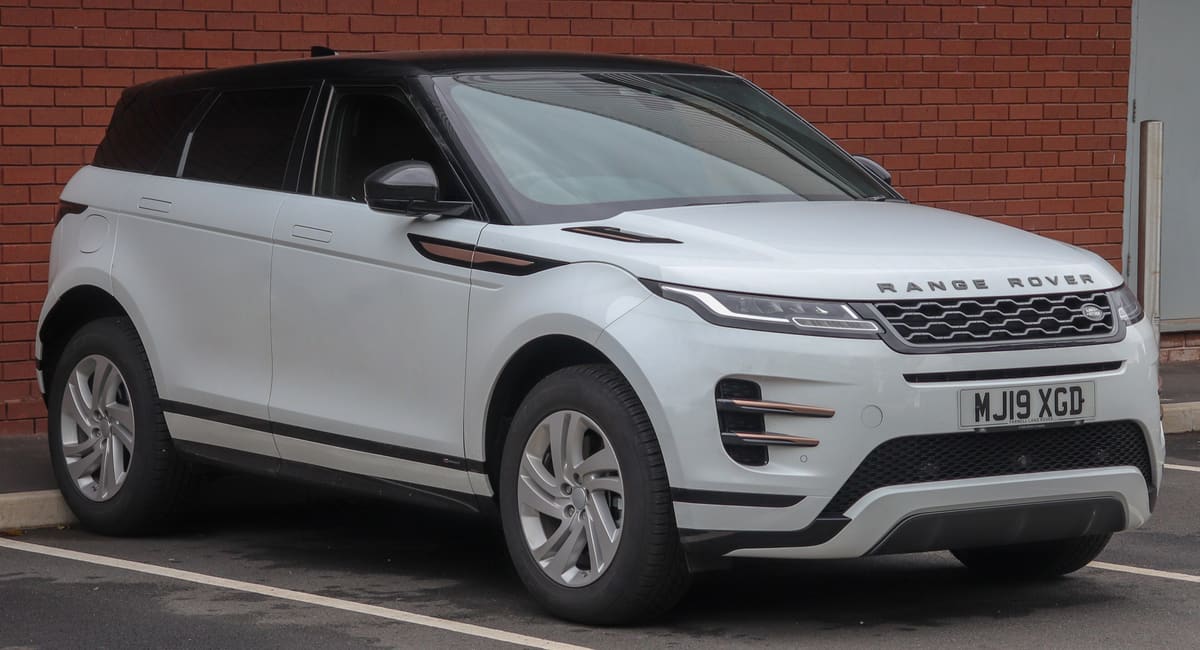
The Land Rover Range Rover Evoque offers a blend of luxury and off-road capability, but its running costs can be significant. Fuel efficiency varies by engine type, insurance groups can be high, tax bands depend on emissions, servicing intervals are reasonable, and depreciation tends to be steep.
Fuel and Electric Costs
The Range Rover Evoque is available with both petrol and diesel engines, as well as a plug-in hybrid variant. Fuel economy can range from around 30 to 50 miles per gallon, depending on the engine choice and driving conditions. The plug-in hybrid model offers an electric-only range of about 34 miles, making it a more economical option for short journeys.
For petrol models, expect to pay more at the pump, while diesel engines tend to provide better fuel economy on longer trips. If you opt for the hybrid, charging costs will depend on your electricity tariff, but it can significantly reduce overall fuel expenses if used efficiently.
Insurance Group
Insurance for the Range Rover Evoque falls into higher groups, typically ranging from group 27 to group 50, depending on the model and trim level. This is largely due to the vehicle’s premium brand status and the cost of repairs.
When selecting your Evoque, consider the insurance group as it can substantially affect your overall running costs. Younger or less experienced drivers may find premiums particularly steep, so it’s advisable to shop around for the best rates and consider factors like security features that could lower insurance costs.
Tax Band
The tax band for the Range Rover Evoque is determined by its CO2 emissions, which vary by engine type.
The lower the emissions, the less you will pay in road tax. For example, the plug-in hybrid variant benefits from lower emissions, placing it in a more favourable tax band. It’s important to check the specific emissions figures for the model you are considering to accurately estimate your tax obligations.
Servicing Intervals
Servicing intervals for the Range Rover Evoque are generally set at every 16,000 miles or annually, whichever comes first. This regular maintenance is crucial to keep the vehicle running smoothly and to maintain its resale value.
Land Rover offers a service plan that can help spread the costs of servicing over a period, making it easier to budget for maintenance. Be aware that while servicing is essential, it can be more expensive than average due to the premium nature of the vehicle and the parts used.
Typical Depreciation
Depreciation for the Range Rover Evoque is notable, with values typically dropping by around 50-60% over the first three years. This steep depreciation is common for luxury vehicles, particularly as new models are released and demand shifts.
When considering ownership, it’s wise to factor in this depreciation when calculating total ownership costs. While the Evoque may offer a luxurious driving experience, its resale value may not hold up as well as less premium alternatives, impacting long-term financial considerations.
Conclusion
The Land Rover Range Rover Evoque presents a compelling choice for those seeking a luxury SUV with off-road capabilities. However, potential owners should carefully consider the running costs associated with fuel, insurance, tax, servicing, and depreciation to ensure it aligns with their budget and lifestyle. Understanding these factors can help make an informed decision when investing in this premium vehicle.
Land Rover Range Rover Evoque recall record
28 recalls have been issued for the Land Rover Range Rover Evoque, between 2015 and 2026.
E-PACE F-PACE Defender Discovery Sport Range Rover Evoque and Range Rover Velar PHEV Traction Battery Fire Risk
R/2025/553Issued 12 June 2026
Vehicles have experienced thermal overload which may manifest in smoke or fire that may occur underneath the rear of the vehicle where the high voltage traction battery is located. The root cause is not yet known and investigations are continuing. A vehicle thermal overload condition such as fire or smoke can result in increased risk of occupant injury and/or injury to persons outside the vehicle as well as property damage.
Remedy:Vehicles will be inspected by the retailer and as required at-risk battery packs will be replaced.
Affects cars built Aug 2020 to Feb 2025
Land Rover Range Rover Evoque Inappropriate Passenger Airbag Deployment
R/2025/252Issued 12 January 2026
On 2021 – 2024 and certain 2020 and 2025 Model Year Range Rover Evoque vehicles during a passenger airbag deployment the airbag may tear as a result of improper folding of the airbag during the airbag assembly process.
Remedy:Affected Vehicles will have the passenger airbag module and associated components replaced.
Affects cars built Sept 2019 to Dec 2024
Gear Shift Module Moisture Ingress
R/2025/436Issued 30 October 2025
On Affected vehicles it is possible that moisture has entered the Gear Shift Module (GSM) during the assembly process. Under certain conditions there is a risk that this moisture could result in non-illumination of the Light Emitting Diode (LED) indicating the selected gear. Non-illumination of the LED gear indicator adjacent to the shifter would not conform to regulated requirements for automatic transmission control position indicator illumination.
Remedy:Affected vehicles will have the Gear Shift Module replaced.
Affects cars built Aug 2025 to Oct 2025
Electric Power Inverter Converter B (EPICB) Software Update
R/2025/280Issued 5 August 2025
On affected vehicles due to a software issue in the Electric Power Inverter Converter B (EPICB) it is possible that as the high voltage battery depletes during driving in EV mode the engine may not restart when the state of charge reduces and the vehicle will therefore lose power. There will not be an associated warning to the driver.
Remedy:Vehicle’s software to be updated in the Electric Power Inverter Converter B (EPICB) and other modules as required to ensure complete cross-module integration. In parallel an over-the-air update will be rolled out and customers who successfully complete this update will not need to visit a retailer.
Affects cars built Nov 2021 to Jul 2025
24 older recalls not shown.
A recall applies to a build range, not to every car of this model. Check a registration to see whether one specific vehicle has an outstanding recall.
Land Rover Range Rover Evoque MOT record
From 163,836 recorded MOT tests, 15.6% failed.
| Registered | Tests | Failed | Median mileage |
|---|---|---|---|
| 2022 | 2,711 | 8.7% | 24,029 mi |
| 2021 | 5,194 | 10.1% | 32,586 mi |
| 2020 | 12,650 | 12.3% | 36,950 mi |
| 2019 | 17,558 | 13.1% | 43,026 mi |
| 2018 | 16,168 | 12.3% | 54,112 mi |
| 2017 | 22,226 | 13.4% | 63,331 mi |
| 2016 | 24,153 | 14.4% | 70,873 mi |
| 2015 | 18,392 | 16.2% | 79,708 mi |
Most common reasons for failure
- Tyre tread depth not in accordance with the requirements29.1%
- A tyre seriously damaged23.5%
- a brake lining or pad worn below 1.5mm21.5%
- Brake disc or drum excessively weakened, insecure or fractured15.4%
- A suspension pin, bush or joint excessively worn10.5%
Figures cover every Land Rover Range Rover Evoque tested in the DVSA dataset, not this specific car. Check a registration for the actual history of one vehicle.
Frequently asked questions
What are the typical fuel costs for a Range Rover Evoque?
Fuel costs for a Range Rover Evoque can vary depending on the model year and engine type. For example, the 2020 Evoque with a 2.0-litre diesel engine averages around 45 mpg, which can lead to lower fuel expenses compared to older models.
How often does the Range Rover Evoque need servicing?
The Range Rover Evoque typically requires a service every 16,000 miles or annually, whichever comes first. Regular maintenance includes oil changes, air filter replacements, and brake inspections to ensure optimal performance.
What are the insurance costs for a Range Rover Evoque?
Insurance costs for the Range Rover Evoque can vary significantly based on the model and your driving history. Generally, the Evoque falls into insurance groups 30 to 40, meaning premiums can be higher than average due to its luxury status.
Are there any known issues that could affect running costs?
One issue that may affect running costs is the timing belt on earlier models, which should be replaced every 100,000 miles. Failing to do so can lead to engine damage, resulting in expensive repairs.
What is the average lifespan of a Range Rover Evoque?
With proper maintenance, a Range Rover Evoque can last well over 100,000 miles. Regular servicing and timely repairs, especially on components like the turbocharger, can significantly extend its lifespan.
Sources
- DVSA anonymised MOT tests and results (Open Government Licence v3.0)
- DVSA vehicle safety recalls (Open Government Licence v3.0)