MOT failure rates
Polestar 2 MOT failure rates: what to expect
What fails on a Polestar 2 at MOT, how often, and what each fix typically costs.
Updated 4th September 2026
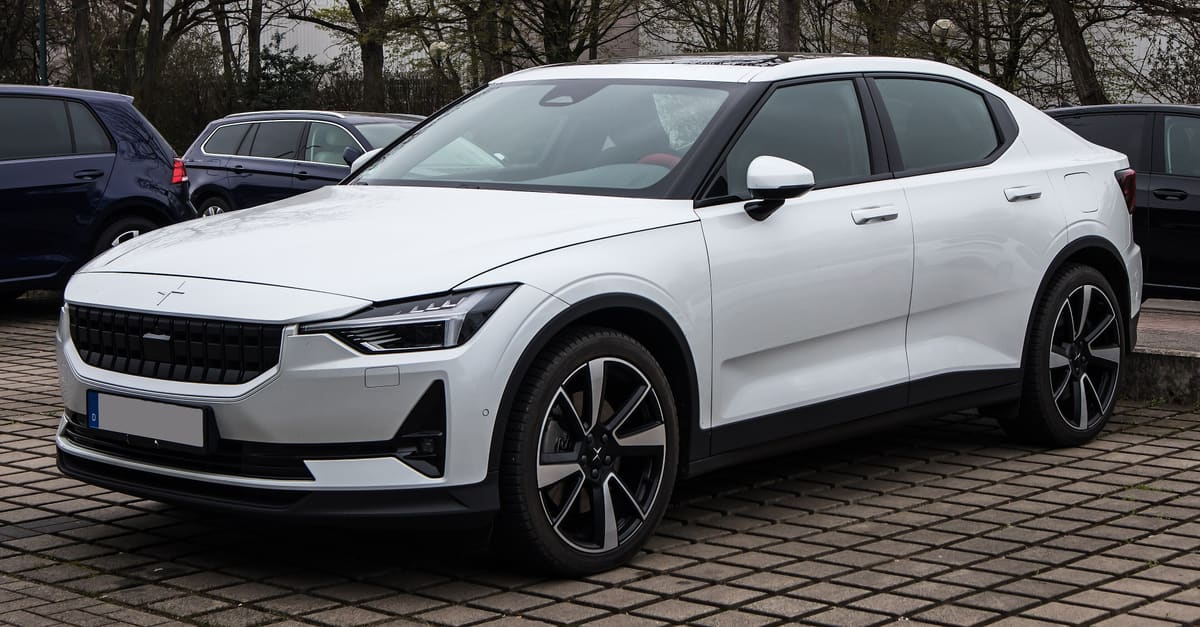
The Polestar 2 typically faces MOT failures due to issues with tyres, brakes, suspension components, and lighting. Testers check these areas thoroughly to ensure safety and compliance. Owners can spot many faults beforehand by regularly inspecting tyre condition and pressure, listening for unusual noises from brakes or suspension, and confirming all lights function correctly. Repairs often involve replacing worn parts or adjusting systems to meet legal standards.
Tyres: The Most Common MOT Failure Point
Tyres are the most frequent cause of MOT failure on the Polestar 2, as with many vehicles. Testers examine tread depth, sidewall condition, and overall tyre integrity to ensure they meet legal requirements and are safe for road use.
During the MOT, the tester measures tread depth across the central three-quarters of the tyre’s breadth and around the entire circumference. The minimum legal tread depth is 1.6mm. They also check for cuts, bulges, or other damage to the tyre walls that could compromise safety. Uneven wear patterns might indicate alignment or suspension issues, which can also lead to failure.
Owners should regularly check their tyres for visible signs of wear or damage and use a tread depth gauge to monitor remaining tread. Tyre pressures should be maintained at the manufacturer’s recommended levels, as underinflated or overinflated tyres wear unevenly and affect handling. Replacing tyres involves removing the wheel, taking off the old tyre, fitting a new one, and balancing the wheel to prevent vibrations.
Brakes: Ensuring Effective Stopping Power
Brake system faults are another common MOT failure cause on the Polestar 2. Testers assess brake pad thickness, disc condition, and brake fluid leaks or faults in the braking mechanism.
The MOT brake test includes a visual inspection of the brake pads and discs through the wheels. Pads must have sufficient thickness to provide safe stopping power, and discs should be free from deep scoring, cracks, or excessive corrosion. The tester also looks for any fluid leaks from brake lines or calipers, which would reduce braking efficiency. Additionally, the handbrake is tested to ensure it holds the vehicle securely.
Owners can spot brake issues by listening for squealing or grinding noises when braking, feeling for vibrations or pulling to one side, and checking brake fluid levels under the bonnet. Brake repairs typically involve replacing worn pads and, if necessary, resurfacing or replacing discs. Brake fluid leaks require replacing damaged hoses or seals and bleeding the system to remove air.
Suspension and Steering: Maintaining Control and Comfort
Suspension and steering components are checked during the MOT to confirm the car handles safely and comfortably. Failures often occur due to worn bushes, shock absorbers, or steering linkages.
Testers physically inspect suspension parts for signs of wear, corrosion, or damage. They check for excessive play in joints and bushes, and the condition of shock absorbers is assessed by looking for leaks or poor damping. The steering system is examined for free play and secure mounting. Any looseness or excessive movement can lead to failure.
Owners might notice suspension faults as unusual noises over bumps, excessive body roll, or a loose feeling in the steering. A visual check can reveal leaking shock absorbers or damaged bushes. Repair work involves replacing worn components such as bushes, ball joints, or shock absorbers, and realigning the wheels to ensure proper handling.
Lighting and Electrical Systems: Visibility and Signalling
Lighting faults are a frequent MOT failure cause, as all lights must work correctly to ensure visibility and communication with other road users. Testers check headlights, indicators, brake lights, fog lights, and rear lights.
During the MOT, each light is switched on and examined for correct operation, brightness, and beam alignment. Faulty bulbs, cracked lenses, or wiring issues can cause failure. The tester also checks that lights are the correct colour and not obscured by dirt or damage.
Owners should regularly inspect all exterior lights for operation and cleanliness. Replacing bulbs is usually straightforward, involving removing the light cluster or accessing the bulb holder, swapping the faulty bulb, and testing the light. More complex electrical faults may require diagnostic checks and wiring repairs.
Windscreen and Wipers: Clear Vision for Safety
The condition of the windscreen and wipers is checked during the MOT to ensure the driver has clear visibility. Cracks or chips in the driver’s line of sight and ineffective wipers can cause failure.
Testers look for damage larger than allowed in the critical viewing area of the windscreen. Wiper blades are checked for wear and their ability to clear the screen effectively. The windscreen washer system is also tested to confirm it sprays fluid correctly.
Owners can spot windscreen damage by inspecting for chips or cracks, especially in the driver’s field of vision. Wiper blades should be replaced if they leave streaks or miss patches. Repairs involve fitting new wiper blades or, if necessary, replacing the windscreen to meet safety standards.
Polestar 2 recall record
3 recalls have been issued for the Polestar 2, between 2020 and 2023.
A joint in the front suspension may have been incorrectly attached during the manufacturing process.
R/2023/203Issued 11 July 2023
A joint in the front suspension may have been incorrectly attached during the manufacturing process.
Remedy:Inspect the front suspension to ensure that the joint is correctly attached and if applicable adjust accordingly.
Affects cars built Dec 2022 to Dec 2022
HIGH VOLTAGE CONTACTORS IN THE BATTERY ENERGY CONTROL MODULE MAY OPEN DURING DRIVING
R/2021/061Issued 24 February 2021
High voltage contactors may open during driving resulting in a risk that the high voltage system may be unintentionally disconnected causing a loss of propulsion.
Remedy:Software upgrade to be carried out.
Affects cars built Dec 2019 to Feb 2021
TIN PLATING ON BULK CAPACITOR TERMINALS COULD CAUSE SHORT CURCUIT AND STALLING WHILE DRIVING
R/2020/306Issued 30 October 2020
Tin plating on the bulk capacitor terminals may create a short circuit
Remedy:Replace the affected inverters as appropriate
Affects cars built Sept 2019 to Aug 2020
A recall applies to a build range, not to every car of this model. Check a registration to see whether one specific vehicle has an outstanding recall.
Frequently asked questions
What is the Polestar 2 mot?
The Polestar 2 mot refers to the Ministry of Transport test required for vehicles in the UK. It checks that the car meets safety and environmental standards.
How often do I need to get my Polestar 2 mot done?
In the UK, your Polestar 2 must have an mot test every 12 months once it is three years old. It's important to keep up with this requirement to ensure your vehicle is roadworthy.
What happens if my Polestar 2 fails the mot?
If your Polestar 2 fails the mot, you will receive a list of issues that need to be addressed. You must fix these problems and have the car retested before it can be legally driven.
Can I drive my Polestar 2 if the mot has expired?
No, you cannot legally drive your Polestar 2 if the mot has expired, unless you are taking it to a pre-booked mot appointment. Driving without a valid mot can result in fines.
Where can I get my Polestar 2 mot tested?
You can get your Polestar 2 mot tested at any approved mot testing centre in the UK. It's advisable to choose a reputable garage to ensure a thorough inspection.
What documents do I need for my Polestar 2 mot?
You should bring your vehicle registration document and any previous mot certificates. It's also helpful to have details of any recent repairs or issues.
Is the Polestar 2 eligible for a mot exemption?
No, the Polestar 2 is not eligible for mot exemption as it is a modern vehicle. All cars over three years old must have a valid mot certificate.
How can I prepare my Polestar 2 for the mot?
To prepare your Polestar 2 for the mot, check that all lights are working, tyres are in good condition, and fluid levels are topped up. A pre-mot check can help identify any potential issues.
Sources
- DVSA vehicle safety recalls (Open Government Licence v3.0)