MOT failure rates
Saab 9-5 MOT failure rates: what to expect
What fails on a Saab 9-5 at MOT, how often, and what each fix typically costs.
Updated 4th September 2026 DVSA data: Across 6,383 recorded MOT tests, 28.6% failed.
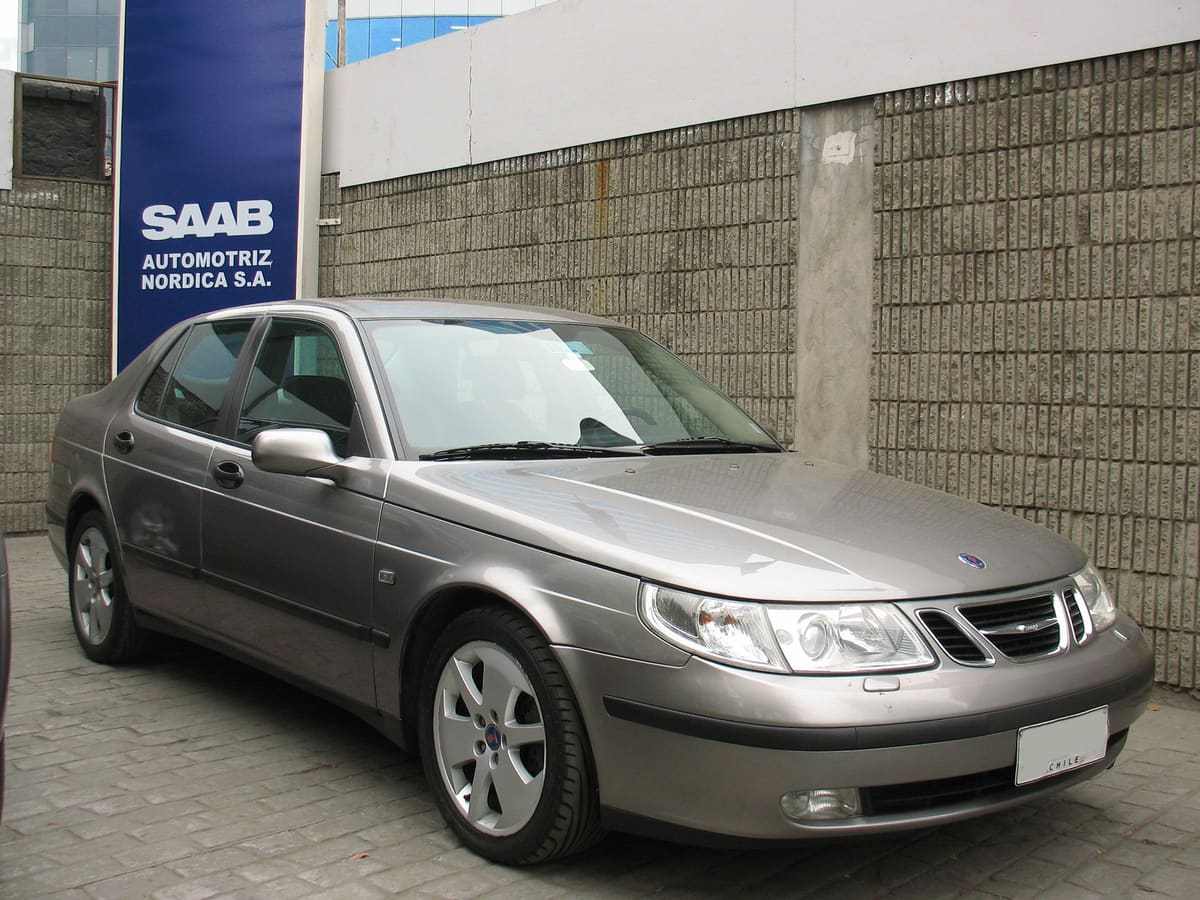
The Saab 9-5 commonly fails its MOT due to issues with worn suspension components, brake wear, and lighting faults. Testers focus on safety-critical parts such as brakes, tyres, lights, and the condition of the chassis. Owners can spot many problems early by checking for uneven tyre wear, brake pedal feel, and all lights working before the MOT. Repairs typically involve replacing worn bushes, brake discs or pads, bulbs, and sometimes addressing corrosion.
Suspension and Steering Components
Worn suspension and steering parts are among the most frequent reasons a Saab 9-5 fails its MOT. Testers check for excessive play or wear in ball joints, track rod ends, anti-roll bar links, and suspension bushes, as these affect vehicle control and safety.
The Saab 9-5’s suspension bushes and ball joints can deteriorate over time, especially on higher-mileage cars or those used on rough roads. When these components wear, you might notice a knocking noise over bumps or loose steering feel. Uneven tyre wear or the car pulling to one side can also indicate suspension issues.
To spot these problems before the MOT, owners should listen for unusual noises when driving over bumps and visually inspect the suspension for cracked or split rubber bushes. A mechanic can also check for play by moving the wheels and suspension components by hand.
Repairing worn suspension parts involves removing the affected components and fitting new bushes, ball joints, or track rod ends. This work often requires special tools to press out old bushes and align the steering after replacement. Ensuring the suspension is in good order improves handling and prevents premature tyre wear.
Brake System Wear and Condition
Brake faults are another common MOT failure point on the Saab 9-5. The MOT tester examines brake pads, discs, drums, and the operation of the handbrake to ensure the car can stop safely and reliably.
Owners should monitor brake pedal feel and listen for squealing or grinding noises, which indicate worn pads or discs. A spongy or low brake pedal can suggest fluid leaks or air in the brake lines. The handbrake must hold the car securely on a slope and not pull up too high.
Before the MOT, check the brake fluid level and look for any visible leaks around the calipers or wheel cylinders. Inspect brake pads through the wheel spokes if possible; thin or uneven pads mean replacement is needed. Also, test the handbrake for firm engagement.
Brake repairs involve replacing worn pads and discs or drums, and sometimes renewing brake hoses or cylinders if leaks are found. Brake fluid should be flushed and replaced periodically to maintain system performance. Handbrake cable adjustments or replacements may be necessary to restore proper operation.
Lighting and Electrical Checks
Lighting faults are a frequent MOT failure cause on the Saab 9-5, as all exterior lights must work correctly and be aimed properly. The tester checks headlights, indicators, brake lights, fog lights, and number plate illumination.
Owners should regularly check that all bulbs illuminate and replace any that have failed. Indicators and brake lights must flash or light promptly. Headlights should be clean and correctly aligned to avoid dazzling other drivers or reducing visibility.
A simple pre-MOT check involves switching on all lights and walking around the car to confirm they function. If bulbs blow repeatedly, it may indicate an electrical fault or poor connections that need attention.
Replacing bulbs is straightforward and usually involves removing the light cluster or accessing the bulb holders from the engine bay or boot. More complex electrical issues may require testing wiring and switches to locate faults. Ensuring all lights work correctly is vital for safety and MOT compliance.
Tyre Condition and Tread Depth
Tyres are a critical safety item checked during the MOT, and the Saab 9-5 often fails due to worn tread or damaged tyres. The tester measures tread depth and looks for cuts, bulges, or other defects that could cause a blowout.
Owners can easily check tyre tread using a tread depth gauge or the 1.6mm legal minimum tread depth indicator bars built into the tyre. Uneven wear can indicate suspension or alignment problems, so it’s important to check for bald spots or cupping.
Tyres should also be inspected for cracks in the sidewall, bulges, or embedded objects. Tyres with visible damage or below the legal tread depth must be replaced before the MOT.
Replacing tyres involves removing the wheels and fitting new tyres of the correct size and speed rating. Balancing the wheels after fitting new tyres helps prevent vibrations. Maintaining correct tyre pressures improves wear and fuel economy.
Corrosion and Structural Integrity
Rust and corrosion can cause MOT failures on older Saab 9-5 models, particularly around the sills, wheel arches, and underbody. The MOT tester examines the chassis and body for corrosion that affects structural strength or safety.
Owners should regularly inspect vulnerable areas for bubbling paint, flaking metal, or holes. Corrosion around suspension mounting points or brake line routes is especially critical, as it can lead to component failure.
Addressing corrosion often involves cleaning the affected area, removing rust with wire brushes or grinders, and applying rust converter or protective coatings. Severely corroded panels may require cutting out and welding in replacement metal sections.
Keeping the underside of the car clean and applying underseal treatments can help prevent corrosion. Early attention to rust spots can avoid costly repairs and ensure the Saab 9-5 remains safe and roadworthy.
Exhaust Emissions and System Condition
The MOT includes checks on the exhaust system for leaks, excessive noise, and emissions. The Saab 9-5 can fail if the exhaust is damaged, corroded, or if emissions exceed legal limits.
Owners should listen for unusual exhaust noises such as rattling or loud roaring, which may indicate holes or broken hangers. Visible damage or excessive rust on the exhaust pipes and silencers can also cause failure.
The emissions test measures pollutants and carbon monoxide output, which can rise if the engine is poorly tuned or if components like the lambda sensor or catalytic converter are faulty.
Repairs involve replacing damaged sections of the exhaust system, repairing or renewing hangers, and addressing engine faults affecting emissions. Regular servicing and engine tune-ups help keep emissions within legal limits and prevent MOT failure.
Saab 9-5 recall record
4 recalls have been issued for the Saab 9-5, between 2002 and 2010.
STEERING WHEEL AIRBAG MAY NOT PERFORM CORRECTLY IN A COLLISION
R/2010/214Issued 3 December 2010
It has been identified that in the unlikely event of a collision where there is a need for the deployment of the driver airbag it is a possible that the drivers airbag module may separate form its mounting on the steering wheel horn plate.
Remedy:Recall all affected vehicles and replace the drivers airbag module.
FUEL MAY LEAK - FIRE MAY OCCUR
R/2008/188Issued 26 January 2009
Fuel may leak from the return hose because it is not to specification and will age/crack prematurely. In the worst case fire may occur.
Remedy:Recall the vehicles that are likely to be affected to replace the fuel return hose.
Affects cars built Jan 2006 to Dec 2008
DETACHABLE TOW BAR MAY BECOME INSECURE.
R/2003/005Issued 10 January 2003
Under certain conditions the detachable tow bar may work loose resulting in the tow bar becoming detached from the vehicle.
Remedy:Replace the tow ball and housing with a calibrated unit.
TOWBALL CAME ADRIFT FROM TOWBAR
R/2002/093Issued 11 July 2002
A combination of internal and external forces caused the towball to prematurely detach itself from the towball housing resulting in separation of the trailer from the drawing unit.
Remedy:All towballs and housing will initially be modified and then replaced with calibrated units at a later date.
A recall applies to a build range, not to every car of this model. Check a registration to see whether one specific vehicle has an outstanding recall.
Saab 9-5 MOT record
From 6,383 recorded MOT tests, 28.6% failed.
| Registered | Tests | Failed | Median mileage |
|---|---|---|---|
| 2011 | 293 | 21.8% | 108,146 mi |
| 2010 | 552 | 24.8% | 110,716 mi |
| 2009 | 538 | 24.5% | 115,843 mi |
| 2008 | 749 | 27.5% | 122,705 mi |
| 2007 | 852 | 29.2% | 125,012 mi |
| 2006 | 784 | 32.8% | 128,722 mi |
| 2005 | 777 | 30.5% | 128,975 mi |
| 2004 | 602 | 28.6% | 124,748 mi |
Most common reasons for failure
- A suspension pin, bush or joint excessively worn27.9%
- A suspension component excessively damaged or corroded24.6%
- Tyre tread depth not in accordance with the requirements18.1%
- Fluid leaking excessively and likely to harm the environment or to pose a safety risk to other road users16.3%
- A tyre seriously damaged13.1%
Figures cover every Saab 9-5 tested in the DVSA dataset, not this specific car. Check a registration for the actual history of one vehicle.
Frequently asked questions
What is the MOT requirement for a Saab 9-5?
In the UK, a Saab 9-5 must have a valid MOT certificate if it is three years old or more. The MOT checks the vehicle's safety, roadworthiness, and emissions.
How often does a Saab 9-5 need an MOT?
A Saab 9-5 requires an MOT test every 12 months once it reaches three years of age. It is important to keep track of the expiry date to avoid penalties.
What are common issues that could cause a Saab 9-5 to fail its MOT?
Common issues include worn brakes, faulty lights, and excessive emissions. Regular maintenance can help prevent these problems.
Can I drive my Saab 9-5 if the MOT has expired?
No, you cannot legally drive your Saab 9-5 if the MOT has expired, unless you are driving it to a pre-booked MOT appointment. Doing so can result in fines.
How can I check the MOT history of a Saab 9-5?
You can check the MOT history of a Saab 9-5 by visiting the UK government's official vehicle check website. You will need the vehicle's registration number.
What should I do if my Saab 9-5 fails its MOT?
If your Saab 9-5 fails its MOT, you will receive a list of issues that need to be addressed. You can then have the necessary repairs done and retest the vehicle.
Is it possible to get a same-day MOT for my Saab 9-5?
Many garages offer same-day MOT services for your Saab 9-5, but it is advisable to book in advance. Availability may vary depending on the garage.
What documents do I need for my Saab 9-5 MOT?
You will need to bring the vehicle registration document and any previous MOT certificates if available. It's also helpful to have proof of identity.
Sources
- DVSA anonymised MOT tests and results (Open Government Licence v3.0)
- DVSA vehicle safety recalls (Open Government Licence v3.0)