MOT failure rates
Tesla Model X MOT failure rates: what to expect
What fails on a Tesla Model X at MOT, how often, and what each fix typically costs.
Updated 4th September 2026 DVSA data: Across 6,063 recorded MOT tests, 19.7% failed.
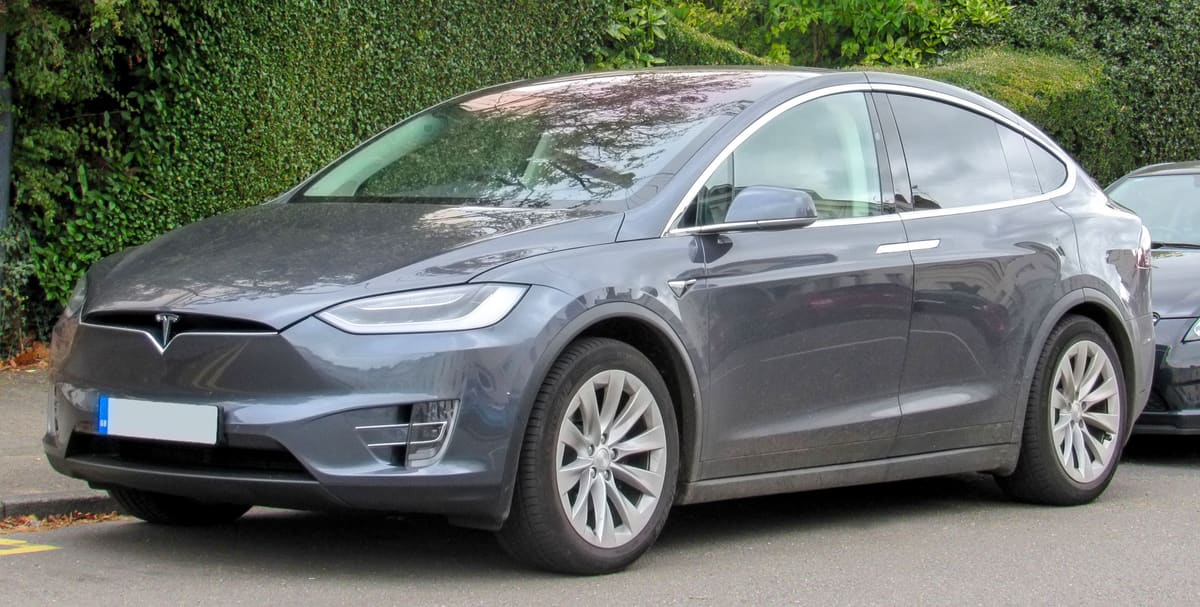
The Tesla Model X is generally a reliable vehicle, but like any car, it can encounter issues that lead to MOT failures. The most common problems include issues with the brakes, suspension, lights, and tyres. Understanding these failures and their typical repair costs can help owners maintain their vehicles effectively.
Brake System Issues
Brakes are crucial for safety, and problems in this area are one of the most common reasons for MOT failures in the Tesla Model X. Issues can arise from worn brake pads, damaged discs, or malfunctioning brake sensors.
Regular maintenance can help prevent these issues, ensuring that your braking system remains in good condition.
Suspension Problems
The suspension system of the Tesla Model X is designed for comfort and performance, but it can be prone to wear and tear over time. Common issues include worn shock absorbers, damaged air suspension components, and issues with the control arms.
Keeping an eye on unusual noises or changes in ride quality can help catch suspension issues early.
Lighting Failures
Lighting failures are another frequent cause of MOT failures for the Tesla Model X. This can include issues with headlights, brake lights, or indicators. Faulty bulbs, damaged wiring, or malfunctioning sensors can all contribute to lighting problems.
Regularly checking your lights and replacing bulbs as needed can help avoid MOT failures related to lighting.
Tyre Condition
Tyres are essential for safety and performance, and their condition is a common area of concern during MOT testing. Issues such as uneven wear, insufficient tread depth, or damage to the sidewall can lead to failures.
If multiple tyres need replacing, the costs can add up quickly. Regularly checking tyre pressure and tread depth, as well as rotating tyres, can help extend their lifespan and ensure compliance with MOT standards.
Battery and Electrical System
The Tesla Model X relies heavily on its battery and electrical systems, which can sometimes lead to MOT failures. Common issues include battery degradation, faulty connectors, or problems with the vehicle’s software.
Regular software updates and monitoring battery health can help mitigate these issues.
Windshield and Wiper Issues
Visibility is crucial for safe driving, and problems with the windshield or wipers can lead to MOT failures. Common issues include cracks in the windshield, damaged wiper blades, or malfunctioning washer jets.
Regularly inspecting your windshield and wipers can help ensure clear visibility and compliance during MOT testing.
Tesla Model X recall record
8 recalls have been issued for the Tesla Model X, between 2017 and 2025.
Loss of Rearview Camera Display Recall
R/2025/049Issued 28 March 2025
On a small percentage of affected vehicles upon vehicle power up the car computer board may experience a short resulting in the loss of rear view camera functionality .
Remedy:Over the air software update or Car Computer replacement if necessary.
Affects cars built Jun 2024 to Jun 2024
Update Vehicle Firmware To Restore Post-Crash eCall Functionality
R/2025/075Issued 7 March 2025
On affected vehicles the eCall audio system will not operate in compliance with Regulations when the front passenger seat is occupied. As a result communications between the occupants of the vehicle and an eCall public safety answer point are unavailable post-crash.
Remedy:Install modified software via an Over the Air (OTA) wireless update.
Affects cars built Feb 2023 to Jul 2024
A first-row seat belt was disconnected from its pretensioner anchor as part of a necessary step to perform a repair during a service visit. After the repair was completed on certain affected vehicles the first-row seat belt may not have been reconnected to its pretensioner anchor to specification.
R/2023/350Issued 15 December 2023
A first-row seat belt was disconnected from its pretensioner anchor as part of a necessary step to perform a repair during a service visit. After the repair was completed on certain affected vehicles the first-row seat belt may not have been reconnected to its pretensioner anchor to specification.
Remedy:Inspect and re-install.
Affects cars built Mar 2023 to Mar 2023
On certain MY 2021-2023 Model X vehicles the vehicle controller that detects the sensor voltage that indicates brake fluid level may not have a sufficient threshold range at low fluid levels. A vehicle controller that does not correctly indicate low brake fluid levels to the customer
R/2023/351Issued 15 December 2023
On certain MY 2021-2023 Model X vehicles the vehicle controller that detects the sensor voltage that indicates brake fluid level may not have a sufficient threshold range at low fluid levels. A vehicle controller that does not correctly indicate low brake fluid levels to the customer
Remedy:Owners of affected vehicles only need to install OTA (over the air) software release 2023.32.7 or a later software release No service visit is necessary
Affects cars built Feb 2021 to Sept 2023
4 older recalls not shown.
A recall applies to a build range, not to every car of this model. Check a registration to see whether one specific vehicle has an outstanding recall.
Tesla Model X MOT record
From 6,063 recorded MOT tests, 19.7% failed.
| Registered | Tests | Failed | Median mileage |
|---|---|---|---|
| 2020 | 1,437 | 19.4% | 49,270 mi |
| 2019 | 1,201 | 19.6% | 55,682 mi |
| 2018 | 1,409 | 18.9% | 64,532 mi |
| 2017 | 2,016 | 20.5% | 73,435 mi |
Most common reasons for failure
- Tyre tread depth not in accordance with the requirements36.6%
- A tyre cords visible or damaged19.1%
- A suspension pin, bush or joint excessively worn18.4%
- A tyre seriously damaged15.6%
- a brake lining or pad worn below 1.5mm10.3%
Figures cover every Tesla Model X tested in the DVSA dataset, not this specific car. Check a registration for the actual history of one vehicle.
Tesla Model X official figures
Median across 2 variants on sale, electricity.
- Electric range
- 347.5 miles
- Manufacturer WLTP figure
Official figures for new cars. Real economy varies with driving, load and conditions.
Frequently asked questions
What is the Tesla Model X mot?
The Tesla Model X mot refers to the Ministry of Transport test, which is required for vehicles over three years old in the UK. It ensures that the vehicle meets safety and environmental standards.
How often do I need to get a mot for my Tesla Model X?
You need to get a mot for your Tesla Model X every year once it reaches three years of age. It is important to keep your vehicle compliant to avoid fines and ensure safety.
What happens if my Tesla Model X fails the mot?
If your Tesla Model X fails the mot, you will receive a list of issues that need to be addressed. You must fix these problems and have the vehicle retested before it can be legally driven.
Can I drive my Tesla Model X if the mot has expired?
No, you cannot legally drive your Tesla Model X if the mot has expired, unless you are driving it to a pre-booked mot appointment. Driving without a valid mot can result in fines and penalties.
Where can I get a mot for my Tesla Model X?
You can get a mot for your Tesla Model X at any authorised testing centre in the UK. Many garages and dealerships offer mot services, so it's best to check for one near you.
How can I prepare my Tesla Model X for the mot?
To prepare your Tesla Model X for the mot, ensure that all lights are functioning, tyres are in good condition, and the windscreen is free from cracks. Regular maintenance can also help improve your chances of passing.
Is the mot different for electric vehicles like the Tesla Model X?
The mot process is generally the same for electric vehicles like the Tesla Model X as it is for petrol or diesel vehicles. However, the focus may be more on the vehicle's battery and electrical systems.
How can I check the mot status of a Tesla Model X?
You can check the mot status of a Tesla Model X by visiting the official UK government website and entering the vehicle registration number. This will provide you with the current mot status and expiry date.
Sources
- DVSA anonymised MOT tests and results (Open Government Licence v3.0)
- VCA new car fuel consumption and emissions data (Open Government Licence v3.0)
- DVSA vehicle safety recalls (Open Government Licence v3.0)