Reliability
Is the Toyota RAV4 reliable? Honest answer.
Is the Toyota RAV4 a reliable car? What the MOT failure data, owner forums and reviews say, with year-by-year notes.
Updated 4th September 2026 DVSA data: Across 130,784 recorded MOT tests, 17.8% failed.
TL;DR
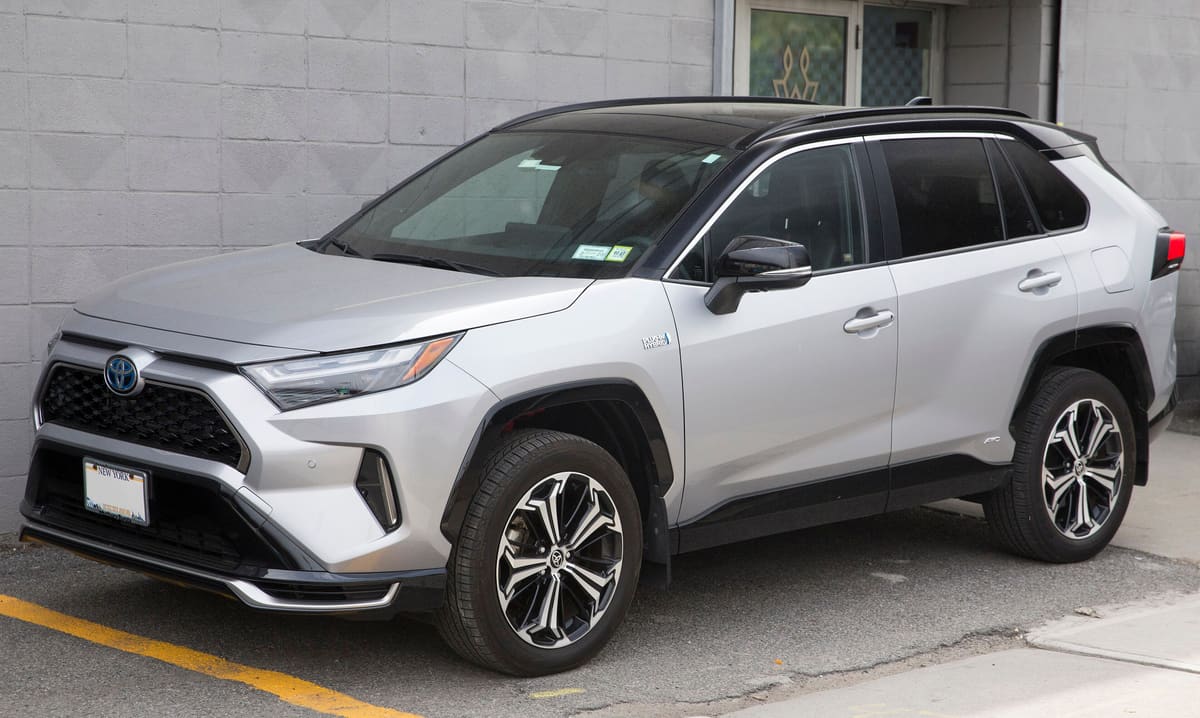
The Toyota RAV4 is generally reliable, especially models from 2016 onwards. However, potential buyers should avoid models from 2006 to 2012 due to higher failure rates and common issues, including electrical faults and suspension wear.
MOT Pass Rates
The Toyota RAV4 has a solid track record in MOT tests, with an overall pass rate of about 80%. However, this figure varies by year. Older models, particularly those manufactured between 2006 and 2012, tend to have higher failure rates due to age-related issues.
Common Failure Modes
Common faults with the RAV4 include electrical problems, particularly with the battery and wiring, and suspension issues, especially on older models. Engine problems can also arise, particularly with the 2.2 D-4D diesel engines from around 2009 to 2013. Owners have reported issues with the diesel particulate filter (DPF) clogging, leading to costly repairs.
Year-by-Year Breakdown
Models from 2016 onwards are generally favoured for their improved reliability and lower failure rates. The earlier models, especially those from 2006 to 2012, should be approached with caution due to their higher incidence of common faults. The 2013 to 2015 models are a mixed bag, showing some improvements but still retaining some of the older model’s issues.
Repair Costs
Repair costs for common issues can vary widely. Electrical faults can cost around £200 to fix, while suspension repairs may run up to £600. Engine-related issues, particularly with the diesel engines, can be more expensive, often exceeding £1,000 if major components need replacement.
What people are asking
What years to avoid when buying a Toyota RAV4?
It is advisable to avoid RAV4 models from 2006 to 2012 due to higher failure rates and common issues reported by owners. These years have been noted for electrical faults and suspension wear, which can lead to costly repairs.
Is the Toyota RAV4 reliable?
Yes, the Toyota RAV4 is generally considered reliable, especially models from 2016 onwards. However, potential buyers should be aware of specific issues that can arise in older models.
What are the negatives of a RAV4?
Some owners report issues with fuel efficiency and interior noise levels, particularly in older models. Additionally, certain features may feel dated compared to newer vehicles in the same class.
Which RAV4 has the least problems?
Models from 2019 onwards are reported to have the least problems, making them a safer choice for buyers looking for reliability and fewer common faults.
What owners say
They often highlight its ability to handle various driving conditions, making it suitable for both urban and rural settings. However, some users express concerns about the fuel efficiency of older models, noting that it does not always meet their expectations, especially when compared to newer vehicles. Many owners appreciate the Toyota RAV4 for its practicality and versatility.
They often mention the 2006 to 2012 models as problematic due to common faults, particularly electrical issues and suspension wear. In discussions, buyers have pointed out that while the RAV4 is generally reliable, there are specific years to avoid. This sentiment is echoed by owners, who suggest that potential buyers should focus on more recent models for a better experience.
They recommend thorough checks on these systems before making a purchase. Owners have shared their experiences with hybrid versions of the RAV4, noting that while they appreciate the fuel efficiency, they have encountered some issues with the hybrid system in models from 2016 onwards.
Some have reported problems with the 2.2 D-4D diesel engines, particularly concerning the diesel particulate filter (DPF), which can lead to expensive repairs if not addressed promptly. Lastly, feedback indicates that while the RAV4 is a solid choice, buyers should be mindful of the engine types.
Toyota RAV4 recall record
25 recalls have been issued for the Toyota RAV4, between 2006 and 2025.
Parking Assist ECU reprogram on multiple models
R/2025/466Issued 1 December 2025
For certain vehicles equipped with a Parking Assist ECU a component of the Panoramic View Monitor (PVM) system that displays the rear view image the software may cause the rear view image to freeze or not display
Remedy:Reprogram the parking assist ECU.
Affects cars built Oct 2022 to Jun 2025
Combination Meter Reprogramming on Multiple Models
R/2025/270Issued 24 November 2025
For certain vehicles equipped with the combination meter system (where various information is displayed) that due to an improper programming of the combination meter unnecessarily repetitive data is written to a memory device. This may cause the memory device to deteriorate and the monitor to not display during the meter at start up and remain in this state permanently.
Remedy:Reprogram or replace the combination meter.
Affects cars built Jan 2022 to Feb 2025
On affected vehicles there is a possibility that the DCM may not complete the shutdown process within a specific period of time when the ignition is turned off causing the DCM to not restart at the next ignition cycle and making the e-Call function unavailable. As a result the vehicles do not comply with relevant regulations.
R/2023/279Issued 12 October 2023
On affected vehicles there is a possibility that the DCM may not complete the shutdown process within a specific period of time when the ignition is turned off causing the DCM to not restart at the next ignition cycle and making the e-Call function unavailable. As a result the vehicles do not comply with relevant regulations.
Remedy:The software of the DCM (Data Communication Module) will be updated via an Over the Air (OTA) wireless update.
Affects cars built Jan 2023 to Jul 2023
DC-DC converter may have been damaged during production
R/2023/206Issued 21 August 2023
The plug-in hybrid system of the subject vehicles includes a DC-DC converter that reduces the voltage of the electricity from the Hybrid Vehicle (HV) battery in order to charge the vehicle�s 12V battery. Contained within the DC-DC converter is a current rectifying module that is installed on the circuit board. Some of these modules may have been damaged during production by the supplier and could fail so creating a short circuit. This allows current from the 12V battery to continue to flow through the module and the module will generate heat. Under certain conditions if excessive heat is generated components within and outside the DC-DC converter could sustain thermal damage increasing the risk of a vehicle fire.
Remedy:Replace the DC-DC Converter.
Affects cars built Jul 2020 to May 2022
21 older recalls not shown.
A recall applies to a build range, not to every car of this model. Check a registration to see whether one specific vehicle has an outstanding recall.
Toyota RAV4 MOT record
From 130,784 recorded MOT tests, 17.8% failed.
| Registered | Tests | Failed | Median mileage |
|---|---|---|---|
| 2023 | 242 | 1.7% | 25,020 mi |
| 2022 | 10,110 | 3.7% | 27,150 mi |
| 2021 | 12,089 | 5.4% | 34,399 mi |
| 2020 | 11,475 | 5.7% | 42,031 mi |
| 2019 | 8,772 | 6.5% | 48,115 mi |
| 2018 | 7,277 | 13.3% | 52,734 mi |
| 2017 | 7,779 | 13.9% | 63,324 mi |
| 2016 | 7,583 | 15.0% | 71,110 mi |
Most common reasons for failure
- A suspension pin, bush or joint excessively worn27.7%
- Tyre tread depth not in accordance with the requirements24.7%
- A tyre seriously damaged18.7%
- A suspension component excessively damaged or corroded15.4%
- Brake disc or drum excessively weakened, insecure or fractured13.5%
Figures cover every Toyota RAV4 tested in the DVSA dataset, not this specific car. Check a registration for the actual history of one vehicle.
Toyota RAV4 official figures
Median across 12 variants on sale, electricity / petrol.
- Combined economy
- 49.6 mpg
- WLTP median across variants
- CO2 emissions
- 130 g/km
- Sets the first-year tax rate
- Electric range
- 47 miles
- Manufacturer WLTP figure
Official figures for new cars. Real economy varies with driving, load and conditions.
Frequently asked questions
What are the common issues with the Toyota RAV4?
Common issues include electrical faults, engine problems, and suspension wear.
Which RAV4 models are the most reliable?
Models from 2016 onwards generally have better reliability ratings.
What years to avoid when buying a Toyota RAV4?
It is advisable to avoid RAV4 models from 2006 to 2012 due to higher failure rates and common issues.
What are the negatives of a RAV4?
Some owners report issues with fuel efficiency and interior noise levels, particularly in older models.
Which RAV4 has the least problems?
Models from 2019 onwards are reported to have the least problems, making them a safer choice.
Sources
- DVSA anonymised MOT tests and results (Open Government Licence v3.0)
- VCA new car fuel consumption and emissions data (Open Government Licence v3.0)
- DVSA vehicle safety recalls (Open Government Licence v3.0)