Recall history
Audi e-tron recall history: what has been recalled and why
Audi e-tron recall history: which model years were affected, what was fixed, and how to check your own car.
Updated 4th September 2026 DVSA data: Across 18,912 recorded MOT tests, 8.8% failed.
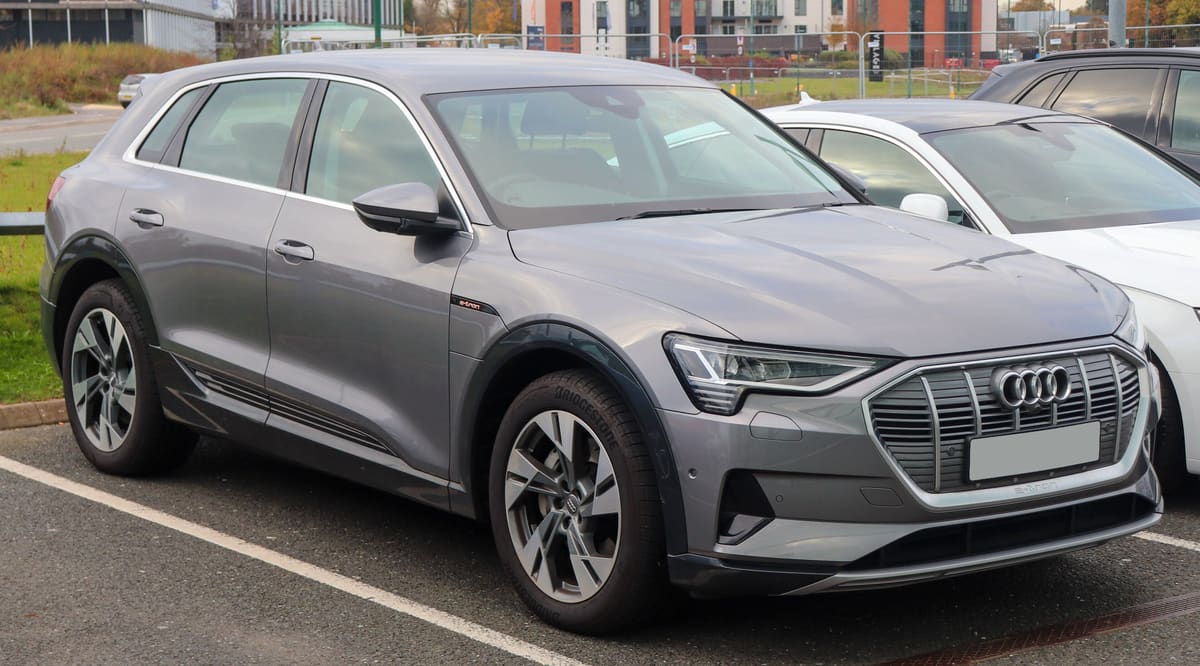
The Audi e-tron has experienced several recalls since its launch, primarily due to issues related to software glitches and battery management systems. Affected build years include 2019 to 2021, with current status indicating that most issues have been resolved through dealer updates and repairs.
Overview of Audi e-tron Recalls
The Audi e-tron, launched in 2019 as Audi’s flagship electric SUV, has faced a number of recalls primarily focused on safety and performance-related issues. The recalls have involved various components, including the vehicle’s software and battery systems. As electric vehicles become more prevalent, manufacturers like Audi are keen to address any potential issues swiftly to maintain consumer trust and safety.
The recalls have primarily affected models produced between 2019 and 2021. Audi has been proactive in addressing these concerns, often notifying owners and encouraging them to bring their vehicles in for necessary updates or repairs. This approach helps ensure that the e-tron remains a reliable choice for electric vehicle enthusiasts.
Key Recalls and Issues
One of the most significant recalls for the Audi e-tron involved the battery management system. A software glitch could potentially lead to incorrect battery readings, which may affect the vehicle’s range and performance. This issue was identified in early 2020 and affected a substantial number of vehicles within the first production year.
Audi responded promptly by issuing a recall notice to affected owners, advising them to visit their local dealerships for a software update. This update was designed to rectify the issue and ensure that the battery management system operates correctly. The swift action taken by Audi highlights the company’s commitment to safety and customer satisfaction.
Affected Build Years
The recalls associated with the Audi e-tron predominantly involve models manufactured between 2019 and 2021. During this period, Audi was still refining its electric vehicle technology, which led to the identification of several issues that required attention.
In addition to the battery management system recall, other recalls have addressed concerns related to the vehicle’s braking system and electronic stability control. These recalls underscore the importance of ongoing monitoring and testing in the rapidly evolving electric vehicle market. Audi has worked diligently to ensure that all affected vehicles receive the necessary updates and repairs.
Current Status of Recalls
As of now, the majority of recalls affecting the Audi e-tron have been resolved. Owners have been encouraged to check their vehicle identification number (VIN) against recall databases to confirm whether their vehicle is affected. Audi dealerships have implemented the necessary fixes, including software updates and hardware replacements, to ensure that the e-tron meets safety and performance standards.
The current status of recalls for the Audi e-tron reflects the company’s proactive approach to addressing issues as they arise. Audi has maintained open communication with its customers, providing updates and information about the recall process. This transparency helps to build trust and confidence among e-tron owners.
Impact on Reliability and Consumer Trust
The recall history of the Audi e-tron has had implications for its overall reliability and consumer trust. While recalls can raise concerns among potential buyers, Audi’s prompt response to issues has helped mitigate negative perceptions.
The proactive measures taken by Audi to resolve issues demonstrate the brand’s commitment to quality and safety. As electric vehicles continue to gain popularity, consumers are increasingly aware of the importance of reliability and manufacturer support. Audi’s handling of e-tron recalls may influence future purchasing decisions for potential buyers.
Recommendations for Audi e-tron Owners
For current Audi e-tron owners, it is essential to stay informed about any recalls that may affect their vehicle. Regularly checking the DVSA MOT data and the official Audi website can provide valuable information about any outstanding recalls. Owners should also maintain open lines of communication with their local dealerships to ensure that they are aware of any necessary updates or repairs.
Additionally, owners should consider scheduling regular maintenance checks to ensure that their vehicle remains in optimal condition. This proactive approach can help identify any potential issues before they escalate, ensuring a safe and enjoyable driving experience. By staying informed and engaged, Audi e-tron owners can maximise their vehicle’s performance and longevity.
Audi e-tron recall record
18 recalls have been issued for the Audi e-tron, between 2019 and 2025.
Checking air spring strut
R/2025/237Issued 2 July 2025
A retaining ring may not be securely seated in the area of the support mounting on the air spring struts on your vehicle. If the retaining ring comes loose from its groove air will escape from the affected air spring strut. This directly impairs the vehicle’s driving dynamics and results in an increased accident risk
Remedy:Check the affected air spring struts and replace them if necessary.
Affects cars built Mar 2025 to Mar 2025
Check high-voltage battery
R/2024/436Issued 8 November 2024
Some individual modules of the high-voltage battery may display technical irregularities. It cannot be ruled out that the battery may overheat under certain circumstances. For safety reasons affected cell modules must be replaced during a workshop visit. Vehicles affected by this should also not be charged above 80% until further notice.
Remedy:The high-voltage battery must be checked on the affected vehicles and if necessary one or more modules must be replaced.
Affects cars built Feb 2021 to Jun 2023
Replace battery module
R/2024/404Issued 16 October 2024
Some individual cell modules of the high-voltage battery may display technical irregularities. It cannot be ruled out that the battery may overheat under certain circumstances with risk of fire and damage to persons or property.
Remedy:Vehicles affected by this should also not be charged above 80% until further notice. Affected cell modules must be replaced during a workshop visit. The corresponding battery module must be replaced on the vehicles affected.
Affects cars built Mar 2021 to Jun 2023
Replacing brake hoses
R/2024/322Issued 30 September 2024
On affected vehicles cracks may occur on the brake hoses on the front axle over time resulting in brake fluid escaping.
Remedy:Replace the front axle brake hoses.
Affects cars built Jan 2020 to Jun 2024
Replacing brake servo
R/2024/344Issued 6 September 2024
On certain Audi e-tron vehicles the bolted connection between the brake pedal and brake servo might not be properly secured. If it loosens the mechanical link between the foot brake and brake servo could fail. In such cases braking would only be possible using the controlled emergency braking function by holding the parking brake button on the centre console (see Owner’s Manual).
Remedy:For safety reasons the brake servo must be replaced on the affected vehicles.
Affects cars built May 2019 to Oct 2019
Checking high-voltage battery
R/2024/219Issued 22 May 2024
Deviations to various important parameters were discovered on the affected battery modules. These may result in the affected battery modules becoming defective over the course of the vehicle’s service life. In turn this represents a fire hazard with the associated risk of severe or fatal injuries to people inside and/or outside the vehicle as well as significant material damage.
Remedy:Check and if necessary replace individual modules of the high-voltage battery. To minimise this risk the manufacturer advises that you limit the charging target to 80 percent capacity until the inspection has been carried out. This significantly reduces the load on the battery during charging. You can adjust this setting in the Charging target menu in the MMI or in the ’myAudi’ app. As this setting may change during vehicle use the current value must always be checked prior to charging the vehicle and set to a maximum of 80 percent if necessary. Additionally until the inspection has been completed the manufacturer advises not to charge the vehicle under cover and or to ensure the vehicle is not parked adjacent to or under buildings.
Affects cars built Jan 2022 to Dec 2023
Replace battery module
R/2024/203Issued 17 May 2024
Deviations to various important parameters were discovered on the affected battery modules. These may result in the affected battery modules becoming defective over the course of the vehicle’s service life. In turn this represents a fire hazard with the associated risk of severe or fatal injuries to people inside and/or outside the vehicle as well as significant material damage.
Remedy:Replace individual modules of the high-voltage battery. To minimise this risk the manufacturer advises that you limit the charging target to 80 percent capacity until the inspection has been carried out. This significantly reduces the load on the battery during charging. You can adjust this setting in the Charging target menu in the MMI or in the’ myAudi’ app. As this setting may change during vehicle use the current value must always be checked prior to charging the vehicle and set to a maximum of 80 percent if necessary. Additionally until the inspection has been completed the manufacturer advises not to charge the vehicle under cover and or to ensure the vehicle is not parked adjacent to or under buildings.
Affects cars built Mar 2021 to Nov 2022
Checking high-voltage battery
R/2024/040Issued 21 February 2024
Certain vehicles with a specific type of high-voltage battery may have cell modules with technical irregularities regarding their charging and discharging characteristics. This may lead to the high-voltage battery overheating potentially creating a risk of fire.
Remedy:To minimise this risk temporarily do not charge the high-voltage battery above 80 percent capacity. The vehicle will be inspected and where necessary the individual cells within the high voltage battery will be replaced.
Affects cars built Jan 2019 to Nov 2021
Checking high-voltage battery
R/2024/041Issued 21 February 2024
Certain vehicles with a specific type of high-voltage battery may have cell modules with technical irregularities regarding their charging and discharging characteristics. This may lead to the high-voltage battery overheating potentially creating a risk of fire.
Remedy:To minimise this risk temporarily do not charge the high-voltage battery above 80 percent capacity. The vehicle will be inspected and where necessary the individual cells within the high voltage battery will be replaced.
Affects cars built Feb 2019 to Jul 2021
In certain conditions and over time moisture may enter the high-voltage battery area of specific vehicles.
R/2023/322Issued 27 October 2023
In certain conditions and over time moisture may enter the high-voltage battery area of specific vehicles.
Remedy:The airtightness of the system must be checked and where required the high-voltage battery will be replaced.
Affects cars built Sept 2022 to Jun 2023
There may have been a discrepancy in the manufacturing process for the air spring strut
R/2022/359Issued 21 December 2022
There may have been a discrepancy in the manufacturing process for the front left air spring strut.
Remedy:The affected air spring strut will need to be checked and if necessary replaced.
Affects cars built Aug 2021 to Sept 2021
THE ELECTRICAL WIRE FOR THE BELT- FASTENED SENSOR WAS NOT ROUTED ACCORDING TO SPECIFICATIONS AND CAN POTENTIALLY MAKE DIRECT CONTACT WITH THE ISOFIX NOUNTING ON THE RIGHT REAR SEAT
R/2022/058Issued 4 March 2022
The electrical wire for the belt-fastened sensor was not routed according to specifications and can potentially make direct contact with the ISOFIX mounting on the right rear seat.
Remedy:The wiring harness for the centre rear seat belt buckle must be checked for damage and must be correctly routed and secured on the affected vehicles.
Affects cars built Feb 2021 to Aug 2021
6 older recalls not shown.
A recall applies to a build range, not to every car of this model. Check a registration to see whether one specific vehicle has an outstanding recall.
Audi e-tron MOT record
From 18,912 recorded MOT tests, 8.8% failed.
| Registered | Tests | Failed | Median mileage |
|---|---|---|---|
| 2022 | 5,798 | 9.4% | 27,926 mi |
| 2021 | 6,978 | 8.2% | 37,134 mi |
| 2020 | 5,134 | 8.6% | 42,427 mi |
| 2019 | 1,002 | 10.4% | 48,912 mi |
Most common reasons for failure
- Tyre tread depth not in accordance with the requirements47.7%
- A tyre seriously damaged28.5%
- A tyre cords visible or damaged16.0%
- Defect 100014.0%
- Brake disc or drum excessively weakened, insecure or fractured3.8%
Figures cover every Audi e-tron tested in the DVSA dataset, not this specific car. Check a registration for the actual history of one vehicle.
Audi e-tron official figures
Median across 4 variants on sale, electricity.
- Electric range
- 341 miles
- Manufacturer WLTP figure
Official figures for new cars. Real economy varies with driving, load and conditions.
Frequently asked questions
What is the Audi e-tron recall history?
Recalls are issued against individual vehicles rather than a model as a whole, so a model-level yes or no would be guesswork. Enter the registration on Honest Car Check and we check the DVSA record for that specific car. Where DVSA holds no status, confirm it with a franchised dealer using the VIN.
How can I find out if my Audi e-tron has been recalled?
Recalls are issued against individual vehicles rather than a model as a whole, so a model-level yes or no would be guesswork. Enter the registration on Honest Car Check and we check the DVSA record for that specific car. Where DVSA holds no status, confirm it with a franchised dealer using the VIN.
What should I do if my Audi e-tron is recalled?
Recalls are issued against individual vehicles rather than a model as a whole, so a model-level yes or no would be guesswork. Enter the registration on Honest Car Check and we check the DVSA record for that specific car. Where DVSA holds no status, confirm it with a franchised dealer using the VIN.
Are recalls common for electric vehicles like the Audi e-tron?
Recalls are issued against individual vehicles rather than a model as a whole, so a model-level yes or no would be guesswork. Enter the registration on Honest Car Check and we check the DVSA record for that specific car. Where DVSA holds no status, confirm it with a franchised dealer using the VIN.
Will a recall affect the resale value of my Audi e-tron?
Recalls are issued against individual vehicles rather than a model as a whole, so a model-level yes or no would be guesswork. Enter the registration on Honest Car Check and we check the DVSA record for that specific car. Where DVSA holds no status, confirm it with a franchised dealer using the VIN.
How does Audi notify owners about recalls?
Recalls are issued against individual vehicles rather than a model as a whole, so a model-level yes or no would be guesswork. Enter the registration on Honest Car Check and we check the DVSA record for that specific car. Where DVSA holds no status, confirm it with a franchised dealer using the VIN.
Can I still drive my Audi e-tron if it has an open recall?
Recalls are issued against individual vehicles rather than a model as a whole, so a model-level yes or no would be guesswork. Enter the registration on Honest Car Check and we check the DVSA record for that specific car. Where DVSA holds no status, confirm it with a franchised dealer using the VIN.
Are recall repairs free for Audi e-tron owners?
Recalls are issued against individual vehicles rather than a model as a whole, so a model-level yes or no would be guesswork. Enter the registration on Honest Car Check and we check the DVSA record for that specific car. Where DVSA holds no status, confirm it with a franchised dealer using the VIN.
Sources
- DVSA anonymised MOT tests and results (Open Government Licence v3.0)
- VCA new car fuel consumption and emissions data (Open Government Licence v3.0)
- DVSA vehicle safety recalls (Open Government Licence v3.0)