Buying guide
Buying a used BMW 1 Series: what to check before you hand over cash
A checklist for inspecting a used BMW 1 Series. Engine, gearbox, electrics, paperwork, and what a Honest Car Check report tells you.
Updated 22nd June 2026 DVSA data: Across 378,686 recorded MOT tests, 19.2% failed.
TL;DR
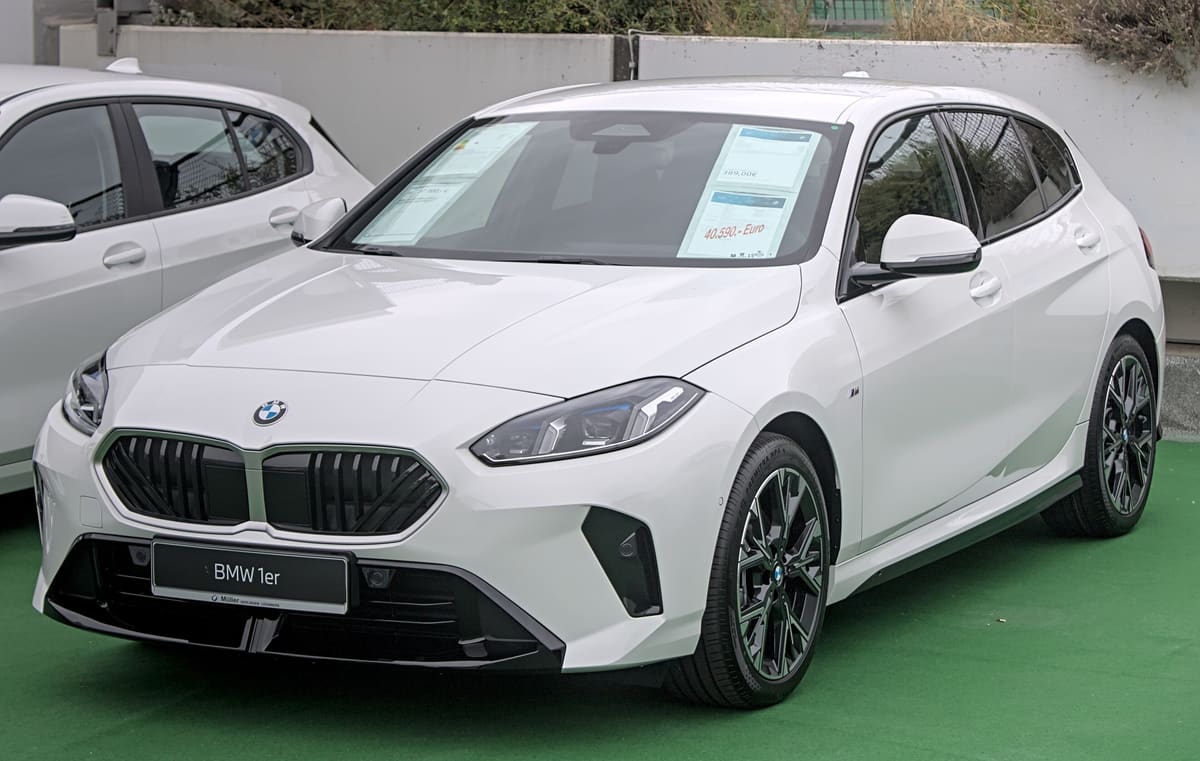
The BMW 1 Series is a compact and sporty hatchback that requires careful inspection before purchase. Key areas to check include paperwork, bodywork, engine performance, gearbox functionality, electrical systems, and MOT history. Understanding common issues and owner experiences can help ensure a sound investment.
Paperwork
Start by checking the V5C registration document. Ensure the details match the seller’s information and the car itself. A complete service history is also vital. It should include regular maintenance records, ideally from a BMW dealership. This documentation can provide peace of mind about the car’s past and its maintenance.
Bodywork
Inspect the bodywork for signs of rust, dents, or scratches. Pay close attention to the wheel arches and sills, as these areas can be prone to corrosion. Look for mismatched paint, which may indicate previous repairs. A thorough inspection can help you avoid costly repairs down the line.
Engine Cold-Start
When starting the engine cold, listen for any unusual noises. The engine should start smoothly without excessive cranking. Check for smoke from the exhaust, which can indicate engine issues, particularly in older models. If you notice any strange smells or sounds, it may be worth investigating further.
Test Drive Checklist
During a test drive, assess the car’s handling and performance. Pay attention to the steering response and braking efficiency. The car should feel stable and responsive. Listen for any odd noises during acceleration and deceleration. Take note of how the car behaves at various speeds and on different road surfaces.
Gearbox
The gearbox should shift smoothly without any grinding or hesitation. If the car is automatic, ensure the transitions between gears are seamless. Manual gearboxes should engage easily without stiffness. A rough or hesitant gear change could be a sign of underlying mechanical issues.
Electrics
Check all electrical components, including lights, windows, and infotainment systems. Look for any warning lights on the dashboard. Faulty electrics can be a common issue in the 1 Series, particularly in models from 2012 to 2015. Ensure that all features function correctly to avoid unexpected repairs.
MOT History
Review the MOT history for any past failures or advisories. This information can provide insight into potential recurring issues. Use the DVSA website to access the car’s MOT history. A clean MOT history is a good sign, but be cautious of any repeated advisories.
Use Honest Car Check to verify mileage and MOT history. This service will provide a comprehensive report, helping you decide with confidence.
What people are asking
Is the BMW 1 Series a good reliable car?
Yes, many owners report that the BMW 1 Series is a reliable vehicle, especially when well-maintained. Regular servicing and attention to common issues can enhance its longevity and performance.
Is the BMW Series 1 expensive to repair?
Repair costs can be higher than average due to the premium nature of BMW parts and servicing. Owners have noted that while routine maintenance can be manageable, unexpected repairs can add up quickly.
Why are BMW 1 Series so cheap?
Prices can be lower due to depreciation, especially for older models or those with higher mileage. Buyers often find that the initial cost is appealing, but they should be aware of potential maintenance costs.
What is the biggest issue with BMW?
One of the most frequent issues with BMWs is the failure of the cooling system, which can lead to significant engine problems. This includes water pump failures, leaking radiators, and thermostat issues, particularly in performance models.
What owners say
Many appreciate the performance of the B series engines, noting that they are reliable when serviced properly. However, some users caution that the basic models can feel cramped and may lack the power of the higher-end variants. Owners have shared mixed experiences regarding the BMW 1 Series.
Common faults highlighted by owners include electrical issues, with reports of battery drains and faulty sensors being prevalent. These problems often arise in models produced between 2012 and 2015, leading some to suggest avoiding these years if reliability is a top priority.
Another theme is the cost of ownership. While many find the BMW 1 Series enjoyable to drive, they also acknowledge that maintenance and repair costs can be high. This sentiment is echoed by buyers who have experienced significant expenses related to servicing and parts replacement.
Additionally, prospective buyers are advised to consider the model year carefully. Some owners recommend steering clear of earlier models, particularly those from 2004 to 2011, due to issues with engine performance and timing chain problems. In contrast, newer models tend to receive better reviews for reliability and fuel efficiency.
BMW 1 Series recall record
39 recalls have been issued for the BMW 1 Series, between 2004 and 2026.
Replace the Driver’s Airbag – Takata PSDI-5
R/2025/327Issued 12 January 2026
Affected vehicles may be fitted with a drivers airbag which may deploy with too much explosive force causing sharp metal fragments to be released into the cabin. It has the potential to fatally or seriously injure vehicle occupants.
Remedy:Affected vehicles will have the airbag replaced.
Affects cars built Nov 2006 to Dec 2011
Takata Driver and/or Passenger Airbag Recall (Global VINs)
R/2025/349Issued 18 December 2025
Affected vehicles are already included in Safety Recalls within the markets they have previously resided in. The vehicles may be fitted with a driver and/or passenger airbag/s which if deployed may do so with excessive force causing sharp metal fragments to be released this may cause serious injury which could prove fatal to people in the vicinity.
Remedy:Vehicles will have the affected airbags checked and if necessary replaced.
Affects cars built Sept 2007 to Sept 2013
Replace the Engine Starter Motor
R/2025/405Issued 27 October 2025
For affected vehicles there is a concern involving water ingress and corrosion to the starter motor for where a short circuit cannot be ruled out. It is strongly recommended to park the vehicle outdoors and not in the immediate vicinity of buildings until the repair has been carried out.
Remedy:Replacement of the starter motor.
Affects cars built Feb 2017 to May 2019
Seat Belt Rear Outer Seats
R/2025/443Issued 23 October 2025
On affected vehicles either one or both of the outer most rear seats may not have been manufactured correctly and the sensitivity sensor may be deformed. If the sensor is not functioning correctly there is a risk the seat belt may not operate as intended.
Remedy:On affected vehicles the affected seatbelts will be checked and replaced.
Affects cars built Aug 2025 to Sept 2025
35 older recalls not shown.
A recall applies to a build range, not to every car of this model. Check a registration to see whether one specific vehicle has an outstanding recall.
BMW 1 Series MOT record
From 378,686 recorded MOT tests, 19.2% failed.
| Registered | Tests | Failed | Median mileage |
|---|---|---|---|
| 2023 | 866 | 4.3% | 19,026 mi |
| 2022 | 10,526 | 7.8% | 23,841 mi |
| 2021 | 14,185 | 8.3% | 32,444 mi |
| 2020 | 20,439 | 10.8% | 38,846 mi |
| 2019 | 26,994 | 12.2% | 45,979 mi |
| 2018 | 26,797 | 13.1% | 54,770 mi |
| 2017 | 32,728 | 14.2% | 64,617 mi |
| 2016 | 31,677 | 16.2% | 74,397 mi |
Most common reasons for failure
- Tyre tread depth not in accordance with the requirements37.6%
- A tyre seriously damaged19.3%
- a brake lining or pad worn below 1.5mm15.6%
- A suspension pin, bush or joint excessively worn14.0%
- A shock absorber damaged to the extent that it does not function or showing signs of severe leakage13.4%
Figures cover every BMW 1 Series tested in the DVSA dataset, not this specific car. Check a registration for the actual history of one vehicle.
BMW 1 Series official figures
Median across 8 variants on sale, petrol, petrol electric.
- Combined economy
- 50.1 mpg
- WLTP median across variants
- CO2 emissions
- 132.5 g/km
- Sets the first-year tax rate
Official figures for new cars. Real economy varies with driving, load and conditions.
Frequently asked questions
What paperwork should I check before buying a used BMW 1 Series?
Check the V5C registration document and ensure the service history is complete.
What common faults should I look for in the BMW 1 Series?
Look for issues with the electrics, turbo failure in diesel models, and wear on the suspension.
How can I check the MOT history of a BMW 1 Series?
You can check the MOT history online through the DVSA website.
Is the BMW 1 Series reliable?
Generally, the BMW 1 Series has a good reliability rating, but check owner reviews for specific models.
What should I listen for during a test drive?
Listen for unusual noises from the engine or gearbox and check for smooth acceleration.
Is the BMW 1 Series a good reliable car?
Yes, many owners report that the BMW 1 Series is a reliable vehicle, especially when well-maintained.
Is the BMW Series 1 expensive to repair?
Repair costs can be higher than average due to the premium nature of BMW parts and servicing.
Why are BMW 1 Series so cheap?
Prices can be lower due to depreciation, especially for older models or those with higher mileage.
What is the biggest issue with BMW?
One of the most frequent issues with BMWs is the failure of the cooling system, which can lead to significant engine problems.
Sources
- DVSA anonymised MOT tests and results (Open Government Licence v3.0)
- VCA new car fuel consumption and emissions data (Open Government Licence v3.0)
- DVSA vehicle safety recalls (Open Government Licence v3.0)