Recall history
BMW 1 Series recall history: what has been recalled and why
BMW 1 Series recall history: which model years were affected, what was fixed, and how to check your own car.
Updated 4th September 2026 DVSA data: Across 378,686 recorded MOT tests, 19.2% failed.
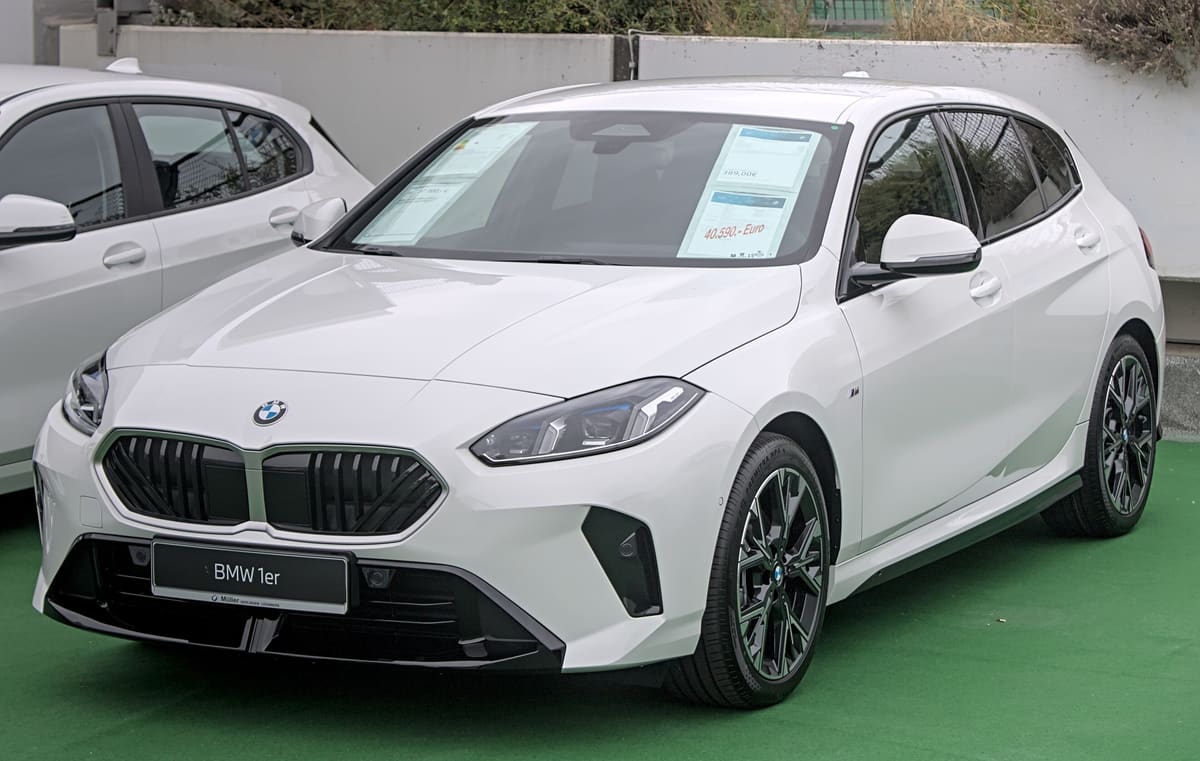
The BMW 1 Series has experienced several recalls over the years, primarily due to issues related to safety and performance. Key recalls have addressed problems such as faulty airbags, potential fuel leaks, and electrical faults. Affected build years range from 2004 to 2020, with the current status of these recalls varying by model and year.
Overview of BMW 1 Series Recalls
The BMW 1 Series, introduced in 2004, has had a notable recall history. Recalls have been initiated to address safety concerns and improve vehicle reliability. The recalls span multiple generations of the 1 Series, affecting both petrol and diesel variants. It is essential for owners to be aware of these recalls to ensure their vehicles are safe and compliant.
The recalls typically involve inspections and repairs to rectify identified issues. BMW has a robust system for notifying affected owners, and it is crucial for drivers to respond promptly to these notifications. Checking the vehicle’s recall status can provide peace of mind and enhance safety on the road.
Key Recalls and Their Issues
Several significant recalls have impacted the BMW 1 Series. One of the most critical recalls involved faulty airbags manufactured by Takata, which posed a risk of deployment failure. This recall affected models produced between 2004 and 2010. Owners were advised to have their airbags inspected and replaced if necessary.
Another notable recall addressed potential fuel leaks due to faulty fuel pumps. This issue was particularly concerning as it could lead to engine stalling or, in extreme cases, a fire hazard. Models from 2011 to 2019 were affected, and BMW took swift action to rectify the problem.
Additionally, electrical faults have been a recurring issue. Some models experienced problems with the battery management system, which could lead to unexpected vehicle shutdowns. This recall affected various build years, and BMW provided solutions to ensure the reliability of the affected vehicles.
Affected Build Years
The BMW 1 Series recalls cover a broad range of build years, from the initial launch in 2004 to the latest models produced up to 2020. Each generation has its unique set of recalls, reflecting the evolving technology and safety standards in the automotive industry.
For instance, the first generation (E87) faced issues primarily related to airbag functionality and electrical systems. The second generation (F20), launched in 2011, saw recalls related to fuel system failures and other performance-related concerns. The latest models, including the F40, have also experienced recalls, particularly concerning advanced driver assistance systems.
It is essential for potential buyers and current owners to check the specific build year of their vehicle against the recall history to ensure they are informed about any necessary repairs or updates.
Current Status of Recalls
The current status of recalls for the BMW 1 Series varies depending on the specific model and year. Many recalls have been resolved, with BMW actively working to ensure that affected vehicles are repaired and compliant with safety standards. Owners are encouraged to contact their local BMW dealership or check the DVSA MOT data for the latest updates on recalls.
BMW typically provides a warranty for recall repairs, ensuring that the work is completed to a high standard. It is advisable for owners to keep records of any recall work done on their vehicles for future reference, especially when considering resale.
Importance of Addressing Recalls
Addressing recalls is crucial for maintaining vehicle safety and performance. Ignoring recall notifications can lead to serious safety risks, including accidents caused by faulty components. For BMW 1 Series owners, staying informed about recalls can significantly enhance their driving experience and peace of mind.
Regularly checking for recalls and having necessary repairs completed can also positively impact the vehicle’s resale value. Buyers are often more inclined to purchase a vehicle with a clean recall history, knowing that it has been well-maintained and is safe to drive.
How to Check for Recalls
Owners of the BMW 1 Series can easily check for recalls by visiting the official BMW website or contacting their local dealership. The DVSA provides a comprehensive database where vehicle owners can input their registration number to find out if their car is subject to any active recalls.
This resource can help potential buyers make informed decisions based on the vehicle’s recall history and overall performance ratings.
By staying proactive about recalls and vehicle maintenance, BMW 1 Series owners can ensure their cars remain safe, reliable, and enjoyable to drive.
BMW 1 Series recall record
39 recalls have been issued for the BMW 1 Series, between 2004 and 2026.
Replace the Driver’s Airbag – Takata PSDI-5
R/2025/327Issued 12 January 2026
Affected vehicles may be fitted with a drivers airbag which may deploy with too much explosive force causing sharp metal fragments to be released into the cabin. It has the potential to fatally or seriously injure vehicle occupants.
Remedy:Affected vehicles will have the airbag replaced.
Affects cars built Nov 2006 to Dec 2011
Takata Driver and/or Passenger Airbag Recall (Global VINs)
R/2025/349Issued 18 December 2025
Affected vehicles are already included in Safety Recalls within the markets they have previously resided in. The vehicles may be fitted with a driver and/or passenger airbag/s which if deployed may do so with excessive force causing sharp metal fragments to be released this may cause serious injury which could prove fatal to people in the vicinity.
Remedy:Vehicles will have the affected airbags checked and if necessary replaced.
Affects cars built Sept 2007 to Sept 2013
Replace the Engine Starter Motor
R/2025/405Issued 27 October 2025
For affected vehicles there is a concern involving water ingress and corrosion to the starter motor for where a short circuit cannot be ruled out. It is strongly recommended to park the vehicle outdoors and not in the immediate vicinity of buildings until the repair has been carried out.
Remedy:Replacement of the starter motor.
Affects cars built Feb 2017 to May 2019
Seat Belt Rear Outer Seats
R/2025/443Issued 23 October 2025
On affected vehicles either one or both of the outer most rear seats may not have been manufactured correctly and the sensitivity sensor may be deformed. If the sensor is not functioning correctly there is a risk the seat belt may not operate as intended.
Remedy:On affected vehicles the affected seatbelts will be checked and replaced.
Affects cars built Aug 2025 to Sept 2025
Checking the Threaded Connection of Grounding Cable PCU48
R/2025/267Issued 18 July 2025
On affected vehicles the ground connection cable on the 48V power supply control unit may not have been torqued to the correct specification.
Remedy:Affected vehicles will have the ground connection checked and re-torqued. If required the relevant cable and Power Control Unit will be replaced.
Affects cars built Jun 2025 to Jun 2025
Rework Front End Threaded Connection (BMW)
R/2024/452Issued 8 November 2024
On affected vehicles the screws connecting the front end to the vehicles body may have been tightened to a torque level lower than required.
Remedy:The screws will be replaced if necessary and correctly torqued.
Affects cars built Apr 2023 to May 2024
Check Driver’s Airbag for Conversion Takata SDI & PSDI-5
R/2024/403Issued 21 October 2024
Affected vehicles may have had a retrofit or conversion of the airbag using a previously recalled airbag variant which if deployed may do so with excessive force causing sharp metal fragments to be released this may cause serious injury possibly fatal to people in the vicinity. The original factory fitment airbag for the vehicle is not affected.
Remedy:Vehicles will have the airbag checked and if necessary replaced.
Affects cars built May 2011 to Nov 2017
Integrated Braking System
R/2024/383Issued 13 September 2024
On certain vehicles the Integrated Brake (IB) system may be impaired due to contamination between electrical contacts.
Remedy:Vehicles that may be affected by contamination are required to have the vehicle’s software updated which can detect signal interference before it occurs. If symptoms are detected you should refrain from use of the vehicle and the affected Integrated Brake (IB) system component will be replaced.
Affects cars built Sept 2023 to Sept 2023
Replace VANOS bolts N51 N52 N55
R/2024/191Issued 1 May 2024
On affected vehicles overtime the aluminium screws can loosen or break on the adjustable variable camshaft timing (VANOS) units potentially resulting in engine emergency mode being activated.
Remedy:On affected vehicles the eight aluminium screws will be replaced if evidence of faulty screws is found then the VANOS adjustment unit will also be replaced.
Affects cars built Sept 2009 to Jul 2011
Replacing the Driver’s Airbag PSDI-5
R/2024/132Issued 18 March 2024
On affected vehicles a possible degradation due to age of the propellant tablets may lead to over aggressive combustion if the air bag is activated and cause the inflator body to rupture.
Remedy:On the affected vehicles the drivers air bag will be replaced.
Affects cars built Apr 2004 to Dec 2005
A possible degradation of the propellant tablets could lead to an over-aggressive combustion in the event the airbag is activated which may cause the inflator body to rupture.
R/2023/016Issued 24 January 2023
A possible degradation of airbag propellant tablets could lead to an over-aggressive combustion in the event the airbag is activated which may cause the inflator body to rupture.
Remedy:On affected vehicles the drivers airbag module will be replaced.
Affects cars built Oct 2013 to Jun 2017
Undetected EGR System leaks may cause thermal activity in the intake manifold
R/2022/255Issued 22 August 2022
Undetected EGR System leaks may cause thermal activity in the intake manifold.
Remedy:The engine management control unit (DDE) will be programmed with improved software incorporating the latest OBD functionality.
Affects cars built Feb 2015 to Feb 2018
27 older recalls not shown.
A recall applies to a build range, not to every car of this model. Check a registration to see whether one specific vehicle has an outstanding recall.
BMW 1 Series MOT record
From 378,686 recorded MOT tests, 19.2% failed.
| Registered | Tests | Failed | Median mileage |
|---|---|---|---|
| 2023 | 866 | 4.3% | 19,026 mi |
| 2022 | 10,526 | 7.8% | 23,841 mi |
| 2021 | 14,185 | 8.3% | 32,444 mi |
| 2020 | 20,439 | 10.8% | 38,846 mi |
| 2019 | 26,994 | 12.2% | 45,979 mi |
| 2018 | 26,797 | 13.1% | 54,770 mi |
| 2017 | 32,728 | 14.2% | 64,617 mi |
| 2016 | 31,677 | 16.2% | 74,397 mi |
Most common reasons for failure
- Tyre tread depth not in accordance with the requirements37.6%
- A tyre seriously damaged19.3%
- a brake lining or pad worn below 1.5mm15.6%
- A suspension pin, bush or joint excessively worn14.0%
- A shock absorber damaged to the extent that it does not function or showing signs of severe leakage13.4%
Figures cover every BMW 1 Series tested in the DVSA dataset, not this specific car. Check a registration for the actual history of one vehicle.
BMW 1 Series official figures
Median across 8 variants on sale, petrol, petrol electric.
- Combined economy
- 50.1 mpg
- WLTP median across variants
- CO2 emissions
- 132.5 g/km
- Sets the first-year tax rate
Official figures for new cars. Real economy varies with driving, load and conditions.
Frequently asked questions
What is the recall history of the BMW 1 Series?
Recalls are issued against individual vehicles rather than a model as a whole, so a model-level yes or no would be guesswork. Enter the registration on Honest Car Check and we check the DVSA record for that specific car. Where DVSA holds no status, confirm it with a franchised dealer using the VIN.
How can I find out if my BMW 1 Series has been recalled?
Recalls are issued against individual vehicles rather than a model as a whole, so a model-level yes or no would be guesswork. Enter the registration on Honest Car Check and we check the DVSA record for that specific car. Where DVSA holds no status, confirm it with a franchised dealer using the VIN.
What should I do if my BMW 1 Series is recalled?
Recalls are issued against individual vehicles rather than a model as a whole, so a model-level yes or no would be guesswork. Enter the registration on Honest Car Check and we check the DVSA record for that specific car. Where DVSA holds no status, confirm it with a franchised dealer using the VIN.
Are recalls common for the BMW 1 Series?
Recalls are issued against individual vehicles rather than a model as a whole, so a model-level yes or no would be guesswork. Enter the registration on Honest Car Check and we check the DVSA record for that specific car. Where DVSA holds no status, confirm it with a franchised dealer using the VIN.
Will a recall affect the resale value of my BMW 1 Series?
Recalls are issued against individual vehicles rather than a model as a whole, so a model-level yes or no would be guesswork. Enter the registration on Honest Car Check and we check the DVSA record for that specific car. Where DVSA holds no status, confirm it with a franchised dealer using the VIN.
How do I know if a recall has been resolved?
Recalls are issued against individual vehicles rather than a model as a whole, so a model-level yes or no would be guesswork. Enter the registration on Honest Car Check and we check the DVSA record for that specific car. Where DVSA holds no status, confirm it with a franchised dealer using the VIN.
What types of issues have led to recalls in the BMW 1 Series?
Recalls are issued against individual vehicles rather than a model as a whole, so a model-level yes or no would be guesswork. Enter the registration on Honest Car Check and we check the DVSA record for that specific car. Where DVSA holds no status, confirm it with a franchised dealer using the VIN.
Is there a cost associated with recall repairs for my BMW 1 Series?
Recalls are issued against individual vehicles rather than a model as a whole, so a model-level yes or no would be guesswork. Enter the registration on Honest Car Check and we check the DVSA record for that specific car. Where DVSA holds no status, confirm it with a franchised dealer using the VIN.
Sources
- DVSA anonymised MOT tests and results (Open Government Licence v3.0)
- VCA new car fuel consumption and emissions data (Open Government Licence v3.0)
- DVSA vehicle safety recalls (Open Government Licence v3.0)