Running costs
Honda HR-V running costs: what UK ownership really costs
Honda HR-V UK running costs: fuel or electric, insurance group, road tax, servicing and depreciation.
Updated 4th September 2026 DVSA data: Across 37,573 recorded MOT tests, 9.3% failed.
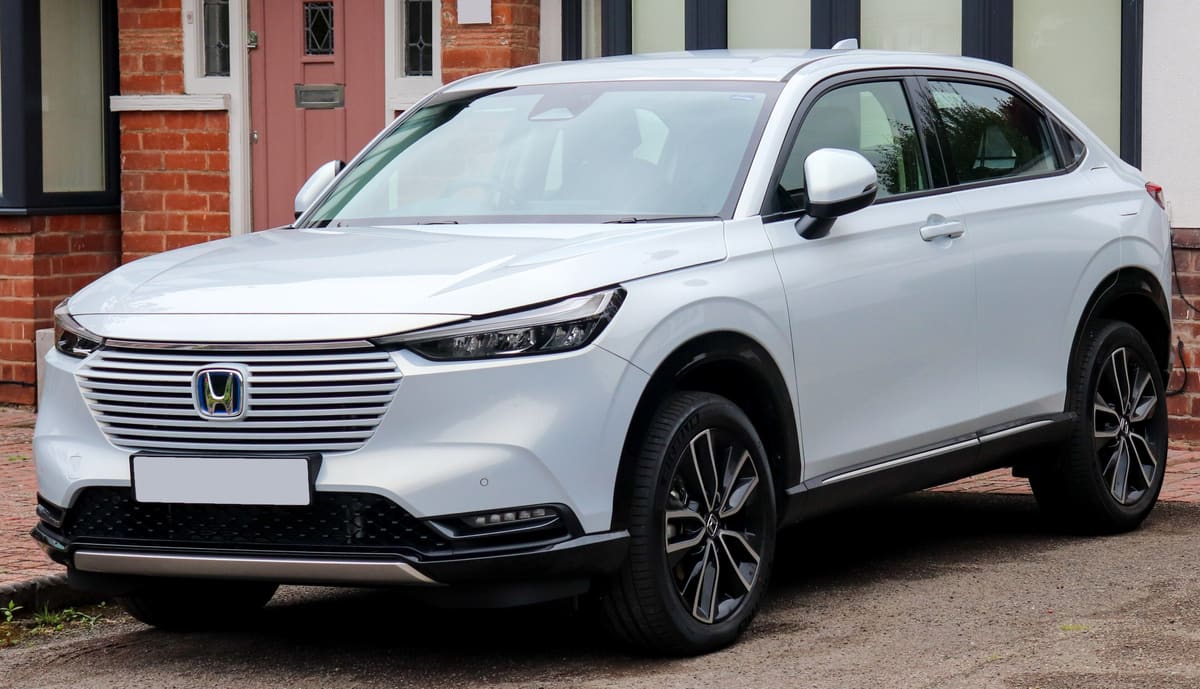
The Honda HR-V offers reasonable running costs, making it an attractive option for many drivers. Fuel efficiency is competitive, insurance is affordable, and servicing intervals are manageable. Depreciation is typical for its class, ensuring that overall ownership costs remain relatively low compared to other vehicles in the segment.
Fuel Economy and Electric Options
The Honda HR-V is known for its fuel efficiency, particularly in its petrol variants.
With rising fuel prices, the HR-V’s efficiency can lead to significant savings over time. The hybrid model, in particular, is designed for city driving, where it can run on electric power alone, further reducing fuel costs. This makes the HR-V a practical option for those looking to minimise their fuel expenses.
Insurance Group
The Honda HR-V falls into a moderate insurance group, typically ranging from group 14 to 18, depending on the specific model and trim level. This places it in a more affordable bracket compared to many competitors, making it accessible for younger drivers or those looking for budget-friendly insurance options.
Insurance costs can vary based on factors such as the driver’s age, location, and driving history. However, the HR-V’s reputation for reliability and safety can contribute to lower premiums. It is advisable to shop around for quotes to find the best deal, as prices can differ significantly between insurers.
Tax Band
The Honda HR-V is generally placed in tax bands that reflect its emissions levels. The petrol models typically fall into lower tax bands, while the hybrid variant benefits from even lower rates due to its reduced CO2 emissions. This can lead to substantial savings on annual road tax, particularly for environmentally conscious drivers.
For the latest models, the tax band can range from Band A to Band D, depending on the engine choice. This means that owners of the HR-V can enjoy lower tax bills compared to many larger SUVs, making it an economically sensible option for those concerned about running costs.
Servicing Intervals
Honda recommends servicing the HR-V every 12 months or 12,000 miles, whichever comes first. This regular maintenance schedule helps ensure the vehicle remains in good condition, potentially preventing costly repairs down the line. Routine services typically include oil changes, filter replacements, and checks of essential systems.
The cost of servicing can vary, but Honda vehicles are known for their reliability, which can lead to lower maintenance costs over time. Additionally, many owners find that using a Honda dealership for servicing can help maintain the vehicle’s warranty and resale value. It’s also worth considering independent garages, which may offer competitive pricing for routine maintenance.
Typical Depreciation
Depreciation is an important factor to consider when assessing the total ownership cost of any vehicle, including the Honda HR-V. On average, the HR-V tends to depreciate at a rate consistent with other vehicles in its class, losing around 40-50% of its value over the first three years.
Factors influencing depreciation include mileage, condition, and market demand. The HR-V’s reputation for reliability and practicality can help it retain value better than some competitors. Buyers should also consider the impact of any additional features or trim levels, as these can affect resale values.
Conclusion
Overall, the Honda HR-V presents a compelling case for those looking for a cost-effective vehicle. With its impressive fuel economy, moderate insurance costs, low tax bands, manageable servicing intervals, and reasonable depreciation rates, it stands out as a practical choice for UK drivers. Whether for city commuting or family outings, the HR-V’s running costs make it an attractive option in the competitive SUV market.
Honda HR-V recall record
4 recalls have been issued for the Honda HR-V, between 2018 and 2020.
VEHICLES MAY BE EQUIPPED WITH A FUEL PUMP MODULE MANUFACTURED WITH LOW DENSITY IMPELLARS
R/2020/186Issued 24 August 2020
Affected vehicles may be equipped with a fuel pump module manufactured with low density impellers.
Remedy:The affected fuel pumps will be replaced.
Affects cars built Nov 2017 to Apr 2018
DUE TO INCORRECT MANUFACTURING THE REAR SEAT BELT ASSEMBLY WEBBING SENSOR COULD BECOME INOPERATIVE
R/2020/194Issued 14 August 2020
The webbing sensor in the rear centre seat belt assembly could become inoperative.
Remedy:Check and if the seat belt is within the affected range the seat belt will be replaced.
Affects cars built Aug 2019 to Sept 2019
THE REGULATORY REQUIREMENT FOR EMISSIONS LEVELS ARE NOT MET
R/2020/008Issued 31 January 2020
The regulatory requirement for emissions levels are not met.
Remedy:Update the software in the Engine Control Unit to improve the performance of the emissions control system
Affects cars built Feb 2015 to May 2018
DURING ASSEMBLY THE CABIN HARNESS CLIP WAS BROKEN RESULTING IN THE HARNESS NOT BEING CORRECTLY SECURED IN FRONT LEFT CHASSIS RAIL / SUSPENSION TURRET AREA
R/2018/225Issued 2 October 2018
During vehicle assembly the cabin harness was pulled to make the process easier to manage. By pulling the harness a clip was broken or dislodged resulting in the harness not being correctly secured in the front left chassis rail / suspension turret area. In around 10% of affected units the harness makes contact with the transmission mount. The vibration of the transmission can cause the harness to be damaged. If the conductors are exposed this can result in a short circuit and blown fuse. Customer complaints are that the engine does not start and/or the wiper does not work. The engine does not start and/or the windscreen wipers do not work.
Remedy:The technician will carry out an inspection of the cabin harness and harness clip to determine the required repair: Replace harness clip if it is damaged/missing; Repair the cabin harness in the case of mild abrasion to the harness outer; Replace the cabin harness in the case of exposed conductors.
Affects cars built Sept 2014 to Apr 2018
A recall applies to a build range, not to every car of this model. Check a registration to see whether one specific vehicle has an outstanding recall.
Honda HR-V MOT record
From 37,573 recorded MOT tests, 9.3% failed.
| Registered | Tests | Failed | Median mileage |
|---|---|---|---|
| 2023 | 361 | 2.8% | 16,967 mi |
| 2022 | 6,197 | 2.9% | 19,994 mi |
| 2021 | 439 | 2.5% | 25,228 mi |
| 2020 | 3,647 | 5.9% | 29,304 mi |
| 2019 | 4,772 | 5.9% | 34,894 mi |
| 2018 | 5,993 | 8.1% | 43,156 mi |
| 2017 | 5,749 | 11.2% | 52,141 mi |
| 2016 | 6,793 | 14.8% | 60,243 mi |
Most common reasons for failure
- Tyre tread depth not in accordance with the requirements30.0%
- A tyre seriously damaged23.9%
- a brake lining or pad worn below 1.5mm21.7%
- A suspension pin, bush or joint excessively worn15.2%
- A shock absorber damaged to the extent that it does not function or showing signs of severe leakage9.1%
Figures cover every Honda HR-V tested in the DVSA dataset, not this specific car. Check a registration for the actual history of one vehicle.
Honda HR-V official figures
Median across 9 variants on sale, petrol electric.
- Combined economy
- 52.3 mpg
- WLTP median across variants
- CO2 emissions
- 104 g/km
- Sets the first-year tax rate
Official figures for new cars. Real economy varies with driving, load and conditions.
Frequently asked questions
What are the typical fuel costs for a Honda HR-V?
The Honda HR-V generally offers good fuel efficiency, averaging around 40-45 mpg depending on the model year and engine type. This means that for a typical UK driver, fuel costs can be manageable, especially with the 1.5-litre petrol engine.
How often does the Honda HR-V need servicing?
The Honda HR-V typically requires a service every 12 months or 12,000 miles, whichever comes first. Regular maintenance includes oil changes, air filter replacements, and brake inspections to keep the vehicle running smoothly.
What are the insurance costs for a Honda HR-V?
Insurance costs for the Honda HR-V can vary significantly based on the model and your driving history. Generally, it falls into insurance groups 15 to 20, which means premiums can be reasonable compared to other vehicles in its class.
Are there any specific maintenance issues to watch for?
Drivers should keep an eye on the CVT transmission fluid, particularly in models from 2015 onwards. Regular checks and changes can prevent issues such as slipping or poor acceleration, which can be costly if neglected.
What is the road tax band for the Honda HR-V?
The road tax band for the Honda HR-V varies by model year and engine size. For example, the 2020 model with a 1.5-litre engine typically falls into Band C, which has a lower annual tax rate compared to larger engines.
How much should I budget for tyres on a Honda HR-V?
Tyre replacement costs can vary, but for a Honda HR-V, you might expect to pay for a set of four tyres every 30,000 to 40,000 miles. Regular checks for tread wear and alignment can help extend tyre life.
What are the typical brake replacement intervals for the HR-V?
Brake pads on the Honda HR-V usually need replacing every 25,000 to 40,000 miles, depending on driving habits and conditions. It's essential to listen for squeaking sounds or feel for reduced braking performance as indicators.
Sources
- DVSA anonymised MOT tests and results (Open Government Licence v3.0)
- VCA new car fuel consumption and emissions data (Open Government Licence v3.0)
- DVSA vehicle safety recalls (Open Government Licence v3.0)