Running costs
Hyundai i20 running costs: what UK ownership really costs
Hyundai i20 UK running costs: fuel or electric, insurance group, road tax, servicing and depreciation.
Updated 4th September 2026 DVSA data: Across 131,599 recorded MOT tests, 20.8% failed.
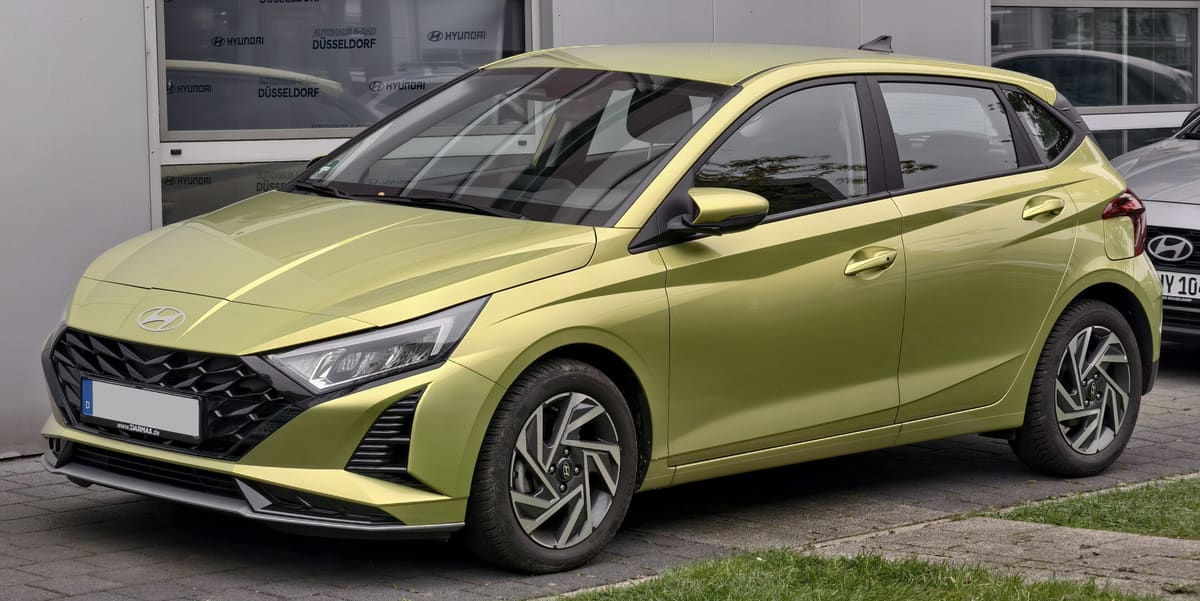
The Hyundai i20 is an economical choice for drivers in the UK, with low running costs that include competitive fuel efficiency, affordable insurance premiums, reasonable tax rates, and manageable servicing costs. Its depreciation is typical for the segment, making it a sensible option for budget-conscious buyers.
Fuel Costs
The Hyundai i20 offers impressive fuel efficiency, with petrol variants averaging around 50 to 60 miles per gallon, depending on the engine size and driving conditions. This makes the i20 an economical choice for both city driving and longer journeys, helping to keep fuel costs low.
For electric versions, the i20 is not currently available as a fully electric model, but the hybrid options provide a good compromise between fuel efficiency and performance. Overall, the fuel costs for the i20 are competitive within its class, appealing to those looking to minimise their spending at the pump.
Insurance Group
Insurance costs for the Hyundai i20 are generally affordable, with most models falling into insurance groups 10 to 15. This makes it an attractive option for younger drivers and those looking for a budget-friendly car. The lower the insurance group, the cheaper the premiums, which can significantly affect overall ownership costs.
When considering insurance, it is essential to shop around for the best deals. Many insurers offer competitive rates for the i20, particularly for models with smaller engines. Additionally, the car’s safety features and reliability can contribute to lower premiums, making it an appealing choice for those prioritising insurance affordability.
Tax Band
The Hyundai i20 is typically classified within the lower tax bands, which helps to keep annual road tax costs manageable. Depending on the engine type and emissions, the tax band can vary, but many models fall into Band B or C, resulting in lower annual fees. This is particularly beneficial for those who want to keep their overall running costs down.
The tax implications are especially relevant for drivers in urban areas, where congestion charges may also apply. With lower emissions, the i20 can help drivers avoid additional costs associated with higher-polluting vehicles, making it a practical choice for city dwellers.
Servicing Intervals
Hyundai recommends servicing the i20 every 12 months or 10,000 to 20,000 miles, depending on the specific model and engine type. Regular servicing is crucial for maintaining the vehicle’s performance and reliability, and Hyundai’s competitive servicing costs make it an appealing option for owners.
Additionally, Hyundai offers a five-year warranty on new vehicles, which can provide peace of mind regarding servicing and repairs. This warranty can help reduce unexpected costs, as many issues may be covered during the initial ownership period. Regular maintenance can also help preserve the car’s resale value, ensuring that it remains a sound investment.
Typical Depreciation
Factors such as mileage, condition, and market demand can influence the resale value, but the i20’s reputation for reliability helps it retain value better than some competitors.
When considering depreciation, it is essential to factor in the overall ownership experience. The i20’s strong build quality and low running costs can make it an attractive option for those looking to minimise long-term expenses. Buyers who maintain their vehicles well can often see a better return when it comes time to sell or trade in their i20.
Conclusion
Overall, the Hyundai i20 stands out as a cost-effective choice for UK drivers, with low fuel costs, affordable insurance, reasonable tax rates, manageable servicing intervals, and typical depreciation. Its combination of practicality and economy makes it an appealing option for those seeking a reliable and budget-friendly vehicle.
Hyundai i20 recall record
3 recalls have been issued for the Hyundai i20, between 2021 and 2025.
The vehicle fuel pump may have an internal malfunction which may fail over time. In case of a fuel pump malfunction the instrument cluster warning light may illuminate and if ignored the vehicle may lose motive power.
R/2025/272Issued 8 September 2025
The vehicle fuel pump may have an internal malfunction which may fail over time. In case of a fuel pump malfunction the instrument cluster warning light may illuminate and if ignored the vehicle may lose motive power.
Remedy:The affected vehicles will have the fuel pump replaced as a permanent solution.
Affects cars built Apr 2021 to Jan 2023
The subject vehicles may experience a transmission malfunction resulting in a loss of drive.
R/2024/171Issued 20 May 2024
On affected vehicles they may experience a transmission malfunction resulting in a loss of drive
Remedy:On all affected vehicles the transmission control unit software will be updated
Affects cars built Mar 2023 to Jan 2024
IN THE EVENT OF eCALL TRIGGER THE VIN NUMBER INFORMATION MAY NOT BE SENT
R/2021/014Issued 22 February 2021
The vehicle VIN information may not be registered correctly within the eCall unit.
Remedy:Register the VIN information within the vehicle by resetting the E-call unit and updating.
Affects cars built Aug 2020 to Dec 2020
A recall applies to a build range, not to every car of this model. Check a registration to see whether one specific vehicle has an outstanding recall.
Hyundai i20 MOT record
From 131,599 recorded MOT tests, 20.8% failed.
| Registered | Tests | Failed | Median mileage |
|---|---|---|---|
| 2023 | 345 | 7.0% | 17,781 mi |
| 2022 | 7,452 | 10.2% | 20,122 mi |
| 2021 | 5,879 | 8.4% | 25,338 mi |
| 2020 | 4,133 | 8.8% | 29,830 mi |
| 2019 | 7,266 | 10.6% | 35,567 mi |
| 2018 | 8,569 | 11.7% | 42,553 mi |
| 2017 | 11,570 | 14.5% | 49,860 mi |
| 2016 | 13,630 | 16.4% | 55,634 mi |
Most common reasons for failure
- Tyre tread depth not in accordance with the requirements27.0%
- A tyre seriously damaged23.5%
- Brake pipe damaged or excessively corroded20.3%
- A suspension pin, bush or joint excessively worn14.7%
- Brake disc or drum excessively weakened, insecure or fractured14.6%
Figures cover every Hyundai i20 tested in the DVSA dataset, not this specific car. Check a registration for the actual history of one vehicle.
Hyundai i20 official figures
Median across 29 variants on sale, petrol, petrol electric.
- Combined economy
- 51.4 mpg
- WLTP median across variants
- CO2 emissions
- 124 g/km
- Sets the first-year tax rate
Official figures for new cars. Real economy varies with driving, load and conditions.
Frequently asked questions
How often does the Hyundai i20 need servicing?
The Hyundai i20 typically requires a service every 12 months or 10,000 miles, whichever comes first. Regular servicing helps maintain the vehicle's performance and can prevent more costly repairs down the line, such as issues with the timing belt or brake pads.
What are the insurance costs for a Hyundai i20?
Insurance costs for the Hyundai i20 can vary significantly based on the model year and your personal circumstances. Generally, it falls into insurance groups 10 to 15, making it relatively affordable to insure compared to other vehicles in its class.
Are there any common repairs needed for the Hyundai i20?
Owners often report needing to replace the front brake pads and discs, especially on models from 2015 onwards. Regular checks can help identify wear and tear early, preventing more extensive damage and ensuring safety on the road.
What is the road tax band for the Hyundai i20?
The road tax for the Hyundai i20 varies by engine size and emissions. For example, the 1.2-litre petrol model typically falls into Band B, which means a lower annual tax cost due to its lower CO2 emissions, making it economical for owners.
How reliable is the Hyundai i20 in terms of running costs?
The Hyundai i20 is known for its reliability, with many owners reporting minimal issues over several years. Regular maintenance, such as oil changes and checking the battery, can help keep running costs low and ensure the vehicle remains dependable.
What are the tyre replacement costs for a Hyundai i20?
Tyre replacement for the Hyundai i20 can vary based on the tyre brand and specifications. Typically, you might need to replace tyres every 20,000 to 30,000 miles, depending on driving style and conditions, with costs for a full set ranging widely.
Sources
- DVSA anonymised MOT tests and results (Open Government Licence v3.0)
- VCA new car fuel consumption and emissions data (Open Government Licence v3.0)
- DVSA vehicle safety recalls (Open Government Licence v3.0)