Running costs
Jaguar XE running costs: what UK ownership really costs
Jaguar XE UK running costs: fuel or electric, insurance group, road tax, servicing and depreciation.
Updated 4th September 2026 DVSA data: Across 42,398 recorded MOT tests, 15.4% failed.
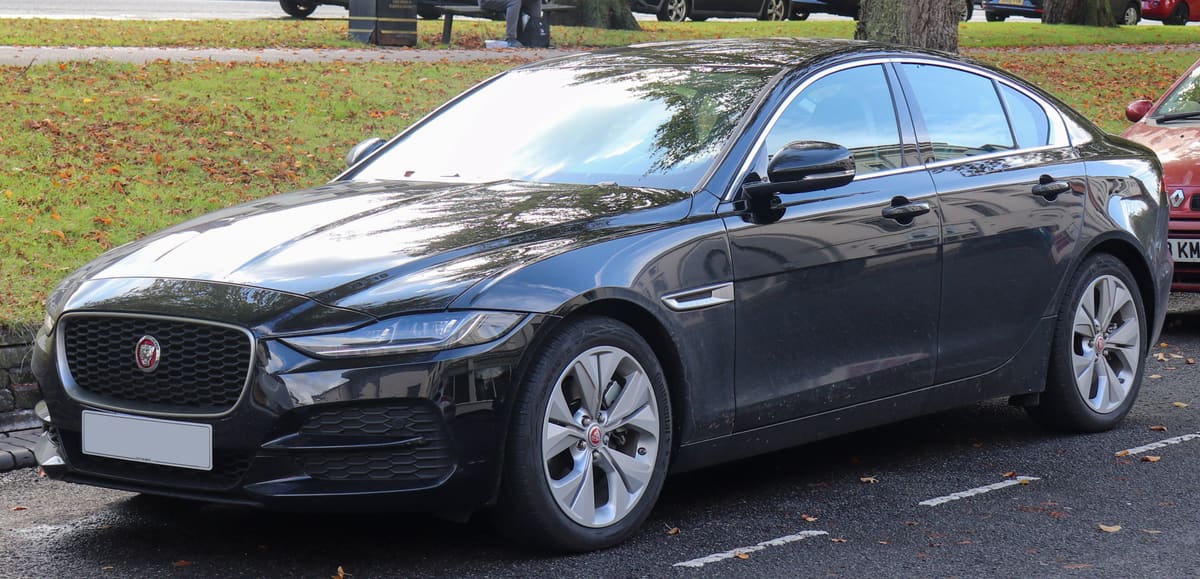
The Jaguar XE offers a blend of luxury and performance, but its running costs can vary significantly based on engine choice, driving habits, and ownership duration. Fuel costs, insurance, tax, servicing, and depreciation all contribute to the total ownership cost, making it essential for potential buyers to consider these factors.
Fuel Costs
Fuel costs for the Jaguar XE depend largely on the engine variant chosen. The petrol engines typically offer lower fuel efficiency compared to the diesel options.
With fluctuating fuel prices, it is wise to consider the long-term implications of fuel choice when selecting an XE model.
Insurance Group
Insurance costs for the Jaguar XE are influenced by the specific model and engine size. The XE falls into various insurance groups, generally ranging from group 26 to group 41. This means that insurance premiums can vary significantly, with lower-powered models being more affordable to insure.
It is advisable to obtain quotes from multiple insurers to find the best deal tailored to your circumstances.
Tax Band
The Jaguar XE’s tax band is determined by its CO2 emissions, which vary between models. Most XE variants fall into tax bands ranging from A to H. Cars with lower emissions benefit from lower road tax rates, while those with higher emissions incur steeper charges.
Understanding the tax implications can help buyers make a more informed decision.
Servicing Intervals
Servicing intervals for the Jaguar XE are typically every 16,000 miles or 12 months, whichever comes first. Regular maintenance is crucial to ensure the vehicle remains in optimal condition and to prevent costly repairs down the line.
Service costs can vary based on location and whether you choose a main dealer or an independent garage. Keeping up with servicing not only maintains performance but also helps preserve the vehicle’s resale value.
Typical Depreciation
Depreciation is a significant factor in the total ownership cost of a Jaguar XE. On average, luxury vehicles like the XE can depreciate by around 50-60% over the first three years. However, this can vary based on market demand, mileage, and condition.
Factors such as the model’s popularity and the introduction of new competitors can also influence depreciation rates. Understanding these trends can assist buyers in making a more informed purchase.
Conclusion
The running costs of a Jaguar XE encompass various factors including fuel, insurance, tax, servicing, and depreciation. By considering these aspects, potential owners can assess the overall financial implications of owning this luxury vehicle. Careful planning and research can help ensure that the Jaguar XE remains an enjoyable and manageable ownership experience.
Jaguar XE recall record
13 recalls have been issued for the Jaguar XE, between 2016 and 2025.
Security Guidance
R/2025/488Issued 2 December 2025
Jaguar Land Rover in conjunction with law enforcement and insurance bodies is aware of the increase in thefts of vehicles in specific geographical locations within the United Kingdom. There is no fault with Jaguar Land Rover's security systems and they continue to meet stringent automotive legislation. Jaguar Land Rover is offering owners guidance on how to maximise vehicle security and protect against theft
Remedy:Vehicle registered keepers will be sent a security guidance letter only - there is no repair action.
Affects cars built Sept 2014 to Jun 2019
AJ21-D4 Turbo Oil Feed Pipe Leak
R/2024/207Issued 7 June 2024
On certain vehicles there may be insufficient clamp load on the turbocharger oil feed pipe which may over time loosen and lead to an oil leak.
Remedy:The oil feed pipe will be removed the O-rings replaced lubricated and an additional clamp installed.
Affects cars built Nov 2019 to Apr 2024
THE RUBBERISED FUEL RETURN HOSE ASSEMBLY MAY HAVE BEEN INCORRECTLY MANUFACTURED
R/2021/230Issued 25 June 2021
The rubberised fuel return hose assembly may have been incorrectly manufactured.
Remedy:Inspect the date code on the fuel return pipe and replace the part if necessary.
Affects cars built Nov 2019 to Apr 2021
THE REAR RAIL ASSEMBLY MAY NOT HAVE THE SPECIFIED STRUCTURAL STRENGTH
R/2021/136Issued 21 April 2021
The rear rail assembly (rear longitudinal armatures) installed as part of an aftermarket repair may not have the specified structural strength.
Remedy:Replacement parts will be installed in line with aftermarket welding standards.
Affects cars built May 2016 to Sept 2017
9 older recalls not shown.
A recall applies to a build range, not to every car of this model. Check a registration to see whether one specific vehicle has an outstanding recall.
Jaguar XE MOT record
From 42,398 recorded MOT tests, 15.4% failed.
| Registered | Tests | Failed | Median mileage |
|---|---|---|---|
| 2021 | 947 | 13.7% | 30,700 mi |
| 2020 | 1,620 | 14.3% | 35,018 mi |
| 2019 | 4,488 | 14.7% | 44,666 mi |
| 2018 | 5,583 | 14.1% | 54,110 mi |
| 2017 | 10,185 | 14.4% | 63,538 mi |
| 2016 | 11,577 | 16.1% | 72,618 mi |
| 2015 | 7,998 | 17.5% | 75,334 mi |
Most common reasons for failure
- Tyre tread depth not in accordance with the requirements36.4%
- A tyre seriously damaged21.6%
- Brake disc or drum excessively weakened, insecure or fractured18.2%
- a brake lining or pad worn below 1.5mm16.7%
- A suspension pin, bush or joint excessively worn7.1%
Figures cover every Jaguar XE tested in the DVSA dataset, not this specific car. Check a registration for the actual history of one vehicle.
Frequently asked questions
How often does the Jaguar XE need servicing?
The Jaguar XE generally requires servicing every 16,000 miles or annually, whichever comes first. Regular maintenance is crucial to keep the engine, particularly the turbocharger in models like the 2017 XE, running smoothly and efficiently.
Are there any specific parts that are expensive to replace on the Jaguar XE?
Replacing the front brake pads on a Jaguar XE can be costly, especially if you opt for genuine parts. The brake system is designed for performance, and using OEM parts is recommended to maintain safety and reliability.
What fuel economy can I expect from a Jaguar XE?
Fuel economy for the Jaguar XE varies by engine type. The 2.0-litre petrol engine from the 2020 model year can achieve around 40 mpg combined, while the diesel variant may offer up to 60 mpg, making it a more economical choice for long-distance driving.
How reliable is the Jaguar XE in terms of running costs?
The Jaguar XE has a reputation for being relatively reliable, but issues with the electrical system, particularly in earlier models like the 2016 version, can lead to unexpected repair costs. Regular checks can help mitigate these risks.
Sources
- DVSA anonymised MOT tests and results (Open Government Licence v3.0)
- DVSA vehicle safety recalls (Open Government Licence v3.0)