Top fixes
Mazda CX-3 top fixes: how owners handle the common issues
Practical fixes for the common Mazda CX-3 faults owners run into.
Updated 4th September 2026 DVSA data: Across 24,965 recorded MOT tests, 13.4% failed.
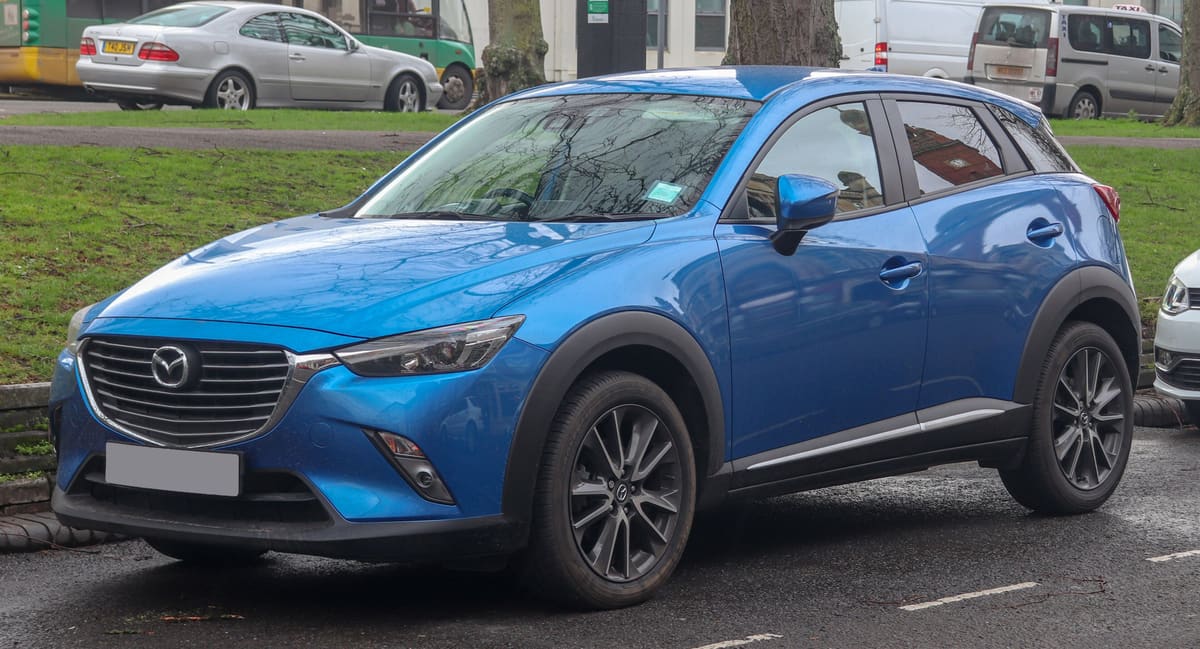
The Mazda CX-3 is a popular compact SUV, but like any vehicle, it can experience issues over time. Common problems reported by owners include electrical faults, suspension noise, and paint defects. This article outlines practical fixes for these issues to help you maintain your CX-3 in top condition.
Electrical Issues
Electrical problems are among the most frequently reported issues with the Mazda CX-3. Owners have noted issues with the infotainment system, including screen freezes and unresponsive controls.
To fix these problems, start by performing a soft reset of the infotainment system. This can often resolve minor glitches. If the issue persists, check the vehicle’s battery and connections, as a weak battery can cause electrical malfunctions. If necessary, consult a professional for a thorough diagnostic to identify any underlying faults.
Suspension Noise
Many CX-3 owners report hearing unusual noises from the suspension, particularly when driving over bumps or rough surfaces. This can be attributed to worn bushings or shock absorbers.
To address this, inspect the suspension components for signs of wear or damage. Replacing worn bushings can significantly reduce noise and improve ride quality. Additionally, if the shock absorbers are leaking or not performing as they should, replacing them can restore comfort and handling. Regular maintenance checks can help catch these issues before they escalate.
Paint Defects
Some Mazda CX-3 owners have experienced paint defects, such as chipping or fading. This can be particularly noticeable on the front bumper and bonnet due to road debris and UV exposure.
To fix paint chips, consider using a touch-up paint kit that matches your vehicle’s colour. For larger areas of damage, professional respraying may be necessary. To prevent future issues, regularly wash and wax your vehicle to protect the paintwork from the elements. Parking in shaded areas or using a car cover can also help minimise UV damage.
Brake Problems
Brake issues, such as squeaking or grinding noises, are not uncommon in the CX-3. These sounds can indicate worn brake pads or discs, which can compromise safety if not addressed promptly.
To fix brake problems, start by inspecting the brake pads and discs for wear. If the pads are worn down, replacing them is essential. Additionally, check for any debris lodged in the brake components, which can cause noise. Regular brake maintenance, including fluid checks and pad replacements, can help ensure optimal performance and safety.
Transmission Concerns
Some owners have reported transmission-related issues, including rough shifting or hesitation during acceleration. These problems can stem from low transmission fluid levels or a faulty transmission control module.
To resolve these concerns, check the transmission fluid level and condition. If the fluid is low or dirty, a flush and refill may be necessary. If the problem persists, a diagnostic scan can identify any electronic issues. Regular transmission servicing can help prevent these problems from developing.
Tyre Wear and Alignment
Uneven tyre wear and alignment issues are common complaints among Mazda CX-3 owners. These issues can lead to poor handling and reduced fuel efficiency if not addressed.
To fix tyre wear problems, start by checking the tyre pressure regularly and ensuring it is at the recommended level. If tyres are wearing unevenly, a wheel alignment may be necessary. This can be performed at most garages and will help ensure that your tyres wear evenly, extending their lifespan. Regular rotation of tyres can also promote even wear and improve handling.
By addressing these common issues proactively, Mazda CX-3 owners can enhance their driving experience and maintain the vehicle’s reliability. Regular maintenance and timely repairs are key to keeping your CX-3 in excellent condition.
Mazda CX-3 recall record
5 recalls have been issued for the Mazda CX-3, between 2017 and 2022.
LOW PRESSURE FUEL PUMP IMPELLER MIGHT BECOME DEFORMED
R/2021/435Issued 4 January 2022
The impeller in the low-pressure fuel pump may become deformed causing fuel pump failure.
Remedy:Replace the low-pressure fuel pump with an improved part.
Affects cars built Oct 2017 to Sept 2019
CONTROL LOGIC WHICH MONITORS THE CHARGING CONTROL PROGRAM FAILS TO DIVERT ELECTRICAL POWER AWAY FROM CAPACITOR IN THE EVENT OF A FAULT
R/2018/237Issued 17 September 2018
On the subject vehicles the control logic which monitors the charging control program fails to divert the electrical power away from the capacitor when a fault is detected within the capacitor circuit. This can cause a short circuit inside the DCDC converter and could cause the engine to stall or overheating of the DCDC converter itself which could cause a fire. The fault is accompanied by the �i-ELOOP� warning light being illuminated on the instrument cluster along with the �i-Stop� warning light flashing The engine may in some circumstances stall and fail to restart. In extreme cases the DCDC converter could overheat and cause a fire
Remedy:Reprogram the PCM with the correct control logic. If error code �U3000: 49-DCDC� is stored � the DCDC Converter must also be replaced.
Affects cars built Feb 2015 to Apr 2017
SOFTWARE ERROR CAN CAUSE ENGINE TO FAIL
R/2018/087Issued 2 April 2018
On the subject vehicles the engine protection logic does not work properly. When the engine speed reaches maximum with no engine load present � the software is unable to cut the engine. This could in extreme cases cause catastrophic engine failure. Immediate and catastrophic engine damage may result.
Remedy:Re-program the engine protection software within the PCM.
Affects cars built Apr 2015 to Nov 2017
BRAKE HOSE RETAINING CLIP MAY FAIL.
R/2017/203Issued 14 July 2017
Surface finishing of brake hose retaining clip may be insufficient causing possibility of corrosion and failure of clip.
Remedy:Replace brake hose clips with modified ones
Affects cars built May 2016 to May 2016
1 older recall not shown.
A recall applies to a build range, not to every car of this model. Check a registration to see whether one specific vehicle has an outstanding recall.
Mazda CX-3 MOT record
From 24,965 recorded MOT tests, 13.4% failed.
| Registered | Tests | Failed | Median mileage |
|---|---|---|---|
| 2019 | 7,461 | 8.5% | 35,540 mi |
| 2018 | 5,568 | 9.7% | 43,987 mi |
| 2017 | 4,814 | 13.2% | 51,431 mi |
| 2016 | 4,815 | 20.3% | 59,407 mi |
| 2015 | 2,307 | 23.7% | 64,405 mi |
Most common reasons for failure
- A tyre seriously damaged26.8%
- Tyre tread depth not in accordance with the requirements26.6%
- a brake lining or pad worn below 1.5mm19.7%
- Brake disc or drum excessively weakened, insecure or fractured14.8%
- Brake pipe damaged or excessively corroded12.1%
Figures cover every Mazda CX-3 tested in the DVSA dataset, not this specific car. Check a registration for the actual history of one vehicle.
Frequently asked questions
What common issues should I look for in a Mazda CX-3?
Common issues include electrical problems, suspension wear, and engine performance concerns. It's important to check for any warning lights on the dashboard during a test drive.
How can I tell if the brakes need fixing on a Mazda CX-3?
Listen for any unusual noises when braking, such as squeaking or grinding. Additionally, if the brake pedal feels spongy or requires more pressure than usual, it may indicate a need for repair.
Are there any recalls for the Mazda CX-3 that I should be aware of?
Recalls are issued against individual vehicles rather than a model as a whole, so a model-level yes or no would be guesswork. Enter the registration on Honest Car Check and we check the DVSA record for that specific car. Where DVSA holds no status, confirm it with a franchised dealer using the VIN.
How often should I service my Mazda CX-3?
It is recommended to service your Mazda CX-3 every 12 months or every 12,000 miles, whichever comes first. Regular servicing helps maintain performance and reliability.
What should I do if my Mazda CX-3 has a warning light on?
If a warning light appears, it's best to consult the owner's manual to identify the issue. If it indicates a serious problem, you should have the vehicle checked by a professional as soon as possible.
Can I perform basic maintenance on my Mazda CX-3 myself?
Yes, basic maintenance tasks such as checking oil levels, replacing air filters, and changing wiper blades can be done at home. However, for more complex repairs, it is advisable to seek professional help.
Sources
- DVSA anonymised MOT tests and results (Open Government Licence v3.0)
- DVSA vehicle safety recalls (Open Government Licence v3.0)