Running costs
Mazda CX-3 running costs: what UK ownership really costs
Mazda CX-3 UK running costs: fuel or electric, insurance group, road tax, servicing and depreciation.
Updated 24th September 2026 DVSA data: Across 24,965 recorded MOT tests, 13.4% failed.
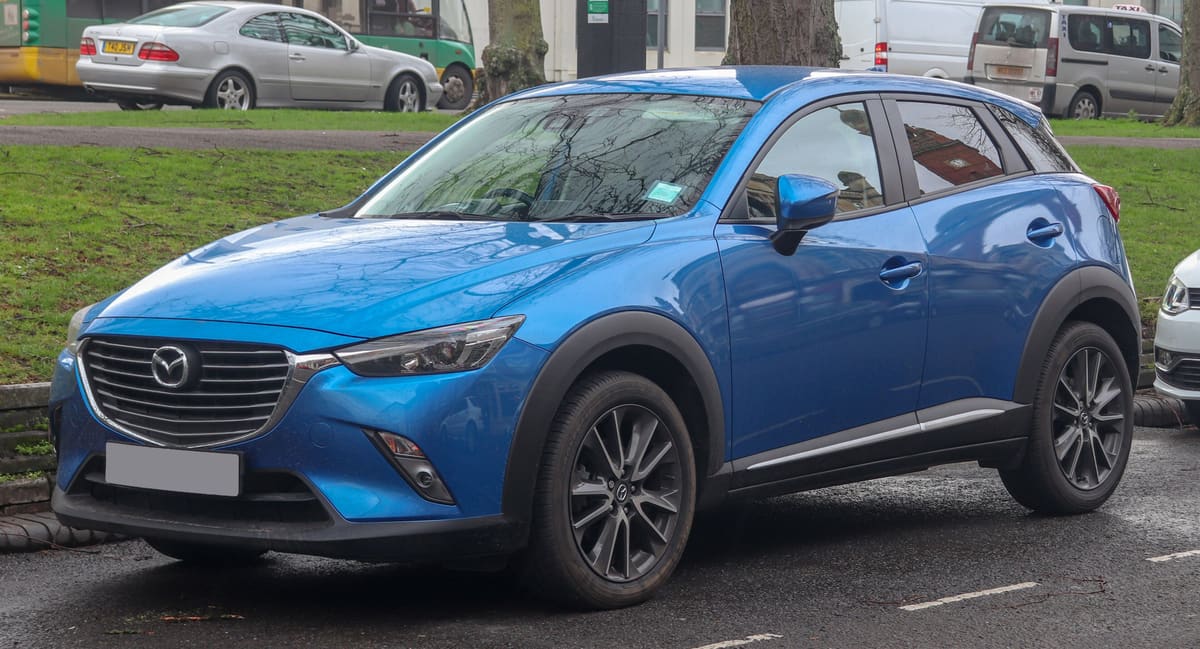
The Mazda CX-3’s running costs are influenced by several factors including its tax band, insurance group, servicing needs, and depreciation. Its tax liability depends on the engine and emissions, insurance costs vary with trim and driver profile, servicing is straightforward but must be done regularly, and its value holds reasonably well compared to rivals. Understanding these elements helps owners budget effectively.
Vehicle Tax and How It Affects Running Costs
The cost of vehicle tax for the Mazda CX-3 is primarily determined by its CO2 emissions and fuel type, as per the UK government’s Vehicle Excise Duty (VED) system. Petrol and diesel variants are taxed differently, with higher-emission models attracting greater charges. This means that choosing a lower-emission engine or trim can reduce annual tax bills.
The first-year tax rate is often higher for models with more emissions, reflecting government efforts to encourage cleaner vehicles. After the first year, the standard rate applies, which is generally consistent across many petrol and diesel cars unless the vehicle is classified as zero-emission or ultra-low emission. Hybrid versions, if available, may benefit from lower tax rates due to their reduced emissions.
It is important for buyers to check the exact tax band of the specific CX-3 model they are considering on the official government website, as this can vary significantly between trims and engine options. This will give a clear indication of the ongoing tax cost associated with ownership.
Insurance Group and Its Impact on Premiums
The Mazda CX-3’s insurance group rating influences how much drivers pay for insurance premiums. Insurance groups are assigned based on factors such as vehicle performance, repair costs, safety features, and theft risk. The CX-3 generally falls into moderate insurance groups, reflecting its status as a compact crossover with safety equipment and moderate power outputs.
Higher trim levels with more powerful engines or additional features may push the insurance group higher, increasing premiums. Conversely, base models with smaller engines and fewer extras tend to be cheaper to insure. Driver demographics such as age, location, and driving history also play a major role in determining the final cost.
Prospective owners should obtain personalised insurance quotes to understand how their profile and chosen CX-3 variant affect premiums. Comparing quotes from multiple providers can help find the best deal. The official government insurance group listings provide a guide to the typical group rating for each model.
Servicing Demands and Maintenance Costs
The Mazda CX-3 is designed with relatively straightforward servicing requirements, which helps keep maintenance costs manageable. Routine servicing intervals are typically set at regular mileage or time periods, involving oil changes, filter replacements, brake inspections, and checks on key components such as tyres and suspension.
Mazda’s engineering tends to focus on reliability and ease of maintenance, which can result in fewer unexpected repairs compared to more complex vehicles. However, servicing costs can vary depending on whether work is carried out at a main dealer or an independent garage. Using genuine parts and following the manufacturer’s service schedule is important to maintain warranty coverage and vehicle performance.
Owners should budget for regular servicing as well as occasional replacement of wear items like brake pads and tyres. Keeping up with scheduled maintenance helps avoid costly repairs and preserves the vehicle’s resale value.
Depreciation and Residual Value
The Mazda CX-3 holds its value reasonably well within the compact crossover segment. Depreciation is influenced by factors such as model popularity, build quality, running costs, and brand reputation. Mazda’s reputation for reliability and driving enjoyment supports stronger residual values compared to some competitors.
Trim level, mileage, and condition also affect how much a CX-3 will be worth after several years. Well-maintained examples with full service history and lower mileage tend to attract higher resale prices. The availability of popular engine and trim combinations can also impact demand on the used market.
While no car retains its value indefinitely, the CX-3’s balance of style, practicality, and running costs helps it remain competitive. Buyers planning to sell or trade in their vehicle should consider how depreciation will affect overall ownership costs.
Fuel Costs and Efficiency Considerations
Fuel expenditure is a significant part of running costs for the Mazda CX-3. The vehicle’s fuel efficiency depends on the engine type, transmission, and driving conditions. Smaller petrol engines generally offer better economy in urban and mixed driving, while diesel variants may be more efficient on longer journeys.
Choosing the right engine and transmission combination can help optimise fuel consumption. For example, manual gearboxes often provide slightly better economy but require more driver involvement, whereas automatic transmissions offer convenience but may use more fuel in some cases.
Driving style also plays a role; smooth acceleration, maintaining steady speeds, and avoiding excessive idling can improve fuel efficiency. Keeping tyres properly inflated and performing regular maintenance further supports better economy.
Tyres, Brakes, and Other Running Costs
Tyres and brakes are consumable items that contribute to the ongoing cost of owning a Mazda CX-3. Tyre wear depends on factors such as road conditions, driving style, and the size of the wheels fitted. Larger alloy wheels with low-profile tyres may look sportier but often cost more to replace and wear faster.
Brake components typically last several years but will need replacement eventually, especially if the car is used frequently in stop-start traffic or hilly areas. Regular inspections during servicing help identify wear early and prevent more expensive repairs.
Other running costs include items like wiper blades, bulbs, and fluids, which require periodic replacement. Keeping these elements in good condition ensures safety and reliability without significant expense.
Understanding the various factors that influence the Mazda CX-3’s running costs allows owners to make informed decisions about purchase, insurance, tax, and maintenance. By selecting the right model and keeping up with servicing, drivers can enjoy this compact crossover with reasonable ongoing expenses. For the most accurate and personalised information, always check official government resources for tax details and obtain insurance quotes tailored to your circumstances.
Mazda CX-3 recall record
5 recalls have been issued for the Mazda CX-3, between 2017 and 2022.
LOW PRESSURE FUEL PUMP IMPELLER MIGHT BECOME DEFORMED
R/2021/435Issued 4 January 2022
The impeller in the low-pressure fuel pump may become deformed causing fuel pump failure.
Remedy:Replace the low-pressure fuel pump with an improved part.
Affects cars built Oct 2017 to Sept 2019
CONTROL LOGIC WHICH MONITORS THE CHARGING CONTROL PROGRAM FAILS TO DIVERT ELECTRICAL POWER AWAY FROM CAPACITOR IN THE EVENT OF A FAULT
R/2018/237Issued 17 September 2018
On the subject vehicles the control logic which monitors the charging control program fails to divert the electrical power away from the capacitor when a fault is detected within the capacitor circuit. This can cause a short circuit inside the DCDC converter and could cause the engine to stall or overheating of the DCDC converter itself which could cause a fire. The fault is accompanied by the �i-ELOOP� warning light being illuminated on the instrument cluster along with the �i-Stop� warning light flashing The engine may in some circumstances stall and fail to restart. In extreme cases the DCDC converter could overheat and cause a fire
Remedy:Reprogram the PCM with the correct control logic. If error code �U3000: 49-DCDC� is stored � the DCDC Converter must also be replaced.
Affects cars built Feb 2015 to Apr 2017
SOFTWARE ERROR CAN CAUSE ENGINE TO FAIL
R/2018/087Issued 2 April 2018
On the subject vehicles the engine protection logic does not work properly. When the engine speed reaches maximum with no engine load present � the software is unable to cut the engine. This could in extreme cases cause catastrophic engine failure. Immediate and catastrophic engine damage may result.
Remedy:Re-program the engine protection software within the PCM.
Affects cars built Apr 2015 to Nov 2017
BRAKE HOSE RETAINING CLIP MAY FAIL.
R/2017/203Issued 14 July 2017
Surface finishing of brake hose retaining clip may be insufficient causing possibility of corrosion and failure of clip.
Remedy:Replace brake hose clips with modified ones
Affects cars built May 2016 to May 2016
1 older recall not shown.
A recall applies to a build range, not to every car of this model. Check a registration to see whether one specific vehicle has an outstanding recall.
Mazda CX-3 MOT record
From 24,965 recorded MOT tests, 13.4% failed.
| Registered | Tests | Failed | Median mileage |
|---|---|---|---|
| 2019 | 7,461 | 8.5% | 35,540 mi |
| 2018 | 5,568 | 9.7% | 43,987 mi |
| 2017 | 4,814 | 13.2% | 51,431 mi |
| 2016 | 4,815 | 20.3% | 59,407 mi |
| 2015 | 2,307 | 23.7% | 64,405 mi |
Most common reasons for failure
- A tyre seriously damaged26.8%
- Tyre tread depth not in accordance with the requirements26.6%
- a brake lining or pad worn below 1.5mm19.7%
- Brake disc or drum excessively weakened, insecure or fractured14.8%
- Brake pipe damaged or excessively corroded12.1%
Figures cover every Mazda CX-3 tested in the DVSA dataset, not this specific car. Check a registration for the actual history of one vehicle.
Frequently asked questions
How often should I service the Mazda CX-3 to keep running costs low?
Mazda recommends servicing the CX-3 at regular intervals to maintain engine health, including oil and filter changes. Checking the condition of the timing chain and brake pads during these visits can prevent costly repairs later.
What are typical signs that the Mazda CX-3’s diesel particulate filter needs attention?
If you notice a persistent warning light related to emissions or reduced engine performance, the diesel particulate filter might be clogged. A garage can perform a forced regeneration or clean the filter to restore function.
Does the Mazda CX-3 require special tyres that affect running costs?
The CX-3 usually runs on standard all-season tyres, but checking the tyre size on your specific trim is important. Maintaining correct tyre pressure and alignment helps improve fuel efficiency and tyre lifespan.
What should I check to avoid expensive repairs on the Mazda CX-3’s transmission?
Listen for unusual noises or rough gear changes, which could indicate issues with the automatic transmission fluid or clutch components. Regular fluid checks and changes as per Mazda’s schedule help prevent major faults.
Are there any electrical components in the Mazda CX-3 that commonly affect running costs?
The battery and alternator are key electrical parts to monitor. Symptoms like dimming lights or difficulty starting the engine suggest these components may need testing or replacement to avoid breakdowns.
How does the Mazda CX-3’s air conditioning system impact running costs?
A well-maintained air conditioning system runs efficiently, but if you notice weak airflow or strange noises, the compressor or refrigerant levels might need servicing. Regular checks prevent more expensive repairs.
What should I look out for regarding the Mazda CX-3’s brake system to keep costs down?
Pay attention to any squealing or grinding noises when braking, which often indicate worn brake pads or discs. Early replacement of these parts avoids damage to the calipers and keeps repair bills manageable.
Is the Mazda CX-3’s turbocharger a costly component to maintain?
Turbochargers require clean oil and proper warm-up and cool-down routines to last. Watch for loss of power or unusual whistling sounds, which can signal turbo wear. Regular oil changes help protect this component.
Sources
- DVSA anonymised MOT tests and results (Open Government Licence v3.0)
- DVSA vehicle safety recalls (Open Government Licence v3.0)