MOT failure rates
Mazda CX-3 MOT failure rates: what to expect
What fails on a Mazda CX-3 at MOT, how often, and what each fix typically costs.
Updated 4th September 2026 DVSA data: Across 24,965 recorded MOT tests, 13.4% failed.
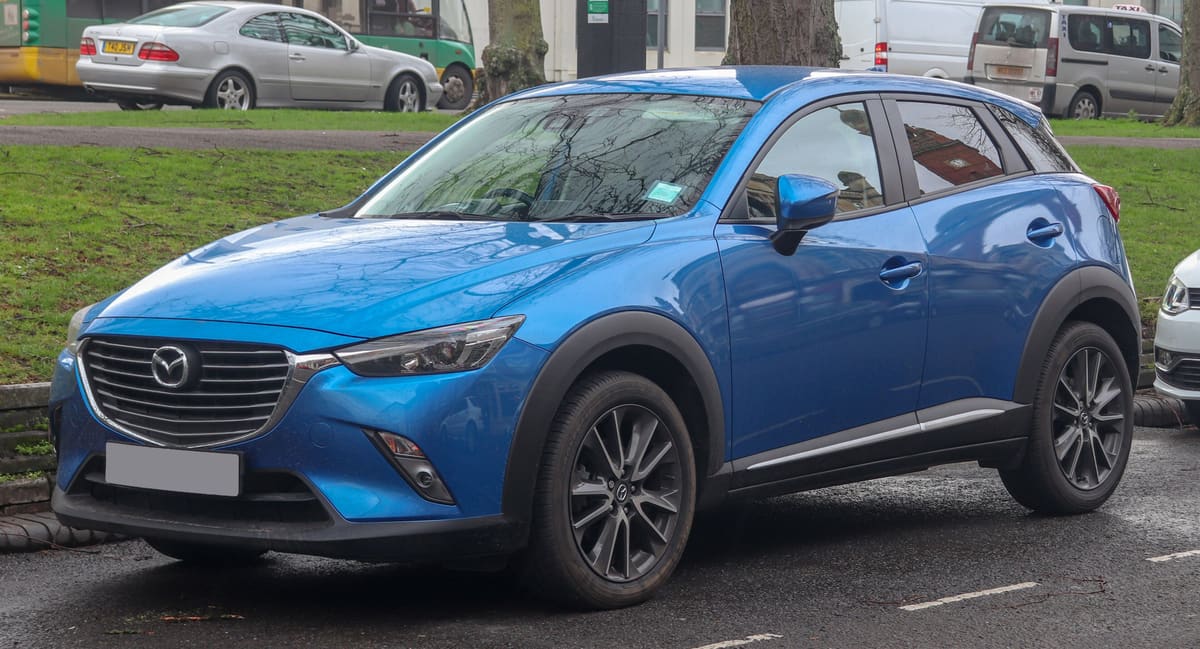
The Mazda CX-3 is generally a reliable vehicle, but like any car, it can encounter issues that lead to MOT failures. Common problems include issues with the brakes, suspension, and emissions. Understanding these failures can help owners anticipate repairs and costs.
Brake System Failures
One of the most common reasons for MOT failures in the Mazda CX-3 is related to the braking system. Problems such as worn brake pads, damaged discs, or leaking brake fluid can lead to a failed test.
Regular maintenance of the braking system is essential to ensure safety and compliance with MOT standards.
Suspension Issues
Another frequent MOT failure point for the Mazda CX-3 is the suspension system. Worn shock absorbers or broken springs can lead to a bumpy ride and may cause the vehicle to fail its MOT.
Regular checks on suspension components can help prevent these issues from escalating and ensure a smoother driving experience.
Emissions Problems
Emissions failures are increasingly common in modern vehicles, including the Mazda CX-3. Issues with the exhaust system, such as a faulty catalytic converter or damaged exhaust pipes, can lead to a failed MOT.
Regular servicing and checks of the exhaust system can help identify problems early and avoid costly repairs.
Tyre Condition
Tyres are a critical safety feature and are a common reason for MOT failures. The Mazda CX-3 must have a minimum tread depth of 1.6mm across the central three-quarters of the tyre. Worn tyres can lead to an MOT failure.
It is advisable to regularly check tyre pressure and tread depth to ensure they meet legal requirements and maintain optimal performance.
Lighting and Electrical Systems
Lighting issues are another frequent cause of MOT failures in the Mazda CX-3. Problems can arise from blown bulbs, faulty wiring, or issues with the vehicle’s electrical system.
Regularly checking all lights and indicators can help catch these issues before the MOT.
Bodywork and Structural Integrity
While not as common as mechanical failures, issues with bodywork and structural integrity can also lead to MOT failures. Rust, corrosion, or damage to the chassis can be problematic.
Repairing bodywork can vary widely in cost, depending on the extent of the damage. Regular inspections and prompt repairs can help maintain the vehicle’s integrity and ensure it passes the MOT.
By understanding these common MOT failure points and their associated costs, Mazda CX-3 owners can take proactive steps to maintain their vehicles and ensure they remain roadworthy. Regular maintenance and timely repairs can help avoid unexpected expenses and keep the car in good condition.
Mazda CX-3 recall record
5 recalls have been issued for the Mazda CX-3, between 2017 and 2022.
LOW PRESSURE FUEL PUMP IMPELLER MIGHT BECOME DEFORMED
R/2021/435Issued 4 January 2022
The impeller in the low-pressure fuel pump may become deformed causing fuel pump failure.
Remedy:Replace the low-pressure fuel pump with an improved part.
Affects cars built Oct 2017 to Sept 2019
CONTROL LOGIC WHICH MONITORS THE CHARGING CONTROL PROGRAM FAILS TO DIVERT ELECTRICAL POWER AWAY FROM CAPACITOR IN THE EVENT OF A FAULT
R/2018/237Issued 17 September 2018
On the subject vehicles the control logic which monitors the charging control program fails to divert the electrical power away from the capacitor when a fault is detected within the capacitor circuit. This can cause a short circuit inside the DCDC converter and could cause the engine to stall or overheating of the DCDC converter itself which could cause a fire. The fault is accompanied by the �i-ELOOP� warning light being illuminated on the instrument cluster along with the �i-Stop� warning light flashing The engine may in some circumstances stall and fail to restart. In extreme cases the DCDC converter could overheat and cause a fire
Remedy:Reprogram the PCM with the correct control logic. If error code �U3000: 49-DCDC� is stored � the DCDC Converter must also be replaced.
Affects cars built Feb 2015 to Apr 2017
SOFTWARE ERROR CAN CAUSE ENGINE TO FAIL
R/2018/087Issued 2 April 2018
On the subject vehicles the engine protection logic does not work properly. When the engine speed reaches maximum with no engine load present � the software is unable to cut the engine. This could in extreme cases cause catastrophic engine failure. Immediate and catastrophic engine damage may result.
Remedy:Re-program the engine protection software within the PCM.
Affects cars built Apr 2015 to Nov 2017
BRAKE HOSE RETAINING CLIP MAY FAIL.
R/2017/203Issued 14 July 2017
Surface finishing of brake hose retaining clip may be insufficient causing possibility of corrosion and failure of clip.
Remedy:Replace brake hose clips with modified ones
Affects cars built May 2016 to May 2016
1 older recall not shown.
A recall applies to a build range, not to every car of this model. Check a registration to see whether one specific vehicle has an outstanding recall.
Mazda CX-3 MOT record
From 24,965 recorded MOT tests, 13.4% failed.
| Registered | Tests | Failed | Median mileage |
|---|---|---|---|
| 2019 | 7,461 | 8.5% | 35,540 mi |
| 2018 | 5,568 | 9.7% | 43,987 mi |
| 2017 | 4,814 | 13.2% | 51,431 mi |
| 2016 | 4,815 | 20.3% | 59,407 mi |
| 2015 | 2,307 | 23.7% | 64,405 mi |
Most common reasons for failure
- A tyre seriously damaged26.8%
- Tyre tread depth not in accordance with the requirements26.6%
- a brake lining or pad worn below 1.5mm19.7%
- Brake disc or drum excessively weakened, insecure or fractured14.8%
- Brake pipe damaged or excessively corroded12.1%
Figures cover every Mazda CX-3 tested in the DVSA dataset, not this specific car. Check a registration for the actual history of one vehicle.
Frequently asked questions
What is the Mazda CX-3 mot requirements?
The Mazda CX-3, like all vehicles in the UK, must pass its MOT test annually once it is three years old. This test checks for safety, roadworthiness, and emissions.
How can I check the MOT history of a Mazda CX-3?
You can check the MOT history of a Mazda CX-3 by visiting the official UK government website. You will need the vehicle's registration number and the make.
What common issues should I look for in a used Mazda CX-3?
When buying a used Mazda CX-3, check for signs of rust, especially around the wheel arches and undercarriage. Also, ensure the electronics and infotainment system are functioning properly.
How often should I service my Mazda CX-3?
It is recommended to service your Mazda CX-3 every 12 months or every 12,000 miles, whichever comes first. Regular servicing helps maintain performance and reliability.
Can I drive my Mazda CX-3 if the MOT has expired?
No, you cannot legally drive your Mazda CX-3 if the MOT has expired unless you are driving it to a pre-booked MOT appointment. Doing so can result in fines.
What should I do if my Mazda CX-3 fails its MOT?
If your Mazda CX-3 fails its MOT, you will receive a list of issues that need to be addressed. You must fix these problems and have the vehicle retested before you can legally drive it.
Sources
- DVSA anonymised MOT tests and results (Open Government Licence v3.0)
- DVSA vehicle safety recalls (Open Government Licence v3.0)