Running costs
Nissan Qashqai running costs: what UK ownership really costs
Nissan Qashqai UK running costs: fuel or electric, insurance group, road tax, servicing and depreciation.
Updated 19th September 2026 DVSA data: Across 595,246 recorded MOT tests, 26.6% failed.
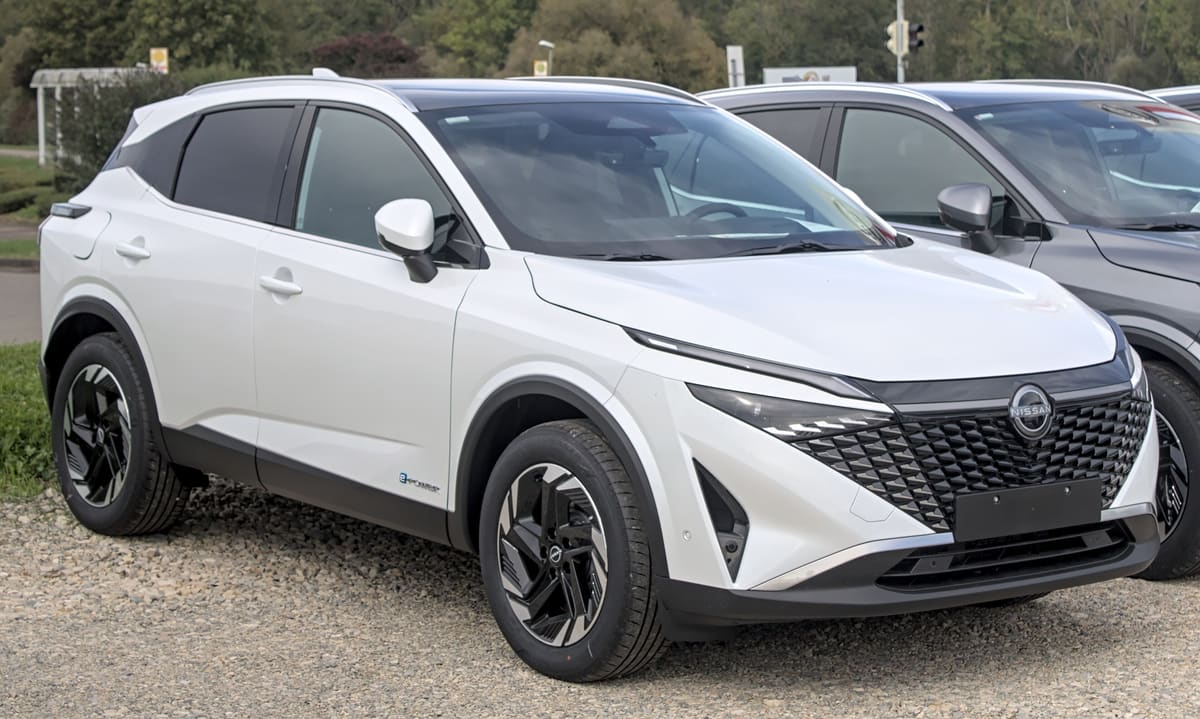
The Nissan Qashqai’s running costs are influenced by factors such as its tax banding, insurance group, servicing requirements, and depreciation. Its moderate emissions and engine options affect vehicle tax, while insurance costs hinge on model specifics and driver profile. Routine maintenance is straightforward, and the Qashqai generally retains value well within its class, making it a practical choice for many UK drivers.
Vehicle Tax and How It Affects Running Costs
The cost of vehicle tax for the Nissan Qashqai depends primarily on its CO2 emissions and fuel type. Petrol and diesel variants are taxed differently, with diesel models often subject to additional surcharges if they do not meet certain emissions standards. Hybrid versions may benefit from lower tax bands due to reduced emissions.
The UK government’s tax system bases the annual Vehicle Excise Duty (VED) on emissions measured during type approval. This means that higher-emission Qashqai models attract higher tax rates, increasing the overall running cost. Buyers should check the exact tax band for the specific trim and engine variant they are interested in, as this can vary significantly.
Additionally, first-year tax rates tend to be higher for more polluting models, while subsequent years may have a flat rate or different scale depending on the car’s age and emissions profile. The government’s official website provides detailed guidance on the current tax bands, ensuring prospective owners can assess the likely tax burden before purchase.
Insurance Group and Its Impact on Premiums
Insurance costs for the Nissan Qashqai are influenced by the insurance group assigned to each model, which reflects factors such as engine size, performance, repair costs, and safety features. Generally, higher-powered or more expensive trims fall into higher insurance groups, leading to increased premiums.
Driver demographics, including age, location, and driving history, also play a significant role in determining insurance costs. For example, younger drivers or those with limited experience may face higher premiums regardless of the Qashqai’s insurance group.
The Qashqai’s reputation for safety and reliability can help keep insurance costs down relative to some competitors. Features such as multiple airbags, stability control, and advanced driver assistance systems contribute to a favourable insurance rating. Prospective buyers should obtain personalised insurance quotes to understand the likely cost based on their circumstances and the specific model.
Servicing Demands and Maintenance Costs
Routine servicing for the Nissan Qashqai is generally straightforward and comparable to other compact SUVs. Regular oil changes, brake checks, and fluid top-ups are standard, with service intervals typically set by the manufacturer’s schedule and influenced by driving conditions.
The Qashqai’s engine and mechanical components are designed for durability, which helps keep maintenance costs reasonable over time. However, more complex features found on higher trims, such as advanced infotainment or hybrid systems, may require specialised attention during servicing, potentially increasing costs.
Parts availability and labour rates also affect servicing expenses. Nissan’s widespread UK dealer network ensures parts are generally accessible, but independent garages may offer more competitive labour rates. It is advisable to follow the recommended service schedule to maintain warranty coverage and preserve vehicle condition, which supports resale value.
Depreciation and Residual Value
The Nissan Qashqai tends to hold its value well compared to many rivals in the compact SUV segment. Its popularity, combined with a strong reputation for practicality and reliability, helps maintain demand in the used car market.
Depreciation rates vary depending on factors such as trim level, mileage, condition, and market trends. Models with popular engine options and desirable features typically retain value better. Conversely, higher-mileage or less well-equipped versions may depreciate more quickly.
Regular maintenance and keeping the vehicle in good condition are key to maximising resale value. Buyers should also consider the impact of new model releases, which can influence depreciation by shifting demand towards newer versions. Overall, the Qashqai’s balance of affordability and desirability supports relatively stable residual values.
Fuel Economy and Its Role in Running Costs
While specific fuel economy figures vary by engine and trim, the Nissan Qashqai offers a range of efficient petrol, diesel, and hybrid powertrains. Fuel consumption directly affects running costs, especially for drivers covering high annual mileage.
Hybrid variants often provide better fuel efficiency in urban and stop-start conditions, potentially lowering fuel expenses. Diesel engines may be more economical on longer journeys but can attract higher tax and maintenance costs due to emissions control systems.
Driving style, traffic conditions, and load also influence real-world fuel consumption. Prospective owners should review official fuel economy ratings for the exact model they are considering and factor in their typical driving patterns when estimating running costs.
Tyres and Other Consumables
Tyres, brake pads, and other consumables contribute to the ongoing costs of owning a Nissan Qashqai. The choice of tyre size and type affects replacement frequency and cost, with larger or premium tyres generally costing more.
The Qashqai’s suspension and braking systems are designed for everyday use, so wear rates are typically moderate under normal driving conditions. However, aggressive driving or poor road surfaces can increase the frequency of replacements.
Regular checks and maintenance of consumables help avoid unexpected expenses and ensure safety. Budgeting for these items as part of the overall running cost is important for accurate financial planning when owning a Qashqai.
Nissan Qashqai recall record
26 recalls have been issued for the Nissan Qashqai, between 2007 and 2026.
QASHQAI J12 Lithium Ion Battery
R/2026/290Issued 14 July 2026
For affected vehicles there is an issue involving the E power Battery Management system (BMS) where warnings and entering limp mode or loss of power cannot be ruled out. Vehicle will not return to normal function until power-latch (IGN off for approximately 30 mins and key away from vehicle).
Remedy:Reprogram the Battery Management System (BMS).
Affects cars built Jul 2025 to May 2026
Qashqai (J12) Fuel Pipe
R/2025/424Issued 20 October 2025
For affected vehicles it has been identified that there is potential for movement between the fuel pipe and its retaining clip within the engine bay this movement can potentially lead to wear on the fuel pipe. In an extreme situation this may cause a hole in the fuel pipe resulting in a potential fuel leak.
Remedy:Carry out an inspection of the fuel pipe and If identified wear is within limits apply protective Grommet to fuel tube. If wear is judged to be outside acceptable limits or a fuel leak from the fuel pipe is identified replace the fuel pipe.
Affects cars built May 2021 to Oct 2024
Qashqai (J12) Battery Management System
R/2025/128Issued 10 April 2025
For affected vehicles due to a software concern the calculated and displayed battery state of charge may rapidly fluctuate.
Remedy:Reprograming of the battery management system with the latest software.
Affects cars built Sept 2021 to Jan 2024
Juke (F16) Qashqai (J12) and Leaf (ZE1) VIN Scan
R/2024/234Issued 17 June 2024
On affected vehicles the VIN stored in the vehicle system may not match the actual VIN of the vehicle. This may lead to a situation where a vehicle user can see information related to a different vehicle resulting in a data security breach.
Remedy:Replace the navigation display / control unit and the telematics control unit.
Affects cars built Oct 2019 to Jun 2023
22 older recalls not shown.
A recall applies to a build range, not to every car of this model. Check a registration to see whether one specific vehicle has an outstanding recall.
Nissan Qashqai MOT record
From 595,246 recorded MOT tests, 26.6% failed.
| Registered | Tests | Failed | Median mileage |
|---|---|---|---|
| 2023 | 1,872 | 5.4% | 21,250 mi |
| 2022 | 42,275 | 7.4% | 22,977 mi |
| 2021 | 29,061 | 9.0% | 29,539 mi |
| 2020 | 32,286 | 10.2% | 35,462 mi |
| 2019 | 49,025 | 13.9% | 44,141 mi |
| 2018 | 46,473 | 17.6% | 53,864 mi |
| 2017 | 58,993 | 20.9% | 61,012 mi |
| 2016 | 57,651 | 25.2% | 69,486 mi |
Most common reasons for failure
- A suspension pin, bush or joint excessively worn31.0%
- Tyre tread depth not in accordance with the requirements23.3%
- a brake lining or pad worn below 1.5mm18.6%
- A tyre seriously damaged13.5%
- A steering ball joint with excessive wear or free play13.5%
Figures cover every Nissan Qashqai tested in the DVSA dataset, not this specific car. Check a registration for the actual history of one vehicle.
Nissan Qashqai official figures
Median across 17 variants on sale, petrol.
- Combined economy
- 44.1 mpg
- WLTP median across variants
- CO2 emissions
- 145 g/km
- Sets the first-year tax rate
Official figures for new cars. Real economy varies with driving, load and conditions.
Frequently asked questions
How often does the Nissan Qashqai need servicing to keep running costs low?
Nissan recommends servicing the Qashqai roughly every 12 months or 12,000 miles, whichever comes first. Regular oil changes and checks on the timing chain tensioner help avoid costly repairs. Keeping an eye on the brake pads during services can also prevent unexpected expenses.
What should I check if my Nissan Qashqai’s fuel consumption seems higher than usual?
If fuel consumption rises, inspect the air filter for dirt or blockage, as this can reduce efficiency. Also, worn spark plugs or a faulty oxygen sensor might cause poor fuel economy. A garage can run a diagnostic to check the engine management system for any error codes.
Are there any specific parts on the Nissan Qashqai that tend to wear out and affect running costs?
The CV joints on the front axle can wear, especially if you hear clicking noises when turning. Additionally, the turbocharger’s wastegate actuator may need attention in turbocharged models. Regular checks of the suspension bushes help maintain ride quality and avoid uneven tyre wear.
What warning lights on the Nissan Qashqai should I never ignore to avoid expensive repairs?
The engine management light is crucial; it often signals issues with sensors like the mass airflow sensor or catalytic converter. Also, the brake warning light should prompt immediate checks of brake fluid levels or worn discs and pads. Ignoring these can lead to more serious damage.
How does tyre maintenance impact the running costs of a Nissan Qashqai?
Keeping tyres properly inflated and regularly rotated prevents uneven wear, which can affect fuel efficiency and handling. The Qashqai’s tyre pressure monitoring system alerts you if pressure drops, so responding promptly helps avoid premature tyre replacement and maintains safety.
Is it expensive to replace the battery on a Nissan Qashqai, and how can I tell when it’s needed?
Battery life varies, but signs like slow engine cranking or dim dashboard lights suggest it’s time for a check. The Qashqai’s battery is accessible under the bonnet, and garages can test its charge and health. Replacing it before failure avoids being stranded.
Does the Nissan Qashqai require any special maintenance for its CVT gearbox to keep running costs down?
The CVT gearbox needs regular fluid changes to maintain smooth operation and prevent belt wear. Nissan specifies particular CVT fluid types, so using the correct one is important. Ignoring this can lead to slipping or juddering, which are costly to fix.
What should I look out for in the exhaust system of a Nissan Qashqai to avoid increased running costs?
Listen for unusual rattling or louder exhaust noise, which may indicate a damaged catalytic converter or loose heat shield. Rust can also cause leaks, affecting emissions and fuel efficiency. A garage inspection can identify worn gaskets or mounting points needing replacement.
Sources
- DVSA anonymised MOT tests and results (Open Government Licence v3.0)
- VCA new car fuel consumption and emissions data (Open Government Licence v3.0)
- DVSA vehicle safety recalls (Open Government Licence v3.0)