2014 to 2019 problems
Skoda Karoq 2014 to 2019: common problems and what to know
What goes wrong on the 2014 to 2019 Skoda Karoq, what owners report and what to check before you buy one.
Updated 22nd June 2026 DVSA data: Across 60,318 recorded MOT tests, 9.1% failed.
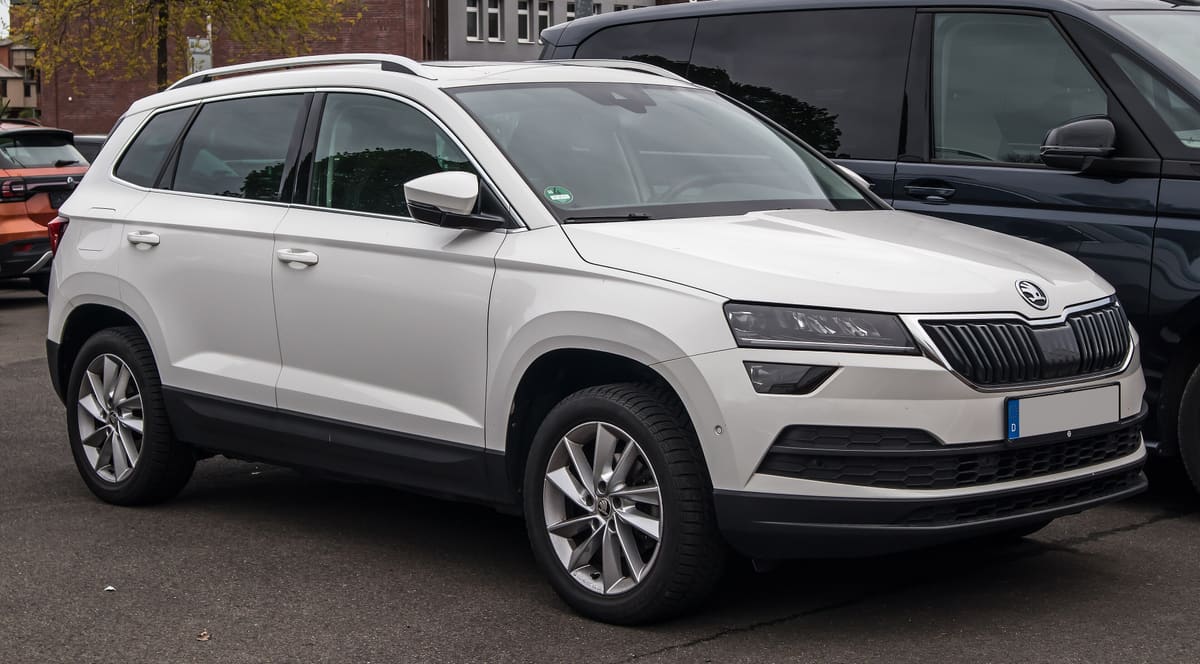
TL;DR
The Skoda Karoq, produced from 2014 to 2019, is generally reliable but has notable issues, particularly with the DSG transmission and electrical systems. Buyers should check the vehicle’s history and be mindful of these problems before making a purchase.
Key facts callout
- Production years: 2014 to 2019
- Common issues: DSG transmission problems, electrical faults, and suspension wear
- Recommended engine: 2.0 TDI for a good balance of performance and efficiency
- Typical price range: £15,000 to £25,000 depending on condition and mileage
Engine and gearbox
The Skoda Karoq offers a range of engines, with the 1.5 TSI and 2.0 TDI being the most popular. The 1.5 TSI is efficient but has reported issues with the DSG automatic transmission, including jerky gearshifts and delayed responses. These problems can appear as early as 30,000 km, making it essential to check the service history for any gearbox repairs. The 2.0 TDI engine is generally more reliable, providing a good balance of power and fuel efficiency, although it can be noisy under hard acceleration.
Electrics and electronics
Electrical issues are common among Karoq owners, ranging from minor problems like faulty infotainment systems to significant concerns such as malfunctioning sensors. Some owners report issues with parking sensors and the electronic handbrake. It is advisable to ensure all electronic features are functioning correctly during a test drive, checking for dashboard warning lights and the smooth operation of the infotainment system to avoid future complications.
Body and suspension
The Karoq’s bodywork is generally well-built, but some owners have reported paint quality and corrosion issues, particularly on older models. Inspect the vehicle for signs of rust, especially around the wheel arches and undercarriage. Suspension wear is also a concern, especially if the vehicle has been used on rough roads. Listen for unusual noises when driving over bumps and check for uneven tyre wear, which can indicate suspension problems. Regular maintenance can help prolong the life of suspension components.
What people are asking
What are the common problems with the Skoda Karoq? Common problems include issues with the DSG transmission, electrical faults, and suspension wear.
Which is the best Skoda Karoq to buy? The best Skoda Karoq to buy is often the 2.0 TDI model for its balance of performance and efficiency.
What is the problem with the Skoda Karoq 1.5 DSG? The DSG transmission in the Škoda Karoq exhibits various weak points, manifesting as jerky gearshifts and delayed responses, especially in the 1.5 TSI DSG variant.
Which engine is best on a Skoda Karoq? The 2.0 TDI engine is generally considered the best for its reliability and efficiency.
What owners say
Sentiment among Karoq owners is mixed. Many appreciate the car’s spacious interior, practicality, and overall driving experience. However, concerns about the DSG transmission and electrical issues are frequently mentioned. Some owners express frustration over repair costs related to these problems, while others feel that the Karoq’s positives outweigh the negatives. Forums and owner forums discussions highlight the importance of thorough checks before purchasing a used Karoq, with recommendations to look for models with a full service history and avoid those showing signs of transmission problems.
Should you buy a 2014 to 2019 Skoda Karoq?
The Skoda Karoq from 2014 to 2019 is a solid choice for buyers seeking a reliable and spacious SUV. While there are common issues, particularly with the DSG transmission and electrical systems, many owners report satisfaction with their vehicles. If considering a Karoq, check the vehicle’s history, pay attention to warning signs during a test drive, and opt for a model with a good service record. With careful selection, the Karoq can be a great addition to your driveway.
Skoda Karoq recall record
6 recalls have been issued for the Skoda Karoq, between 2018 and 2019.
TOO LITTLE TORQUE MAY BE PROVIDED BY THE ENGINE AT LOW ENGINE SPEEDS
R/2019/303Issued 5 September 2019
Too little torque may be provided by the engine at low engine speeds.
Remedy:On the affected vehicles the software of the engine control unit must be updated.
Affects cars built Oct 2018 to Jun 2019
POSSIBLE CRACK ON THE FRAME OF THE LEFT FRONT SEAT
R/2019/214Issued 9 July 2019
There is a possibility that due to a fault in the production process there is a crack on the frame of the left front seat.
Remedy:Check and replace the seat frame if a crack is found.
Affects cars built Feb 2019 to Feb 2019
POSSIBLE DISCREPANCY IN THE MANUFACTURING PROCESS OF THE CENTRE REAR SEAT HEAD RESTRAINT
R/2019/079Issued 6 March 2019
The centre rear head restraint may not be to specification.
Remedy:Check the head restraint and replace if necessary.
Affects cars built Apr 2018 to Jun 2018
A WELDED CONNECTION OF THE REAR SEAT BENCH MAY NOT HAVE BEEN CORRECTLY PERFORMED
R/2018/357Issued 14 December 2018
The rear back rest head restraint mounting is not correctly welded.
Remedy:Check and replace rear back rest frame if required.
Affects cars built May 2018 to Aug 2018
2 older recalls not shown.
A recall applies to a build range, not to every car of this model. Check a registration to see whether one specific vehicle has an outstanding recall.
Skoda Karoq MOT record
From 60,318 recorded MOT tests, 9.1% failed.
| Registered | Tests | Failed | Median mileage |
|---|---|---|---|
| 2023 | 649 | 5.5% | 20,021 mi |
| 2022 | 8,534 | 6.2% | 23,768 mi |
| 2021 | 10,927 | 9.2% | 31,809 mi |
| 2020 | 12,188 | 10.3% | 37,821 mi |
| 2019 | 14,265 | 10.0% | 45,785 mi |
| 2018 | 13,755 | 9.1% | 51,869 mi |
Most common reasons for failure
- A tyre seriously damaged29.6%
- Tyre tread depth not in accordance with the requirements22.1%
- A shock absorber damaged to the extent that it does not function or showing signs of severe leakage21.4%
- a brake lining or pad worn below 1.5mm17.9%
- A suspension pin, bush or joint excessively worn9.0%
Figures cover every Skoda Karoq tested in the DVSA dataset, not this specific car. Check a registration for the actual history of one vehicle.
Skoda Karoq official figures
Median across 22 variants on sale, diesel, petrol.
- Combined economy
- 46.5 mpg
- WLTP median across variants
- CO2 emissions
- 142.5 g/km
- Sets the first-year tax rate
Official figures for new cars. Real economy varies with driving, load and conditions.
Frequently asked questions
What are the common problems with the Skoda Karoq?
Common problems include issues with the DSG transmission, electrical faults, and suspension wear.
Which is the best Skoda Karoq to buy?
The best Skoda Karoq to buy is often the 2.0 TDI model for its balance of performance and efficiency.
Sources
- DVSA anonymised MOT tests and results (Open Government Licence v3.0)
- VCA new car fuel consumption and emissions data (Open Government Licence v3.0)
- DVSA vehicle safety recalls (Open Government Licence v3.0)