MOT failure rates
Tesla Model S MOT failure rates: what to expect
What fails on a Tesla Model S at MOT, how often, and what each fix typically costs.
Updated 4th September 2026 DVSA data: Across 10,726 recorded MOT tests, 18.6% failed.
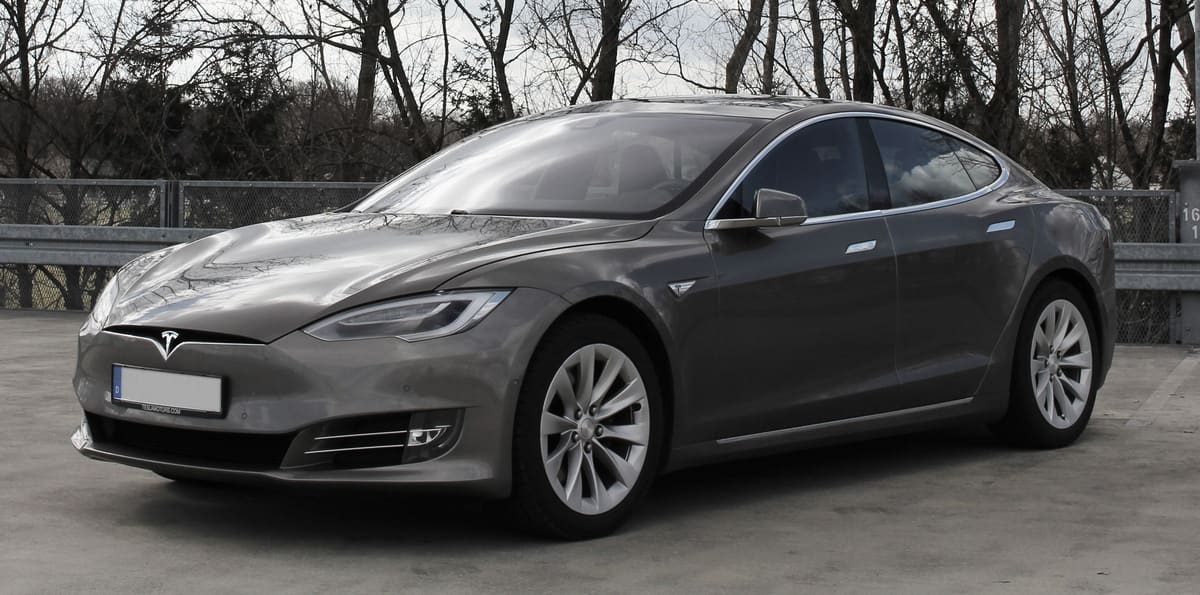
The Tesla Model S is generally a reliable electric vehicle, but like any car, it can encounter issues that lead to MOT failures. Common problems include worn tyres, faulty lights, and issues with the suspension. Fixing these issues can vary in cost, but understanding them can help you prepare for your MOT.
Tyres: A Common MOT Failure
Tyres are one of the most frequent reasons for MOT failures on the Tesla Model S. The legal tread depth in the UK is 1.6mm across the central three-quarters of the tyre. If your tyres are worn beyond this limit, they will fail the MOT.
It is advisable to regularly check the tread depth and replace tyres before they reach the legal limit. Additionally, ensure that your tyre pressure is maintained, as under-inflated tyres can wear out more quickly and affect handling.
Lights and Indicators: Essential for Safety
Faulty lights and indicators are another common reason for MOT failures. The Model S is equipped with various lights, including headlights, brake lights, and turn signals. If any of these are not functioning correctly, it can lead to an automatic failure.
Regularly checking your lights can prevent last-minute repairs before your MOT.
Suspension Issues: A Critical Component
The suspension system of the Tesla Model S is designed for comfort and performance, but wear and tear can lead to MOT failures. Common issues include worn bushings, shock absorbers, and springs. A failure in this area can significantly affect the vehicle’s handling and safety.
Regular inspections and addressing any unusual noises or handling issues can help catch problems early and avoid costly repairs.
Brakes: Vital for Safe Operation
Brakes are crucial for vehicle safety, and any issues can lead to an MOT failure. The Tesla Model S features regenerative braking, which can sometimes mask traditional brake wear. Common problems include worn brake pads or discs, which can be overlooked until the MOT.
It is essential to monitor brake performance and have them checked regularly, especially if you notice any changes in braking efficiency or unusual noises.
Battery and Electrical Systems: Unique to Electric Vehicles
While the Tesla Model S is known for its electric powertrain, battery and electrical system issues can also lead to MOT failures. Problems may include faulty sensors or issues with the battery management system. Although these are less common, they can still occur.
Diagnosing electrical issues can be complex and may require specialist knowledge. Keeping your software updated and addressing warning lights promptly can help mitigate these issues.
Windscreen and Wipers: Visibility Matters
A clear windscreen is essential for safe driving, and any damage can lead to an MOT failure. Common issues include chips, cracks, or worn wiper blades. The MOT test will check for any damage that obstructs the driver’s view.
Regularly inspecting your windscreen and wipers can help ensure you maintain clear visibility and avoid MOT failures.
Understanding these common MOT failures for the Tesla Model S can help you prepare and maintain your vehicle effectively. Regular checks and addressing issues early can save you time and money, ensuring your car remains roadworthy and compliant with UK regulations.
Tesla Model S recall record
8 recalls have been issued for the Tesla Model S, between 2015 and 2025.
Update Vehicle Firmware To Restore Post-Crash eCall Functionality
R/2025/075Issued 7 March 2025
On affected vehicles the eCall audio system will not operate in compliance with Regulations when the front passenger seat is occupied. As a result communications between the occupants of the vehicle and an eCall public safety answer point are unavailable post-crash.
Remedy:Install modified software via an Over the Air (OTA) wireless update.
Affects cars built Oct 2022 to Apr 2024
MISALIGNMENT OF THE HOOD LATCH MAY PREVENT LATCHING OF THE SECONDARY LATCH
R/2022/009Issued 18 February 2022
Misalignment of the hood latch may prevent latching of the secondary latch.
Remedy:Inspect the secondary hood latch on affected vehicles. If the hood is not properly retained by the secondary latch the latch mechanism will be reassembled and repositioned to assure proper alignment.
Affects cars built Sept 2014 to Dec 2020
WHEN THE eMMC REACHES ACCUMULATED LIFETIME WEAR THE CUSTOMER MAY EXPERIENCE A BLANK CENTRE DISPLAY
R/2021/031Issued 1 February 2021
When the eMMC reaches accumulated lifetime wear the customer may experience a blank centre display.
Remedy:Ensure current software is installed and upgrade the VCM daughterboard to a 64GB Micron eMMC.
Affects cars built May 2012 to Mar 2018
THE PROPELLANT IN THE FRONT PASSENGER AIRBAG INFLATOR MAY DEGRADE OVER TIME
R/2019/006Issued 11 January 2019
The front passenger airbag inflator could rupture in the event the airbag is deployed.
Remedy:Replace the front passenger air bag on affected vehicles.
Affects cars built Mar 2014 to Dec 2016
4 older recalls not shown.
A recall applies to a build range, not to every car of this model. Check a registration to see whether one specific vehicle has an outstanding recall.
Tesla Model S MOT record
From 10,726 recorded MOT tests, 18.6% failed.
| Registered | Tests | Failed | Median mileage |
|---|---|---|---|
| 2020 | 920 | 17.2% | 53,504 mi |
| 2019 | 1,226 | 13.8% | 62,600 mi |
| 2018 | 1,880 | 15.7% | 72,874 mi |
| 2017 | 2,532 | 17.8% | 81,529 mi |
| 2016 | 2,305 | 20.6% | 94,900 mi |
| 2015 | 1,271 | 23.3% | 103,452 mi |
| 2014 | 592 | 25.5% | 109,759 mi |
Most common reasons for failure
- Tyre tread depth not in accordance with the requirements33.9%
- A suspension pin, bush or joint excessively worn32.2%
- A tyre seriously damaged14.4%
- Brake disc or drum excessively weakened, insecure or fractured9.9%
- A tyre cords visible or damaged9.6%
Figures cover every Tesla Model S tested in the DVSA dataset, not this specific car. Check a registration for the actual history of one vehicle.
Tesla Model S official figures
Median across 2 variants on sale, electricity.
- Electric range
- 383.5 miles
- Manufacturer WLTP figure
Official figures for new cars. Real economy varies with driving, load and conditions.
Frequently asked questions
What is the Tesla Model S mot?
The Tesla Model S MOT is a mandatory annual test to ensure that the vehicle meets road safety and environmental standards in the UK.
How often does a Tesla Model S need an MOT?
A Tesla Model S requires an MOT test every 12 months once it is three years old. This is in line with UK regulations for all vehicles.
What does the MOT test cover for a Tesla Model S?
The MOT test for a Tesla Model S covers various aspects, including brakes, lights, tyres, and emissions. It ensures the vehicle is safe to drive and meets environmental standards.
Can I drive my Tesla Model S if it fails the MOT?
If your Tesla Model S fails the MOT, you cannot legally drive it on public roads until the necessary repairs are made and it passes a retest.
How can I prepare my Tesla Model S for its MOT?
To prepare your Tesla Model S for its MOT, check the lights, tyres, and brakes. It is also a good idea to ensure that the battery is charged and that there are no warning lights on the dashboard.
Where can I get an MOT for my Tesla Model S?
You can get an MOT for your Tesla Model S at any authorised testing centre in the UK. Many garages are equipped to handle electric vehicles.
What should I do if my Tesla Model S is due for an MOT?
If your Tesla Model S is due for an MOT, book an appointment at a local testing centre. Make sure to allow enough time for any repairs if it does not pass.
Are there any special considerations for the Tesla Model S during the MOT?
While the MOT process is similar for all vehicles, ensure that the technician is familiar with electric vehicles like the Tesla Model S, as they may have specific requirements.
Sources
- DVSA anonymised MOT tests and results (Open Government Licence v3.0)
- VCA new car fuel consumption and emissions data (Open Government Licence v3.0)
- DVSA vehicle safety recalls (Open Government Licence v3.0)