Reliability
Tesla Model S reliability: how dependable is it really?
What Tesla Model S owners actually report, by year, plus what MOT data tells us about its reliability.
Updated 4th September 2026 DVSA data: Across 10,726 recorded MOT tests, 18.6% failed.
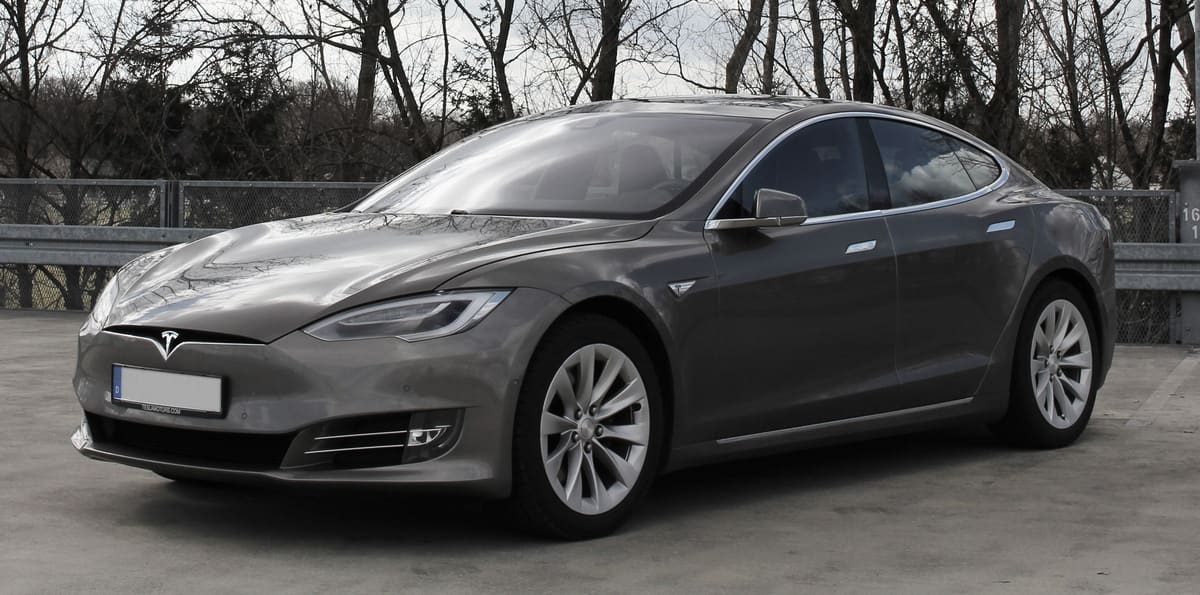
The Tesla Model S is generally considered a reliable vehicle, though its dependability can vary by model year. While many owners report satisfaction with their cars, some years have experienced more issues than others, particularly with electronics and battery systems.
2012-2013: Early Adoption Challenges
The initial years of the Tesla Model S saw a mix of excitement and concern. Early adopters often faced teething problems, particularly with software glitches and build quality.
These early models were groundbreaking but came with the risk associated with new technology. Owners often reported that Tesla’s customer service was responsive, helping to mitigate some of the frustration caused by these early issues. Despite the challenges, many drivers remained loyal, drawn to the innovative features and performance.
2014-2015: Improvements and Growing Pains
By 2014, Tesla had made significant strides in addressing early concerns. The introduction of the D variant in 2014 brought not only dual motors for improved performance but also enhancements in reliability. Reports from DVSA MOT data indicated a decrease in common issues, suggesting that Tesla was learning from customer feedback.
However, some owners still reported problems with the infotainment system and battery management. The Model S was becoming more reliable, but the complexity of its technology meant that some issues persisted. Overall, these years marked a turning point, with many owners feeling more confident in their purchase.
2016-2017: Maturing Technology
The 2016 and 2017 models of the Tesla Model S showcased a more mature vehicle, with improvements in both hardware and software. The introduction of over-the-air updates allowed Tesla to address issues quickly, enhancing the user experience without requiring a visit to a service centre.
Reliability ratings improved during this period, with fewer reports of significant problems. However, some owners still experienced issues with the air suspension and battery performance. Despite these concerns, the overall sentiment was positive, with many drivers praising the vehicle’s performance and range.
2018-2019: Refinements and Reliability
The 2018 and 2019 Model S saw further refinements, with Tesla focusing on enhancing build quality and reliability. The introduction of new battery technology contributed to improved range and performance, while the company continued to address software issues through regular updates.
According to DVSA MOT data, these models showed a marked improvement in reliability, with fewer reported faults compared to earlier years. Owners appreciated the enhancements, and many noted that the driving experience had become more refined. However, some still reported minor issues, particularly related to the touchscreen interface.
2020-Present: Modern Reliability
The latest iterations of the Tesla Model S, starting from 2020, have continued to build on the strengths of previous models. The introduction of the Plaid variant in 2021 showcased Tesla’s commitment to performance while maintaining a focus on reliability.
Feedback from owners indicates that the latest models have fewer issues overall, with improvements in both hardware and software. However, as with any complex technology, occasional issues do arise, particularly with the advanced driver-assistance features.
Overall Reliability Trends
When considering the Tesla Model S’s reliability over the years, it is clear that the vehicle has evolved significantly. Early models faced numerous challenges, but Tesla’s commitment to improving its technology and addressing customer feedback has led to a more dependable vehicle.
While some issues persist, particularly with electronics and software, the overall trend shows a marked improvement in reliability. Owners can generally expect a high level of performance and satisfaction, making the Model S a strong contender in the electric vehicle market. As technology continues to advance, it will be interesting to see how Tesla maintains its reputation for innovation and reliability in the years to come.
Tesla Model S recall record
8 recalls have been issued for the Tesla Model S, between 2015 and 2025.
Update Vehicle Firmware To Restore Post-Crash eCall Functionality
R/2025/075Issued 7 March 2025
On affected vehicles the eCall audio system will not operate in compliance with Regulations when the front passenger seat is occupied. As a result communications between the occupants of the vehicle and an eCall public safety answer point are unavailable post-crash.
Remedy:Install modified software via an Over the Air (OTA) wireless update.
Affects cars built Oct 2022 to Apr 2024
MISALIGNMENT OF THE HOOD LATCH MAY PREVENT LATCHING OF THE SECONDARY LATCH
R/2022/009Issued 18 February 2022
Misalignment of the hood latch may prevent latching of the secondary latch.
Remedy:Inspect the secondary hood latch on affected vehicles. If the hood is not properly retained by the secondary latch the latch mechanism will be reassembled and repositioned to assure proper alignment.
Affects cars built Sept 2014 to Dec 2020
WHEN THE eMMC REACHES ACCUMULATED LIFETIME WEAR THE CUSTOMER MAY EXPERIENCE A BLANK CENTRE DISPLAY
R/2021/031Issued 1 February 2021
When the eMMC reaches accumulated lifetime wear the customer may experience a blank centre display.
Remedy:Ensure current software is installed and upgrade the VCM daughterboard to a 64GB Micron eMMC.
Affects cars built May 2012 to Mar 2018
THE PROPELLANT IN THE FRONT PASSENGER AIRBAG INFLATOR MAY DEGRADE OVER TIME
R/2019/006Issued 11 January 2019
The front passenger airbag inflator could rupture in the event the airbag is deployed.
Remedy:Replace the front passenger air bag on affected vehicles.
Affects cars built Mar 2014 to Dec 2016
4 older recalls not shown.
A recall applies to a build range, not to every car of this model. Check a registration to see whether one specific vehicle has an outstanding recall.
Tesla Model S MOT record
From 10,726 recorded MOT tests, 18.6% failed.
| Registered | Tests | Failed | Median mileage |
|---|---|---|---|
| 2020 | 920 | 17.2% | 53,504 mi |
| 2019 | 1,226 | 13.8% | 62,600 mi |
| 2018 | 1,880 | 15.7% | 72,874 mi |
| 2017 | 2,532 | 17.8% | 81,529 mi |
| 2016 | 2,305 | 20.6% | 94,900 mi |
| 2015 | 1,271 | 23.3% | 103,452 mi |
| 2014 | 592 | 25.5% | 109,759 mi |
Most common reasons for failure
- Tyre tread depth not in accordance with the requirements33.9%
- A suspension pin, bush or joint excessively worn32.2%
- A tyre seriously damaged14.4%
- Brake disc or drum excessively weakened, insecure or fractured9.9%
- A tyre cords visible or damaged9.6%
Figures cover every Tesla Model S tested in the DVSA dataset, not this specific car. Check a registration for the actual history of one vehicle.
Tesla Model S official figures
Median across 2 variants on sale, electricity.
- Electric range
- 383.5 miles
- Manufacturer WLTP figure
Official figures for new cars. Real economy varies with driving, load and conditions.
Frequently asked questions
How reliable is the Tesla Model S compared to other electric vehicles?
The Tesla Model S generally ranks well in reliability compared to other electric vehicles. Many owners report fewer issues than with traditional petrol or diesel cars.
What common problems should I be aware of with the Tesla Model S?
Common issues reported by Tesla Model S owners include battery performance, touchscreen malfunctions, and occasional software glitches. Regular software updates often help to resolve these problems.
Is the Tesla Model S expensive to maintain?
While the Tesla Model S has fewer moving parts than traditional cars, some repairs can be costly. However, routine maintenance is generally less frequent and less expensive.
How does the warranty work for the Tesla Model S?
The Tesla Model S comes with a warranty that covers the vehicle for four years or 50,000 miles, whichever comes first. The battery and drive unit have an extended warranty of eight years or up to 150,000 miles.
What do owners say about the long-term reliability of the Tesla Model S?
Many owners report high satisfaction with the long-term reliability of the Tesla Model S. Positive feedback often highlights the vehicle's performance and low maintenance needs over time.
How does the Tesla Model S perform in crash tests?
The Tesla Model S has received high safety ratings in various crash tests. Its design and safety features contribute to its strong performance in protecting occupants.
Sources
- DVSA anonymised MOT tests and results (Open Government Licence v3.0)
- VCA new car fuel consumption and emissions data (Open Government Licence v3.0)
- DVSA vehicle safety recalls (Open Government Licence v3.0)