MOT failure rates
Hyundai Kona MOT failure rates: what to expect
What fails on a Hyundai Kona at MOT, how often, and what each fix typically costs.
Updated 4th September 2026 DVSA data: Across 61,435 recorded MOT tests, 10.2% failed.
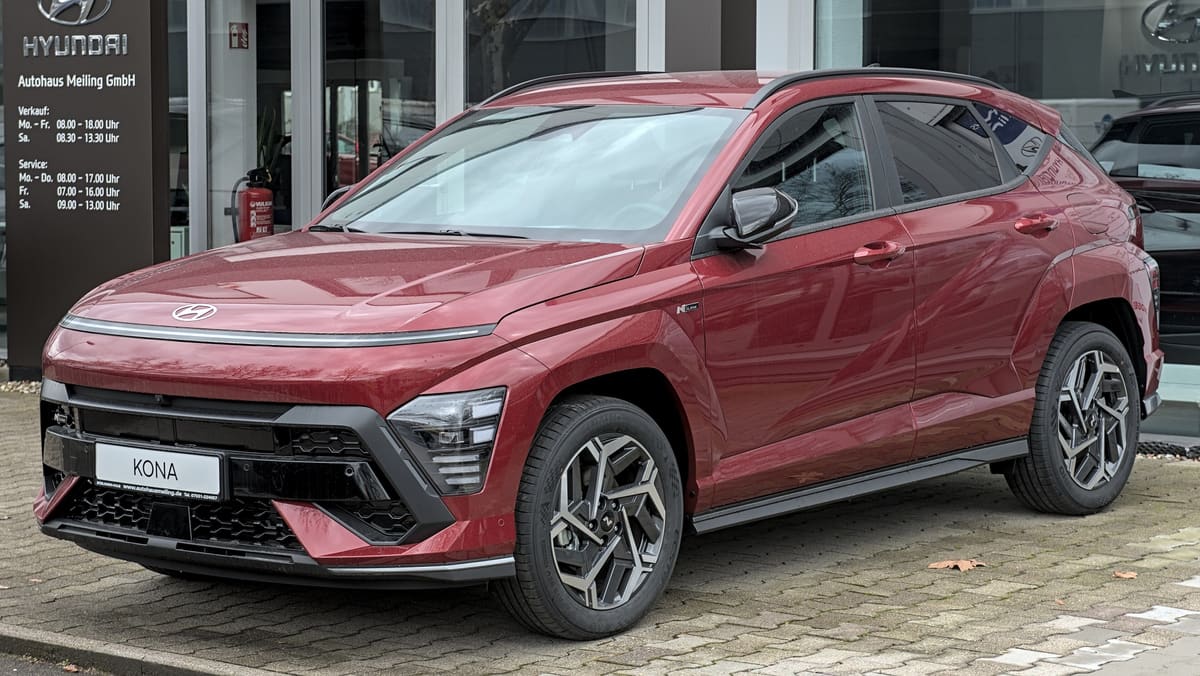
The Hyundai Kona is generally a reliable vehicle, but like any car, it can encounter issues that lead to MOT failures. Common problems include issues with lights, brakes, and suspension components. Repair costs can vary, but understanding these common failures can help you prepare for your next MOT.
Lights and Electrical Systems
One of the most frequent causes of MOT failure for the Hyundai Kona is issues with the lights and electrical systems. This includes problems with headlights, brake lights, and indicators. A blown bulb or faulty wiring can lead to an automatic failure during the test.
Regularly checking and maintaining your lights can prevent these issues from arising.
Braking System
The braking system is crucial for safety and is closely inspected during the MOT. Common issues include worn brake pads, discs, and fluid leaks. The Hyundai Kona’s braking components can wear out over time, especially if the vehicle is frequently driven in urban areas or heavy traffic.
If there are fluid leaks, the repair costs can vary significantly based on the source of the leak and the parts that need replacement. Regular brake inspections can help catch these issues before the MOT.
Suspension and Steering
Suspension and steering components are vital for vehicle handling and comfort. Common failures in the Hyundai Kona include worn shock absorbers, broken springs, and issues with the steering rack. These problems can affect the car’s stability and safety, leading to MOT failures.
Regular checks and maintenance of the suspension system can help extend its lifespan and ensure a smoother ride.
Tyres and Wheel Alignment
Tyres are a critical safety feature and are thoroughly checked during the MOT. Common issues include insufficient tread depth, damage, or uneven wear. The Hyundai Kona requires tyres that meet legal standards, and failure to comply can lead to an automatic MOT failure.
Additionally, if the wheel alignment is off, it can cause uneven tyre wear and affect handling. Regularly checking tyre pressure and tread depth can help maintain tyre health.
Emissions and Exhaust System
The emissions system is another area where Hyundai Kona owners may face MOT failures. Common issues include a malfunctioning catalytic converter or exhaust leaks. These problems can lead to increased emissions, which is a critical aspect of the MOT test.
Keeping the exhaust system in good condition is essential for passing the MOT and maintaining fuel efficiency.
General Maintenance and Pre-MOT Checks
Regular maintenance is key to preventing MOT failures. Common pre-MOT checks include inspecting lights, brakes, tyres, and the exhaust system. By addressing minor issues before the test, you can save on potential repair costs and ensure a smoother MOT experience.
Keeping up with regular servicing and addressing any warning lights or unusual noises promptly can help maintain the Hyundai Kona’s reliability and performance.
Hyundai Kona recall record
14 recalls have been issued for the Hyundai Kona, between 2019 and 2026.
Some vehicles fitted with a high voltage battery may have internal cell voltage deviation
R/2026/128Issued 4 May 2026
Some vehicles fitted with a high voltage battery may have internal cell voltage deviation. If this occurs it may result in the risk of an electrical short circuit inside the battery. Until the high voltage battery software has been updated we recommend the vehicle to be parked in a well ventilated area. The vehicle can be used as normal.
Remedy:Hyundai has launched a Safety Recall to update the battery management system (BMS) software.
Affects cars built Jan 2018 to Jul 2023
Some vehicles may have an instrument cluster operational concern whilst driving the vehicle
R/2026/146Issued 2 April 2026
Some vehicles may face a concern where the instrument cluster panel may reboot during vehicle operation potentially resulting in a blank instrument cluster display screen.
Remedy:To correct this an ‘Over the Air ‘ software update to the vehicles will be deployed remotely.
Affects cars built Jul 2025 to Nov 2025
The subject vehicles may experience a transmission malfunction resulting in a loss of drive.
R/2024/172Issued 20 May 2024
On affected vehicles they may experience a transmission malfunction resulting in a loss of drive
Remedy:On all affected vehicles the transmission control unit software will be updated
Affects cars built Apr 2023 to Dec 2023
A risk of electrical short circuit within the engine compartment during a vehicle collision
R/2024/154Issued 29 April 2024
On affected vehicles a risk of an electrical short circuit within the engine compartment during a collision
Remedy:On affected vehicles crush shields will be installed to protect the wiring
Affects cars built Apr 2023 to Dec 2023
10 older recalls not shown.
A recall applies to a build range, not to every car of this model. Check a registration to see whether one specific vehicle has an outstanding recall.
Hyundai Kona MOT record
From 61,435 recorded MOT tests, 10.2% failed.
| Registered | Tests | Failed | Median mileage |
|---|---|---|---|
| 2023 | 1,011 | 9.0% | 24,220 mi |
| 2022 | 16,848 | 8.9% | 22,255 mi |
| 2021 | 16,107 | 10.2% | 30,980 mi |
| 2020 | 11,718 | 11.0% | 35,495 mi |
| 2019 | 8,742 | 10.8% | 39,026 mi |
| 2018 | 6,592 | 11.2% | 44,406 mi |
| 2017 | 417 | 12.7% | 48,147 mi |
Most common reasons for failure
- A tyre seriously damaged37.3%
- Tyre tread depth not in accordance with the requirements30.5%
- a brake lining or pad worn below 1.5mm11.7%
- Wiper blade missing or obviously not clearing the windscreen10.5%
- Brake disc or drum excessively weakened, insecure or fractured10.0%
Figures cover every Hyundai Kona tested in the DVSA dataset, not this specific car. Check a registration for the actual history of one vehicle.
Hyundai Kona official figures
Median across 82 variants on sale, electricity, petrol, petrol electric.
- Combined economy
- 47.9 mpg
- WLTP median across variants
- CO2 emissions
- 135 g/km
- Sets the first-year tax rate
- Electric range
- 291 miles
- Manufacturer WLTP figure
Official figures for new cars. Real economy varies with driving, load and conditions.
Frequently asked questions
What is the Hyundai Kona mot requirement in the UK?
In the UK, the Hyundai Kona must have its MOT test conducted every 12 months once it is three years old. This ensures that the vehicle meets safety and environmental standards.
How can I check if my Hyundai Kona is due for an MOT?
You can check if your Hyundai Kona is due for an MOT by visiting the official UK government website and entering your vehicle registration number. This will provide you with the MOT expiry date.
What are common reasons for Hyundai Kona failing an MOT?
Common reasons for a Hyundai Kona failing an MOT include issues with brakes, lights, tyres, and emissions. Regular maintenance can help prevent these problems.
Can I drive my Hyundai Kona if it has failed its MOT?
You cannot legally drive your Hyundai Kona if it has failed its MOT unless you are taking it to a garage for repairs. Otherwise, you must wait until it passes the test.
What should I do if my Hyundai Kona is close to its MOT expiry?
If your Hyundai Kona is close to its MOT expiry, you should book an appointment for the test as soon as possible. You can do this at any authorised MOT testing centre.
Is it possible to get a free retest for my Hyundai Kona?
Yes, if your Hyundai Kona fails its MOT, many garages offer a free retest if you return within a certain timeframe, usually 10 days. Check with your testing centre for their specific policy.
What documents do I need for my Hyundai Kona MOT?
For your Hyundai Kona MOT, you should bring the vehicle registration document and any previous MOT certificates. It's also helpful to have proof of identity and insurance.
Sources
- DVSA anonymised MOT tests and results (Open Government Licence v3.0)
- VCA new car fuel consumption and emissions data (Open Government Licence v3.0)
- DVSA vehicle safety recalls (Open Government Licence v3.0)