Common problems
Jeep Cherokee common problems and reliability issues
Honest rundown of the most common Jeep Cherokee faults, what to watch for, and how to keep one running well.
Updated 4th September 2026 DVSA data: Across 8,343 recorded MOT tests, 26.9% failed.
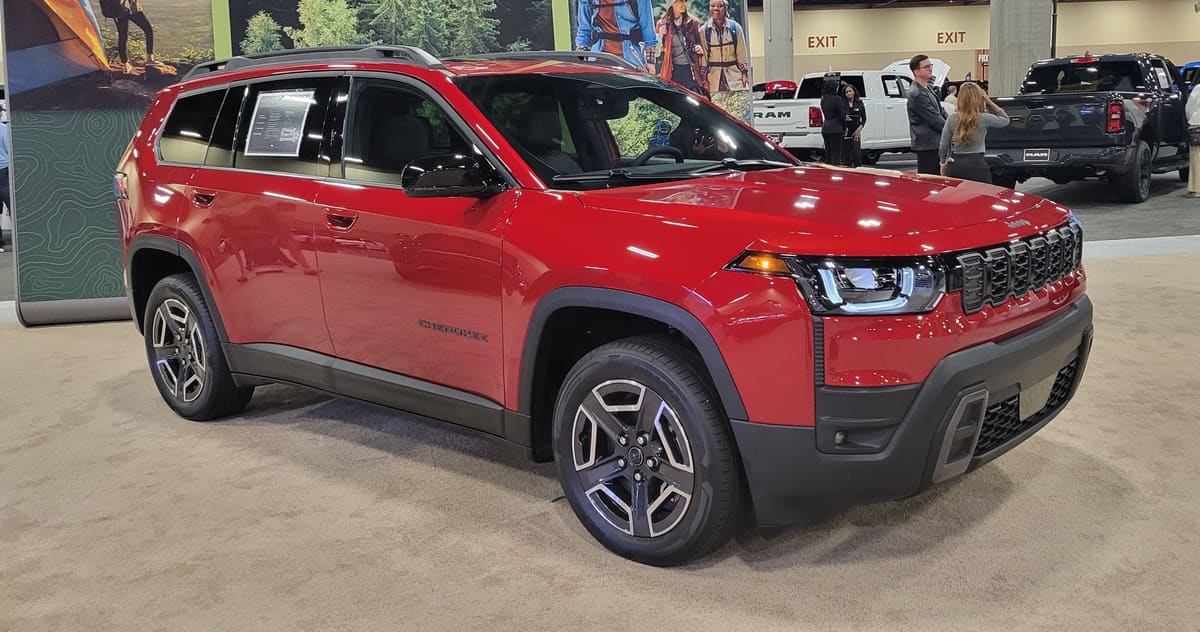
The Jeep Cherokee is known for its rugged design and off-road capabilities, but it does have its share of common problems. Owners often report issues related to the electrical system, transmission, suspension, and engine.
Electrical System Issues
One of the most frequently reported problems with the Jeep Cherokee involves its electrical system. Owners have noted issues with the battery draining unexpectedly and problems with the vehicle’s wiring harness. These electrical faults can lead to various malfunctions, including failure to start and dashboard warning lights illuminating.
Additionally, some models have experienced problems with the infotainment system, where screens freeze or fail to respond. This can be frustrating for drivers who rely on navigation and other features. Regular checks of the battery and electrical connections can help mitigate some of these issues.
Transmission Problems
Transmission issues are another common concern for Jeep Cherokee owners. Many have reported rough shifting, slipping gears, and even complete transmission failure. These problems can stem from a variety of factors, including low transmission fluid levels or faulty sensors.
The Jeep Cherokee’s automatic transmission has been known to exhibit erratic behaviour, particularly in earlier models. Regular maintenance, including fluid changes and inspections, can help prolong the life of the transmission and prevent costly repairs down the line.
Suspension and Steering Concerns
The suspension system of the Jeep Cherokee can also present problems, particularly with the front suspension components. Owners have reported issues such as excessive noise when driving over bumps, which may indicate worn-out shock absorbers or struts.
Additionally, steering problems can arise, including a loose or unresponsive steering feel. This can affect the vehicle’s handling and overall safety. Regular inspections of the suspension and steering components can help identify issues before they become serious.
Engine Troubles
Engine-related problems are not uncommon in the Jeep Cherokee. Some owners have reported issues with excessive oil consumption, which can lead to engine wear over time. This is often linked to faulty piston rings or valve seals.
Another concern is the check engine light illuminating due to various sensor failures. This can indicate issues ranging from minor to severe, making it essential for owners to have their vehicles diagnosed promptly. Regular servicing and using high-quality engine oil can help maintain engine health.
Brake System Failures
The brake system in the Jeep Cherokee has been known to experience various issues, including premature wear of brake pads and rotors. Some owners have reported a spongy brake pedal feel, which may indicate air in the brake lines or a failing master cylinder.
Additionally, the anti-lock braking system (ABS) can malfunction, leading to reduced braking performance. Regular brake inspections and timely replacements of worn components are crucial for ensuring safety and reliability.
Fuel System Issues
Finally, fuel system problems can affect the Jeep Cherokee, with some owners reporting issues related to fuel injectors and fuel pumps. Clogged fuel injectors can lead to poor engine performance and reduced fuel efficiency, while a failing fuel pump can cause starting issues or stalling.
Maintaining a clean fuel system through regular servicing and using quality fuel can help prevent these issues. Keeping an eye on fuel economy and performance can also alert owners to potential problems before they escalate.
Jeep Cherokee recall record
32 recalls have been issued for the Jeep Cherokee, between 1996 and 2026.
Two speed power transfer unit failure. Loss of power.
R/2026/138Issued 26 June 2026
Affected vehicles may have been built with an improperly seated input shaft snap ring on the power transfer unit (PTU). An input shaft snap ring that is not fully seated may allow uncontrolled movement of the input shaft inward which can cause an unexpected loss of motive power or loss of PARK function while stationary. A loss of motive power can cause a vehicle crash without prior warning. A loss of PARK function can cause a vehicle crash without prior warning and/or injury to others outside the vehicle.
Remedy:Install modified software in the Drivetrain Control Module (DTCM) and the PTU to detect and monitor for excessive wear within the PTU. If a PTU failure is confirmed by the software the PTU will be replaced.
Affects cars built Mar 2017 to Feb 2019
Jeep Cherokee 2014-2014 Power liftgate module
R/2024/230Issued 14 June 2024
On affected vehicles the power liftgate control module may experience a short circuit. An electrical short in the power liftgate module may lead to a vehicle fire with the ignition on or off.
Remedy:Relocate the power liftgate module to the D Pillar and install water barrier/curtain
Affects cars built Feb 2013 to Sept 2015
Reverse lamp height
R/2024/149Issued 4 June 2024
On certain vehicles built with a specific suspension package the reverse lamps may be above the UN ECE 48.04 height requirement.
Remedy:Install the reverse lamp in accordance with the UN ECE 48.04 height requirement.
Affects cars built Jul 2013 to Dec 2017
The Power Transfer Unit (PTU) may allow relative movement between the input splines and the transmission output shaft
R/2023/196Issued 4 August 2023
On affected vehicles relative movement between the differential input splines and the transmission output shaft in the area of the power transfer unit�wear of the input splines�cannot�be�ruled�out.�
Remedy:Reprogram of the Drive Train Control Module and Electric Park Brake.
Affects cars built Sept 2015 to Oct 2016
28 older recalls not shown.
A recall applies to a build range, not to every car of this model. Check a registration to see whether one specific vehicle has an outstanding recall.
Jeep Cherokee MOT record
From 8,343 recorded MOT tests, 26.9% failed.
| Registered | Tests | Failed | Median mileage |
|---|---|---|---|
| 2018 | 308 | 14.6% | 55,803 mi |
| 2017 | 544 | 19.7% | 62,503 mi |
| 2016 | 1,398 | 20.2% | 73,398 mi |
| 2015 | 1,942 | 22.7% | 83,082 mi |
| 2014 | 1,143 | 27.7% | 87,633 mi |
| 2007 | 337 | 37.1% | 105,372 mi |
| 2006 | 464 | 39.2% | 105,835 mi |
| 2005 | 456 | 33.1% | 107,006 mi |
Most common reasons for failure
- A suspension pin, bush or joint excessively worn35.9%
- Tyre tread depth not in accordance with the requirements22.8%
- Brake disc or drum excessively weakened, insecure or fractured15.1%
- Fluid leaking excessively and likely to harm the environment or to pose a safety risk to other road users13.7%
- a brake lining or pad worn below 1.5mm12.5%
Figures cover every Jeep Cherokee tested in the DVSA dataset, not this specific car. Check a registration for the actual history of one vehicle.
Frequently asked questions
What are the most common issues with the Jeep Cherokee?
Common issues include electrical problems, transmission issues, and engine performance concerns. Owners have also reported problems with the air conditioning and suspension.
How reliable is the Jeep Cherokee?
The Jeep Cherokee has a mixed reputation for reliability. While some owners have had positive experiences, others have faced significant issues, particularly with older models.
Are there any known electrical problems with the Jeep Cherokee?
Yes, electrical problems are frequently reported, including issues with the battery, alternator, and various sensors. These can lead to warning lights on the dashboard and other malfunctions.
What should I check before buying a used Jeep Cherokee?
Before purchasing, check the service history, look for signs of rust, and ensure all electrical components work. It's also wise to have a mechanic inspect the vehicle for any hidden issues.
Is the Jeep Cherokee good for off-roading?
Yes, the Jeep Cherokee is known for its off-road capabilities, especially in models equipped with four-wheel drive. However, some owners have noted that certain models may struggle with more challenging terrains.
What are the typical maintenance costs for a Jeep Cherokee?
Maintenance costs can vary, but they are generally considered moderate. Regular servicing, including oil changes and brake checks, is essential to keep the vehicle in good condition.
How does the Jeep Cherokee perform in terms of fuel efficiency?
Fuel efficiency can vary by model and engine type, but many Jeep Cherokees are not known for being particularly economical. It's advisable to check the specific model's fuel consumption ratings.
Are there any recalls on the Jeep Cherokee I should be aware of?
Recalls are issued against individual vehicles rather than a model as a whole, so a model-level yes or no would be guesswork. Enter the registration on Honest Car Check and we check the DVSA record for that specific car. Where DVSA holds no status, confirm it with a franchised dealer using the VIN.
Sources
- DVSA anonymised MOT tests and results (Open Government Licence v3.0)
- DVSA vehicle safety recalls (Open Government Licence v3.0)